

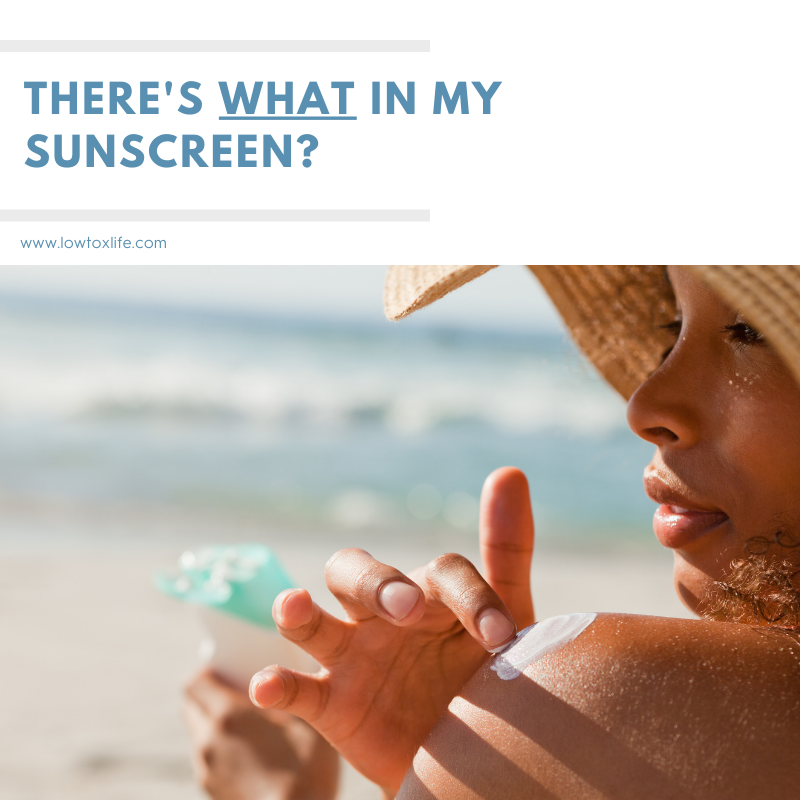
Are you looking for non toxic sunscreens and concerned about mainstream sunscreens?
Maybe you’ve read in the news or seen reports ranging from recalls due to skin irritation and damage, or the dangers of certain ingredients to the ocean and its reefs? Maybe it’s some of the ingredients that, ironically, have question marks on them as possible carcinogens? Or how about worrying about the synthetic fragrances and other ingredients found to be hormone-mimicking/disruptive?
Man… that’s A LOT. I first published this blog in 2012 and have updated it every couple of years since. Why? Because we get more and more products for sun protection available to us each year in the sunscreen category, including – thankfully – in the low tox category, and with the advances in green chemistry, we no longer have to wrestle with thick, goopy and virtually impossible to spread sunscreens that I once had to contend with when I first switched sunscreens nearly 20 years ago. Thank GOSH for progress!
I caught a whiff of just how shocking an amount of potentially harmful chemicals there are in your average sunscreen when it came time to buy one for my then 6-month-old son who is now a very tall young man towering over me – how did that happen!? When green chemistry is as advanced as it is these days, why we have to continue to use things with potentially harmful effects, is a mystery. We learn, we say no, and we vote with our dollars to seek out the better option.
If you’re new to going low tox and worried you’ve been ‘doing everything wrong and using everything toxic: Been there, so let me stop you right there: It’s not worth getting upset about what you used up till now and it’s definitely not worth your panic and worry – it’s just an opportunity to grab something that does better by you and our planet.
I also want to note that it’s not worth panicking if you do find out that your kid used a conventional sunscreen at the sports carnival, or the day care or at a friend’s house when they went to the beach. Please dont’ hate the ‘other’ teacher, parent or whatever and repeat after me:
WE DO WHAT WE DO MOST OF THE TIME SO WE CAN GO WITH THE FLOW SOME OF THE TIME.
You’re fine. They’re fine. You mostly use a great product once you’ve made the switch and the odd application of something mainstream – especially to avoid getting badly burnt with kids playing – is not the end of the world and doesn’t mean other people have ‘no idea and how could they do that and not ask!?!?!’ Relax. Focus on the gratitude and their care in that moment looking after your child cause that’s what that was…
Now, let’s hop to what we need to learn about the case for why we’re switching sunscreens…
Here’s what you can expect to find in what we’re NOT using from now on
- Octyl methoxycinnamate (OMC) is one of the most frequently used chemical UV filters worldwide. OMC easily penetrates the upper layer of the skin and, when exposed to UV radiation, generates free radicals in skin cells.
- Oxybenzone (benzophenone-3), octyl-dimethyl-PABA and octinoxate – all hormone-disrupting and oxybenzone is also shown to be damaging to algae and coral formation, leading it to be banned in the state of Hawaii from 2021 (Hooray!)
- 4-Methyl benzylidene camphor (4-MBC) Laboratory tests on rats exposed to 4-MBC revealed that male rats born to mothers exposed to this compound had lower testis weight, experienced delayed puberty and decreased adult prostate weight. Human trials found that both OMC and 4-MBC were readily absorbed through the skin and were detectable in urine. There is also a study that shows pituitary change showing up as hypothyroidism.
- Padimate O (2-Ethylhexyl-4-dimethylaminobenzoate ) shown to bioaccumulate in the liver and kidneys of fishies!
- Fragrance chemicals – As many as 150 chemicals can be used in the catch-ingredient ‘fragrance/parfum’ on an ingredient list. One family of chemicals often found there are called phthalates which are the ‘sticky, plasticiser’ chemicals that make a fragrance long-lasting. What phthalates have also been shown to do, however, is be harmful to our reproductive systems as potent endocrine disruptors.
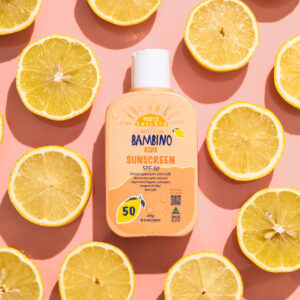


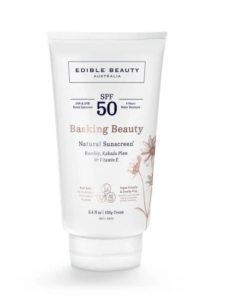
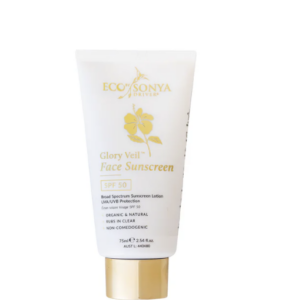
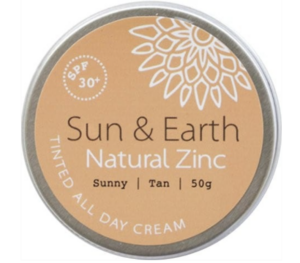
If you fancy a highly protective tinted cream with 25% zinc oxide protection, Biome has the Sun and Earth Tinted All Day Cream. a mineral-based physical barrier that covers and protects the skin from the external environment. Great for plastic-avoidance, too, with its packaging.
AFTER SUN CARE
Pure Aloe Vera Gel is the simplest and best option. Biome has a 100% Natural Aloe Gel for the Aussies.

I will warn that the velvety fine texture of conventional sunscreens will not be found in natural land in those top two as they are a bit thicker, but we are definitely headed into a better direction on texture, formulation and protection triple-win products!
INTERNATIONALLY AVAILABLE

DIY OPTIONS
Here’s come of our top DIY recipes:
1. Cyndi O’Meara has this simple one.
2. This one is also DIY and great value once you have all the ingredients.
An alumni of this course, Michelle, actually made the latter and costed it out at $18 for 210ml.
Note: If DIY’ing keep in mind the zinc oxide ingredient needs to be above 18% of total volume to be protective against UVA/B rays.
FAQ: Can I get too much zinc from zinc oxide sunscreens – nope. The particles are too big to penetrate – it’s the NANO Zinc in those super-thin sunscreens that spray or glide on that you risk zinc overload from.
When it comes to your vitamin D and zinc levels, both should be on your annual blood ‘basics’ testing to keep things in check.
Homemade Sunscreen
Recipe/Full ingredient listing: Wellness Mama
Ingredients I chose (see the recipe for all options):
- 1/2 cup almond oil (125ml)
- 1/4 cup coconut oil (62.5ml)
- 1/4 cup (loosely packed) beeswax yellow beads (approx 25g)
- 2 Tablespoons Zinc Oxide(approx 28g)**
- 1 teaspoon Carrot Seed Oil (5ml)
- 1/2 teaspoon Vitamin E oil(2.5ml)
- 1 tablespoon Shea Butter (approx 15g)
Key also is to not overprotect to the point where you cause a deficiency in Vitamin D. Allow yourself a little splash of sun on bare skin for at least your legs and arms, for 15 minutes, 10 minutes if really fair and make sure this isn’t smack bang in the middle of the day and speak to your health professional to decide what’s best for you.
We need vitamin D for so many of our body’s functions and adequate levels show added protection against cancer risks, particularly breast cancer, as well as bone and immune system health to name a couple. Our ‘overprotecting’ and indoor lifestyles can be contributing to the reemergence of Rickets and other low-vitamin-D related immune and hormonal issues, which is crazy, BUT we do have to be careful nonetheless – especially in the harsh sun of Australia. So how do we strike a balance? 10-20 minutes unprotected gentle sun per day in the earlier part of the morning or late afternoon. There’s a great sun-safe app called UV Index Now – UVI Mate that gives you a traffic light system approach to enjoying safe sun time when you can, from wherever you are in the world. This plus a good low tox sunscreen and we’re sorted!
What to do about the mandatory kid’s sunscreen wearing at preschool and school?
BYO and ask that this one is used on your child as they’re ‘sensitive’ and this is the only one that works for you. I’ve never had an issue.
It’s your little one’s body and YOU decide what goes on it. My little guy has hand sanitiser and sunscreen in his bag and has done since preschool.
Natural sunscreen, as long as the zinc oxide component is at least 18% or more – ideally 22-25%, will give you all the benefits of providing protection, without having the burden of the potentially harmful ingredients absorbed into our skin or damaging the reef and oceans. If money’s tight, it’s better to protect with light, full cover clothing and a good hat, and use a natural sunscreen when you really need it, than it is to settle for the cheap, mainstream stuff.
I hope that’s helped you make your choices as to what to try,
Low Tox. Happy Bodies. Happy Planet.

Geek out… Further reading and more in-depth explanations from trusted sources, backed by numerous study citations, which I have verified. Also a link to an extensive exploration of nano technology by the EWG.
http://www.novamagazine.com.au/article_archive/2008/08_12_toxicsunscreen.htm

