







About this show:
This podcast is a big exploration of several important topics of our times (Das hates the word ‘conversation’ and shares why in the show)
- People feel jaded seeing injustices inflicted on people, from corporate to political to personal, without a sense of real accountability for actions taken and how that’s impacting everything from polarization to lack of success in environmental care and regeneration.
- The corporatisation of not-for-profits and climate change are feeding into many people’s scepticism that the policies and solutions being tabled will get us results.
- Wild Animals and Das’ book “Wild Quests” to help remind us what needs our attention and witness.
- Why “Donate $1 a day to save the Koala/Nature reserve/World” is not working.
- Living with our own contradictions – impossible to escape if we want to unite over what will make a difference.
Das isn’t here to give people comfortable ‘off ramps’ and this was definitely a thought provoking hour exploring things we’re all often thinking about, also often despairing over the state of, and yet never moving forward and we aim to light a fire or remind us to find our overlaps and common ways to move forward.
I hope you love it as much as I did, your host,
Alexx Stuart
Founder of Low Tox Life and the Low Tox movement
Join me on Insta @lowtoxlife
***
Thank you to this month’s show sponsor for helping you make your low tox swaps easier:
@ausclimate continues giving 10% off their Winix Air Purifiers and Dehumidifiers at ausclimate.com.au. CODE: LOWTOXLIFE at checkout https://bit.ly/ShopAusclimate
@Biofirst with 15% off sitewide for the entire month of June – welcome to your new podcast swaps offer for one of my favourite low tox brands when it comes to skin with challenges and how frustrating it can be. CODE: LOWTOXLIFE https://bit.ly/3ydRS8T
Be sure to join me on Instagram @lowtoxlife and tag me with your shares and AHAs of this week’s episode.
***
About Satyajit Das
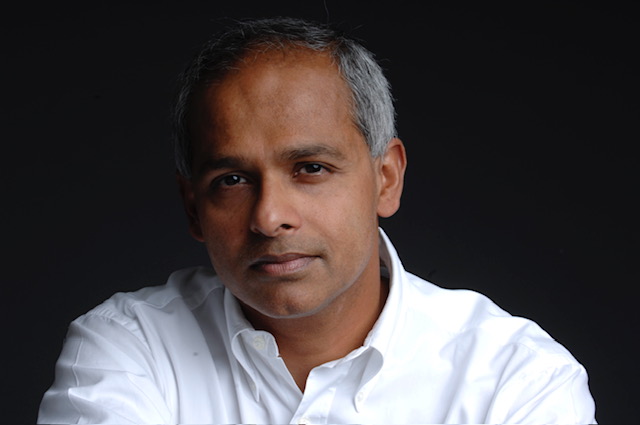
Satyajit Das is a former banker, recognised as one of the world’s leading financial thinkers. He is the author of numerous books, including Traders, Guns & Money, Extreme Money, Banquet of Consequences and Fortune’s Fool, which examine the intersection between money and society, and the co-author, with his partner Jade Novakovic, of In Search of the Pangolin. Together they have seen many of the planet’s emblematic mammals, nearly 5,000 species of birds and more. Das is a regular festival guest and media commentator, and he appeared in the Oscar-winning documentary Inside Job.
Connect with Das on the following platforms:
Satyajit Das in conversation with Cassie McCullagh
The Royal Oak Balmain – 36 College St Balmain, NSW 2041 Australia
Thursday, June 27, 2024 7:00 pm – 8:30 pm
Book at https://bit.ly/3X6xFfM
***
More about this month’s sponsors:
Thank you to this month’s sponsors for partnering with our show and helping you make your swaps with their special offer:

Ausclimate’s highly recommended range of WINIX Air Purifiers is the ideal solution for cleaner, healthier indoor air. Easy to use, reactive features and settings with a truly comprehensive 4-5 stages of purification, including Hospital Grade True HEPA Filtration and Winix’s unique PlasmaWave® technology. Perfect for smoke, dust, pets, viruses, bacteria, household odours, and allergies (covering a variety of allergens). Breathe easier, sleep better, and feel better. Winix; is the most complete air purifier on the market!

Offer: Ausclimate is now giving all Low Tox Life followers an EXTRA 10% OFF their already discounted prices. Simply enter the discount code of LOWTOXLIFE on check out via: https://www.ausclimate.com.au/
This discount can also be redeemed for over-the-phone orders verbally.
Website: www.ausclimate.com.au
Facebook: www.facebook.com/Ausclimate
Instagram: www.instagram.com/ausclimate

If you’re looking for high-quality skin formulations to address skin challenges or stress and nothing’s worked yet – put this on top of your shopping list, with 100’s saying “Finally something has worked!”.
Enjoy the help in making the skin product swaps with this month’s generous offer from Biofirst, Alexx! Anyone tried the products yet? I love using the Ultra sensitive skin rescue lotion towards the end of my luteal phase as my day/night moisturiser, and I’ve given both that one and Manuka skin saver to people as gifts with Eczema or Dermatitis skin challenges. The little self heal salve tube is a very effective first-aider too

Enjoy 15% off site-wide with your code LOWTOXLIFE and if you have any questions, feel free to ask in the comments via our Facebook or Instagram.
🔗 https://bit.ly/3ydRS8T
Facebook: BioFirstOfficial
Instagram: @biofirstofficial
***
Title show track, by LIOR.
Love the podcast music? You will hear excerpts from Lior’s track “Caught Up” – go check it out on iTunes or Spotify if you want to hear the whole song or album, Scattered Reflections. Co-written with Cameron Deyell, it’s a great song and I love the reflective energy of it – perfect for the show, right? Enjoy. Lior is always touring, so do check out his website. It is wonderful to hear him sing live, trust me.
Low Tox Club – The place to bring your low tox life to life.
Want to join a community of like minds and enjoy all the perks of being in the Low Tox Life inner circle such as an online membership platform, 50% off all our Low Tox courses, an awesome chat group, my monthly Q&A, and special guest star interviews for just $49AUD ($29USD/28EUR/23pounds) per YEAR? We have created a special place and set of resources to help you achieve your goals and it’s a wonderful place to be – MORE DETAILS AND REGISTRATION HERE.
***
If you would love reading like me or you just simply want to go through the full transcript, you can check below.
[Alexx Stuart] (0:00 – 7:52)From the wild quests of the banking and trading floors, this ex-banker has turned his attention to the wild quests of witnessing the most precious animals on the planet. Today’s show is fascinating. Hello, and welcome to the Lotox Life podcast.
I’m Alexx Stewart, your host and founder of the Lotox Movement, and I want to welcome all of our loyal listeners, as well as anyone new to the show this week. There is so much over on lotoxlife.com. If you are new to the Lotox Movement, people come because they’re interested in doing better for the planet and sustainability or they come and you can let me know.
I always love hearing what piqued your interest because often it’s a health challenge where you’ve tried all the conventional things and you’ve been forced to think outside the box. Why ever you decided, and of course another one is you become a parent and you just become more aware of everything that might be going in and on your very precious child. So whatever your awakening and whatever has pushed your buttons of curiosity, it is great to have you here.
Today’s guest, Das, is an ex-banker and he got the bug for traveling to very remote places and witnessing the wild creatures of the world, fell in love with the biodiversity in these environments that were so pristine and felt such a departure every time he left, a sense of why can we not get this right? Why can we not preserve, grow, protect in adequate ways? This will all be gone in a matter of decades if we don’t do better.
And so Wild Quests, his new book, is an attempt to help us understand just how precious what is out there in nature as so many of us say and we unpack that idea of a separate us from nature today because it ain’t the case, not possible, and some of the systems issues and flaws that are preventing us from moving forward in meaningful ways. Not everything Das says is agreeable and easy. He is there to push buttons and get people thinking in different ways and I really appreciate him for that.
And while I wouldn’t necessarily choose some of the same solutions he would choose, we also talk about how we work better to find overlaps to move forward and how conversations are actually killing action because we talk so much. And we also talk about a system that’s very broken in philanthropy which is largely leaving philanthropy to extremely wealthy people who all have different solutions for the planet and saving it and corporatizing those solutions that just end us up with a different problem as we kick things down the road. So I can’t wait to unpack that with you and share this incredible exploration.
But first I just want to share a couple of wonderful brands that help our podcast each week come to you and that is our major sponsor Oz Climate. You have 10% off with the code LOWTOXLIFE all year round. We’ve just moved recently and it’s been brilliant to have a look at the different rooms in our apartment and see that’s the shady one.
We have metal window frames and single panes so we get a bit of condensation in winter. We’ll have to act on that with a dehumidifier in the mornings or when it’s raining. And the way you can assess that, I actually did a master class for our LOWTOX club membership that’s in the dashboard library, is to use things like a climate gauge and have it around different parts of the house and see what’s regularly going over 60% and see with your eyes where you’re seeing the condensation.
But if you’re experiencing that, use that 10% and the LOWTOXLIFE code and get that dehumidifying happening. It will change your life. And of course they have a beautiful new heater range and they’re wonderful Winix air purifiers as well.
We also have the wonderful local business BioFirst changing people’s lives when it comes to eczema, psoriasis, dermatitis, hives, itching, burning skin, getting burnt and other skin SOSs like cold sores. It’s a small but mighty range and is just wonderful. You have 15% off for the month of June through to July 7.
They have extended it for us and that is available for Australians, New Zealanders and Americans. So US, NZ, AU, you’ve all got 15% off with the code LOWTOXLIFE over at BioFirst and they’ve just actually set up a DHL partnership that makes it even more affordable to get it shipped to the US. So make the most of it.
I think I just want to give a shout out to midweek, mid life ladies, a hack that I have been employing towards the end of the luteal phase just before my period when in this phase of my life, the hormones go a little cray cray. The ultra sensitive skin rescue lotion just as a moisturizer. It is a calm the farm powerhouse.
So don’t just use it on your kids with their stressed out skins. It can be really helpful for you as well. So I wanted to give a shout out to that particular product that’s also extremely effective for a number of other reasons.
And they have some fantastic graphics on whether you would choose the Manuka Skin Saver over the ultra sensitive skin rescue lotion, depending on your symptoms and what you’re experiencing or what your family members experiencing. And I mean, the reviews speak for themselves. It’s always that kind of I tried so many different creams and I tried so many prescriptions with the dermatologist and finally this one works.
So enjoy that and enjoy now this epic exploration of a number of beautiful things and a number of broken things in our world and how we might move forward together. Hello, Das, how you doing? Good.
How are you? Well, thank you. And I am thrilled to be interviewing you.
And I always have this moment where I’m preparing for conversations with people. And then I come across someone like yourself with a body of work that has twisted and turned. And I want to ask you a question because something I noticed in the books that you’ve written, your journalism, you seem to be very passionate regardless of the subject with intended or unintended consequences and the justice that surrounds both those things.
Am I even close to that being a thread in your work over the years or?
[Satyajit Das] (7:53 – 9:06)I think the best way to describe the thread, if there is one, is I was told very early in my life by somebody who was very kind to me, actually. And he said to me, you have to know everything about something and something about everything. So I’m pretty much interested in everything.
And what I’ve observed over my working life, and that leads my interests as well, is there are patterns to things. And I once wrote an essay for an American collection called Parallelism. And I said, what people do is look at one discipline.
There are parallels across different disciplines. And you gain a heck of a lot if you actually understand what’s happening in all these disciplines. And you see the cross connections.
And I like the fact that you mentioned consequences because there’s a very funny story around the last book I did on, I suppose, money. It’s called A Banquet of Consequences. And that was based around a very famous quote by Robert Louis Stevenson.
Whether it’s true or not, everybody argues whether he ever said it or not, is that sooner or later, everybody has to sit down to a banquet of consequences. And I think the human race is just about to find that out.
[Alexx Stuart] (9:07 – 9:47)I think so too. Yeah, I agree. And it just seems like there’s a bit of a domino effect energetically and with everything that we’re seeing unfolding.
I want to ask, obviously, we’re here to talk about biodiversity as the main topic of today’s conversation. But banking to biodiversity, show me the way that you stopped being solely interested in and focused on money and investments and treasury and then, hold on, we’re killing the planet. What was your personal journey there?
[Satyajit Das] (9:48 – 11:27)Well, I think the most interesting thing about that is clearly you’ve never worked in the dealing room because I used to work with wild animals. And I tell you what, I’ve never been afraid of real wild animals as I was of the people I used to work with. So I have a great degree of familiarity with wildness.
But leaving that to one side, it came about in a kind of curious way because my partner was a very keen traveler and I was not a very keen traveler, which seems 30 years later to be a very odd statement. But we went on a holiday, we went to actually Spain and Morocco and I was bored to tears. The Alhambra is magnificent, some of the monuments, but if I see another cathedral, God forbid me, God forbid, I’ll burn it to the ground, I think.
So what actually happened at that point was she said, we have to go on a holiday and I dreaded this statement and I thought, where can we go? And as it turned out, we went to Africa before it became fashionable in 1991. And in one of the strangest things that you do in life, most people work their way up a progression and get to see mountain gorillas.
Guess what the first thing we went to do? We’d see mountain gorillas. And we spent two hours, one hour with one group and one hour with the other.
And I think I can’t even begin to describe what actually happened. And I’m not a very touchy-feely person or I’m not a very sort of what I would call, the best way to put it, herbie-gerbie sort of person.
[Alexx Stuart] (11:28 – 11:29)You’re not moved easily. [Satyajit Das] (11:29 – 13:25)
No, I’m not moved easily. And suddenly this thing hit me and later on I understood what that was. And later on I read Aldo Leopold.
Aldo Leopold is a very interesting figure. In 1909, Aldo Leopold was a very young biologist. He worked as a ranger for the US Wildlife Service and he went to the southern part of the United States and his job was to survey the land.
And one day when they were walking around, they saw this female wolf and pups and they got their rifles and shot it because that was what you did, because they were regarded as pests and vermin and you exterminated them. Anyway, to make sure they were dead, Aldo Leopold and his colleagues walked up to them and he said he will never forget that moment because he saw a green fierce fire dying in the eyes of this female wolf. And I think the best way to describe it has changed him.
Now, I have never shot anything. In fact, I hate guns. But I can understand what he was talking about.
And what he did afterwards, this remarkable man, is basically the sort of thing that happened. And then, you know, perverse things being perverse, we got a trip to the Antarctic because the travel agent couldn’t sell the last two birds on a ship and Jade knew the travel agent. And next thing I know is we went to the Antarctic.
And in our first few trips, we’d done the trips which are the iconic, I suppose, trips that everybody does. And from that moment on, I think the best way to describe it is you correctly pointed out that I worked in finance. The best way to describe it is I sort of flirted with finance to make enough money to do the other thing.
So this has been going on for 30 years.
[Alexx Stuart] (13:25 – 13:31)Okay. And would you classify those first two trips as ecotourism? [Satyajit Das] (13:32 – 13:59)
That term has been around for a long time. But in those days, I suppose it was not ecotourism in the sense we now understand it now. It was what people did and that was available.
And there was some element of conservation, some element of this, but there was a heck of a lot of novelty at that stage. Today, it’s almost like a rigorous machine, ecotourism. It wasn’t that in those days.
Mm.
[Alexx Stuart] (13:59 – 14:06)And would you say then what it has become has an unintended consequence sometimes? [Satyajit Das] (14:06 – 14:53)
Look, if you actually look at ecotourism, its objectives are tremendously laudable because the whole idea is if you preserve habitat, you preserve wilderness, you preserve wild animal, you preserve biodiversity, all of that we can understand. And there are attendant benefits for human beings as well because the communities in theory whose land it is, who live around there get a benefit from that either by working there or by being paid by people for them to preserve that land. Now, that’s the ideal.
What I’ve learned over 30 years with increasingly growing alarm is that the reality falls somewhat short of those very, very praiseworthy objectives.
[Alexx Stuart] (14:54 – 15:33)Yeah, I couldn’t agree more. My mother’s from Mauritius and something that I remember as a kid and them even more so in their generation is just expansive beaches and you could dunk your pineapple in the sea and just things that you could, the little kids could go play with the turtles and now it just feels like it’s built up cement hotel resorts one after the other for the scuba diving trips and the things that are, you know, almost sort of activity-oriented versus appreciating an environment. [Satyajit Das] (15:34 – 16:07)
Yeah, I always call it like it’s like a restaurant menu. You know, go to places and you sort of tick off things on the restaurant menu like have I had that, have I had that, have I had that, which wasn’t really what it was when I originally started doing. There was a tremendous element of surprise and novelty and I can still, even today and it’s like 30 something years, I can feel the awe I felt at some of the things and it’s very hard to recapture that now. [Alexx Stuart] (16:07 – 16:49)
Yeah, I would say 30 years ago we were probably, if you lived in a city, certainly we would probably more disconnected from nature than we are now. We didn’t even have the David Attenborough documentary series to connect us visually or yeah, I feel like we know, we at least know and appreciate more if one is interested and so when you talk about wild quests because this is where it gets interesting, what you’re exploring and proposing a way forward when it comes to interaction and protection of biodiversity becoming the central theme to interaction with the natural world. [Satyajit Das] (16:49 – 21:46)
Yes, because I think there’s a lot of stuff around biodiversity because I think if you ask five people you get about six opinions as to what biodiversity should be but I think there’s a fundamental issue which underlies that. Human beings have this rather strange perspective of themselves. They talk about nature, they talk about environment, they talk about biodiversity as if it’s something that is external to them.
My starting point is hang on, we’re part of this and without it we do not live. We live in this environment and without the environment we will not survive as a species and that’s the fundamental thing. I’ll give you a couple of small examples which are very interesting.
The first is we’re now having this huge problem with bees because suddenly people have said oh my god, we need bees for pollination and I’m sort of going, I’m being Homer Simpson and going duh. It’s not something new, it’s been there all along so what did you think destroying habitat would do to the bees? And now we have this enormous expense of people having to transport bees and bees also have another point as we know in Australia with varroa mites and also with foreign bees which destroy native bees.
These are all introduced species, people introduced them without any thought as to what happened and that’s obviously going to affect the habitat, the biodiversity, the environment. The other one is actually COVID-19. Everybody looks at COVID-19 and goes oh it’s terrible, you know we were locked up for a while.
If you actually look at what COVID-19 represents, it represents a couple of things. The first thing which I think is really important is the process of zoonosis and this is where diseases cross over from one species to the other and why does that come about? It comes about very simply because what happens is we go into wild areas.
We bring ourselves into contact with other creatures and when we create human habitation there’s a couple of things that happen. There are a couple of species which actually multiply. One is bats and the other is rats.
One, bats because they eat a lot of insects and so forth and human beings with waste and everything else create, the best way to describe it, human beings are a bat’s idea of a smorgasbord and basically rats are the same. The problem is both of these animals have quite robust immune systems so they carry lots of things. It doesn’t affect them but all it needs is for that to cross over to the process of zoonosis and COVID-19, though as we know there are more conspiracy theories about how COVID-19 started than there is Sundays in a month, but basically there is a strong element of zoonosis and we’re going to see this with bird flu and I’m very sorry to say this but COVID-19 is not the start or the end of this process. That affects human habitation, it affects human life, all of those things.
The last other thing which is sort of related to that is why is bird flu a problem? It’s a mixing of wild birds and domestic birds. The problem with that is we keep our domestic animals in particular conditions.
I think if I’m actually a vegetarian but I watch people eat meat and I always say to them, fine, you eat meat, that’s your decision, it’s got nothing to do with me, but the one thing that I would say is go and see the conditions under which animals are kept, go and see how they’re killed, how the whole process goes on, and then if you can continue to eat meat that’s absolutely fine, but don’t please sit there saying it comes in a nicely packaged plastic container in a supermarket and it’s all benign because it’s not.
The problem is the mixing of wild birds and domestic animals and what will happen and everybody looks at South China where a lot of this zoonosis takes place and the reason is very simple. It’s got a very high water table, it’s got a lot of poultry and it’s also actually a stopping over point on a flyway for lots of wild birds. That’s where the crossover takes place and when the crossover takes place through fecal matter it gets into the water stream and the water table and that’s how it transfers.
That sort of stuff is things which are absolutely fundamental, but human beings sort of say that’s a problem to be solved and it is, but it also needs a deeper look at how we got to that problem and we refuse to do that. We refuse to do that.
[Alexx Stuart] (21:46 – 22:04)Right and so is what you’re saying there the way we have separated and compartmentalised is actually at the crux of why when we then accidentally reintegrate bad things happen? [Satyajit Das] (22:04 – 24:44)
I think that’s very, very true. I’ll give you another example of that. One of the things which is very big is everybody’s into rewilding.
To me it’s a complete joke and the reason it’s a complete joke is that what you take is land that you can’t use for any other purposes and then you say what am I going to do with it? Well I will rewild it and make it into a nature reserve. Okay, good idea.
There’s a fundamental problem with that. One is you can’t have habitat, you can’t regrow habitat. In a patch of rainforest which is probably a kilometre square there’s probably 10,000 species of plants and animals.
How are you going to recreate that? It’s not possible for you to start from scratch and recreate. The thing that I always say is that nature doesn’t need improvement.
It’s done fine for four billion years without us. How do we suddenly presume that we’re going to do this? But then it creates problems.
Rewilding is being done in a lot of places in Europe and in a lot of places in England but there’s a paradox in that as well. We were rewilding until the Ukraine war happened and then we all went holy hell we need to grow more food now don’t we? So rewilding off the table we’re now going to use it again for agriculture and a lot of that land was being rewilded because of the subsidies in the European Union was going to be cut back and therefore it wasn’t worth farming but now it was.
But then you rewild and you introduce species. In Europe there’s this massive debate going on over the reintroduction of wolves. Wolves are an essential part of natural environments.
They kill weak animals, they move ungulates around so they don’t overgraze particular parts of that but they are vital. But you can’t have tiny areas into which you introduce a wolf pack. They multiply then they spill over and then there is now in Europe they’re going to in my view probably remove the protection of wolves.
So having exterminated them, having now reintroduced them, we are now going to have to control them again. And underlying this is to show you how fickle and idiotic human beings are. Behind this is the head of the European Commission, Ursula van der Leyen.
And she was a great ardent believer in rewilding and reintroduction of wolves. Now she’s changed her mind. The fact that her precious 30-year-old pony Dolly was supposedly killed by wolves has absolutely nothing to do with it, of course.
Absolutely nothing. Nothing to see here, let’s move on.
[Alexx Stuart] (24:44 – 26:05)Wow. And so this is something a lot of people have an issue with, Das, is this we see leaders around the world do stupid stuff and act in knee-jerk fashions, act because they’re getting paid a truck ton of cash by some lobby group. I mean, you’re a big picture thinker.
So how do we change that system? I know this is absolutely not what we’re talking about on script today, but it’s not often you get to talk to someone who’s at the coalface of multiple issues and writing about and researching them all. And it is, I mean, you just mentioned one example where you’d see something like that and you’d just go, oh, it depends on who’s in power at the time.
It’s so thin, the stability of things. I mean, someone could literally be having a bad day. Hitler got rejected by art school enough times that he went bonkers and started the Nazi party.
I mean, like in history, you see it everywhere if you’ve studied history and we see it today, almost it seems like more and more, when now we’ve got two very old grandpas fighting each other for the US election.
[Satyajit Das] (26:05 – 26:08)Well, the US election is I think what you’re referring to. [Alexx Stuart] (26:08 – 26:28)
Well, as an example though, but it sort of, you wonder why people start theorising and conspiring because so many people are just fed up and they all start their own little groups where things feel a bit more energised and normal and debatable because we’re not allowed to even debate anymore. [Satyajit Das] (26:29 – 27:22)
I think the problem that you’re pointing to has got to do with fundamentally the political system. Democracy is a great theory. Winston Churchill once explained democracy in terms of the fact that it was the worst of all possible systems except the others, and that’s the basic way to describe it.
The problem in a democracy is that fundamentally it’s amateur hour. The entire democratic process is amateur hour. The reason is you and I are amateurs because we have to vote and the only time we actually see our candidates is around an election, and they have half-baked policies which we can barely understand because they can barely understand them themselves.
Then we have to vote and it’s the choice between, as you were talking about in the US, I mean the US election is going to be vote for me because the other guy’s worse. That’s basically the only slogan.
[Alexx Stuart] (27:22 – 27:25)And it’s been that way for nearly 20 years, I would argue. [Satyajit Das] (27:25 – 28:07)
Absolutely, and somebody once said to me that you really are the most authoritarian, autocratic person that I’ve ever met. You want an autocratic ruler. I’m saying I like my personal freedoms, but the point is that if you want to make real meaningful change, and sometimes the change, as you correctly point out, is not a good change, but is where you have a leader who is not subject to the whims of people voting them in and out.
Because effectively in all Western democracies, the policy framework is what I call NIMTA, not in my term of office. So it doesn’t matter, as long as it’s not in my term of office.
[Alexx Stuart] (28:07 – 28:09)Pick it down the road long enough. [Satyajit Das] (28:09 – 29:27)
Absolutely, and you can’t do that. And that’s a fundamental problem that you have. People are highly critical of China and there is a lot of things you can be critical about.
But if they wanted to stop emissions, they can do it tomorrow. Why? Because one person or one group of people decides that and says, this is how it’s going to work.
And you have no choice in the matter. Whereas we are now ossified in this wonderful debate, which as I said, we will be debating it until the last person on earth chokes to death from something, because essentially we will never be able to resolve it. And essentially the other part is a very good economist called Mancur Olson, who wrote The Logic of Collective Actions.
And he pointed out the blindingly obvious in many ways, which is that in liberal democracies and in market systems, what actually happens is people organize. And eventually you get different groups organizing to the point where they offset each other. So basically nothing actually happens.
We get complete total stalemate. And if you want to see an example of that, just look around the world, because that’s what it is. And also there is a fundamental problem here among individuals as well.
For instance, we all love trees, but if it’s blocking our view, we want to cut it down.
[Alexx Stuart] (29:27 – 29:45)I literally just walked past a tree yesterday that had been poisoned. And, you know, the council was saying, anyone who saw anything, let us know. And it happens to be in front of this beautiful apartment block that would have incredible views. [Satyajit Das] (29:45 – 29:55)
I don’t think the police will have much difficulty in working out who that is. That shouldn’t be too difficult to work out. That should be an easy one.
Proving it might be more tricky.
[Alexx Stuart] (29:55 – 30:10)Well, yeah. And then you end up with people mysteriously donating a library wing to the new council library, and then they get off scot-free. And we now know about these systems and arrangements, and everyone’s a bit jaded, I think. [Satyajit Das] (30:10 – 30:52)
Absolutely. But the interesting thing about that is the conservation movement, because in Wild Quest, I talk a lot about the conservation movements and NGOs. And one of the fundamental things about the conservation movement is every rich person in the world seems to have a plan for saving the planet, except it doesn’t affect them personally, it affects everybody else.
And it’s just quite a weird sort of world. And these contradictions are inbuilt into our democratic system, and they prevent us from dealing with problems. So you may not like autocracies, but under certain circumstances, perhaps that’s the only way you can actually bring about major change.
[Alexx Stuart] (30:52 – 32:01)It’s such an interesting thing to think about. It is, genuinely, because we’re so frustrated with so many things that don’t seem to change. And I remember when I was writing my second book about food, like you, I don’t care what people eat, what your food mix is based on religion, preference, how your body feels eating certain foods.
It’s so different. It’s a ridiculous thing to fight. But how are we farming?
What kind of chemicals? You know, you mentioned eat the meat, but look at all of the ways that that is coming to be on a plate. I agree.
And I would also suggest people do that with their grains and vegetables. Go spend a day with your farmer who’s unscrewing the glyphosate sometimes and then irrigating it across the fields and poisoning everything under the sun, you know, in the name of crop yield while forsaking biodiversity, every food group has its evil side. And so I think for me, it’s like, we really need to find where we meet in the middle on things, where the overlaps are, if we’re going to move forward in any meaningful or productive way.
[Satyajit Das] (32:02 – 33:12)Absolutely. And, but the problem in all of that is what we consider, what you might consider an equitable solution, somebody else like me will say, no, no, that’s not where the line should be drawn. And we can’t really ever get there.
And this is a fundamental problem. And I think I’ve thought about this quite for a long time. And I said, why has this changed?
I think we now live particularly in Western societies in this idea of individuality, because everything is around, we have have not got an idea of community. It’s me. It’s not we anymore.
It’s me. And unless we understand that there’s a greater interest and accept that, and this is actually going to be played out, I suspect in the election, which is what’s known as loser’s consent. If somebody votes you down, the entire system fails, unless the loser accepts that they are not in the majority and accept the decision, except in our world, losers don’t accept the decision.
[Alexx Stuart] (33:13 – 33:42)Nope. Yeah. And, you know, I mean, look at people thinking the global financial crisis or, you know, all the golden parachutes that we see in corporate organisations, where people have obviously done something awful and unjust and dishonourable.
And it’s cost either a company or the workers or the customers, and they get their little $40 million payout and get to go enjoy their lives.
[Satyajit Das] (33:42 – 34:17)I’ve always said this very easy way to sort out white collar crime is you take randomly one white collar criminal, hang him in Martin Place to an audience of business people. You do one in Sydney, one in Melbourne, one in Brisbane, one in Adelaide, you will have no more white collar crime after that one. And my view is it should be random.
Like you say, I don’t really care who it is or what it is. I’m just going to do this randomly to make my point that if you play this game, if you play this game, oh, you never know, you might be hanging without a chance.
[Alexx Stuart] (34:18 – 34:41)So controversial, Das. I think you get a few people a bit hot under the collar on that statement. But I completely get your point.
It is this lack of culpability and accountability and appropriate justice for actions taken. People are sick of it. And I genuinely believe it’s one of the biggest things playing into the polarisation we’re seeing around the world now.
[Satyajit Das] (34:41 – 34:44)Oh, I think you’re absolutely right. I have no doubt you’re right. [Alexx Stuart] (34:44 – 35:14)
Wow. Let’s talk about nature again. I need a break.
Wild quests. I guess I want to ask you what you hope to achieve with this book, because we always, you know, as an author, you write and you just hope when someone takes that, something lands deeper for them than it did before they had that in their hands. What is that for you?
[Satyajit Das] (35:15 – 35:55)This isn’t an easy book to write. And it wasn’t an easy book to write. And it was actually a harder book to get published, actually, than to write even.
And I’ll tell you about a couple of publishers who I won’t name because it would be embarrassing. One said, this is just so confronting. And I said, well, it’s actually the truth.
And they said, no, no, no, you can’t. The reader won’t read this. And I said, well, I don’t know what the reader wants.
How do you know what the reader wants? And they said, oh, you’ve got to give them an offering, an easy way to do that. I said, well, I’m going to give them a little button, say, click here to save the world or something like that.
[Alexx Stuart] (35:56 – 35:57)Donate $1 today. [Satyajit Das] (35:58 – 36:24)
Exactly. $1 a day, the world will be saved. And so it’s a difficult book to write.
And in a way, what I wanted to do was challenge orthodoxy. Because the orthodoxy is the wild world is absolutely fine. We watch David Attenborough documentaries, look at the pristine world out there.
[Alexx Stuart] (36:24 – 36:29)I know. I think it’s a false sense of security watching those docos, isn’t it? [Satyajit Das] (36:29 – 39:42)
It is. And let’s come back to that. But anyway, so I wanted to force people to confront one of the prime sort of what I would call underpinnings, that ecotourism, conservation is like a fig leaf on ecotourism.
And it’s an area I know very well, because I’ve spent so much time going around the world and traveling. So it was a very obvious way to bring out and the book really, if you actually read it carefully, is a celebration of animals, but also a criticism of what we’ve done to them. And it’s the two levels.
And what I wanted to do was draw attention to them. And there are deeper issues, like what is causing the problem, and possibly looking at ways to do it. But what we were talking about Aldo Leopold a little earlier, and one of the things that I learned reading, and he’s got a wonderful book called The Sand County Almanac, which is very, very short, and now very, very famous.
But in it, he wrote that if you want to experience nature, you have to go into a world of wounds. And he said, there’s two ways of looking at it. One way of looking at it is you just assume that everything that’s wrong is not your problem.
And I could have done that. I could have basically gone and essentially seen what I wanted to see, and basically turned away from all of the other things, but I couldn’t. And that’s the second choice that Aldo Leopold gives you.
He said, then you become a witness, that you have to harden yourself and say, what am I going to do? And one of the things you can do is be a witness. Now, I don’t know if people will read this book.
I don’t know even if people will like it. But what I want to do with the book is to be a witness to what we’ve done. And that to me is very important.
And the book ends with an interesting phrase. There’s a wonderful, he’s now dead, called Barry Lopez. He was a Canadian.
And I think he had, I’m not 100% sure, but I think he had Inuit blood. And he wrote a wonderful book called Arctic Dreams, which is really a ramble of his time in the Arctic. And there’s a little bit in it, which was kind of interesting.
And a horned lark is a very common bird. I mean, if you go to that part of the world and you don’t see a horned lark, there’s something wrong. And when he saw a horned lark on the tundra once, he sort of looked at it, and he almost unconsciously bowed to it.
And it became his habit. So whenever he saw wild things, he bowed to it. It was a mark of respect.
And to me, in many ways, wild quests is attempting to respect what we don’t respect, which is the other denizens of the planet, who are in every sense of the world, equal possessors of the earth.
[Alexx Stuart] (39:42 – 40:15)I think it’s excellent that you’re brave enough to write a book like this. I was stupid enough. Fellow author here, so I get it.
Especially when you’re trying to do things that either, you know, save the health system or fix the planet with agricultural change or whatever it might be. But with you, what you’ve done to, it’s almost I feel like you’re inviting us to also remember what it is we might be fighting for if we did decide to take up the mantle of witness.
[Satyajit Das] (40:17 – 45:46)Very much so, because it’s kind of difficult for people who don’t experience it. But even the people who are not, I suppose, very deeply attracted to it, to see certain birds and so forth in the wild. I mean, anybody who has seen some of the birds of paradise in Papua New Guinea, they are just outrageous.
There’s a thing called the king bird of paradise, which is tiny. It’s about this big. Because the first time I saw one, I found myself on the ground.
It was about 40 meters above us. And I was looking at it through binoculars. And I turned to the guide and said, it’s small, isn’t it?
And he goes, it’s about this big. And it’s outrageous. It’s red.
Its head is this bizarre shape. It’s got tails with these saucers at the end of it, which it waves around during mating things. And I would defy anybody to see this and not stand there in awe.
And I mean, one of the great, great naturalists, and also collectors of specimens, which means killing them, was A.E. Russell, the famous naturalist who wrote the Malay Peninsula. And the first time he saw a king bird of paradise in the wild, because he’d only seen skins or people’s paintings of it, he was without words. He said he couldn’t find words to describe the And this is somebody who knew what he was looking at.
So it’s quite astonishing. We’ve spent eight weeks in Mexico very recently. And for a whole bunch of reasons, we had some problems and we ended up having to change our trips.
And in the end, we went down the west, the Pacific coast of Mexico, to very close to the border with Guatemala. And there’s a place there. It’s a small place.
It’s a community-run project. And the man’s called Pablo. And so we had to go and find Pablo, which was kind of difficult because there’s no mobile reception.
So our guide kept ringing Pablo and saying, are you there? And can we come? And all this sort of stuff.
Anyway, and we stayed at this very small facility they have, which I can tell you ain’t five-star luxury. That’s the first thing I would say. If you like cold showers, it’s fine.
If you don’t like cold showers, don’t bother. And the food is, I love the food because I’m a vegetarian. I said this, and the woman, his lovely woman, kept repeating the same thing.
And I said to our guide, David McKay, I said, does she get what I’m saying? And David looked at me and smiled and said, I think she’s telling you that’s the only thing on the menu. And that’s what you’re going to eat if you want to eat.
You’re not going to get anything else. Anyway, we went with Pablo into the mangroves. And very few people go here because it’s kind of out of the way of the normal tourist trail in Mexico, even for wildlife enthusiasts.
And you go along a main river in a motorboat, and then he turns off the motor. And it’s a small boat. It’s a skiff with enough for four people.
And then he paddles into these mangroves. And we spent three hours in the mangroves. And the mangroves are so close that they touch you.
And the wildlife is completely, totally unaccustomed to humans. So they don’t fear us. It’s exactly the opposite of if they’re accustomed to you, if they’re accustomed to you, they’re going the other way at a rate of knots because they know who’s coming.
They basically were completely curious as to who’s coming in. And they see Pablo quite often, so they’re probably comfortable around the boat. But there’s a bird called the agami heron.
Now, we’ve seen an agami heron, a juvenile, once in Venezuela 20 years ago. And I’ve always wanted to see a full adult. And one of the attractions of going here was they said, you might be able to see agami herons.
Boy, oh, boy, did we see agami herons. It was like about eight or nine of them. And to give you an idea of this bird, it’s a sign of an ibis.
You know, the big chickens growing up wet. It’s got short legs. It’s got chestnut on its breast.
It’s blue on top. But on its breast, it has these filamentous figures of feathers, basically, which are silvery. And you can take photos of them until the cows come home, and we don’t take photos.
But the thing is, you can never capture the refraction of light on those. And you’re seeing this like three feet away. And David Mackay, who our guide was, said, I’m never going to get a better chance to take a photo of one.
So I went, excuse me, I’m going to take it. I said, fine, David. Then he says, it’s too close.
I can’t focus. I said, what do you want us to do? You can get out and climb on the mangroves if you want to.
I’m not getting out of the boat for you, so it’s too bad. But the beauty of that will stay with me forever. And in my quiet moments, when I think of that, to have seen that, it’s just quite extraordinary.
So the experience that people are, and the thing that really grieves me is we’re destroying this. And for what?
[Alexx Stuart] (45:47 – 46:30)For what? And it’s so interesting to me because we then, we distance ourselves, we cut ourselves off. If you’re interested in nature, if you opt in as a separate person from nature, you can then go and be in nature.
But then humans recreated in different ways. Look at the Met Gala, haute couture. We want that fancy, that beauty that I can’t believe someone has created this for me to look at.
We need that wonder in form and colour and display. And yet it exists already, and we’ve cut ourselves off from it.
[Satyajit Das] (46:30 – 46:41)Absolutely. And it’s quite bizarre. I can’t remember who it was.
One of the haute couture fashion designers once made the comment that he got a lot of his ideas from looking at birds.
[Alexx Stuart] (46:41 – 46:42)Yeah, that’s why I mentioned it. [Satyajit Das] (46:43 – 46:53)
Yeah. And he said, looking at the colours and so forth. It’s just such an obvious, and you get contrasts like colours you would never, ever mix.
And you sort of think, how the hell does nature do that?
[Alexx Stuart] (46:53 – 46:56)Where the sales assistant says, why don’t you do this? [Satyajit Das] (46:56 – 46:57)
And you’re like, what? [Alexx Stuart] (46:58 – 47:00)
And you put it on and you’re like, well, that actually works. [Satyajit Das] (47:00 – 47:29)
Yeah. So it’s just extraordinary. And my fear is that in 10, 20 years time, this will all be gone.
And then, you know, what are we leaving for future generations? What are we leaving? And they will see things.
I’m not saying nature will be destroyed. But what they see is like animals in a cage. I mean, you can go to Africa and you can go to certain places.
But to me, they don’t feel wild anymore.
[Alexx Stuart] (47:29 – 47:33)Well, we’ve taken away the rainbow and replaced it with beige. [Satyajit Das] (47:34 – 51:03)
Exactly. And the other interesting issue about that is people also have this innate desire to be guaranteed to see something. It’s like, I paid for this.
Where’s my gorilla? That’s right. And in Mexico, there’s a bird called the Navas Wren, which used to be part of the Sumicrest Wren complex.
It was a subspecies, but it was separated out. It’s the most unimpressive bird, I have to tell you. It’s what birders often refer to as LBJs, little brown jobs.
It’s about this big. It’s a Wren, but big for a Wren, got a curved beak. But it’s very interesting in terms of Wrens, which tend to sort of sulk in bushes.
But these live in limestone cast forests. And they’re quite unique. And what I wanted to see was, we saw one Sumicrest Wren, and I wanted to see the Navas Wren to see how different it was, and why they were different, and why they were separated.
Anyway, we went to Chicxipeque and spent 36 hours tracing up and down, and up and down, and up and down, looking for the Navas Wren. And the weather was against us. The winds were against us.
The birding gods were against us. Everything was against us, and we didn’t see it. But I don’t actually mind.
I really don’t mind. And I was a bit grumpy at the end of that experience. I’d be dishonest if I said I was smiling.
I was sort of, my teeth going, oh my god, I’ve put in this much effort. Surely somebody should reward me. And a lot of the things we’ve seen in the wild are accidental.
And, you know, the funniest thing was, we went to Brazil last year with a friend of ours, Federico. Federico has guided us before, and we get on very well. And he took us, and we were driving up this place on the coast near Sao Paulo.
There’s a park called Itachaya. It’s the oldest national park in Brazil. Anyway, we’re driving up this road, and we’re just chatting, actually, because we wanted to get to the top of the hill, and then we’re going to walk down.
Anyway, suddenly we see this small cat-like thing walking down the road. And I said, Fred, what’s that? And he looks at it and says, it’s an onchilla.
And an onchilla is a small cat. And they’re about the size of a house cat. They’re not much bigger than that.
And there’s three groups. There’s the ocelot group, there’s the margay group, and the onchilla group. And we saw it literally for 20 seconds, because it stopped, because otherwise we wouldn’t have seen it.
It stopped on the edge of the road to look back at us. And that’s when we saw it. And anyway, we were sort of all completely blown away by this.
And then I said to Fred, I assume you’ve seen one before. And he looked at me and said, are you kidding? I’ve been doing this for 30 years.
I’ve never seen one before. And he said to me, the most ironic thing in life is here you are. You’ve spent probably a subtotal of three months in Brazil, and you’ve actually seen one.
It’s really irritating. So you have to take the good and the bad. But it’s about the fact that these creatures exist, that they actually exist, this wilderness exists.
And that’s what I fear. Doesn’t have a long time to go.
[Alexx Stuart] (51:04 – 51:51)And obviously, we have a lot of NGOs working around the world trying to do their bit and put together conservation campaigns. And, I think I’ve done everything from sponsor a koala to, I’ve done it all, I’ve got to say, because you just, you think, well, it’s with my son and I want him to grow up conscious. So this would be a lovely thing to just plant the seed that we need to care about more than what’s happening in your little daily life.
But there are issues with the effectiveness of that work. It seems like we’re not really moving forward and getting in front of the problems that we face with species extinction. So.
[Satyajit Das] (51:52 – 52:23)If you look at NGOs, they’re fascinating. And I had a very, very long look at people like the Audubon Society, the Sierra Club, Greenpeace, and trace their history through. And the problem is that essentially, they’re fundraising organisations.
In the end, the basic thing that they’re into is fundraising, and they spend a lot of the money in fundraising and in admin. The money that flows through into the actual work is quite limited.
[Alexx Stuart] (52:23 – 52:47)I was going to say, because it also costs a lot of money to employ the people to do the campaigns. And this is by, if anyone’s listening who works for any of these organisations, I have many friends who do. It’s not a criticism of you as a person.
It’s just trying to understand a system and solutions that might actually get in front of the problems we’re all chasing.
[Satyajit Das] (52:47 – 55:06)Absolutely. Look, the people who are all doing this are good people. They have all their emotions and their feelings and their moralities in the right places.
But the system itself is deeply flawed. And so firstly, the amount of money that goes there doesn’t really mean that all the money goes. The second thing is, they spend all their time fundraising.
So basically, in the old days, the money used to come from individuals like you and me, and from government, but governments have scaled that back. So what they’re now after is rich donors, and which I call the eco-barons. And the best way to describe, I’ve spent a lot of time around rich people, because if you work in banking, there’s no point in, as I once explained to people, there’s no point in going to poor people, they don’t have any money.
So they’re not going to invest. So you have to go after rich people. He was a bit shocked at my lack of social morality.
I said, I’m just stating a fact. I mean, it’s just a fact. And these people are whimsical.
They flirt from one thing to the other. And they’ve got no idea nine times out of 10 of what they’re looking at. And I call that the last person syndrome, which is the last person to talk to them before they’re signing a check is the person who’s going to get the money.
And they have really strange ideas of what they’re doing. For instance, Henry Paulson, who was once the US Treasury Secretary, and basically was the chief of Goldman Sachs for a number of years, has a foundation. And I know where the money goes, because I know some of the recipients.
And basically, some of the money does good, some of them, it doesn’t do good. But he’s brought up an entire area of the Pantanal for himself. Because he wants to leave it pristine, but he also wants to go there alone.
He doesn’t want to have to go there with other people. So there’s a lot of conflicts involved in that. But there’s a fundamental conflict underlying this.
And that conflict has to do with the raison d’etre of an NGO. Let’s say you have a problem, which is to fix biodiversity. Once you fix the problem, you’ve done yourself out of a job.
So bad news for the environment is actually good news for these people, because it attracts donors, it attracts interest, it attracts volunteers, all of those types of things.
[Alexx Stuart] (55:07 – 55:10)It’s like cockroach killer or mold sprays. [Satyajit Das] (55:10 – 59:30)
Absolutely. You know, you create the mold and then you do that. But I have to tell you a lovely story.
If you want to see a good example of that, I saw that in Africa 30 years ago. There was this group of kids, because we were waiting for somebody on the side of the road, they dug a big hole in the road. And they would stand around with shovels.
And then if a car came, because the car couldn’t navigate the road, they’d go up to there and say, well, if you give us some money, then we’ll fill that road in. Then they’d fill it in. And after they got the money, the car would go.
Then they would quickly make the hole again. And to me, that just about sums up NGOs in a reverse sort of way. But also NGOs will not tackle the real issue.
We can talk about the real causes of loss of biodiversity. And if you actually think about the problems of NGOs and conservation, you can start by saying, well, what are the problems? The problems are very easy to diagnose.
You don’t have to have a PhD to do them. One is habitat destruction. We’re destroying habitat in which wild animals live.
The second, of course, is overharvesting. We kill them, we overfish. Basically, we were talking about birds of paradise.
Birds of paradise were nearly wiped out because people kept collecting their feathers to adorn rich people’s hats, of all things. So basically, that’s the second problem. The third problem is what I call islandization, which is basically you have these islands that you have now created because once there were human populations surrounded by wilderness, now there is human populations surrounding wilderness.
It’s completely different. And you isolate them. You denude their genetic diversity.
You don’t allow transference of populations from one area to the other. The fourth is obviously things like introduced species. I mean, in Australia, introduction of cane toads has been a complete total utter disaster together with the rabbits.
And the last one is obviously climate change. And to some extent, ecotourism also creates damage. So these are six things.
We can actually address all of those things. The problem is underlying that is bigger things, which no NGO wants to talk about. The first and foremost is population.
There’s eight billion people on the planet. And at the moment, what they consume in terms of resources requires 1.7 Earths. And that’s with probably seven billion of them living at standards of living, which are well below that of what you and I enjoy.
And if they come to our level of standards, we’re going to need about three to four Earths. Now, the problem is we only have one. So that’s one of the major problems that we have to deal with.
But you can’t actually ever talk about that. The moment you mention this, people say, well, you want to have involuntary euthanasia. You know, you are actually a eugenist.
And if you talk to scientists, scientists will write their papers, never, ever confront this issue head on. Why? Because they’re terrified of the criticisms that they’re going to get.
In fact, it’s a very funny story around that. Peter Scott, Sir Peter Scott, who was one of the founders of World Wildlife Fund, was interviewed, I think, about 20 or 30 years ago and about his work. And he said, you know, I feel like a complete failure because what I wanted to do was to save wild animals from extinction.
I failed miserably. What I really should have done with all the money is basically bought condoms and given it to people because that actually would have had some concrete effect. So one of the problems of NGOs have, and it’s not a criticism of NGOs, is if they want to raise money, if they want to be social actors, if they want to participate in the process, then they can’t raise the real issues.
I mean, I can. I don’t care. I’m 66 years old and I don’t have much left to go.
I don’t care. And I don’t care whether anybody really thinks well of me or badly of me and thinks whether, you know, I’m a eugenist or not. I don’t care.
But people who care, who are in their career, and remember, NGOs are now a career path. This is not people who would just have a passion. There is a career path.
Actually, I went to an NGO presentation and I said to the guy, I said, this reminds me so much of McKinsey’s.
[Alexx Stuart] (59:31 – 59:34)He said, oh, I used to work there. Oh, wow. That’s interesting. [Satyajit Das] (59:35 – 59:43)
Yeah. And I looked at him and I thought that explains all the beautiful PowerPoint slides and the mission statements and the visions. [Alexx Stuart] (59:44 – 59:59)
But do you think part of that is to then appeal to the people who see that as a quality organisation worth giving to, who are from those investment bank, high net worth philanthropy? [Satyajit Das] (59:59 – 1:00:05)
It might be because they do demand certain standards. Certainly they want better chocolate biscuits. [Alexx Stuart] (1:00:05 – 1:00:16)
Yeah. So it’s almost like because we’ve ended up with the private philanthropy model of save the world, we’ve then had to corporatise NGOs. [Satyajit Das] (1:00:16 – 1:00:30)
I think that’s an important point. I think you’re absolutely right. That is actually quite important in the way that we’ve done it.
And the problem with that is half of them think this is a business problem to be solved. I think this is an existential problem.
[Alexx Stuart] (1:00:31 – 1:00:31)Agreed. [Satyajit Das] (1:00:32 – 1:00:32)
And, you know… [Alexx Stuart] (1:00:32 – 1:00:34)
We’ve got to dig deep on this. [Satyajit Das] (1:00:34 – 1:04:54)
Yeah. And you can’t sort of treat this as a sort of business problem. As I say, this is not sort of, let’s not do a SWOT analysis here of strengths, weaknesses, opportunities straight here, because all I see is the last T.
That’s what I see. I don’t see much of the SWO in here. So that’s the…
And people often forget that what we’re talking about here is vital to our survival. Because as we started this discussion, we’re part of nature. And one of the major problems that I constantly grapple with is trying to explain to people that if we lose biodiversity, if we lose wilderness, there’s nothing to actually say that we are going to survive as a species.
And the fundamental thing is there’s basically… I look at nature in a very simplistic way. There are three rules.
One, there is an ecosystem with certain resources, and there’s a balance of species within it. Once that balance gets disturbed, what happens is the dominant species either destroys the habitat by over-consuming resources or over-consuming all the other denizens of that. And eventually the way that ends is pretty straightforward, which is the offending species dies off.
And we have this picture that somehow, and we have this godlike belief in technology, that somehow we can control all of this. I mean, people fail to grasp that a hurricane, a force five hurricane, has more power than the entire nuclear arsenal of all the superpowers in the world. So the best way to describe it, we are children playing with little toys compared to the forces that are there.
And essentially, we’re nothing more than apes. I mean, apes with smartphones, albeit, but basically we’re… But I will often think that the phones are actually smarter than we are.
And we don’t really understand that this is an existential problem. And we don’t want to understand this because the answer I get to that, oh, you’re a Luddite, technology will solve all these problems. And my answer to that always is, right, okay, how did we get into this problem in the first place?
Do you think Diesel and Daimler sat around saying, if I build an internal combustion engine and use fuel to do that, where does the exhaust go? And what happens when that… Do you think they actually thought through the problem?
We didn’t. And so we’re now and this is one of the really tragic things that we’re doing is we’re putting our faith in lots of technology, which may or may not work. But the problem is whether it works or doesn’t work, it’ll damage the environment in a different way.
For instance, we’re not going to burn fossil fuels, we’re going to mine lots of copper. How does that actually solve anything? My concern is that we have considerable intellectual achievements as a species, but basically my concern is that if we don’t address this, then those same intellectual achievements that we have will lead to our extermination.
And by the way, that’s how nature works. It gets rid of useless adaptations. And I have a dreadful feeling that we’re like a…
I always joke that we’re like the giant panda. Some said, what do you mean that we’re like the giant panda? There’s no resemblance.
And I said, well, the giant panda, when you sit down and actually analyze them, is a species which was always doomed to going extinct. It’s actually kind of useless. And it’s very specialized.
It only eats a certain type of food, lives in a certain type of habitat, is terrible at mating and reproducing. And I can’t see exactly how this species is going to survive with all the help in the world, it’s not going to survive. So, you know, we have to admit that.
And I said, that’s why I think we like that, because we’re quite useless as well. And people don’t want to hear that.
[Alexx Stuart] (1:04:54 – 1:05:00)No, I mean, you just have to look at how long it takes for a baby to be even half independent. [Satyajit Das] (1:05:01 – 1:05:05)
Well, some would argue that you and I aren’t probably fully independent yet. So that’s probably true. [Alexx Stuart] (1:05:07 – 1:06:06)
I have one more question before I ask you for a bit of a call to action question. And the precursor question is, how do you reconcile on a personal level travel? Because I am Mauritian-French on one side, British on the other.
My family is very dear to me and I prioritize seeing them with my spare cash. And I do often think about the ramifications of that. And then you could argue, well, travel isn’t the big thing.
If you’re doing this, this and this, then that matters more. And think of all the good work you’re doing here. And we’re all a soup.
And as long as we’re tending to mostly decent ingredients, we can have a couple of not so optimal options. But I mean, you’ve mentioned your travel passion several times throughout our trip. So I’m just curious to see how you reckon.
Is it something you think about? Is it?
[Satyajit Das] (1:06:06 – 1:08:14)Oh, it’s something I think about almost constantly. And it troubles me deeply. I could give you a very glib answer is to say that I don’t have children.
And having children is probably the most polluting thing that you can actually do. But that’s a glib answer. That’s not the real answer.
The real answer is that we are now very parsimonious in our travel. We try and travel only where there is something we really want to see. And I almost have to go through a 10-point list saying, does it meet all of those?
We select our destinations very carefully. And we try and do a couple of things. We don’t go to places which are over traffic.
We tend to go to places which are less traffic. The operators we use, we have certain filters that we use. The first filter we have is we use locals, which sometimes causes the most gigantic stuff-ups that you’ve ever seen.
Like, you know, the guy who was a birding guide turns to be a climbing guide. And I said, I didn’t come to climb mountains here, kiddo. I’m not into climbing.
So let’s find somebody who actually knows what I’m looking for. So we try and basically help the local economy. We will go to local community projects.
We’ll support them. We traveled a thousand kilometers round trip in Brazil along not-so-nice roads and to not-so-nice accommodation, I have to say, to see one single bird. That’s a local community which supports this particular conservation project.
So we try to keep our footprint as low as possible. But, you know, I travel, as people laugh at me because I’m constantly planning three, four, five years ahead. I don’t think I’ve ever traveled.
Jade laughs. She’s my partner. She just laughs.
She says that somebody said, you know, if we go there, what can we see? She said, just hang on, I’ll get you at DAS. Because you’ll probably have about 30 files on this particular topic that you just asked.
[Alexx Stuart] (1:08:16 – 1:08:20)After having spoken to you for an hour, I don’t doubt that at all. [Satyajit Das] (1:08:20 – 1:09:00)
Absolutely. And so I research it and I make the choices. I’m not trying to justify what I do.
I do understand the damage. And I hope that it helps people. I hope it basically preserves some of those things.
I’m not sure it will, but I do try very hard. And it goes back to the point I made earlier, is I’m very careful at basically being a witness. I want to be, if nobody else wants to be a witness to this, at least I will be a witness to what we’ve done.
And that’s very important to me.
[Alexx Stuart] (1:09:00 – 1:09:06)And is that, for you, a sense of accountability on behalf of the human race? [Satyajit Das] (1:09:07 – 1:11:04)
I’m not as presumptuous to say that I’m doing it on behalf of the human race, but it’s something I’m doing for myself. And hopefully, people who might be interested in that, I’m happy to do that. But I also know that some people will interpret that as just exposed justification.
And I’m sure, and I acknowledge there is an element of that. I honestly don’t think, in the way the human race operates, you can’t actually preserve these places without monetizing them in some way. I hate to use that word, but it is.
But for instance, I’ve been talking to a friend of mine in Argentina, and we were talking about different models, because he actually runs a reserve. I said, look, you’re going to have to get people in to get some cash flow and some revenue. So my suggestion is, they’ve now bought another piece of land, and it backs onto a major national park.
I said, why don’t you work with the park authorities and allow people into one part of it and leave the rest untouched? No roads, no nothing. And the only people who can go there are researchers, but they have to sign a pact with you that they go in on foot.
They have to use tents. And you might eventually allow some tourists to go in with the researchers under very strict conditions, but you’re not going to allow wholesale damage to that. And he’s thinking about that and thinking whether of that it is.
But his problem is, one of his funders is a big American corporation. And I said, how do you think they’ll take to it? They said, the problem with them is they’ll want to come once a year to go and see everything, and to see that whether we’ve done everything right.
And what you’re saying is we’ll say to them, well, you can’t go there, you can’t go there, you can’t go there. That’s all off limits. So there are tensions in here.
And I live with those contradictions every day of my life.
[Alexx Stuart] (1:11:04 – 1:11:32)And do you think coming back to something we were talking about very much at the start, which was this failed notion of idealist democracy, and all of us trying to sort of justify our points and the individual, you know, being able to have their opinion, and therefore we don’t move forward. Is acknowledging our contradictions actually part of the healing towards starting to move forward? I think it is. [Satyajit Das] (1:11:33 – 1:11:50)
I think it’s a very important thing. One of the most annoying words in the modern vocabulary to me is conversations. As I keep saying to people, we are having a conversation, we are all having conversations, but we are doing absolutely effing nothing. [Alexx Stuart] (1:11:51 – 1:11:52)
All talk and no action. [Satyajit Das] (1:11:52 – 1:12:23)
That’s right. So my view would be, okay, I may not agree 100% with what you’re saying, but let’s start. Let’s start to do something.
And this is where I have some sympathy for NGOs, and some of the people, and particularly smaller ones, which I genuinely think have the right idea, is they’re actually doing things. We met this wonderful guy who has this name. When I heard it, all I could do was not start to laugh.
His first name is Elvis.
[Alexx Stuart] (1:12:24 – 1:12:24)Fabulous. [Satyajit Das] (1:12:25 – 1:13:33)
He’s Brazilian, and a Brazilian named Elvis. I thought this is really weird. What he’s done is he used to work for the water company in this area, and he retired from the water company, and he’s bought this plot of land and he’s added on things.
It’s on the edge of a national park, and he’s starting to restore some of it, and he’s basically trying to preserve as much habitat as possible. We were happy to stay. He’s got two rooms.
We stayed there with him. Those types of efforts are a beginning. Lasse said that every journey begins with a step, and I’m not saying any of these steps are perfect, but underlying this all is really what we need to think about, is that Mahatma Gandhi once said, there is enough on the planet for man’s needs, but not enough for man’s greed.
Until we basically adjust our living standards, our populations, to what this planet can actually provide, it’s very difficult to make progress.
[Alexx Stuart] (1:13:33 – 1:13:46)Mm-hmm. And so the call to action, how can we create an on-ramp rather than the off-ramps that we’re constantly craving because it’s all too much? [Satyajit Das] (1:13:47 – 1:14:36)
Well, I think we were talking about Lasse, the Chinese philosopher. He had this wonderful statement, is the truth is rarely beautiful, but beautiful words are rarely true. So we have to get away from this business about we want pleasantness.
We have to face the unpleasantness of what we’ve done, and it goes back to where you started. We have to understand the consequences of who we are, what we’ve done, and then we need to say, well, that’s not actually what we want to be. And that’s got to be the way forward.
And I think eventually that will happen, to what degree, I don’t know. I just hope it’s not too late by then.
[Alexx Stuart] (1:14:38 – 1:14:48)And I think it’s almost up to all of us to reflect on how we can take that step forward, what that looks like for us, wherever we are as well. [Satyajit Das] (1:14:48 – 1:15:07)
Yes, it’s individual. I would be lying to you if I said I had every answer. I have some views, and I’m willing to debate that view.
But we have to accept that we can’t go on the way we’re going on. And that’s got to be the first step.
[Alexx Stuart] (1:15:09 – 1:15:49)Well, here’s to that first step. And I so appreciate your time having a brave conversation around these topics, because I use the word conversation, Das. Oh, no.
But it is important for us to actually talk about those frictions and acknowledge that they’re unproductive. So thank you for the work you do. Thank you for Wild West.
I really think it’s a special work that people should confront themselves with, because there’s a lot of beauty in that as well, that you explore to show us what we’re fighting for. And here’s to that next step for us all.
[Satyajit Das] (1:15:50 – 1:15:51)Here’s to the next step. [Alexx Stuart] (1:15:51 – 1:18:47)
I hope you loved today’s show as much as I loved bringing it to you. I want to remind you that if you are someone who craves a low-tox community that is judgment-free, full of empowerment, has health professionals and building health professionals that can support you, as well as me in there answering questions multiple times a week, I want to invite you to join the Low Tox Club for the price of less than a cup of coffee a month. You have an annual membership for $49 Australian.
So it’s about $30 US or Euro that allows you to have a member masterclass every single month with a health professional or global expert from the podcast where we have them to ourselves for an hour to ask questions and deep dive further. You have the beautiful supportive chat group. You have Q&As with me, me answering questions.
We read books and talk about them and a whole bunch more. You can head to lowtoxlife.com, hit the explore tab and join the club is the very first option on that list. Of course, we have over 10 evergreen courses that you can jump into anytime, whether it’s navigating everyday low-tox swaps with our Go Low Tox signature course, whether you have kids and you’re wanting to know how to best support them with our Low Tox Kids course, whether you’re planning a family and looking at a healthy low-tox preconception journey, reducing inflammation, especially the chronic kind with our Inflammation Ninja course, many, many other courses. You can again, head to lowtoxlife.com, hit the courses tab, and you’ll see all of the options, which includes a business course, my Low Tox Method program. A lot of people don’t know, but I was doing a lot before starting Low Tox Life in 2009. And I was a business consultant across hospitality, health, retail, and cosmetics. I have been in business consulting for a very long time.
So I absolutely adore helping people move into the low-tox space or develop their low-tox businesses. So that’s a way I can support you. And then of course, there’s our wonderful social media communities at lowtoxlife on Instagram, and of course the website with over 250 gluten-free recipes, blogs, downloadable PDFs to help you navigate wanting to get rid of synthetic fragrances in your school or office.
I could go on. So head to lowtoxlife.com, see what takes your interest or fancy. And thank you so much for being a part of our podcast community.
I love, love, love reading your reviews. I appreciate every follow and subscribe. And I want to just remind you to finish off that if there’s anything you heard that you found interesting from medical or scientific perspective, it is intended as education only, please always chat to a health professional who knows you and your situation best.
I’ll see you next week. Bye.
