






About this show:
Immune support and health and tips and tricks to boost ourselves this time of year with changing seasons, is common and normal to be chatting about, and of course, often very helpful.
BUT.
I knew when I invited my dear friend and wise sage, Shalani McCray @livealivehq who is a naturopathic nutritionist, practitioner of many years, an EFT, MAPS and GAPS practitioner, an herbalist and an ordained interfaith minister… that we wouldn’t just be talking about garlic soaked socks and vitamin D capsules, but about fundamental common sense inputs for being WELL and robust and having the vitality to withstand common lurgies for the most part in the first place.We talk about:
- Diets
- Sunshine
- Grief
- The Nervous System
- Connection to all things
- Exploring therapeutic tools we don’t need to see someone for
And more.
Come, listen and be soothed by the simple things that count BIG,

Alexx Stuart
Founder of Low Tox Life and the Low Tox movement
Join me on Insta @lowtoxlife
***
Questions we explore in the show:
- The Joy and The Spirit is big for you in your life and practice – is there only so much food and herbs can do?
- Seasonal change and its effect on the immune system – what’s going on that means we seem to be more vulnerable when seasons transition, than during a season?
- Isolation when ‘things are going around’: negative impacts of prolonged isolation
- Indoor environments and disconnection from nature: It’s hard to measure the ‘exact’ impact, but what are some of the reasons for connecting in our natural environments as much as possible that we now know to be so vital to our wellbeing?
- Emotional, Physical, Envioronmental stressors in life, in modern world or through life’s seasons… These can impact the immune system too and it’simportant to think about more than just testing zinc and D levels as to why someone might find it hard to stay in health/stave things off that are going around? (If open to discussing grief in the context of emotional/physical/environmental stress feel free but not expecting you to either…)
- Practical stuff: You’re not a huge “tester of all the things” but if someone is continually coming down with gastros or colds or flus or strep or a mixed bag – where can a practical investigation begin for seeing what might be missing, overgrown etc?
- What does an everyday immune support supplies look like for your clients in terms of herbs, supps, foods they might be focusing on?
- When you get that note from school, or someone in the house comes down with something, can we talk about a prophylactic plan for gastro / other common infections that might mean we can successfully avoid it or only experience a mild case if we do get it? We can stack the odds in our favour right?
- What are the best foods to eat when sick – again we can go through each type of common family illness separately or discuss tips for each one with each question… we can discuss before hitting record)
- Recovery and resilience – are the useful things to step up after experiencing illness to rebuild our system’s strength and vitality?
- Anything else? Tangents will abound no doubt too…
Thank you to this month’s show sponsor for helping you make your low tox swaps easier:
@ausclimate continues giving 10% off their Winix Air Purifiers and Dehumidifiers at ausclimate.com.au. CODE: LOWTOXLIFE at checkout https://bit.ly/ShopAusclimate
@Biofirst with 15% off sitewide for the entire month of June – welcome to your new podcast swaps offer for one of my favourite low tox brands when it comes to skin with challenges and how frustrating it can be. CODE: LOWTOXLIFE https://bit.ly/3ydRS8T
Be sure to join me on Instagram @lowtoxlife and tag me with your shares and AHAs of this week’s episode.
***
About Shalani McCray
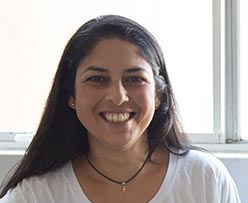
SHALANI MCCRAY – LIVE ALIVE
“I don’t have any magic to give you — I am here to lead you back to a place where you can remember your own.”Shalani McCray inspires others
to make daily joy a priority. She is on a mission to simplify wellness, helping others discover and live THEIR unique glorious life by addressing the mind, body and spirit — this is to Live Alive!
Her qualifications in early childhood education, nursing, naturopathic nutrition, herbal medicine, and supportive therapies, complemented by her ministry in interspirituality and end of life guidance, inform her work in both clinical practice and educational offerings.
Please provide your social media handles.:
Connect with Shalani on the following platforms;
Instagram— @livealivehq
Facebook — @fromblahtoBOOM
Website — https://www.livealive.com.au/
***
More about this month’s sponsors:
Thank you to this month’s sponsors for partnering with our show and helping you make your swaps with their special offer:

Ausclimate’s highly recommended range of WINIX Air Purifiers is the ideal solution for cleaner, healthier indoor air. Easy to use, reactive features and settings with a truly comprehensive 4-5 stages of purification, including Hospital Grade True HEPA Filtration and Winix’s unique PlasmaWave® technology. Perfect for smoke, dust, pets, viruses, bacteria, household odours, and allergies (covering a variety of allergens). Breathe easier, sleep better, and feel better. Winix; is the most complete air purifier on the market!

Offer: Ausclimate is now giving all Low Tox Life followers an EXTRA 10% OFF their already discounted prices. Simply enter the discount code of LOWTOXLIFE on check out via: https://www.ausclimate.com.au/
This discount can also be redeemed for over-the-phone orders verbally.
Website: www.ausclimate.com.au
Facebook: www.facebook.com/Ausclimate
Instagram: www.instagram.com/ausclimate

If you’re looking for high-quality skin formulations to address skin challenges or stress and nothing’s worked yet – put this on top of your shopping list, with 100’s saying “Finally something has worked!”.
Enjoy the help in making the skin product swaps with this month’s generous offer from Biofirst, Alexx! Anyone tried the products yet? I love using the Ultra sensitive skin rescue lotion towards the end of my luteal phase as my day/night moisturiser, and I’ve given both that one and Manuka skin saver to people as gifts with Eczema or Dermatitis skin challenges. The little self heal salve tube is a very effective first-aider too
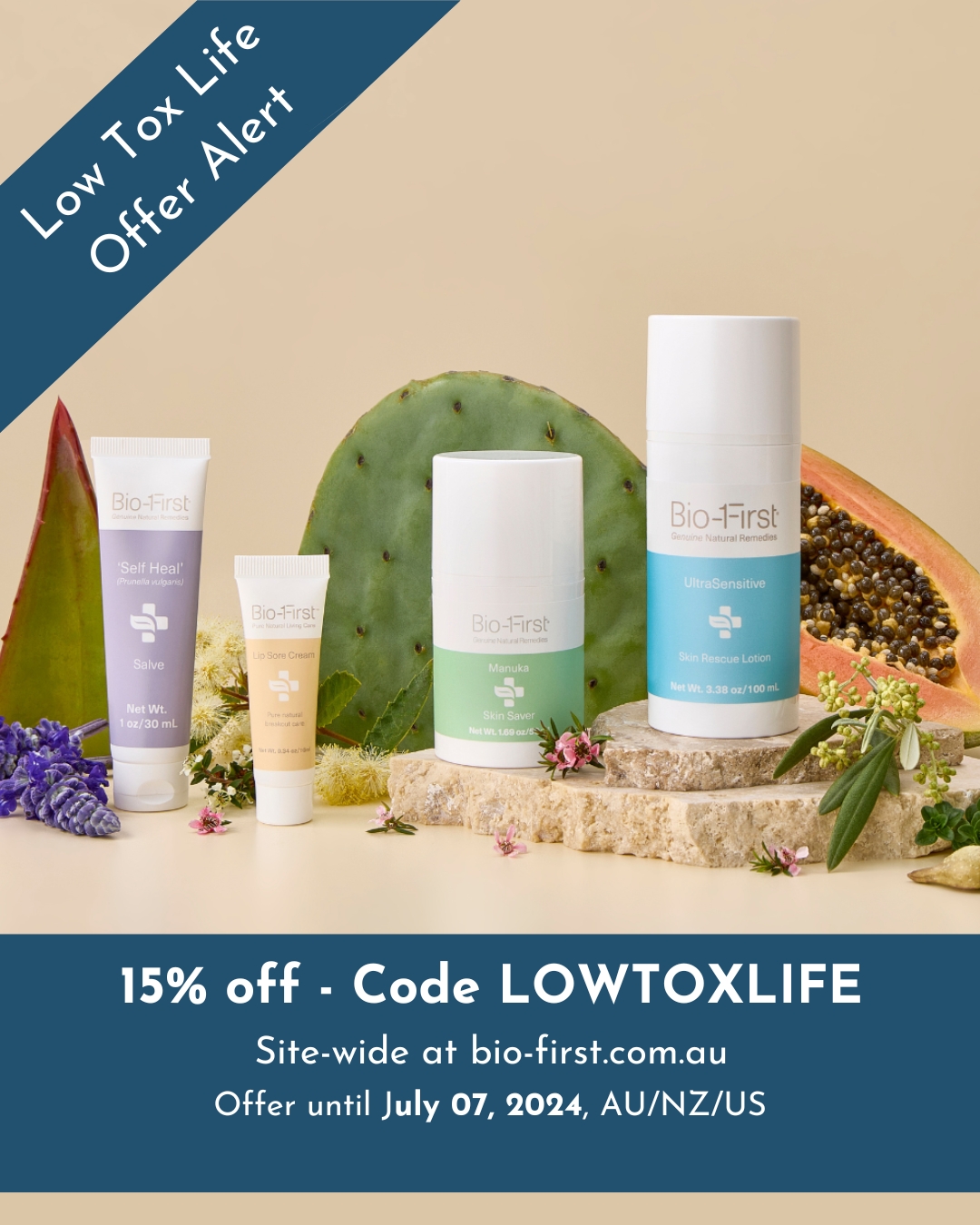
Enjoy 15% off site-wide with your code LOWTOXLIFE and if you have any questions, feel free to ask in the comments via our Facebook or Instagram.
🔗 https://bit.ly/3ydRS8T
Facebook: BioFirstOfficial
Instagram: @biofirstofficial
***
Title show track, by LIOR.
Love the podcast music? You will hear excerpts from Lior’s track “Caught Up” – go check it out on iTunes or Spotify if you want to hear the whole song or album, Scattered Reflections. Co-written with Cameron Deyell, it’s a great song and I love the reflective energy of it – perfect for the show, right? Enjoy. Lior is always touring, so do check out his website. It is wonderful to hear him sing live, trust me.
Low Tox Club – The place to bring your low tox life to life.
Want to join a community of like minds and enjoy all the perks of being in the Low Tox Life inner circle such as an online membership platform, 50% off all our Low Tox courses, an awesome chat group, my monthly Q&A, and special guest star interviews for just $49AUD ($29USD/28EUR/23pounds) per YEAR? We have created a special place and set of resources to help you achieve your goals and it’s a wonderful place to be – MORE DETAILS AND REGISTRATION HERE.
***
If you would love reading like me or you just simply want to go through the full transcript, you can check below.
[Alexx Stuart] (0:00 – 8:31)For your immune system to work, the whole of you needs to be well. And today we explore whole being health with the wonderful Shalani McRae. Hello and welcome to the LOTOX Live podcast.
I’m Alexx Stuart, your host, founder of the LOTOX movement. And it is an absolute pleasure to have you tune in today. There is no way, in fact, I’ll say it a different way, a positive way.
There is a hundred percent chance you will feel nourished and inspired by today’s conversation. Shalani McRae is a unique practitioner in the sense that she is a naturopathic nutritionist practitioner, a herbalist. She is EFT, MAPS, GAPS certified, and she is an ordained interfaith minister and a funeral planner.
It is a unique set of qualifications that she brings and that she has kept on adding to her decades long practice of helping humans be not only mentally and physically well, but also spiritually fit and to find peace and trust in their lives. And she’s a dear friend. We actually met helping a mutual friend before we knew each other, Kitza Yianniotis, who was running a stall at a conference and we both put our hands to help out and we hit it off and have been friends ever since.
That was, I think, 12, 13 years ago. And it has been such a joy to have these lifelong friends in the wellbeing space because we’ve seen so many fads come and go and so many, so much fear and stress around doing health better. We’ve felt it ourselves.
We’ve tried it ourselves. And to come out the other end with a sense of peace and calm and be able to support others to really focus on what matters foundationally, as well as some of the granular stuff that we need to deep dive into when the poop hits the fan, or when there’s just a problem to solve where an extra stone needs to be turned to see what’s under there. Today’s all about the bird’s eye view, the really massive, important levers that we, fantastic news is, have a huge amount of control over in our day to day lives.
So I’m really looking forward to hooking into that chat in a minute, a special word to our podcast sponsors, BioFirst, 15% off site wide. If you have skin challenges of any kind, psoriasis, dermatitis, eczema, hivy skin, angry skin, perhaps you’re recovering from radiology treatment, or you just want a couple of really fantastic products in the SOS department. I’m thinking uniquely there of their Self Heal Salve, which is just a brilliant product to have.
I’d say, especially if you’re a parent of young kids or you’re clumsy, in your handbag, that’s where that one belongs. But I use the Ultra Sensitive Skin Rescue Lotion and the Manuka Skin Saver. We use it on everything from saving Seb’s skin when he’s been on a Duke of Ed or school camp, five day hike or something like that.
The boys have been camping, they take the products camping. I love using it because I tend towards high histamine in the later part of my cycle. So those calming, nourishing, healing types of products like those two creams are just beautiful.
And then of course, I’ve given it to friends who’ve got kids with eczema and they’ve noticed a real difference as well. But what I love about BioFirst especially is the founder, Dr. Jude Lennert, who we had do a masterclass in our Low Tox Club membership recently, where we didn’t actually mention BioFirst products once in the entire thing, because Jude foundationally brings this kind of like what we’re talking about with Shalani today, which is why I love that these two things have happened in quick succession for our community, is this incredible way of looking at what is causing the stress and distress and lack of hope around our health, whether that’s skin or another part of our lives, and how to move into belief and relief as your thinking and your actions and working from belief towards relief and breaking those skin stress cycles or life stress cycles that Jude so eloquently talks about. If you aren’t a club member yet, please do come and join us.
It’s $4 a month if you average it out over the year, that’s less than a takeaway coffee. It’s like half the price of a takeaway juice per month. And you get these gorgeous masterclasses where you’re able to ask either show guests who we deep dive further with.
I’m certainly going to be hitting Shalani up for a masterclass after this chat that we’ve had so that members can tap into her incredible brain and experience a little more. And a bunch of other benefits, 50% off all courses, some really beautiful member offers that brands give for everyone who’s maybe newer to things and making low-tox swaps or wanting to stock up on faves. It’s awesome.
So low-tox club, it’s always in the show notes, lowtoxlife.com forward slash podcast. But if you go to lowtoxlife.com hit the explore tab, join the club is the very first option there in the dropdown menu. And I guarantee you it’s the loveliest chat group, support group community I’ve ever had the pleasure of being a part of let alone running that I’ve seen online in the health space.
Everyone’s so beautiful and you don’t just get my advice with the Q and A’s that we do. And with me jumping in every now and then a few times a week, answering questions, but you get hundreds of other people’s experiences and shortcuts and no don’t do that. This is the product that was much, much better.
Or this is the practitioner that’s really helped us. Or these are the things that we’ve used, or this is how I’ve done this. It’s just an incredible collective.
So I’m inviting you there. And of course, I’m inviting you to make the most of listening to Jude’s masterclass that is now in the recent masterclasses dashboard area of the club. Because it truly was a magical hour of looking at health from a more bird’s eye perspective, just as we’ll be doing today.
So if you need products for your skin, 15% off lowtoxlife is your code. And of course, if you need dehumidifiers, Winix air purifiers, or their brilliant new energy saving heating range, Ozclimate gives us 10% off all year round, even on top of things they might have on sale. So you can really save if you keep an eye out and your code for that is also lowtoxlife.
Now let’s just settle in for this beautiful, soothing exploration of how to feel well and build a healthy system, which in turn provides you with a healthy immune system. And towards the end, she graciously gives us a few specifics on things that can really work to support you in your immune health arsenal. Enjoy. Shalani, hello.
[Shalani McCray] (8:31 – 8:37)Hi, Alexx. Nice to see you in person on a regular basis. [Alexx Stuart] (8:37 – 9:43)
I know. So lucky to have our regular catch ups. And you are someone I still remember, it was probably about 12 years ago, we were both helping out at the gorgeous Kitsa’s emporium, you know, when she used to make those beautiful macaroons and do the gaps, practitioner trainings and things.
And we were both helping her out that weekend at a conference. Feels like a whole other lifetime. It does.
And I remember very distinctly when then you tried 12 years ago to talk to regular people about any of the things that we were interested at that time, we were genuine crackpots. And I just want to take a moment to celebrate how far the movement towards a more holistic approach to health has come. And it’s hard for people to see the positives if you’re just coming in now.
But we are testaments to the way and a lot more people care than they used to. Right.
[Shalani McCray] (9:44 – 10:50)And it’s an interesting thing, too, because you can it can be also overwhelming and when it’s new to you and and all of that. But it is yeah, it’s it’s staying staying the ground or whatever to to make it become and I think you talk about this a fair bit that it becomes your new normal. But yeah, we have come such a long way.
I mean, yeah, sometimes so I think like I don’t know how much people know about me, but I was around and then I had to step back for a while for life circumstances and coming back in now. And I think we tend to be in our own little not bubbles, but, you know, we are the sum total of the people around us and the conversations that we have and all of that. And it’s been quite surprising to me, I guess, coming back into it, talking to people now, reading what people are saying on social media, which is a lot sort of prevalent, more prevalent now than when we started out and realizing how many people are still only just realizing now.
[Alexx Stuart] (10:51 – 11:53)There’s still a long way to go, which is exciting. Like I mean, you know, I want to show up for the work. So I think it needs more of us who have the breadth of years and experience of saying contextually what is actually genuinely healthy for people versus what grabs people’s attention in a 30 second social media post.
My son actually said, Mom, you have to do something much more grabby at the start because the average watch time for reels is only eight seconds. And I was like, oh, God. And then I had this moment where I was like equal parts horrified that I might have to pander to some sort of, you know, such a formulaic approach to sharing information.
And at the same time, why did my son know this? As a mom, I was like, that’s not something important to know. But then is it for his generation?
So it’s a really interesting time.
[Shalani McCray] (11:53 – 13:11)On how on technology and how to utilize it and manipulate it and whatever. But on that, too, when you brought up your son, I was just about to say, too, that for us, I think another really important thing is that it can feel overwhelming, especially for those with young children. However, what I’m seeing now as a newly minted grandmother is and having been doing this for a good 20 or so years is that or being in this mindset or space is the little things that come up in your children that you wonder, is it all worth it?
And little things that come up with them that make you go, yep, it’s all worth it. Like little things that they say as adults now and the way they’re raising their children and things like that. Not perfect.
And there’s a lot like, you know, not to horrify me, but I wouldn’t make that choice or whatever. But on the whole, it’s been a gift for that generation and now the next generation with my grandchildren and whatever. So it is it’s important, important what we’ve done.
And as you say, celebrating it is really important because it’s for the generations ahead.
[Alexx Stuart] (13:11 – 14:09)Yeah, 100 percent. I had exactly that kind of a little moment this morning when Seb said, mom, I need a bit of extra protein for breakfast this morning because it’s a really physical day and I’ll take a couple of pieces of fruit. I was like, oh, lovely.
What a great idea. Couldn’t have put it better myself. So, yeah, you’re right.
Those little things that you share and say do get in there. Absolutely. We’re talking about immunity today, principally, because it’s a change of season here.
We’re coming into winter, but a lot of people listening will be going into their summer. And I kind of wanted to start by asking you. Why is it when seasons are changing that we seem to be at our worst?
It’s almost like once winter has settled in or summer has settled in, it’s not as bad or certainly not if you’re not part of the elderly population. But is it is it change that actually disturbs our immune resilience?
[Shalani McCray] (14:10 – 15:16)So look for the. There was a time when it was a little bit more glaring that get into the cooler weather and and as a naturopathic practitioner, you know, I’d start in about March saying to everyone, all right, we’ve got to start fortifying ourselves and getting ourselves ready for this cold weather, what they call the flu season, which is only four seasons. It almost sets us up that we’re going to get sick.
I think basically it’s more the reason then it was happening was because, you know, we’re not outside as much. We’re more in enclosed spaces. We’re not moving as much.
We’re not connecting as much. We’re not, you know, those sorts of things. But having said all that, I don’t believe now and that’s what we’re noticing clinically, both in medicine and traditional, is that delineation, I guess, from season to season of illness is is really blurred.
[Alexx Stuart] (15:16 – 15:25)Wow. And so you think one of the attributable factors is the more indoor life. Potentially. [Shalani McCray] (15:26 – 16:40)
Potentially. But we can’t say scientifically. No, I think that it’s more our overall constitutions.
Interesting. That now we’re seeing like, I mean, we’ve been through summer where there’s so obviously we’re talking about Australia at the moment, but this is translates to other countries as well, is that we were having outbreaks of different things throughout summer. And so and that’s been increasing.
So it’s not only what we’ve been through since 2020 is definitely a big contributor because everyone took a hit in a big way. And when I say hit, I mean, it’s it’s the whole weakening of the organism. So one of the things like I’m really clear about, yes, we’re talking about immunity here, but I don’t any longer separate the immune system or the gastrointestinal or whatever, because we are one organism.
And I think that that is one of the things that has really buckled modern medicine is how they’ve reduced it like that real reductionist into there’s someone you go to just for your hand.
[Alexx Stuart] (16:40 – 16:42)Yeah. Different compartments. [Shalani McCray] (16:42 – 18:38)
Oh, yeah. And and now with traditional medicine, you know, we are going that. Well, it has gone that way, too.
Oh, this is my niche and this is my specialty. I’m not I’m not criticizing it at all. It has its benefits.
But I think we then still go into that whole focus of the one area and forgetting that we’re the the whole organism and so many things that affect that whole organism and that there’s that domino effect to the whatever you do to one part of it is going to have an effect on the rest. Not one part of our body is it’s exist in isolation or functions in isolation. So.
Yet so. To go back to the seasons and whatever. Yes, we with the change in season and cooler weather and and all of that, the whole organism is affected by things like being indoors, being in closer proximity, probably being, you know, a spirit is weakened quite a lot for people who love cold weather, that your your whole spirit is weakened and and all of that.
And if we don’t, we tend to not live with the flow of that. We don’t, you know, live into this this this cycle and the season and doing things like more no longer do like even with things like the food we eat and whatever, you know, we will still be looking for the food that is not in season to eat. But because I don’t know, we got used to always having our smoothie or whatever it is, and we have to do that every day.
It’s just things like that. So not not living inside in in season, but also the fact that we overall generally, I believe, weaker as as individuals.
[Alexx Stuart] (18:38 – 19:05)And you mentioned covid and how everyone’s system took a hit. Is that primarily because we lost our socialization and biodiversity in that sense of like coming into contact with lots of different people? You know, obviously a ton more blue light because a lot more people were inside for a lot longer than they normally would be.
Are there any other bits that we need to think, oh, I’ve got to consciously make sure I bring that back?
[Shalani McCray] (19:05 – 21:27)My biggest word is connection. It’s connection to ourselves, to each other, and most importantly, to nature. Nature being the sun, as you said, the blue light that that to me has is probably the the primary area I’m focusing on and seeing the hugest results for really the the minimal, the biggest bang for the minimal buck really of time, effort, money, whatever.
Cheap healthcare. Yeah. Yeah.
Yeah. Well, it costs nothing. And as I mentioned when we were talking before, like first thing I’m out at looking at the sun, the sunrise, I’ve been in the water or whatever.
They’re all things that like my day has to start with. And within the people I’m working with now, within days we notice a difference. But yes, the isolation thing of of our with each other is really important.
But also with with the environment, with with pathogens, with, you know, all the things that we’re meant to be fearful of are all really natural in helping to fortify our bodies and strengthen them. And and the fear of illness, to be honest, because illness is it’s like a cleansing process. It’s, you know, regardless of whether it’s a gastro gastro type thing or a flu, a respiratory type thing.
It’s all like a cleansing and detoxifying, which our bodies do so beautifully naturally. But there’s so much fear around it and so much suppression of those natural processes. So I think if we can get our heads around that, too, it’s really, really helpful.
But it’s hard because we’re on a really fast time now and a really demanding time now. Both parents were like we were children concerned by parents working, having to pay daycare fees and all those sorts of things that we we’re not taking the time really to allow our bodies to do what they need to do to strengthen. And as a result, they’re weakening more and more and more.
So have you heard of I’m going to keep going.
[Alexx Stuart] (21:27 – 21:29)Yeah, you go for it. [Shalani McCray] (21:29 – 21:33)
Have you heard of the pottinger’s cat? [Alexx Stuart] (21:33 – 21:34)
Yes. Yes. [Shalani McCray] (21:35 – 22:54)
Generations just got weak. I really feel that that’s the trajectory we’ve been on. And it’s not all is not lost because as down to those who don’t know, basically, it was he was a dentist pottinger and he had these cats and he actually wanted to prove that raw meat or something, I think was the best thing for them.
But anyway, he fed them an unnatural diet and each generation got weaker and weaker. And when he fed them, went back to with this really weak general and the generations got weaker, meaning that the female cats couldn’t carry pregnancies or that the pregnancies that they did carry, the babies, the kittens, whatever, had issues and whatever. But when he changed those, that generation that had all the issues, changed their diet and their circumstances and whatever, they gradually with generations improved their health.
So so all is not lost, like as in we can do something about it. And this goes back to what we talked about at the very beginning of sharing this information and and whatever. But it is it is I’ll admit it is simple, but not easy.
[Alexx Stuart] (22:55 – 23:56)Well, yeah, we’re literally going against the status quo, trying to do the right thing. So and I think Renee Brown is the researcher who shared that that’s the single hardest thing for a human to do is a different thing to all the people around you. Which I think is why we all end up then finding each other in different ways, right?
Because you know what you need. And then so you go and find other people who want that, too, because much easier to say, do you want to catch up for a sunrise walk with a girlfriend who sees things a similar way than the one who’s always trying to invite you out for cocktails? So nothing wrong with my friends who love cocktails.
Nothing wrong with that on occasion. But it’s about that kind of it’s the 80, 20. I really do believe there’s a lot to be said for 80, 20.
And it’s why I say we do what we do most of the time so we can go with the flow and just not care so much.
[Shalani McCray] (23:56 – 24:08)I agree with I think that as we’ve got more exhausted, basically, that 80, 20, it can be easy to keep going. This is my 20. This is my 20.
Yeah, you’ve got to be careful.
[Alexx Stuart] (24:08 – 24:10)I 100% agree. [Shalani McCray] (24:10 – 24:18)
And I hear it in the conversations in consultations or just in in some of the groups and things like that, that everything is suddenly becoming the 20s. [Alexx Stuart] (24:18 – 24:21)
The 20s, the 80s, we can’t have that. [Shalani McCray] (24:21 – 26:05)
Yeah. And again, this is criticism. It’s just it is just the way it is, you know, so understandable when there’s so much coming at us.
And most importantly, when we’ve lost the connection of all of those things that are important with ourselves, with each other, with with nature and whatever, it’s just exhausting. And overall, it really is. And, you know, I don’t have any answers, to be honest, of what to do about it, because I think it’s very individual.
One of the biggest learnings I had by stepping away and coming back in was part of me stepping away, too, was I was managing a neuro clinic for neuro people with neurodegenerative diseases. So your Parkinson’s, your MS, your MND, things like that. And so I was working full time and traveling because we’re living your way at the time.
And we are now. So that was peak hour traffic and all of that and trying to maintain all the values that I had been telling everyone about, you know, the diet and with relaxation and, you know, all of those sorts of things became a whole lot harder when I was spending three hours in peak hour traffic a day. And I only had my husband and myself to look after.
And I think to myself, how do women with little children who are working full time, they’re in daycare, they’re in school, they’ve got the activities, they’ve got sport, they’ve got whatever. How are they doing this? And it just was a real wake up call to me about it was really easy for me to go and tell everyone, this is what you need to do.
But how? There’s 24 hours in a day. And oh, and make sure you get your sleep.
Make sure you get good quality sleep, you know.
[Alexx Stuart] (26:06 – 26:13)Well, I do think with the sleep, we have the hard truth factor of looking at your average daily screen time. [Shalani McCray] (26:13 – 26:14)
Yeah. [Alexx Stuart] (26:14 – 26:51)
And just saying, oh, OK. So I keep saying I don’t have time. I don’t have time.
I don’t have time. I don’t have time. But turns out I’m spending 20 of my life’s years on average per human on a smartphone.
And look, I work on a smartphone a lot of my workday. So I’m right there with you guys. But when it comes to the sleep piece, I think the smartphone will tell us, actually, I could go to bed a little bit earlier.
And that’s like just a nice little easy win that we can all have right now.
[Shalani McCray] (26:51 – 27:11)Agree. Agree. And all the people who are saying, oh, oh, no, but I’m not tired.
And I’m not really. It’s all habit. It’s all you just take yourself to bed at the time.
And but again, I don’t want to I realize that people have lots of different challenges and things like that. But but and you also by getting a bit earlier, decreasing the amount of the blue light, the blue light.
[Alexx Stuart] (27:11 – 29:10)Exactly. It’s huge. And Seb’s pediatrician, we had our annual review this morning.
Layla, you know her well. And it was a fascinating I have to bring this up because I know you’ll love this, too. And Seb was like, oh, yeah, that’s right.
It was brilliant. It was a great team moment, but really collaborative approach because Layla always puts it in. You know, she’s had boys herself growing up, so has a beautiful way of putting things for teens to get it.
And it was around the fact that he has to be woken up for school days. But bounds out of bed at 630 in the morning to watch his Asian cooking YouTube that he adores, which I mean, I’m not complaining because the food he’s making at home is delicious from the time he’s spending doing that. But also PlayStation.
And he’s not a huge gamer, but he will spend those early hours of the weekend morning when we’re not doing stuff, doing that. And she said, so don’t you find it interesting that you’re bounding out of bed on a Saturday, Sunday earlier than when you have to be dragged out of bed on the weekdays? And it’s because you get to do something completely gratifying and dopamine chasing.
So we’ve put in place off the back of that appointment, a no tech until nine a.m. She said, you will not believe how many teens who are dopamine chases by nature, whether it’s ADHD or whatever label or not. They just miraculously start sleeping in and getting the sleep they need because it’s not that there’s nothing to wake up for, but it’s just that there isn’t the thing that they’re hyper motivated to wake up for. And I thought that was such I mean, that was worth the appointment in itself to really flesh that out.
You would be saying these sorts of examples all the time.
[Shalani McCray] (29:10 – 29:52)I would. And to be honest, you know, again, there’s a bit of a quandary involved as well, because I when I first started looking more at the light thing and the sunlight and the importance of that first thing in the morning, it was really interesting because I am I’m naturally an early riser, always have been. And at this time of year, the sun is rising later.
It was one of the quantities for me as similarly as you were referring to was now what do I do? Because the first light I see, I want to be the sun, except I’m up at I can be up anywhere from like four thirty five. Oh, wow.
[Alexx Stuart] (29:52 – 29:53)Yeah. [Shalani McCray] (29:53 – 30:06)
And it’s like now what do I do? Because light or anything that I do, I pick up my phone because that’s the wrong type of light. And I’m not really. [Alexx Stuart] (30:06 – 30:11)
So you have a rule that you do not look at any kind of light until you’ve seen the sun. [Shalani McCray] (30:12 – 30:30)
Well, the only way it can change and that’s not to look at my phone, that’s because I’m going to get up and maybe make a cup of tea or whatever is I have my my blue light, you know, and so I walk around with that torch and it’s my bedside. [Alexx Stuart] (30:30 – 30:32)
Oh, the reading light. Yeah, that’s fantastic. [Shalani McCray] (30:33 – 30:51)
And I put that if I need it a bit brighter, it goes on an amber or whatever. And that’s but but yeah, finally, what can I do? And so I’m I’m crocheting.
But I’ve got a lot of light.
[Alexx Stuart] (30:51 – 30:51)Yeah. [Shalani McCray] (30:53 – 31:13)
Yeah. Things like that or not do some stretching or or finding things. But it was really it was really baffling to me that it was I can do some work and they can’t because you’re not turning your laptop on and not putting my blue glock like like glasses on so that I can do that because that’s to me it’s defeating a purpose. [Alexx Stuart] (31:13 – 31:29)
It is. But what’s super interesting to me about all the things you just listed that you could fill that time with is they all fill up your cup. They’re all quite mindful activities, really nourishing for the nervous system.
And what an amazing way to start the day.
[Shalani McCray] (31:30 – 34:18)Absolutely. And I’m telling you, it’s it’s like it has been truly life changing and especially I’ll just dip into this quickly. One of my life circumstances is my husband recently passed away.
And so I’m I’m sort of traversing this whole new season of life on my own, metaphorically speaking, and and grief. And I’ve been super conscious. He was sick for a good period of time before that.
And so life for the last few years has been super chaotic. And the whole time I had to be I know that what I did have to be and I chose to be so conscious of my nervous system because to me that underpins all out. But it’s the founder really.
And and I know it to be true due to his illness as well. It was just glaringly clear how much that had to do with his illness. And so for me to to I don’t know, I’ve just been that my life mantra has always been I’m always looked after life works.
And if I that again, I’m always life works, life works, as it works in my favor, always, not in the way I might want or planned, but always much better than my silly little silly, but my tiny little human brain could imagine, you know, I’m just such a big connector to something bigger than ourselves that you can call whatever you want to call that just has my back and will guide me if I allow that without trying to hang on for dear life and control the direction that I my little self thinks is the right way. And that nervous system thing is so much about being in flow of and and sort of releasing the reins. So yeah, so I’m grateful for and I think it’s really helped me dealing with the grief, which is just like a daily thing.
You know, there’s there’s tears every day. Sometimes I just feel my eyes and sometimes ugly crying. As I told you earlier, yoga class yesterday where I realized from we did partner yoga and being touched that I hadn’t been touched in a non transactional way for years due to his illness.
And I’m not talking sexually or whatever, either just. So, yeah, so that nervous system thing is huge, and I’m so grateful for the fact that I didn’t sort of was understanding about the light and things and started making these choices again, because I’m always looked after. Life works for me.
So, you know, and for everyone, for everyone.
[Alexx Stuart] (34:19 – 34:24)But it’s such a good mantra, Shalani. I’m totally borrowing it. [Shalani McCray] (34:24 – 34:32)
It’s on my website. It’s beautiful. Sue Ho, who does great.
So I call her the she’s an old.
[Alexx Stuart] (34:32 – 34:34)She did the girl like Tom’s course years and years ago. [Shalani McCray] (34:34 – 34:43)
I love you. And I think once we can have that trust, life is not meant to be. Anyway, we’ve gone completely off track. [Alexx Stuart] (34:44 – 34:47)
As if we were ever going to stick to that topic. [Shalani McCray] (34:47 – 35:04)
Not really, because I think all of this is so important for our joy and our contentment. And this is what makes our whole organism, our whole body work really well is, you know, the chemicals that are being released from a conversation like this and from beliefs like this are also health supporting. [Alexx Stuart] (35:04 – 35:19)
Mm hmm. Well, it’s and we’re not off topic because if I could read out one of my questions that I had for you, it is the joy and the spirit is big for you in your life and practice. Is there only so much food and herbs can do? [Shalani McCray] (35:19 – 35:21)
Of course. Yeah. Yeah.
Yeah.
[Alexx Stuart] (35:21 – 35:23)There we go. Yeah. [Shalani McCray] (35:24 – 37:28)
So and that’s not to discount food and herbs and and whatever it’s, you know, it’s not any of this like throwing the baby out of the bathwater that, oh, that’s not everything that’s important. It’s just where I guess you put your attention and the intention you have when you so there’s a lot of needing a magic bullet or something quick or and I have to tell you that out of all the practices, modalities, whatever that I’ve taken on over the years thinking this has been this is helpful or whatever, the one with the quickest response is and I’m talking days is the sunlight one. Literally, I mean, even for me to see in my face and in my my my whole functioning within days of just looking like getting up with the sun has been and looking at it.
And there was an interview on the radio the other day, and it was about how Australians have the highest rate of allergies in the world. Yes, professor who was on said, oh, there’s these five things. And one of them was the vitamin D thing and the message that we’ve been given to stay out of the sun and use sunblock and all of that and how that has all has gone against us for our overall collective health.
And I’m like, yeah, good. And like, and I love that she didn’t say it wasn’t saying, I’ll take vitamin D supplements or whatever it was that that message has not been good for us. Then, literally, two, three hours later, that might have been morning, afternoon, another professor was talking about how the increase in cancer and how one of the worst things that’s happened that yeah, our love of the sun has been so bad for us and how important it is to our sunglasses and put the sunblock on and stay out of the sun.
And I’m just like, for a start, I’m thinking of all the people listening to hear both.
[Alexx Stuart] (37:29 – 39:38)Well, and it’s no wonder people are more confused than ever about who to follow, what to trust. Something I’ve been thinking a lot about lately, and I would love your thoughts on this is food. And I’ve started following some nutritionists from different cultures, an African-American nutritionist, an Indian Ayurvedic nutritionist, and they’re debunking of a lot of the micro trends in food.
You know, you’ve got to eat all meat because that’s the only way or you’ve got to be vegan or you’ve got to be whatever label you want to put on it. Keto is the only way you can not have mental health problems. We could go on and on.
And and I think I’ve been thinking a lot more about Indigenous groups and how further disempowering that is to them to now dishonour cultural foods that have been providing health for many, many generations. And all of a sudden, their beans and rice are terrible and evil and going to cause autoimmune conditions. And you just think, wow, we really we really do go granular against all sense sometimes.
You know, speaking with a great microbiologist who’s going to be on the show soon, talking about how the reason our diets need to get more and more narrow is because we’re less and less resilient. And, you know, we just can’t handle that. We don’t have the gut microbiome to to handle a beautiful, wide variety of plants and meats anymore, depending on which way you end up needing to go.
What are you saying with dietary needs of people? And like, I guess what I also want to ask there is there are diets that are incredibly healing. We know that GAPS has some incredible research behind it, for example, as one phase, though, right?
Like the goal is not to then have to eat a very restricted diet forever. It’s actually to heal and then rebuild.
[Shalani McCray] (39:38 – 39:43)Yeah, I didn’t realise just a while ago, a couple of months ago. [Alexx Stuart] (39:43 – 39:44)
I’ll share it in the show notes. [Shalani McCray] (39:44 – 40:38)
Yeah, I’ll link in or tag you, whatever the word is. I like, you know, the right food to eat in the right way. I mean, for a long time now, it has grated on me the fact that we all need to eat a Mediterranean diet or we all need to eat like the Okinawans or we all need.
And one of the things I’ve got numerous posts where I’ve said, you need to look at your constitution, your ancestral, your ancestry to know, to get some sort of idea of what’s going to be right for you. There is no one way. There is no one food.
There is nothing about my ancestry that is connected with the way an Okinawan would like that sort of thing. Right. So it’s not familiar for my body.
[Alexx Stuart] (40:38 – 40:47)I know I purple sweet potato and it backs me up for days. I don’t think I’m going to be going for that anytime soon. [Shalani McCray] (40:47 – 40:59)
And also, I think there’s been a little bit of the equivalent of the poetic license in recommending these diets like Mediterranean or whatever. [Alexx Stuart] (40:59 – 41:02)
Well, you can tell a compelling story. So it gets noticed. [Shalani McCray] (41:03 – 41:53)
And all of a sudden, what is traditionally a Mediterranean diet, when you ask a Mediterranean person is like, no, not really. And many years ago, I don’t know if I ever mentioned this to you. I’ve got all the footage.
This is maybe 15 years ago or something. I started doing nunas and cities and and all that who were back then in their at least 70s or if not older. Yeah.
Like to get it from what really what did you eat? How did you eat? How did you get your food?
You know, all of those sorts of things. And that they were the facts. I mean, really, you know, right down to this whole I don’t know what I think you’ll use the same line with olive oil and that you can’t use it for high fat.
And, you know, that’s the only oil that they had and a whole lot of different things like that.
[Alexx Stuart] (41:53 – 42:08)So high, high temperature, you mean? Yeah, that’s all we find. It’s all my family’s in France and maybe duck fat as well.
But ethical issues around most of that where it comes from. But yeah.
[Shalani McCray] (42:09 – 45:26)But so, yeah. So the example I use in my family is that I’ve got on my mom’s side is Dutch Sri Lankan on my dad’s side is Indian Portuguese. I personally have got the more that real robust Dutch Portuguese constitution and that sort of diet.
And I’m so grateful that that’s what I got because I get to eat all the meat, all the dairy, all the all the like. And that is what I’m like. So for me to eat a really vegetable heavy diet doesn’t sit well with me.
So not that I don’t eat them. I do because I think it’s important to be all rounded. But for me, and I think I might have told the story about when I went on one of the minister’s sabbaticals and it was, you know, for some reason retreats and things like that are always vegan or vegetarian.
And it was Tasmania. The food was extraordinary. It was delicious, but it was vegetarian, leaning more vegan.
And I remember on about day three talking to Bruce back in Sydney and saying it was back when, do you remember Macellaria? I know it’s still there. For those who don’t know, it was like a steak, like really good quality meats and whatever had just opened.
And I said to him, when you pick me up from the airport, we’re going straight to Macellaria. And he’s like, no problem, because he loves it. And when I, because I just felt, I don’t know, I just really craved it.
Got off the plane, went to Macellaria, and we’re sitting there, I can remember so clearly, my plate’s now empty, but I’ve been telling him all about five days away and whatever. And he just looked at me and he said, you’ve changed. And I said, what do you mean?
Yeah, I’ve had a great time. No, he said, while we’ve been sitting here, you’ve changed. Like, there’s something about you.
And it was, I got my, my vital force back, like it was like an end in eating the meat. That’s what I need. Now I’m going to not going to tell everyone else that’s what they need.
Just because, and but that’s, we’ve got a little bit of that now of, because it’s good for me, it must be good for everyone. Because he said that, Bruce, who’s so Anglo, and like Scottish background, said Emma Cray, also we discovered has Chinese in his, his great, great grandmother was one of the Chinese on the golf field. So our children, Jake is, we’ve got two children, gone boy, Chloe and Jake.
Jake is more like me, he’s got that robustness, he’s more that Dutch Portuguese side. And Chloe, like is like Bruce, which have have that more, a lot of that Chinese influence of their dairy is a problem for them. And they’re a little not as robust, I guess.
And that’s not to say that all Chinese aren’t, it’s just that mix of that of for them. That’s the other thing that happens that the mix makes a difference as well. You know, we’re not all just, we’re intermarrying.
And yeah, so it’s, so it’s, it’s observing how things work for you. I’m not what the latest influencer or fad or superfood, or I don’t know, nutritionist, whatever is telling you is the right way to eat. It’s wrong.
And that’s frustrating for people, because the amount of times as practitioners, we get, well, he just told me what to eat, and I’ll do it.
[Alexx Stuart] (45:26 – 46:20)Yeah, well, I know, I remember when I started the Real Food Rockstars course, which you’re one of the wonderful interviews in, I think that was 2015 or 16. And everyone was emailing me messaging me, reaching out on Facebook, saying, so where’s the protocol? Where is the diet plan?
It’s not that kind of course, I’m asking you to do that work to figure out what it is for you. Because we are just so individual. And I think there’s something you talked about connection as being your number one word and connection to self.
That hyper externalization of someone out there is going to have all of my answers. It is one of the things that holds a lot of us back from actually finding our answers much faster, because we’re not connecting to what’s going on in here.
[Shalani McCray] (46:20 – 47:53)We have everything we need inside us. I think I put that when I put our name, the name of business, Live Alive and whatever, is that we really have everything we need inside us. And it’s just uncovering that.
So I’m not one to use the word healing and that we are broken and that we’re, you know, to me, a wound heals as in a physical wound, we don’t need healing. We there’s nothing wrong with us. There’s nothing broken about us.
Even with traumas, triggers, irritations, whatever it is, it’s just we have it all there. And it’s just a matter of, of getting still and uncovering it. And that I believe is what I do.
Like people, you know, Oh, you’re a healer. You’re a no, I’m not. You are the only person who can uncover your wholeness and your perfection yourself.
But sometimes we need or it’s helpful to have someone who um, supports us in that or might guide us in that and bring us back to it when we start to lose our way or go down rabbit holes or, or whatever. Um, and I think that, yeah, we just, it’s just taking that time. And again, as I keep saying, I know that these days it just feels like my dad and I used to always say that busy thing, you know, yeah, but we, everyone has the same 24 hours.
Um, it’s, uh, you know, um, I think that we all have different tools and challenges that we have. Um, and it’s really easy. Like you said, whole thing of, well, back in my day, we did.
[Alexx Stuart] (47:53 – 48:42)Yeah. Well, you know, I, as anyone I say back in my day here, back in my day, I’m like, well, back in your day, one salary could take two kids to private school. So shush.
Um, you know, it really has changed and we have to acknowledge the challenge there of an evaporating middle-class that, you know, people don’t really talk about it, but it is a huge health impact that a good old Bernie Sanders has been rabbiting on about for about four decades warning. Um, but here we are, right. And, um, and it is having an impact.
So to be kind to ourselves and honour what we can do, it’s, it’s gotta be the start of what enough feels like so that we’re not always chastising ourselves for never doing enough. Cause I think that’s also part of it too. Right.
[Shalani McCray] (48:43 – 50:57)I was on a great, um, a mentor for, um, he’s a, uh, like for herbal medicine, um, called the other day and something he said really stuck with me is he said, uh, we were talking about adrenal herbs, uh, herbs like adrenal tonics and adaptogens and the right time to use them for, you know, cortisol, you know, people with varying degrees of cortisol depletion and whatever. And he said, he talked about the people. And to me, it seems to be almost a general thing now, not just people, but a certain subset of people who can’t function at anything less than 150%.
You know, and then we ask ourselves and I see samples of it all the time of why am I so tired? Why, you know, have you, you’re what people are wanting a supplement or whatever, because I’m so tired. I’m so flat.
I’m so well, when you’re running at 150% and there’s, there’s like a couple of, and again, I need this to be emphasised. This isn’t criticism. This is observation.
And sometimes, again, as I say, we need someone to sort of remind us, but there’s two influences for want of a better word, lovely people. And one of them I know personally, like not really well claims, um, who, um, have children and are just doing all the things. And, and what’s attractive about them is because they’re making motherhood wheel as far as I’ll talk about, Oh my God, this morning was just manic.
This one hadn’t smelt down. And so they’re very relatable, right. And, um, talk about even marriages and whatever.
However, they do all the things, right. They’re running businesses there. Um, they’ve got, you know, books out or they’ve got, you know, whatever.
And so they, they, they’re living and flying like interstate or at the drop of a hat and things like that. And I’m just, I just feel tired watching them. You’re doing what you’re doing that now.
And I’m just thinking you’re about to come on done big time. And then every now and again, there’ll be sitting in their car, doing a little chair, you know, on a story and saying, Oh my God, I know it’s so long. I’m so tired.
I’m just, you know, what’s that anyone else feeling this? And I’m sure everyone else is too.
[Alexx Stuart] (50:57 – 50:58)Yeah. Yeah. Of course. [Shalani McCray] (50:58 – 51:41)
I’m just like, Hey lady, just stop so that I don’t feel tired. Um, yeah, it is. There’s so much of that comes back to that when human beings not doing this and there’s not being, there’s lots of doing, doing, doing, and, and am I worth it if I’m not, you know, um, am I making the most of life if I’m not.
And when I think of all my memories with Bruce and with the children when they were younger and whatever, it’s always been, it hasn’t been a doing time. It’s a being time that memories of just being together and a look and a whatever that are the like the warmest memories and the ones that, um, that energised your spirit the most.
[Alexx Stuart] (51:41 – 51:41)Right. [Shalani McCray] (51:42 – 52:30)
Yeah. Yeah. Looking at me now.
He caught your eye. Um, but yeah, so yeah, there’s that. And, and again, bringing it back to you at the immune and whatever really is so important because that all giving 150%, how do you expect your body to function?
Um, like to be well on all the time and going back to the sleep and it’s not doing that rejuvenating and, um, darling little valley, my granddaughter, she’s four and last night when we were snuggled up with her, when she’s going to and she said to me, I’m not, I’m, I’m tired, but I don’t want to go to sleep. And I said, that’s all right, darling, just close your eyes and rest. Tata.
What’s the difference between rest and sleep?
[Alexx Stuart] (52:32 – 52:36)Well, she’s definitely asking all the questions. [Shalani McCray] (52:37 – 52:44)
But, um, yeah, it’s just, uh, and really to think about it, even at four, I don’t want, why, why don’t you want to sleep? [Alexx Stuart] (52:49 – 53:06)
Oh, it’s boring at four, you know, well, that comes back to the 14 year old example of bound out of bed and do things. Our kids are noticing it. They’re feeling it.
They’re not, you know, and it’s up to us to actually recognize what’s going on there.
[Shalani McCray] (53:08 – 54:09)Just really now, you know, everyone knows I’m just reveling in the grandparent thing and looking at it and just saying, um, it’s better than parenting, but you have to be a parent and being brought down to earth and, um, like of, of what’s important and the little joys and things like that, that I don’t think any of this is apparent, you know, I love parenting and I would stay at home mum because it’s all I ever wanted to do was just get married and have children didn’t care about nothing.
Um, and I felt, um, you know, my first profession was, you know, childhood education and, and whatever. And I felt I was present, but I realized now I wasn’t nearly there. There’s questions.
I want, I asked Polly, um, often about, oh, um, how, what was your experience when you, you know, when you did this as a child, because I can’t remember, you know, and, and I think it goes with parents, you know, there’s so much going on, but it is nice to, I don’t know. I wish I remembered more of it.
[Alexx Stuart] (54:09 – 54:50)Oh, I’m right there with you. We were just talking me and my 14 year old said talking yesterday about some of the cute things, the littlest cousin says, uh, how he calls the dog and, you know, other little friends. I don’t need help.
I’m three and a half and like, you know, things like that. We just, we were rattling off a whole bunch of things he said off by heart. And I said, sweetie, I, I know you were adorable and you did exactly the same kind of things.
And I just so wish I could remember what they were. Um, but we do, we’re just so involved, I think, but I’ve just discovered my computers just told me that I’m on low battery.
[Shalani McCray] (54:51 – 55:10)Oh, no problems. Yeah, exactly. It’s just so much that we don’t remember.
And as I said, I don’t know if it’s, it’s a normal thing or because you are just caught up in, in everything. But then I also think, um, do we need to be caught up in everything?
[Alexx Stuart] (55:10 – 56:56)You know, is there things that can give and, and sometimes it needs to be life threatening things, unfortunately that make us, um, yeah, I think as a parent of a kid now, I, something I recognized about three years ago, was okay. Let’s look at the schedule and how enamored are you with each of these things? Are you busting to get out the door for the drum lesson?
Uh, if you had to choose between the drum lesson and the singing lesson, is that an easy choice? Can you tell me straight away, which one you really want to show up for singing? Okay.
So how much do we like the drums? Oh, that’s fun. And then I was like, okay, it’s gone.
If it ain’t a heck yes, it’s a heck no. And I think even just removing a couple of hours from your kid’s week also removes that from your week. We don’t, you know, don’t often remember and just creating space, space and making sure we’re equal parts.
Something I noticed, we were doing a lot of functional have-tos on the weekend and not joyful connecting. So bringing back in barbecues with friends and, you know, part of that story for us was the, the nomadic crazy situation we got ourselves into over the mold years, um, through COVID. But, um, to really remember to bring those things in and back and front and center, because they’re the things that you’re going to remember.
You’re not going to remember rushing to, uh, appointments and Saturday sports, but you are going to remember those super fun all afternoon, um, catch ups with friends where you all went for a walk in the park at sundown. Like that’s the stuff you remember.
[Shalani McCray] (56:57 – 1:00:04)Yeah. And it’s even just wondering in like, um, I’m in a little unit, I’ve got a little balcony, but my garden in my, on my balcony is just my joy. And that’s, um, so that even if I can’t get out for my walk, sunrise walk in the morning, I will sit on the balcony because just getting that energy, the first light and whatever is really helpful.
Um, but I always have, um, uh, an excuse to touch nature in my, so even it’s pulling weeds, I’ll never pull all the weeds in one go so that there’s every day I can be touching, um, and smelling and whatever. And that’s what, um, it appears I’ve instilled in my grandchildren and Zali will come. She knows the names and one of her favorite things to it.
Cause my whole, what I grow is herbs and something I really, again, getting back to supposedly the topic is one of the best things you can do for yourself before anything else is getting supplements and things like that is growing your own herbs, like medicinal herbs, culinary herbs, whatever that they all double up. Um, your, you know, your mints and your, um, um, lemon balms and, and chamomiles and, uh, all of those sorts of things. And, um, I’ve got obviously from culture and whatever curry leaf and I did my favorite thing in the world.
I did my major project, you know, whatever it was in herbal medicine on curry leaf and I can’t like the amount of health benefits, let alone that beautiful smell and the taste and whatever it has. Well, Zali adores going and plucking, um, curry leaves and just eating them straight and beautiful blood cleanses and, you know, all of that. So it’s just lovely to, to be doing.
Um, and, and she’ll be like, let’s water the garden, tata. And, you know, that sort of thing. And that’s time that we’re spending together.
I’m ticking a box of making sure my gardens looked after pulling the weeds, water and whatever, and instilling things like going forward with her as well. And there, there’s lots of things that I think we, um, we don’t give enough value to of we were just in the garden. We just spent five minutes in on the balcony or whatever with the parts, but what that has given her and myself in so many ways, energetically as well is so important.
And now Ben, the beauty of, you know, she’s got a sore throat or coming down with whatever we’ve done, pick some of whatever there is and, um, put it in some water to steep and she drinks that with some honey. And I’m always talking, you know, she knows that that’s going to be helpful for her and that she had a part in all of that. So she grabbed a whole bunch.
I said to Chloe the other day, did you notice the difference in Zali the whole manner? And she just grabbed some lemon balm. And I, she, she always checks with me what she can eat.
If she’s not sure on the whole, she knows now from my garden. And I thought she was just going to pluck a leaf and she picked a whole handful and shoved it in her mouth. And her demeanor, the rest of the day, she was chilled.
[Alexx Stuart] (1:00:04 – 1:00:06)Yeah, I bet she was. [Shalani McCray] (1:00:07 – 1:00:07)
Yeah. [Alexx Stuart] (1:00:09 – 1:00:24)
That’s brilliant. Yeah. Yeah.
And maybe she knew she needed that, you know, you know, you see dogs going nuts for grass when they’ve got upset tummies. And I think that bringing that instinct back, allowing space for that instinct to develop is so powerful.
[Shalani McCray] (1:00:25 – 1:00:57)Chloe is from such a young, a really young age. None of it is odd or different or even with herbs and things, you know, it’s just been such a part of her life. Homeopathy, she’s a big responder for homeopathy.
And so that’s, that is all natural to her. She calls, so homeopathy is called balance and then her herbs are herbs. And that’s all she’s ever known, really, of anything that, of what helps her to support her.
Yeah.
[Alexx Stuart] (1:00:58 – 1:01:05)And so you mentioned homeopathy there when we’re thinking about kids coming down with different stuff. What are some of your go-tos? [Shalani McCray] (1:01:06 – 1:01:42)
Again, as I said, she’s a great responder for homeopathy and I think we’re great responders for different things. And because her brother, who’s 20 months, is more, he doesn’t seem to respond as well and it could just be what he’s had. But anyway, the go-tos, well, you’ve got your belladonna’s for fevers and your, and I’m not a homeopath, I’ll just make that clear.
And I think that with everything, with, you know, your essential oils, with your homeopath, whatever, homeopathy, whatever you really do, there’s, there’s one level where you can utilize it.
[Alexx Stuart] (1:01:42 – 1:01:46)You sort of have a little dabble and then there’s the next level of actual practitioner. [Shalani McCray] (1:01:46 – 1:02:28)
Yeah. And so, and also you have the constitutions and I’m not across all of those. All I know is that she screams pulsatilla for her constitution and, and it has from her one, though that can change.
But what else is there? Gosh, I’ve got a complete blank. Apis for the apis, for the hay fever-y type or runny nose-y type things.
But as I said, that’s, for me, that’s not my running in my lane. So I think that I’ve realized it worked for us and it’s probably not, if I’m recommending homeopathy to anyone, it’s more as in this might be something you want to look at. And these are some people that I would recommend you talk to about it.
So yeah, it’s.
[Alexx Stuart] (1:02:28 – 1:03:21)Yeah, we had, we actually had a really great podcast with Julia Edgley, who’s a homeopath. Over in France. And she did a masterclass on here is what you do around infections and this colored snot.
And like she went into such crazy detail. So I’ll link that in the show notes for anyone who, whose interest was peaked there and thought, oh, I wouldn’t mind learning a bit more about that. Cause yeah, it is fascinating.
But in terms of herbs, given you’re a herbalist, um, what are some of our go-tos that are safe with kids? Uh, cause I, and a lot of the times if you’re buying extracts, um, that are specifically marketed for kids, they’ll already naturally have the alcohol not in there. So you won’t have to worry, but is there anything that is safe for us to sort of pop in the home medicine cabinet without needing a practitioner?
[Shalani McCray] (1:03:21 – 1:05:34)Yeah, absolutely. And so I come to before anything else, I come to the herbs, the spices, um, things like that. So I love, um, obviously we’ve got the garlics and gingers.
We’ve got, um, lemon, um, with the herbs might probably number depending. So of course it depends on what the condition is. So if we’re talking respiratory type ones, I love time.
Um, so growing it, you steep it, all these herbs steep in some water, add honey. I’m not, um, I’m not, especially at times like this, um, like respiratory illnesses and things, but in general too, I’m not a, um, be scared of sugar or sweet or whatever. So the minute, um, the little ones are sick or including myself, it will be a spoonful of honey.
And I, you know, like it’s a lollipop on a spoon and you tip it over and feel it going down. Um, so Manuka or raw or jelly bush or, you know, don’t get too caught up with it because, um, they’re all going to have their, their benefits. And of course, you know, it’s about availability and budget and all of that, but, um, honey is great.
Um, lemon, I said, I think I said lemon, um, olive leaf, love olive leaf, um, for both digestive and for, um, respiratory. Um, what am I thinking of now? I’m getting a complete blank.
Uh, chamomile again, you can grow, echinacea you can grow, but also having echinacea on hand as a spray or in drop. I love, I love the little ones like drop dosing. So just putting a few drops in there, the water or whatever, um, and letting them sit.
Cause there’s one of the things we’ve really forgotten about is the energetics of herbs. So which works along that whole line of flowering essences and homeopathy and whatever. And, um, I think the energetics of things, again, we’re talking about our nervous systems and all that of that is so important.
And I think we have to revitalize all that, all of that knowledge and wisdom, um, about how it affects.
[Alexx Stuart] (1:05:34 – 1:06:27)I agree. I remember I had always traditionally been given kind of five and 10 mil doses of herbs, pure extract kind of amounts. And then I went when I was really, really sick on the mold front, but didn’t even know it was that yet.
I think. So it was a really dark, mysterious kind of time saw this very experienced, um, herbalist who was practicing out of the Demux building upstairs. She old too.
I can’t even remember her name. It was like eight years ago and mold brain. So forgive me, but she prescribed me and it was like six drops of this and three drops of that one.
And she made me do the standing balance test, holding different bottles and like that whole shebang. And, um, they were, that was actually the most powerful response I’d ever had to herbs after that appointment. So I completely agree with you.
We forget the energetics piece.
[Shalani McCray] (1:06:28 – 1:08:21)And that, that sort of reminds me when he said the standing balancing and whatever to is another, um, well, I guess it’s modality. I, uh, for a long, long time, I’ve used, um, things like, and we talked before about, you know, we have everything we need within us and to, we just have to uncover that. And so for a long time, I was using and still use, and it’s been quite powerful for me to agree from whatever tapping like the technique that’s for physical things as well.
You know, I, um, used to get a lot of hormonal migraines, um, back in the day, obviously menopause now, but I still get them in because there was a, um, there was also a stress component and I have found it to be literally, I can’t believe, you know, preach myself or whatever, teach, teach myself, um, is tapping for when I’m getting a migraine, which I probably get only about one or two max a year now. Um, and I, I never go full blown anymore.
I agree with you that we nearly always have what we need. And, and I think life again, like, like what I’m always looked after in life works, it sort of happened for me at that time. But, um, but yes, going into the what, and, and I think earlier you mentioned also with, um, diets and like gaps and different things like that too.
Um, and my views have changed a little bit on it, only for the strictness of it. And we were already so stressed and all of that, but also, um, I think it’s that whole, um, the beauty of it is the simplifying and like, even in my tagline, I’m simplifying wellness, but unfortunately simplifying, um, and just going with the basics, uh, seems to be, um, not valued as you know. Um, and, and also just yet what, what can you bring in that is at hand that is helpful as well?
Um, I don’t know.
[Alexx Stuart] (1:08:21 – 1:09:12)It’s just, no, I don’t think you don’t know. I think, you know, exactly because, uh, I hear this time and time again, I’ve come to my own conclusions on this as well. And it is, you can take every supplement, you can know every snip, you can, uh, try every protocol, but if you’re not waking with the sun and getting regular movement and connecting with people you love on a deep level, connecting with yourself in stillness and mindfulness, uh, and ditching the junk, which we can all agree is the primary.
And that could be junk light minimization could be junk food, could be junk media that just makes you scared and afraid all of the junk, uh, unless we do any of those things. I mean, you know, all the genetic snip testing in the world isn’t going to help us.
[Shalani McCray] (1:09:13 – 1:10:26)So I think you talked about, you mentioned in, um, wanting to talk about is, um, like supplements and testing and knowing I’m not that person. Well, it’s not my first go-to and I do have a reputation for that. And that’s one of the things that to me, it doesn’t make sense when you come for a consultation for the first time for me to give you supplements or, um, send you off the test when we can make lifestyle adjustments first or dietary or whatever first.
And in the majority of cases, things are resolved or improved. And then we’ve saved money, time resources. I mean, the resources used for, to make supplements to go for tests and things like that are huge that we forget about as well.
Um, and we’ve saved on all of that by making those adjustments and, or at least we know, all right, this works and it’s given us another example. And so what are those things? Well, they are those things like, well, what are we doing with sleep?
What are we doing with life? What are we doing with our diet? What are we doing for ourselves?
What are we doing with you know, all of that. And again, that’s that simple stuff, but not necessarily easy for everyone, but, um, biggest thing to know about.
[Alexx Stuart] (1:10:26 – 1:10:45)Yeah. And I think that’s the immune system lesson right there. Really?
I mean, we just didn’t call it that in all the things we were talking about. And yet they’re the things that we keep having to come back to and prioritize. However we can to strengthen the entire system.
[Shalani McCray] (1:10:46 – 1:12:00)It’s really, you mentioned it earlier, just going back to, you know, um, and we sort of went off on a tangent and not talking about what the right diet is and all of that and going back to the indigenous and, and all of the cultural stuff and, and all of that. And it’s really, um, when you say like getting confused about what is the right thing and all of that, for me, every time I’m, I’m, um, exposed to or whatever, like a new diet or a bit kind of, or whatever, I think to myself or a vegan diet or a different modality or whatever. I think to myself, what did people originally do?
What did we do when we didn’t have testing and we didn’t have supplements and we didn’t have, you know, all of these things, what was the way they were living and what was normal for them? Now there’s not one way because this is the other thing we’ve just, I’m really strong about is with paleo and all of that, right? There is no one way because traditionally what, what the environment gave the food, the environment gave you in the entire, in the Arctic was going to be very different to the Sahara.
So there is no one way. Um, and so you can’t, we can’t be saying yes, but you know, paleolithic man did this and this or ancestrally, this is the way it was because there wasn’t one way.
[Alexx Stuart] (1:12:01 – 1:12:05)Yeah. And where were they living? [Shalani McCray] (1:12:05 – 1:12:15)
Exactly. Exactly. Different light and different everything.
So again, it is that coming back to the basics and, and trying to intuit yourself.
[Alexx Stuart] (1:12:15 – 1:13:03)Yeah. It actually exhausts me that beyond ditching junk food, how much time and effort and energy is spent on trying to convince everyone to eat a certain way. Uh, and you know, I think there are different ages stages in life and we have the convenience of hacking and tweaking probably to a greater result than our ancestors, simply because we do have what we want whenever we want it.
And I get that that science is valid, but at the same time, you know, if there are certain foods that light you up and make you feel like you can just bound off the dinner table and go play games and be full of beans. Um, then that’s probably the best food for you. Unless it’s, unless it’s like super processed high sugar kind of stuff.
[Shalani McCray] (1:13:03 – 1:13:21)It’s not going to kill you, but never, ever put guilt, like whatever we food, um, or junk for that matter, if it’s a one-off or very rare, but, um, I think that science thing is really important too, because, um, it does science only works because even standardizing us and we can’t. [Alexx Stuart] (1:13:22 – 1:13:54)
No, we can’t. And certainly now with research institutions, you know, you find out there’s a Dean who eats a certain way and therefore the research can actually be skewed based on who is the Dean of the university these days or which company is funding it. And it’s, it’s not that we then completely discount it.
It’s that we put an appropriate level of weight on information that comes to light rather than going, Oh my gosh, there’s a headline and I need to change my entire life.
[Shalani McCray] (1:13:54 – 1:14:41)Yep. And the other thing on that too, is the seasons of life that we live. So that’s going to change what suits us and what doesn’t as well.
And I’m now in this season, um, and, and going along with that and thinking, well, I’m now in this season and that’s why not why, but it could be a reason why this food no longer sits well with me or this activity or whatever, no longer brings me joy or wow. Now I’ve embraced this or, you know, whatever. And it’s, and that’s like with each season taking inventory, you know, like being able to sit with yourself for a little while and go, right, well, this is where I am now.
And this is what’s going on for me now. And that’s, um, again, I talk about the luxury of it for time and whatever, but so, so important. Um, otherwise we get that whole, the body’s whispering and now it’s screaming.
[Alexx Stuart] (1:14:41 – 1:14:43)Yeah. That’s it. [Shalani McCray] (1:14:43 – 1:14:44)
It screams inconveniently. [Alexx Stuart] (1:14:45 – 1:15:17)
Very inconveniently when it screams. Oh, Shalani, it’s such a pleasure to chat with you and bring this, um, of course, uh, spiritual medical melange, uh, to the podcast. It was never going to be one way or another with the breadth of experiences you have both as, you know, into faith minister, herbalist, naturopathic, uh, uh, practitioner.
Uh, I just think, and then your life that you always bring like your wisdom. So I really appreciate you and your work. It’s such a joy to chat.
[Shalani McCray] (1:15:18 – 1:15:35)You’re very welcome. And thank you for having me on. Um, I always love our chats and I just love the, um, the trust that you give me to share with your community.
I really appreciate that. And I don’t take that lightly. It means a lot.
And I appreciate it.
[Alexx Stuart] (1:15:36 – 1:18:38)Well, my favorite thing to make is a quality recommendation and I always love recommending you. That’s for sure. So thank you.
Thank you. I hope you loved today’s show as much as I loved bringing it to you. I want to remind you that if you are someone who craves a low-tox community, that is judgment-free full of empowerment has health professionals and building health professionals that can support you as well as me in there answering questions multiple times a week.
I want to invite you to join the low-tox club for the price of less than a cup of coffee a month. You have an annual membership for $49 Australian. So it’s about $30 U S or Euro that allows you to have a member masterclass every single month with a health professional or global expert the podcast where we have them to ourselves for an hour to ask questions and deep dive further.
You have the beautiful supportive chat group. You have Q and A’s with me, me answering questions. We read books and talk about them and a whole bunch more.
You can head to lowtoxlife.com, hit the explore tab and join the club is the very first option on that list. Of course, we have over 10 evergreen courses that you can jump into any time, whether it’s navigating everyday low-tox swaps with our go low-tox signature course, whether you have kids and you’re wanting to know how to best support them with our low-tox kids course, whether you’re planning a family and looking at a healthy low-tox preconception journey, reducing inflammation, especially the chronic kind without inflammation ninja course, many, many other courses. You can again, head to lowtoxlife.com, hit the courses tab, and you’ll see all of the options, which includes a business course, my low-tox method program. A lot of people don’t know, but I was doing a lot before starting low-tox life in 2009.
And I was a business consultant across hospitality, health, retail, and cosmetics. I have been in business consulting for a very long time. So I absolutely adore helping people move into the low-tox space or develop their low-tox businesses.
So that’s a way I can support you. And then of course, there’s our wonderful social media communities at lowtoxlife on Instagram. And of course the website with over 250 gluten-free recipes, blogs, downloadable PDFs to help you navigate wanting to get rid of synthetic fragrances in your school or office.
I could go on. So head to lowtoxlife.com, see what takes your interest or fancy. And thank you so much for being a part of our podcast community.
I love, love, love reading your reviews. I appreciate every follow and subscribe. And I want to just remind you to finish off that if there’s anything you heard that you found interesting from medical or scientific perspective, it is intended as education only, please always chat to a health professional who knows you and your situation best.
I’ll see you next week. Bye.
