






About this show:
You know what’s in this week’s show on metabolic health? YOU ARE.
No one is left behind in Lara’s book “The Metabolic Reset” which just came out, nor is anyone left behind on this week’s show where we explore these and so much more:
- Sleep, circadian rhythms and individuality within that
- Struggling to achieve ‘satiety’ after meals and how food is the OPPOSITE of ‘one way for all’!
- How a deep sense of safety and relaxation are gold for metabolic function
- Not achieving the results the online guru with the protocol is talking about and feeling like you are the problem – AGAIN!
- Favourite hacks, tips and things to explore along your way after Lara’s decades of research and clinical practice.
And we also talk about culture, societal pressures and messages, evolution – like my survival superpower of seriously good fat storage skills for tough times 😂and Lara’s checkered history with sleep 😴
It’s real talk. Listen, share it. It’s important.
You will feel like you can explore, experiment and implement from the minute you finish the show. Enjoy,
Alexx Stuart
Founder of Low Tox Life and the Low Tox movement
Join me on Insta @lowtoxlife
Questions we explore in the show:
- There have been several books on metabolic health in recent years – what was your desire to bring something out on the topic that you’d not seen yet? What would you say was the defining contribution you wanted to make specifically that you maybe felt women were still missing pieces on?
- So many people, myself included, who have experienced/are experiencing metabolic challenges/dysfunction feel it’s their fault somehow—they haven’t tried hard enough, they’re guilty/ashamed… I’ve felt these things. I was that girl in the friendship group who ate the same as everyone but was a bit bigger. I love that your book starts there and starts unapologetically with the emphasis that yours is a book for women. Why is the shame/guilt “it’s my fault somehow” piece so important to addressing and moving past, on a metabolic health journey?
- Can we talk about diety culture, cause in the 90s at least we moved through things 1 celebrity protocol at a time, and at least for a few months (HA!) which was bad enough, but now we have a multitude of protocols and silver bullets and very hard-line diet groups and influencers and health professionals barking their perfect diets at us, hating on ‘other people’s recommendations’ and I feel like it lands people even more disempowered and less intuitive than ever about what to eat – can we talk about the psych AND physiological damage searching ‘out there’ for the perfect diet does, and swapping through different things all the time, often to the extremes?
- What are the absolute most basic, apply-to-almost-everyone things we know for sure, contribute to metabolic health when it comes to food? UPF obviously serves no one other than emergency relief aid but beyond that?
- This book takes us on the most comprehensive deep dive into fleshing out our metabolic health and any challenges and from where they might be stemming… I want to look at insulin resistance and metabolic inflexibility: can you explain the relationship here and then talk a little about why just testing HB1ac + insulin might not be the best markers for suggesting insulin resistance/ met.dys?
- In part 2 odf the book where we’re troubleshooting, I want to pick out a couple here “Safety” – not a word you often see in weightloss and metabolic health books, and yet, crucial – why is safety important to metabolic health? Can the nervous system/chronic stress due to stressful life itself or chronic illness contribute to why one way of eating might feel unsafe to one person but not another (ie time restricted eating or low carb)
- What does safety feel like and mean when we’re talking about eating?
- In your section on Troubleshooting: Nourishment, top of the list is to consider hydration: These days between different filter systems, electrolytes, structured water, hydrogen water, alkaline water… people get confused: What does great hydration mean for you when you’re supporting your patients?
- You mention not moving enough/building muscle… why do some people find it harder to build muscle than others? Things we can prioritise to do so, given healthy muscle mass is so great for our met health?
- I’m mindful of stearing people towards more external tools when listening ‘inwards’ is already so poor, but certain tools/tracking can help us get to know ourselves better too, right? What is a healthy approach to tracking and metrics when working to improve metabolic health?
- In Part 3, Treatment, there’s everyone one needs on liver, thyroid, food sensitivities, digestive problems and of course – a comprehensive section on female hormones and how they play into our metabolic health: What happes to metabolism at key moments/typical chapters in a modern woman’s life – puberty / birth control / peri / PCOS / pregnancy
- And I’m not up to this section yet but I had to pick it out of the contents page “We have to be realistic about bread and dessert”. Do we though?
- How do you feel about the new era of weightloss treatments such as Ozempic?
- And how should we feel about calories in/out – what’s true and what’s got to be more nuanced there?
And if we make it through all that, bravo team!
***
Thank you to this month’s show sponsors for helping you make your low tox swaps easier:
@ausclimate continues giving 10% off their Winix Air Purifiers and Dehumidifiers at ausclimate.com.au. CODE: LOWTOXLIFE at checkout https://bit.ly/ShopAusclimate
@koalaeco gives you 25% off all of July CODE: LOWTOXLIFE. It’s a delicious range of home and personal care products using no new plastic, fake fragrances, dyes, harmful preservatives or phosphates. I’m a bit obsessed with their clothes-washing liquid, stain spray and doggy wash are all on repeat order at our house! https://bit.ly/3sOmxr1
Be sure to join me on Instagram @lowtoxlife and tag me with your shares and AHAs of this week’s episode.
***
About Lara Briden:
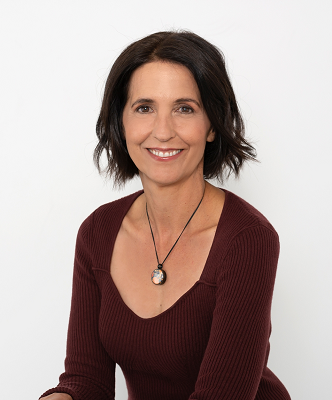
Lara Briden is a naturopathic doctor and the bestselling author of the books Period Repair Manual, Hormone Repair Manual, and The Metabolism Reset. She’s Canadian but practised in Sydney for many years. She currently has consulting rooms in Christchurch, New Zealand, where she treats women with PCOS, PMS, endometriosis, perimenopause, and many other hormone- and period-related health problems.
Connect with Lara on Instagram @larabriden
Websites: larabriden.com/
Her books are available on Amazon AU and Amazon US:
Period Repair Manual – here for Aussies and here for US peeps
Hormone Repair Manual – here for Aussies and here for US peeps
The Metabolism Reset – here for Aussies and here for US peeps
More about this month’s sponsors:
Thank you to this month’s sponsors for partnering with our show and helping you make your swaps with their special offer:

Ausclimate’s highly recommended range of WINIX Air Purifiers is the ideal solution for cleaner, healthier indoor air. Easy to use, reactive features and settings with a truly comprehensive 4-5 stages of purification, including Hospital Grade True HEPA Filtration and Winix’s unique PlasmaWave® technology. Perfect for smoke, dust, pets, viruses, bacteria, household odours, and allergies (covering a variety of allergens). Breathe easier, sleep better, and feel better. Winix; is the most complete air purifier on the market!

Offer: Ausclimate is now giving all Low Tox Life followers an EXTRA 10% OFF their already discounted prices. Simply enter the discount code of LOWTOXLIFE on check out via: https://www.ausclimate.com.au/
This discount can also be redeemed for over-the-phone orders verbally.
Website: www.ausclimate.com.au
Facebook: www.facebook.com/Ausclimate
Instagram: www.instagram.com/ausclimate

Koala Eco is a purpose-led family business founded by Jessica Bragdon and Paul Davidson. We have created a range of safe, powerful, plant-based products for a clean home, body and mind. Made locally in the USA with high concentrations of Australian essential oils, the range of natural and eco-friendly cleaning and hand & body products are certified non-toxic, vegan and allergy-safe.
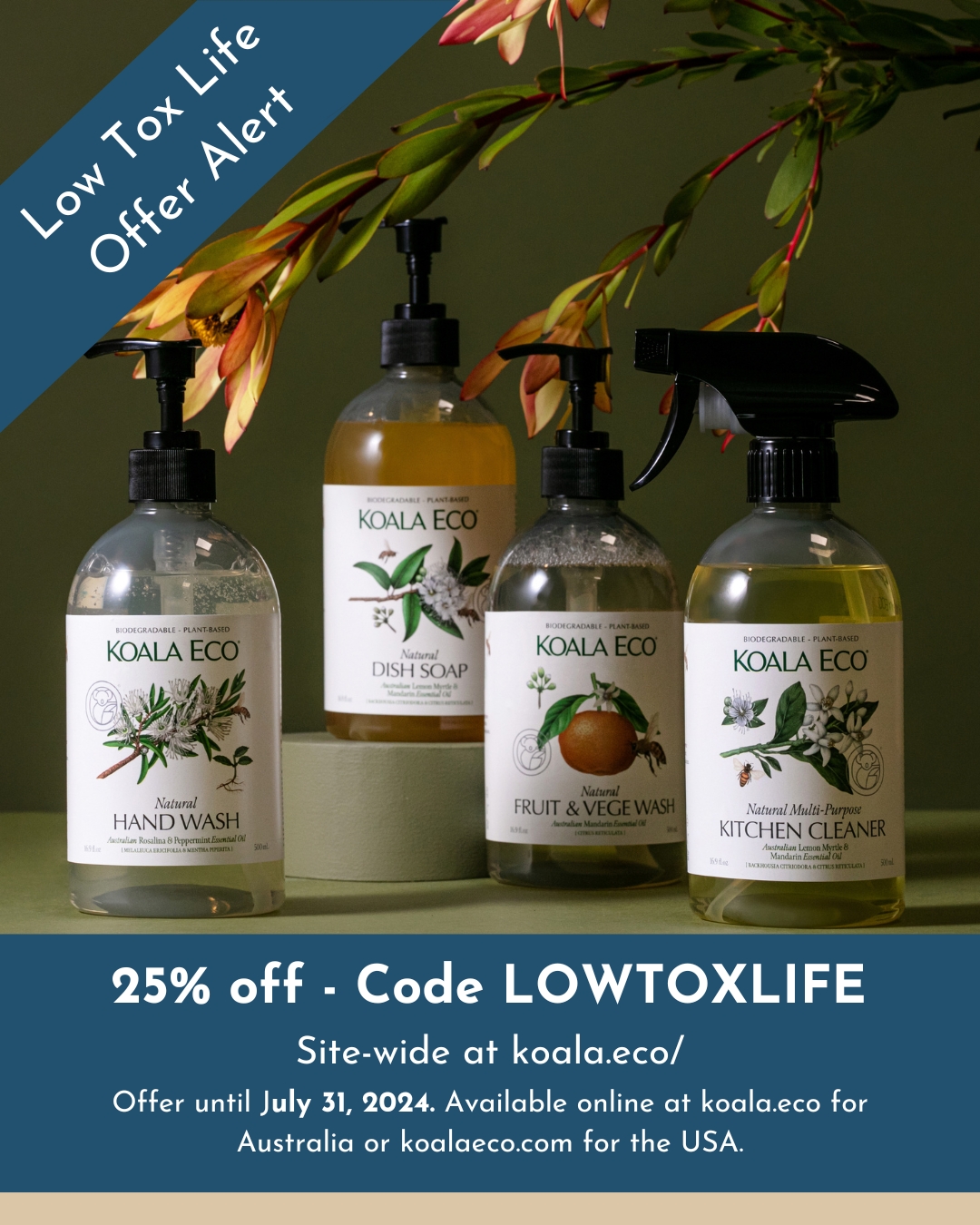
Enjoy the 25% off site-wide with your code LOWTOXLIFE and if you have any questions, feel free to ask in the comments. You can also check out their subscriptions to save even more, which you can cancel any time! Available in Australia AND the USA, a beautiful range of low tox home and personal products.
What to say about this lovely, Aussie/American brand of goodness other than we’ve had the liquid laundry wash, doggy wash and now Stain Spray too, on regular reorder for a couple of years now? Koala Eco is a purpose-led family business founded by Jessica and Paul. They’ve created a range of safe, powerful, plant-based products for a clean home, body and mind. Made locally in the USA with high concentrations of Australian essential oils, the range of natural and eco-friendly cleaning and hand & body products are certified non-toxic, vegan and allergy-safe. I love that they provide refills for products, given pumps are notioriously hard to recycle, and no virgin plastics are used in the range.
Fun fact – the laundry wash is 100 washes per bottle (tell my teen that, though, who always uses far too much!!! hehe) so it’s extremely good value. The Eucalyptus rosemary liquid is our family favourite.
Instagram: https://www.instagram.com/koalaeco
Facebook: https://www.facebook.com/koalaeco
***
Title show track, by LIOR.
Love the podcast music? You will hear excerpts from Lior’s track “Caught Up” – go check it out on iTunes or Spotify if you want to hear the whole song or album, Scattered Reflections. Co-written with Cameron Deyell, it’s a great song and I love the reflective energy of it – perfect for the show, right? Enjoy. Lior is always touring, so do check out his website. It is wonderful to hear him sing live, trust me.
Low Tox Club – The place to bring your low tox life to life.
Want to join a community of like minds and enjoy all the perks of being in the Low Tox Life inner circle such as an online membership platform, 50% off all our Low Tox courses, an awesome chat group, my monthly Q&A, and special guest star interviews for just $49AUD ($29USD/28EUR/23pounds) per YEAR? We have created a special place and set of resources to help you achieve your goals and it’s a wonderful place to be – MORE DETAILS AND REGISTRATION HERE.
***
If you would love reading like me or you just simply want to go through the full transcript, you can check below.
[Alexx Stuart] (0:00 – 9:36)It’s time to retire the willpower message and start understanding the person when it comes to metabolic health. That is today’s show. Hello, and welcome to the Lotox Life Podcast.
I am Alexx Stuart, your host, founder of the Lotox Movement, and I am so happy you are joining me today. If you’re joining me, it’s probably because you’re curious about metabolic health optimization or you have often in the past or are currently struggling with weight gain, with a sense that you’re tired and foggy and like the cells just aren’t getting the energy they need for your whole body and mind to function the way you know is possible, but you just can’t figure it out. Today’s show is so full of answers as is the new brilliant, and I’m pausing for dramatic effect here because it’s true, brilliant book by Lara Brydon called The Metabolism Reset.
It is not as it implies that there’s like a quick little protocol and you’re going to do it for 30 days. You know, publishers like to give books certain names, but as you start to work through this book, which I have done, you realize just how much of a personal discovery project metabolism resetting is. There is no stone unturned.
No one is left behind in this latest book of Lara’s as she so brilliantly did with her period repair manual and then the hormone repair manual. But today is obviously not just talking about her book. We are actually unpacking quite a few aspects of metabolic health that people sometimes just really find themselves so much at a dead end around.
You know, I joke, laugh, but kind of cry as well when I see a lot of people oversimplifying what we need to be doing. Like you got to get your eight hours sleep. And I know there are thousands and thousands of people out there saying, don’t you think I want that?
Tell me how to hack it. Like, how do I actually do it? And as Lara talks about today, it’s not just about a few little pre bedtime routine activities.
You need to consider it as a much wider project often because there are things that are setting you up to fail and of course, to succeed when it comes to sleeping well and the many other things that play into metabolic health. We talk about hunger. We talk about shame.
I share a couple of stories. We talk about protein optimization, a whole bunch of things. So it is packed with useful stuff.
And I’m going to jump into it in a sec. I can’t put this podcast on without our wonderful sponsors who are helping allotoxins make their swaps a little bit easier. And I just love hearing from you that you’ve made the most of various offers going, whether you’re a long timer who’s stocking up on something or finally kicking a goal with a new appliance or a new skincare range.
I just know that a lot of people really appreciate the offers that they provide for our community. And I want to ask for some grace from the people who don’t like ads. I know you’re out there, but like the thing is, it’s not just about the ad.
A, these products I genuinely adore. B, it’s about being able to provide this free for everybody all around the world every single week to help you with all manner of things on this show. We cover a lot.
But C, remember that first timer who’s going, oh my gosh, I’m being introduced to something I can trust by someone I can trust and I can get 20% or 15 or 10 or whatever it is off. That’s really helpful for me right now. So remember those people, folks, when we bitch about the ads, because I really think there’s a lot more to it and they can serve a beautiful purpose in a change journey.
And I’m proud to provide them and to work with the beautiful companies that I do. So this month, those are Koala Eco is back. And I just love these guys.
They’re a Sydney based American Australian business and the cleaning and home care products, and even a couple of personal care products, the doggy wash that we love in our family for our big retriever. It helps him smell way less like mud sometimes when we need that. They are giving 25% off, excluding their amazing packs that they do.
And your code is LOTOXLIFE. Now that is a really great way to try a few different things from the brand. I want to just share a couple of things that I use, the eucalyptus, is it eucalyptus rosemary?
I think that’s the combo. I hope I haven’t got that wrong. The laundry liquid is so divine.
And when the clothes are drying on the balcony and you get the little waft of that gorgeous essential oil, or when the drum is spinning in the dryer because it’s raining outside and we’ve got to use the dryer, it just fills the house with the most beautiful, subtle, natural fragrance. Koala Eco is a no virgin plastic company, which is great for people who are conscious of that, of course. And then they provide refills, which lets us use less virgin pumps, which of course are really hard to recycle.
So there’s that beautiful plastic awareness component while also delivering these beautiful, safe, non-toxic products. But then of course, no synthetic fragrances or other toxins that often make their way into cleaning products. Fun fact around cleaning products, not having to disclose ingredients, that actually dates back to a 1970s court case where a cleaning company copied another cleaning company’s ingredient lists.
And the judge ruled, get this, that because cleaning products aren’t a personal care item, they don’t need to list their ingredients. And so of course this proprietary blend idea came through. But what that also meant was that it was a real race to the bottom on cheap, toxic ingredients, not having to be disclosed.
And of course, now we know from cleaners, having all sorts of awful respiratory conditions and issues is one of the most toxic jobs to people’s lives, uh, that these products were not safe and that I’m really grateful that now good brands, good low-tox companies always share exactly what they’re using, exactly what they’re not using. And Koala Eco is of course, no exception. The list is long of what they don’t put in there and it’s only the good stuff.
So enjoy that 25% off with your code low-tox life. And of course, a reminder, our major sponsor Ozclimate continues to provide you with 10% off on top of sometimes sale prices as well, which is amazing. You really end up, you know, if you’re keeping a watch, uh, then you can get some ridiculous deals, but 10% is already an amazing help.
Dehumidifiers, air purifiers, and of course their new, uh, energy efficient heating range. I’ve had a couple of DMS about the word smart because they are smart appliances. And I just want to clear something up.
It’s only smart. If you download the app and hook it up to the appliance and they’re talking to each other. So if you don’t do that, it’s just like a regular heater that you switch on and off and you temperature gauge and you do all those sorts of things.
So please don’t worry about that aspect. If you don’t want that aspect, which of course I don’t either. I bought one of the little column heaters that come in that minty, that pale mint color or the beige.
We got the beige one because we needed a bit of, uh, uh, warmth in our bedrooms with the way the layout is. Uh, one, one oil heater turns out isn’t cutting it this winter. It’s really cold in Sydney.
And so, um, it’s so cute and it just tucks away nicely and it’s really efficient. Um, and so I, uh, of course, um, love that one because I just got it and I’m excited about my new toy and it’s really reasonable as well. They’ve got a heating sale at the moment.
If the Aussies are listening to this, so 10% off code, low-tox life. I’m trying to make all the podcast sponsorship codes, low-tox life. So you guys don’t have to remember anything other than the brand to look them up and make the most of it.
Enjoy. And now let’s talk metabolic health with Lara Brighton. Hello, Lara.
How you doing?
[Lara Briden] (9:37 – 9:40)Hi, Alexx. I’m good. Thanks for having me back. [Alexx Stuart] (9:40 – 10:16)
I am so excited to have you back. I had no idea until very, very recently that you were writing a book on metabolic health. And I want to start right there because over the last few years, I might’ve interviewed and read several books on the topic.
And I would imagine you are always seeing what’s coming out in the space as well. And you’re at the coalface with your patients. What made you want to tackle this?
And what did you feel like people weren’t getting that your book could give them that, that they hadn’t seen yet?
[Lara Briden] (10:17 – 12:06)Yeah, that’s an excellent question. Well, for me, it was about, as I say, in the introduction, it was about going deeper into women’s health. It still came from the place of my main passions are menstruation and women’s hormones and perimenopause.
But this metabolic health is such an integrated part of that. And I just, I could see that as a clinician and as a scientist, and it’s like, that’s the next best step. And I wanted to find a way to communicate that and emphasize the importance of it in a compassionate way.
I know early on, I did a lot of, I spoke to a lot of people trying to get help with this book, including a close friend who’s a clinical psychologist. And she asked me early on, she said, what is the main thing, Marlena? What is the main thing you’re trying to do?
I’m like, well, my first step with the book is to not make things worse. I really just want to make people feel better about the process, not worse. And I know from my patients and just from observing, you know, there’s so it’s so easy to kind of get set up for, oh, this time, it’s going to work, you know, this is going to be the thing.
And then it not work for whatever reason. And then people feel, of course, because we’re women, we like people blame themselves. It’s not like, yes, that’s like, well, I’m, I’m broken.
I must, you know, this, obviously this one diet has worked for everyone else and it didn’t work for me. So that just confirms how broken I am. And so I just really wanted to, as I say in the book, try to do things differently, try to not leave anyone behind basically.
It’s like, oh, you didn’t leave anyone behind. You are not going to fail at this. Like there’s no failing at getting biologically healthier.
Like that’s, that’s, there’s always, there’s always just going forward, even if it’s like one step forward, two steps back, because.
[Alexx Stuart] (12:06 – 12:51)Yeah. Well, I had a beautiful guest recently who said, and it was Juliet Starrett, who, you know, she’s part of the ready state and they did that beautiful book that was on mobility and balance, really bringing those into the cornerstone of health as we age and how it’s never too early or too late to start on these things. And she said, success.
Is actually just progress, any kind of progress, any kind of new clarity it’s success. And I think we often think because we’re not there yet, wherever this imaginary picture is, we feel unsuccessful. And like, we’re still failing instead of where having little successes.
I think it’s such a powerful reframe.
[Lara Briden] (12:52 – 13:16)Yeah, that’s good. And a big part of that success is just feeling better. Like trusting that first and foremost, like I say in the book, it’s about feeling, having more energy, feeling more satiety, which is an important concept, which is this ongoing feeling of not just feeling satisfied with meals, but it’s bigger than that.
It’s feeling like, you have enough energy between meals. You feel good. Your cells are getting the energy.
[Alexx Stuart] (13:16 – 13:20)They’re your friends. They’re on your team. [Lara Briden] (13:20 – 13:21)
Okay. [Alexx Stuart] (13:21 – 15:30)
So I love that you start the book with the, you’re not failing. It’s not, you don’t have to be ashamed anymore. I remember being a teenager and realizing like, I was probably about 14, 15 and realizing I was the slightly big, and I wasn’t even big, you know, right.
But I was the slightly bigger girl, the one who had the complex around going bikini shopping with friends at the mall. And even though I was a dancer, a tennis player, so active, but just because I was a little bigger and just because the ballet teacher said, keep sticking that butt in and keep singling me out in class. Girls often get these messages that I sometimes think actually plays into worsening metabolic health journeys because you’re just thinking about it more and you’ve been othered in some way growing up.
And I would never have considered my someone, myself as someone having an eating disorder. I was, I was still quite healthy, I guess, with my relationship with food. But if I look back, I started tuning into all the protocols that came up on the Oprah show as a teen.
And I start, you know, and I just think, at least in the nineties, we went one by one through the celebrity protocols. I think of young girls now, which is bombarded. Oh my gosh.
You go onto social media and you scroll for maybe two hours. Let’s just say you did that. You could come up against different, this is how we do optimal health or peak training or diets or protocols.
And you’ve got to join me and you’ve got to get off the meat and you’ve got to get on the plants or you’ve got to get on the meat because you’re too inflamed. Oh my gosh, Laura. Like, I think that would be way worse growing up now or being a young woman, impressionable or a midlifer who feels like they’ve tried everything and they’re jumping from protocol to protocol to try and feel just a little better in a day.
What do we do with this? It’s awful.
[Lara Briden] (15:31 – 16:07)Well, we do need to collectively just try to detach from those. It’s hard. Those decades of, I think, I mean, I think women have always been scrutinized and was looking a certain way, but I think you’re right.
I think the nineties, the eighties, nineties and since then have been particularly brutal in terms of certain expectations about bod, not just size, but like particular kind of shape. So I mean, I offer various things in the book, including the fact that it’s just a fact that we come in different shapes and sizes. I know.
[Alexx Stuart] (16:08 – 16:10)I love that you said we don’t need to solve big butts. [Lara Briden] (16:11 – 16:32)
No, don’t break your heart. You know, don’t break your heart trying to lose a big bum when a big bum is actually healthy. That’s, you know, this is the sad part of it all.
But for you, Alex, what helped, I guess, you know, with the wisdom of years and, you know, what, what helped you finally just, you know, move on from that messaging and not take it on board?
[Alexx Stuart] (16:32 – 17:52)Do you know, I think it was actually going back to grandma skills, like just those basics of cooking and nourishment away from the noise and also waking up to the ultra processed food world and really starting to recognize that there was a common enemy that a lot of people were ditching when they were starting said diet. And that was the processed crap, the sodas, the chips, the, you know, I used to look at, I remember I used to look at chocolates and things like really crappy compound kind of bars that you get a convenience store supermarket and think, oh, I shouldn’t. And I’m trying to cut down.
That would be the mind game there. But then when I actually learned about profit and loss and shareholders and CEO golden parachutes when they stuffed up, but they still got $20 million on the way out. And the injustice of the ultra processed food matrix was actually one of the things that just made me go, oh, I just want to eat real food from farmers and learn how to cook it well.
And it was just this simplification and moving away from, as you correctly put it, the noise. And I think we almost need to do that moving away from all the protocolization of even now.
[Lara Briden] (17:53 – 20:42)Yeah. There’s no one protocol. And I like your phrase, your framing of it as the common enemy.
So you’re right. Like a lot of the diets do if just to cut through some of the confusion, there is a consensus, no matter who you ask that you know, junk food or just even some of the ultra processed, what we used to think of like healthy food, but, you know, like muesli bars and like some of the processed stuff, most experts will agree that’s. And to frame it again, not, you know, not bad, not sinful, not you’re a bad person for eating it, but like that’s actively harming a lot of people and and also just knowing as we do now that the food industry has been actively predatory in terms of formulating food that is like as addictive and tasty as possible and putting it everywhere and the packaging and just this incessant and then coupling that with that there, it was a big part of their strategy to is to put it all on the individual, it’s all about individual choice. And if you just balance it with enough exercise, you’re fine.
Yeah, that’s, that’s, that’s been predatory behavior. And so as you know, in my book, I do frame it as sheltering from those foods. And we do it from a position of sheltering from them.
But obviously, you have to in the process of sheltering from those foods, you have to get what you need from all the other, you can’t be hungry. I mean, I think what I’ve observed, one of the legacies of that diet culture that we’ve been talking about is this shame and guilt shame not only about body size, but like, what I’ve observed with my patients anyway, sometimes shame about feeling hungry, like that the actual feeling that the actual, like, normal sensation, like physiological undeniable drive to eat, you know, feeling hungry, women feel ashamed of it sometimes are embarrassed that they you know, they shouldn’t have that. And so that’s one of my messages to is like, if you’re hungry, you’re gonna eat because that’s how the world works. Because we’re animals.
And that’s how biology works. So we Yeah, there’s we don’t, there’s no, absolutely no feeling ashamed of being hungry, there is maybe some troubleshooting around it. And if people are existing in a current physiological state where they’re a lot hungrier than normal, would say is very common is most one of the most common symptoms of metabolic dysfunction, rather than like, apologizing for it or fighting it or is actually try to make changes.
So that again, coming back to that, that goal of satiety so that you do, it does happen, it can happen. I’m, I’m sure, you know, known this or talked to other people about this, you can like, you can just watch your hunger sort of norm, like normalize. And just that’s such a freedom in life to just be able to like, eat a meal, be satisfied, and then just maybe not think about food again till you’re ready for your next meal.
[Alexx Stuart] (20:43 – 21:52)Yeah, that’s the goal. And I think once we recognize that that is what success actually looks like, then that’s where the troubleshooting starts to look at why we might be still feeling hungry straight after having eaten a full big plate of food. And so can we unpack that part of the book?
Because I think in the, the first section where you’re talking about testing, and quite often a doctor will just quickly whip up like, you know, maybe an HPYC, like once a year, or once every couple of years, or if you ask specifically, certainly, if you’re under 40, most people would never check it unless you were having legitimate issues. But you say that that might not provide us a comprehensive picture of like insulin resistance, and how even testing the insulin might not be enough. And you actually flesh out a bunch of markers that can give us a more comprehensive view.
And I think we need to empower ourselves to know what these are, because a lot of our doctors, wherever we are in the world, aren’t naturally doing these comprehensive panels.
[Lara Briden] (21:53 – 23:11)So true. And HbA1c absolutely cannot rule out insulin resistance. So I mean, it’s good to have a normal HbA1c.
You don’t want to be in that sort of later stage problem of actually moving into chronically elevated blood sugar, but that’s comes very late in the game. Insulin resistance for decades could have normal sugar, normal HbA1c, and an increased tendency to low blood sugar. This is the part that, so this is why interactions with my patients and followers is so important, because of course, as a clinician, I knew that one of the main symptoms of insulin resistance is to feel hungrier than normal to experience increased frequency of episodes of hypoglycemia or low blood sugar.
But because of this sort of understanding that insulin resistance is pre-diabetes and therefore high blood sugar, I had a couple of people comment on social media saying something like, well, I get low blood sugar, so therefore I must not have insulin resistance when it’s the actual opposite situation. That’s probably likely in many cases, a symptom of insulin resistance. And I know even just the term insulin resistance is quite daunting for people.
I know that from decades of trying to communicate about it, people are like, that sounds hard.
[Alexx Stuart] (23:11 – 23:14)Oh my God, am I getting diabetes? Yeah. [Lara Briden] (23:14 – 24:46)
Yeah, but it’s, it’s common. I mean, the estimates, even conservative estimates say it’s probably close to one in two adults have some degree of insulin resistance and it’s reversible. And it’s just, it’s just an important, I think a really important starting place is to understand, yeah, to what degree those, that metabolic problem is, is happening.
And yeah, as you say, there’s like lots of different signs, like common ones are high triglycerides, high cholesterol, fatty liver is a really common one. So I’m just connecting the dots for anyone out there who’s been told they have fatty liver and don’t really have a clear explanation as to why it’s probably insulin resistance, like 90% chance. That’s what’s causing it.
Although there can be other causes. And then of course, the symptoms of abnormally high hunger, high, high blood pressure would be another one, more episodes of low blood sugar. And also like weight gain specifically around the middle.
I always say it’s like right under the rib cage. It’s this kind of hard layer or like almost like bulge under the rib cage. That is that’s the kind of weight gain that is associated with insulin resistance, not the subcutaneous fat, not as I say in the book, not the bum fat, that’s something quite different.
So hopefully that starts to alert people who yeah, might have this happening. Another important thing is family history of it, of family history of heart disease or family history of diabetes is a really good clue that this might be something to think about.
[Alexx Stuart] (24:47 – 25:10)Yeah, absolutely. And I mean, a lot of midlife women get that. I mean, just I remember like sitting on the couch and going, what the and that like just popping up for the first time and thinking where on earth has this come from?
So what is the hormone interplay there that’s happening for midlife women?
[Lara Briden] (25:11 – 26:09)Yeah, well, it’s basically that the way I frame it these days is that oestrogen higher dose oestrogen like we would get with regular natural menstrual cycles gives us an edge. It gives us a bit of a superpower. It shelters younger women to some extent from insulin resistance.
It is, of course, still possible to develop insulin resistance as a younger woman, for sure. I mean, that would be more so with polycystic ovary syndrome, for example, that’s another warning sign that people might be in this territory. But then as well, as we lose first progesterone and then as we eventually drop to the lower menopausal levels of oestrogen, yeah, we do.
We’re more at risk of insulin resistance. And again, it doesn’t mean that absolutely will develop insulin resistance because it always depends on lots of other factors. But we tend to yeah, we tend to lose that protective effect.
[Alexx Stuart] (26:10 – 27:16)You use the word shelter a lot and book and and I’m hearing it now. So yeah, I actually want to touch on that because for me, it brings a feeling of safety and protection. And I know when we were talking about perimenopause, for example, in the last show, we really focused on the nervous system and you actually have it play quite a starring role in addressing metabolic health.
And and so not really talking specifically about midlife women here broadly. How is the nervous system interplaying with metabolic health and where do where do we find our best safety? Because a feeling of safety is I’m not hungry.
I don’t need to reach for something right now to survive. It is a feeling like I can sleep really well and my blood sugar can just coast on through steadily in the night and not wake me up. Like safety is actually a big part of it, right?
[Lara Briden] (27:17 – 29:24)It is. And the nervous system is a huge player. I think we’re about to see in the research kind of an uptick in exploration of that.
There was just a paper. I can put it in the show notes if you want that just came out this week about how profoundly the nervous system influences mitochondria, which are big players in metabolic health, definitely influences like what’s called set point or sort of the part in the brain basically deciding when you’ve had enough to eat, when you need to eat more, how much energy you should burn unconsciously, which is constantly being sort of dialed up and down. And there’s different parts of the nervous system, as people know. I mean, the the boss of all of this is hypothalamus, where we literally that’s where set point lives, like a part of the brain that is deciding how this should all go down.
And then there’s the autonomic nervous system. And as I say in the book a couple of times, anything that affects the autonomic nervous system affects metabolic health. So that includes the two halves, sympathetic, you know, adrenaline, hence to sort of upregulate fat burning, but can also obviously increase stress.
And then the parasympathetic part of the nervous system, which is the vagus nerve, is really important for ongoing satiety and digestion health. And yeah, all of that. So the great news about the fact that the nervous system is so influential is there’s lots of nice ways to influence that this goes back to the basic principle of the way to metabolic health is, is through health is to feel better is to coax your nervous system, including your brain, that everything’s okay, that you’re, you know, that you are okay, that you’re not in danger that you have enough to eat and not and not just enough calories, but like you have enough nutrition coming in. So that, yeah, the body is, is reassured that it doesn’t go into panic fat storing mode, which is really our fat storing mode is an old survival strategy from a couple hundred thousand years ago.
And we, yeah, evolved to be very good at that.
[Alexx Stuart] (29:25 – 29:29)I often think my body is especially good at survival. [Lara Briden] (29:30 – 29:34)
Some people are better than others. Can I ask about that? [Alexx Stuart] (29:34 – 29:47)
Because it must be that we know this, right. That some people do tend to like save it for later for one of a better phrase, better than other people in some old survival strategy. [Lara Briden] (29:47 – 30:54)
Those would be, I mean, those are going to be genes you inherited from ancestors who lived through a famine basically. And the, you know, the less metabolically, you know, I got some Scottish, some Irish. Yeah.
And the other people that, you know, weren’t able to do that just died out basically. So, I mean, with some of those, those genes have come down to us and, but there’s more than that too. There’s, I mean, there’s the genes that served us well over the previous millennia.
And then there’s some confusion that’s happening in the past century, probably 50 to 70 years, probably where a variety of things, including environmental toxins and including some very weird changes to our food supply are confusing the system and potentially sending signals of famine when there’s clearly no famine, but the brain thinks there might be, this is where some of the research is. So yeah, that, that old survival part of the brain that was all ready to pack on fat is thinking that it has to do that. Yeah.
That’s something about to go very wrong.
[Alexx Stuart] (30:54 – 32:08)And so, well, a lot of people with environmental toxin illnesses of various kinds do go into that stress survival state. And I remember the dawning of like everybody has to try time restricted eating. And my very well-meaning doctor at the time said, this could be really good for you coming out of mold and trying to lose the excess weight.
And I remember like waiting for that, you know, thing that I would eat at like 10 or 11 AM. And I think within a month I put on an additional five kilos because my body was clearly still under stress and steely just battened down the hatches every time I ate something. And it was good quality food.
That’s the thing. And I think this is where your book is so good, Lara, because it’s so fricking nuanced, like no stone unturned. Everyone can see themselves in any number of the scenarios and troubleshooting scenarios you paint.
And that’s what we need. We need to come back to individualism and not these blanket trends and protocols that everybody jumps on the bandwagon of only to find out that only about 20% of the people thrive there.
[Lara Briden] (32:09 – 33:02)And you can see it has a lot of it out there has an evangelical tone about it. Like you can get it right. Like if someone has been struggling for years and then finds the way of eating that works for them and just unlocks, you know, their metabolism and their, you know, body shape changes.
And then of course they’re going to be like a convert and wanting everyone else to do that exact same thing. But that, I mean, that is not how it works. Obviously there are some basic principles as we’ve acknowledged that do work for most people, but in terms of like macronutrient or timing of meals, or it just, I mean, I know it’s cliche that there’s no one size fits all, but that really is true.
And a good, the guiding principle again, is that sense of safety and satiety. So right. Like you just described that not eating until 10 AM, which for some people feels amazing, by the way, like some people love that.
[Alexx Stuart] (33:02 – 33:04)Oh, I have friends that do it religiously. [Lara Briden] (33:04 – 33:09)
Yeah. But your body was like, Oh no, no, no, no, no. [Alexx Stuart] (33:11 – 33:17)
I’m the 40 grams of protein breakfast gal who can then forget about food till 1 PM. [Lara Briden] (33:17 – 34:19)
Okay. That works. That’s your schedule.
And we just have different circadian rhythms. Yeah. We have different circadian rhythms.
And as you say, we’ve had different health histories. So depending on, yeah, like a certain medical health history or medications we might’ve been on or that, yeah, they’re going to be different timings and it does, it does mean there’s going to be some trial and error. And I know that makes it harder.
And I guess I would just say on that, on that topic of trial and error, I guess I would say, try to like logically come up with, you know, each individual, what they think is feels like it’s probably going to be the right fit, maybe based on my book or based on talking to other people and then, you know, decide on it and give it a few months. Like, you know, the problem, you don’t want, you don’t want to do trial and error too quickly either, you know, try something for two days and then change and go back. And so I think, but yeah, I think usually two to three months is enough time to give that something a go.
And see if that is increasing the sense of safety and satiety or if that’s decreasing.
[Alexx Stuart] (34:19 – 35:04)And so we talked about obviously that that common thing to shelter from for pretty much everybody being junk or ultra processed food or whatever you want to call that category. Long life, I would probably even put in there. And, and then obviously we’re trying to create a sense of safety.
Are there any other sort of this tends to work, this is what we know for sure kind of things that we can bring into our experimentation as we try to evoke this sense of deep safety and you don’t need to go looking for food and your blood sugar is not going to crash. What are some of the basic principles that we could follow?
[Lara Briden] (35:05 – 35:55)Yeah, well, that’s in my book, you know, getting what you need, being fully nourished. So you kind of just touched on it. I think, and again, this is where an area where most in the Venn diagram of all the different people out there, most people will agree.
Protein, getting protein earlier in the day and like when you need it is basically I say to my patients, you know, a simple rule might be don’t eat until you’re hungry, but then eat protein like in a good amount. And as you said, 40 grams, 40 grams is a lot. I mean, that’s, I probably don’t quite hit 40, but just for everyone listening, if you’re thinking about grams of protein and probably most people know this, but some don’t.
So it’s worth mentioning it again. We’re not talking about 40 grams of a protein food. We’re talking about like 40 grams of actual protein.
So how do you actually just for illustration purposes, Alex, how do you hit 40 grams of protein? Like what would that look like for you?
[Alexx Stuart] (35:55 – 36:23)For me, it’d be a full serving of a protein powder in a, and for me, whey protein works really well. I have friends that do better on pea proteins and like, you know, everybody find your thing. And then I would have a couple of eggs scrambled some way on like a goat’s cheese toast.
So they would be like three layers of a protein and the toast would even be a really grainy, seedy kind of gluten-free something.
[Lara Briden] (36:24 – 36:25)Especially higher protein. [Alexx Stuart] (36:25 – 36:26)
Yeah. [Lara Briden] (36:26 – 36:33)
So you just, this is the layering the protein, right? Cause just for illustration, like one egg has between six to eight grams of protein. [Alexx Stuart] (36:33 – 36:36)
I’m hungry by 9.30 if I do an egg on toast. [Lara Briden] (36:37 – 36:51)
So even two eggs is only 12 or 15. And you’re talking about 40. So yeah, I said the same, like you have to kind of layer it.
Like I’m a, well, I’m personally a big fan of just leftover dinner for breakfast. That’s my breakfast is chicken soup or meat.
[Alexx Stuart] (36:51 – 37:52)Something really is like that. That is my go-to and tends to often be my lunch as well. I could just keep it simple.
I think there are just so many like recipe apps now and like the glorification of cooking instead of the granification. I think granny is a much better thing to follow. I just came up with it then, but it kind of, it’s just so easy and peaceful to just do basic, simple food and get on with your life.
Like just, it creates so much more space when you’re not always thinking, Oh, I need to put a new recipe in the plan this week. And I need, I just think, yeah, it’s been really great for me to, to oversimplify almost like you say, just heat up leftovers, cook extra basic things, eat it again the next day. It doesn’t have to be like the commercials suggest this ongoing source of chasing excitement.
And I think this has spilled out into lunch boxes, meal prep, everything. And it doesn’t need to.
[Lara Briden] (37:52 – 38:01)No, it doesn’t. And it can be quite hard unless you’re a true foodie and get real joy from that. Like I saw, as you know, I share in the book that I don’t like cooking.
I really don’t like it actually.
[Alexx Stuart] (38:01 – 38:10)But I, um, and thank you for admitting that because a lot of people think they have to produce incredible stellar meals every day and you just don’t. [Lara Briden] (38:10 – 39:13)
No, I don’t like it for a lot of years. My husband did a lot, most of it, but just timing with this book somehow in the last, maybe six months, I’ve had to take over the majority of cooking because he’s gone back to university. He’s super busy.
And so friends have asked me, is it getting any easier? Like, no, I still don’t like it, but I am cooking almost every night and it, you just have to do it. Like there’s really no option.
And of course people can rely to some degree on, um, the meal, the weekly delivery services. And we can, we can touch on those. You know, I think that obviously I want people to have, get what they need and be able to live their life.
And, um, and I’d say you, I don’t want your thoughts on those. I think you can use them, but I would just caution people. Like you do need to probably just make use your own sauces and your own oils, because it’s a, it’s a little detail, but I do think that commercial vegetable oils, like the cheap vegetable oils that are out there, the soybean and the corn oil.
And I do think that’s part of the problem.
[Alexx Stuart] (39:13 – 39:20)And I, I know there’s, that’s one of the, There would definitely be biological genetic confusion trying to process those. [Lara Briden] (39:20 – 39:53)
There is. And I think processed and even the relatively unpro, like those seed, well, as you call it, controversially called seed oils. And I know I do acknowledge there’s different experts saying different things about them, but my read of the research is the writings on the wall.
I think those, yeah, we can’t, we can’t avoid them though. I mean, of course you do eat them when you eat out in restaurants, but I think we can, we can at least avoid them at home and try to have mostly olive oil, which is getting more expensive, but butter, coconut oil. Yeah.
[Alexx Stuart] (39:53 – 40:20)Well, yeah, I always say like, you know, you can press an olive with a press, even with a lemon press at home and you could get a few drops of oil out of it. So that’s a very simple process. Um, whereas even, uh, a sunflower that has been cold pressed that all the, all the things that you want to throw on a label to try and make yourself feel like you’re buying something natural, it’s still a lot harder to get it out of a, a little seed.
Yeah.
[Lara Briden] (40:20 – 40:52)So that’s, there’s that basic principle. It’s just the fact that high dose omega-6 specifically linoleic acid does seem to be doing weird things to metabolic health, which is interesting because linoleic acid or omega-6, I mean, not to get too technical on people, but it’s also an essential fatty acid. So it can both be an essential fatty acid that we need in small amounts that you’d get from whole food and also potentially be a metabolic toxin might be strong, but like a metabolic obstacle in large dose. [Alexx Stuart] (40:52 – 41:24)
Oh, obstacle’s a good word. And I think just seeing the, the journey of like, say if one eats meat and cows and beef fat pre grain feeding versus post grain feeding. Um, and the, the literal, the switcheroo of the two omega types, um, the major omega types in a, in a grass fed or grain fed.
And then that is like for me, oh, wow. And that was pretty much when we started to say meat might be bad for people sometimes in excess. So I don’t think that’s a mistake either.
[Lara Briden] (41:24 – 41:34)There’s another fatty acid that people could, if they’re interested in this sort of thing, and we’ll just say a bit more and then we’ll move on to other topics, but there’s something called C-15. I didn’t really know about this. [Alexx Stuart] (41:34 – 41:35)
Yeah. [Lara Briden] (41:35 – 42:23)
So it’s, um, it’s a type of saturated fatty acid, a 15 chain saturated fatty acid. Um, it’s nickname is C-15 and it’s so beneficial for metabolic health. It’s found primarily in dairy, but also lamb and mostly animal products.
And it’s so beneficial for metabolic health that it’s now available as a supplement. I mean, the scientists who have kind of discovered some of this are like, this is missing from our diet. We need to get it back.
And yeah, that really does speak to like, you know, 60 or 70 years ago, we were eating a lot more of that and it’s been actively removed. So it’s maybe not even just it’s, it’s the, all the vegetable oil coming in potentially causing harm, but also usurping or, you know, crowding out some of the, um, the C-15 that we need.
[Alexx Stuart] (42:23 – 43:40)Oh, a hundred percent. Like no one was buying potato chips a century ago. So, you know, like, and now it’s a really common thing in a lunchbox when you look around the playground.
So it’s not rocket science to see how the levels are changing and the ratios are changing in the everyday food mix. Um, I want to talk about, uh, the, some of the um, parts around that safety. Cause just coming back to that, I think it’s a good theme and sleep is obviously a huge one for a set.
Like you have to have a sense of safety to be able to sleep deeply and you have to be able to sleep deeply to have good metabolic health. It’s true. And yet it eludes a lot of people.
I think a lot of people are triggered when they hear you’ve got to get that eight hours sleep. It’s like, no, don’t you think I want to get the eight hours sleep. So approaching sleep troubleshooting, which you do beautifully in the book, but I would love for you to pick out a couple of things that even from today might be good to explore, whether it’s supplements, whether it’s winding down properly, what are your top, top let’s try and get this pace looking better.
[Lara Briden] (43:41 – 46:14)Yeah. I’ll give you a top two, I guess. I’ll just say, um, sleep is physical.
A lot of it is physical. You know, I think sort of having the ability for the nervous system to be healthy enough. It’s, it’s not just, you know, whatever tricks you do at bedtime to get there.
It’s like, what is the state of your nervous system throughout the whole day? And then heading into the evening. So it’s a whole body project.
And I’ve shared in both my last two books, or maybe all three, I’ve shared that I have been an insomniac. I do not have a great track record with sleep. It’s actually better now in menopause than it ever was.
I think partly for me, it was about, um, not trying to be too perfectionist about it. Like, I mean, I’m with you like this, some of the messaging around, if you don’t get eight hours sleep, you’re going to get diabetes and you’re going to get cancer. And so for people with insomnia, it’s not only like lying there anxious.
Oh, I can’t sleep. It’s like, oh, now I can’t sleep. And now I’m going to get diabetes because I can’t sleep.
Like it doesn’t help. It’s not helpful. What people who have trouble sleeping need to hear is, you know what, it doesn’t matter.
Like your body will sleep when it’s able, like ready to sleep. And all that said, I mean, there are obviously various strategies and, um, the two, I think probably easiest ones would be magnesium, which of course I’m a huge fan of. It’s just like, can be a game changer.
Um, and then getting morning light. So not, not even just the evening dark, sure. You know, shelter from blue light in the evening, but get outside in the morning.
For me personally, this has made a huge difference. And so I’ll just like, whatever, you know, if you live in a high latitude in the winter, you might want to think about getting a sunlamp or something to get some light by preferably, you know, seven or 8am when your brain is trying to instruct your brain morning. And then, then the brain can like feed that into the circadian rhythm or the body clock and explain to every organ in the body.
It’s like, okay, it’s morning now. And then, you know, in 12 hours, it’s going to be evening. And so all the parts of the body are like, right, got it.
You know, understand yet we’re going to be in 12 hours is going to be evening. And that can make a huge difference. We are, as I say in the book, we’re biological creatures and a big part of being a biological creature is our circadian rhythm.
So some scientists, you know, all the different scientists looking at metabolic health and what has gone so wrong, everyone’s got their theory about what’s gone wrong, but the people studying circadian rhythm, they make pretty like solid statements like that. What has gone wrong, gone wrong is the disruption of circadian rhythm and that they could be right about that. You know, it affects not only sleep, but metabolic health.
Yeah.
[Alexx Stuart] (46:14 – 46:59)Yeah. It’s maybe it’s the broth in the soup, like a really big, important piece of the overall puzzle. Absolutely.
And I think because when things are new, they feel like the biggest, most important thing ever as well. And I get it. Like, I really feel different when I take my walk in the park straight away in the morning and I do the right thing and put my glasses on if I want to watch TV at night.
And we don’t have any blue light on in the living or bedrooms, you know, so I’ve got all of that going on and I do feel like it makes a difference. Yeah. It it’s inarguable actually.
So it’s a great one for people to try. And it is a place that you can bring a bit of biohacking in with tools.
[Lara Briden] (47:00 – 48:25)And it’s easy. And so, as you know, each in the book, as in the troubleshooting process, I list, I think it’s about 25 potential metabolic obstacles. You know, your body clock is out is one of them.
And it’s for every obstacle. I give it, you know, priority level and ease of fixing. And circadian misalignment is high priority and easy to fix.
It’s that magic combination of you can like you could always do that people can always step outside or they can always get a sun lamp or they could all like it doesn’t take a lot of some of the things are harder, like, you know, learning to cook new foods is arguably quite hard or fixing a digestion problem or some of the other things I talk about, but trying to solidify or what they call in train circadian rhythm, and also work with your body clock that kind of goes back to what you were talking about with, you know, some people like waiting till 10am to eat and some people really don’t like that. And likewise, some people love a high intensity exercise in the morning. And some people really don’t want that and need a much slower start to the morning.
And that is valid. That’s backed up by research. We know that different people have different chronotypes.
And for someone who is more of a night owl chronotype, to force themselves to do intense exercise in the morning is probably counter. Yeah, like it’s detrimental. It’s probably not going to give the results that they need.
[Alexx Stuart] (48:25 – 48:51)Yeah. I’m an evening tennis competition. My gosh, no.
Yeah. So, and I think that is, it’s so important that this has come up, right? The permission to be yourself in all of this.
Yeah. We’re so often trying to alienate ourselves from ourself because we failed. And so we’re trying to become someone we’re not half the time.
[Lara Briden] (48:51 – 49:47)We’re kind of shoehorn our body into a protocol. It’s a one thing to keep in mind, keep in mind. I mean, of course, there’s lots of people out there giving advice and lots of different kinds of people and different kinds of advice.
And so there’s, you know, there’s no generalization about that. But my observation is a lot like portion of the people giving advice are the early bird, like high intensity exercise types. And of course they’re going to love that.
That like super early, you know, hit a protein, get up and do a hip class at like 7am. Like that’s, that’s disaster for some people. And so it is just acknowledging that, you know, I guess, I guess what I’m saying is even people who are maybe drawn to sharing their fitness advice with the world might be a certain body type or a certain chronotype.
And so, whereas the, the night owls might be just writing novels and not sharing fitness advice.
[Alexx Stuart] (49:47 – 50:48)Yeah, absolutely. I’m a slow yoga person in the morning. I love, I mean, I think we should all be moving like it’s beautiful for lymph.
It’s beautiful for blood flow. There’s a lot of benefits of slow walk through the park with a friend, having a chat, like easing into your day or like, you know, running like a bull out the door and getting your stuff done because you love it like, and just be you and move the way that you feel called to move. So good.
And then continuous glucose monitors seem to be all the rage right now. Every man and his dog is sharing their results and showing graphs and saying, Oh, look at this. And then it’s extrapolatable over everybody, of course, which it’s not.
How much importance should we give to some of the tracking tools out there? And I’ll ask you about that one, but also about like movement, HRV, sleep apps as well. Like what are your views on those?
Because we can often feel like we need to get everything and do every test.
[Lara Briden] (50:49 – 54:06)Well, as you know, I do survey the different tracking methods in the book. So I give them some real estate and, you know, describe what they are and kind of the benefits or the, but at the front of that section, I do sort of a disclaimer, I really do think there are, you know, there’s always two kinds of people in the world. I think there’s people who track and people who don’t.
And I am for better or for worse, I don’t track, I don’t like it. I like it doesn’t suit my brain. Like I, for me, I like I, I don’t like it because it feels like always feels like a test that I could fail at.
So that’s just me. Like, you know, I was just like, that doesn’t sound fun at all, especially like tracking my sleep. I’m like, Oh, my God, that would be the worst thing like that I’d be lying there thinking I’m getting bad marks on my sleep.
So yeah, okay, all that said, yeah, I know that a lot of people do love tracking. So I want them to get something out of as well. So if there is, I think if people are into it, then sure, there can be some insights from the continuous glucose monitors.
I mean, they’re expensive. That’s another reason people don’t necessarily have to do them. But I think you want to with any kind of data like that, especially that’s kind of micromanaging type of like, you do want to just try to remember to take a zoomed out view of it and understand their limitations to some of that data.
And you want to be looking at trends rather than I mean, it could be helpful, for example, to see are there certain foods that consistently seem to cause like a blood sugar crash two hours after eating them, then yeah, you might want to take that on board as information. I think of all the tracking, and I do I list them in descending order of what I have utility, I would say, but well, number one, I’d say would be menstrual cycles. You know, I do think tracking your natural menstrual cycle can be pretty helpful.
I think tracking that feeling of safety, satiety, and zest is pretty helpful, too. I think I do think there’s something to be said for tracking macros. If people have never done it, if nothing else, just get it if even they don’t have to track but just get a sense maybe of protein to circle back to the protein and what you were describing is what it takes to get 40 grams of protein because I can’t even tell you how many conversations I’ve had with patients where I’ll then do the same.
I’ll try to say, okay, well, you need like two eggs and some cheese and maybe like a piece of salmon. And like, this is what 30 grams looks like. And they’re like, I had no idea like people just have no.
So if you’ve never kind of had gotten a sense of how much protein you need and what it looks like, that can be worth maybe monitoring that. And just also even maybe just monitoring like on the days when you do hit 30 grams of protein in the morning, how does how do you feel after that? Again, collecting multiple days of data.
So there’s not much you can do with one data point. Like you don’t much you can do with, well, I, you know, I did this and then my weight was this. It’s like, you can’t.
And in tracking weight itself is can be demoralizing. I’ll just say for what it’s worth, fluid weight fluctuates a lot with fluid. And so if you’re trying to go by the number on the scale, that can be pretty demoralizing and it can mask the benefits that might have happened because you can have a lot of changes happening under the hood and improvements to metabolic health and satiety and insulin going down.
And yet your body size kind of seems the same at first. Like you don’t want to be discouraged by that.
[Alexx Stuart] (54:07 – 54:48)Yeah. Yeah. Such a great point.
And again, would it be maybe about getting to know yourself and what your triggers are like you with the sleep app? Yeah. Like I love my ring and I love getting out on that kind of stuff.
And I find it really positive for my brain. I’m like, Oh, you know, like if you, when those nights that you go to bed and you read, you do much, much better. So just remember that.
Like, it’s like having a really positive little coach. Whereas I completely see that if you had a history of insomnia, it could be a self-perpetuating beast of I suck. I fail, I’m doing worse and worse.
And then you’re more stressed and less likely to sleep. So it really is know thyself.
[Lara Briden] (54:48 – 55:11)Well, this is good. So we’ve in our sample size of two, the two of us here, we’ve got one tracker and one non-trackers so people can pick and choose. And yeah, and I do want to be supportive for people who love tracking.
It’s like, if you love it, fine. Like, you know, I think if it’s, if it’s empowering and as you say, you’re thinking, Oh, that’s good. That just reinforces the good things that I might be doing then.
Then yeah. Yeah.
[Alexx Stuart] (55:11 – 56:11)Do it. Nice. Now supplementation, obviously the nutraceutical industry has blossomed over the last couple of decades.
And then it feels like a new company has started off the back of every research paper that comes out. And I didn’t want to say something no, I know it might be bad because it could actually be very good, but at the same time, it’s like, Oh, we have new research that supports that we can bring out this new strain of probiotic and do a huge marketing campaign around this one study. But a lot of people don’t know that often it is just quite nascent research and, and we can end up taking a ton of things, spending a lot of cash.
How do we actually get to a place where we have a, um, a qualitative approach to supplementation? How do we know when we really need it?
[Lara Briden] (56:12 – 56:14)I know that’s yeah. [Alexx Stuart] (56:15 – 56:16)
I mean, it’s a big question. [Lara Briden] (56:16 – 58:01)
Well, it is. I mean, and just to say for people just to know, like there’s no, for a lot of these important nutrients, there’s no test. So there’s just no test.
So as you would have seen in the book, I kind of put my full weight behind five, you know, that I think are the most important. And even then not everyone needs them because you can get them from a diet, but it has to be a particular kind of diet. And I’ll just say that the diet that would fully provide probably these five that I’m about to list would be a whole food diet from a hundred years ago where they also ate organ meats.
So I do think the missing organ meats is part of the problem. I do think so. That would be my, again, my read of the science.
And so for any of those keeners out there who are, you know, eating liver and kidney and as part of a whole food diet, you may not need supplements, you know, I guess. So, you know, I don’t think, I certainly don’t think there’s a one size fits all for supplements either, but the five, and I’m, I just, I’ll just list them because I don’t want to be, I don’t want to be coy. I don’t feel like I want people to feel like they need to buy the book to learn what my five are.
I’ll just say, so make, and they’re all, I like them too, because they’re inexpensive and any brand is fine. Like you really don’t have to, like there’s no particular, they’re easy to find. So magnesium, which is no surprise, my other books are big fans.
Taurine, which kind of go together. I think the magnesium and taurine, a lot of the research looks at them together. They both really support mitochondrial health amongst other benefits.
Um, choline, which might not be on people’s radar, but it’s, it’s huge. It’s really important. It helps to reverse or prevent fatty liver, um, helps the body to metabolize fat.
It promotes satiety.
[Alexx Stuart] (58:02 – 58:07)And are you talking like, cause with supplements, you’d often see choline as phosphatidylcholine, right? [Lara Briden] (58:07 – 59:26)
You could, so lecithin or phosphatidylcholine is a source of choline for sure. There’s other, what are called activated choline. So I personally take a, um, it’s called alpha, uh, alpha GPC, which is a activated version of choline, but people don’t, I mean, they can look at that or they could just go back to old fashioned lecithin or they just eat eggs and liver and seafood and get choline that way.
And then, um, the other two are inositol, which anyone who’s been looking at PCOS or polycystic ovary syndrome might have an inositol on their radar. It was also obtained from organ meats. It’s also, it’s been clinically as a supplement, it’s been clinically trialed for PCOS and for, um, the insulin resistance of perimenopause menopause.
And then the final one is glycine. And I think what glycine is a calming neurotransmitter, again, it shelters the liver to some degree from fructose and metabolic dysfunction. It, um, helps with sleep.
I always feel like I’m doing an infomercial for some of this. And it could also do this. Um, but one thing to tie it in.
So glycine is the main ingredient in collagen. So, you know, how popular collagen is. I think, I mean, I’m not anti-collagen.
I think it’s fine if you don’t take that, but you could also glycine. You could also just take glycine, I think for a lot of those same benefits.
[Alexx Stuart] (59:26 – 1:00:37)And so I took glycine and then I had to stop taking it. I’m just going to share it. I was like, oh my gosh, no, it really is the it made me so sleepy the next day.
I was very sleepy. It’s so sedating and yeah, I slept better, but it just kept on keeping on. And, um, interesting.
So interesting. And I wondered whether it was because I had a really omnivorous kind of diet, um, that maybe I’m just getting enough in my meals and, um, I didn’t need more. Um, or it could actually just be, I do tend to process any medication or supplement about half the speed of anyone else.
Um, so I just wondered whether it was lingering for longer. Um, and I’m absolutely not poo-pooing it because it’s like, no, it’s good to share your nutrient. Um, but like, it kind of comes back to that.
Uh, what about me? Like, am I the one who does something and like, it’s supposed to work for everybody and then it’s, it doesn’t, right. Um, It’s a really good example of that.
[Lara Briden] (1:00:37 – 1:00:37)Yeah. [Alexx Stuart] (1:00:38 – 1:00:43)
Yeah. Cause I know you appreciate that kind of, um, Oh yeah. Totally. [Lara Briden] (1:00:43 – 1:01:33)
And I think every one of those five I’ve mentioned, I’ve certainly through the years had the occasion, you know, patient or followers say, oh, but I tried that, but that didn’t work for this reason. So yes, I mean, that’s, um, it’s good to share that kind of information. And also the great thing about those five potentially is they can be tried one at a time.
Like they don’t have to come all in one thing. So you can just pick and choose and, um, you know, a simple line of people are just really don’t want to go through all the trouble of troubleshooting, like trying all of those. I would say probably a magnesium glycinate that does contain some glycine.
Um, magnesium glycinate supplement is really good place to start. It can just help stabilize blood sugar, make people feel potentially safe. It’s a safe, it’s a safety mineral feel a bit more relaxed, maybe sleep better.
Yeah.
[Alexx Stuart] (1:01:34 – 1:02:24)Yeah. And so sleep really, um, shaping then like a story of, uh, satiety almost the next day, if we are able to, um, make improvements there. So it’s a great place to focus.
Uh, and then in terms of, I guess, um, different stages of life because metabolic health changes, right? You’ve mentioned PCOS briefly, we briefly talked about midlife. Um, and you also talk about puberty in the book.
So a lot of us have, who would be listening to the show now would have, uh, you know, teens and kids starting to hit puberty girls. What’s happening with metabolic health at that point? Um, because that does seem to be a time when things can go a bit haywire as well.
[Lara Briden] (1:02:25 – 1:02:46)Yeah. So just, just differentiate, as you said, like I sent her. So female, I would say female is the norm.
I’m just mostly joking, but like female is the normal version of human physiology and male is the quirky variant. I mean, it’s both, obviously we’re both normal, but. Um, female health, metabolic health does have these different modes, right?
[Alexx Stuart] (1:02:46 – 1:02:46)Yeah. [Lara Briden] (1:02:46 – 1:05:05)
Like this as soon as, you know, there’s puberty, there’s menstruation, then the two phases of the menstrual cycle, then there’s pregnancy. If people often are able to have a pregnancy, then there’s postpartum and there’s breastfeeding and then there’s perimenopause and there’s menopause. Like it’s, it’s a lot, it’s a lot of, um, heterogeneity that men don’t really have.
So female puberty is interesting in that I think even more so than male puberty, but definitely, definitely for female puberty, there is this phase of what’s called physiological insulin resistance. So there are two types, the two times when, um, quite a strong shift insulin resistance is normal or physiological. So one is female puberty and one is pregnancy.
Um, so girls, yeah, pre period. So like, you know, in those few years leading up to their first menarche or their first period, they do. So they do become more insulin resistant and that will be associated with that kind of thickening around the waist.
Like a lot of, you know, nine, 10, they do get this sort of, um, slight change in their body shape. That is not necessarily a bad thing. I mean, that’s just their body.
That’s a stage of puberty is there. The idea is, you know, you go, you go insulin to growth hormones, or they go through this phase of insulin resistance. And then once periods kick in, then both estrogen and progesterone have a, well, especially estrogen has an insulin sensitizing effect.
So it’s going to change body shape again and improve insulin sensitivity sort of just naturally from that process of moving into periods. So it for, I think for girls, it’s just about being aware that there’s just sort of a normal, some normal metabolic changes happening. They still need healthy food throughout.
And I think arguably that maybe they are at a bit more risk of going more down the path of proper insulin resistance in PCOS during that transition time. Like we talked about in our perimenopause interview, like, so perimenopause is second puberty, a time of transition, a time of sort of vulnerability. I think first puberty is like that too.
So it’s a transition time. Um, yeah, to get girls through that, they just need to be fully nourished with all the things, the nutrients we’ve been talking about, protein, moving their body, getting enough sleep, that healthy circadian rhythm, all of that’s going to help them, um, yeah, move through that calibration of their hormonal system.
[Alexx Stuart] (1:05:05 – 1:06:33)Yeah. And for that, I would definitely, uh, point people to a show I just did with, uh, Jocelyn Brewer on screens and healthy technology conversations. So we are getting away from those screens and getting enough sleep.
Uh, and my pediatrician with my son the other day, uh, Laila Masan, she said, um, said, so, you know, does someone have to wake you up before school? And we were like, yeah, we got to peel him out of bed at like just after seven. And, uh, and then he said, what, she said, what about the weekends?
And he said, no, I really like to get up early because you know, I get to play video games or whatever. Um, because we, we have historically let him do that before we’ve gotten the day going. And she said, okay, so what we’re going to do from now on is no screens until 8.00 AM on the weekends, because she was finding that kids were excited because it was a day off. And so their brains are already like, I got to get up early. And so they’re losing their sleep. And then of course, that’s not great for metabolic health.
I’m sure girls are doing the same thing, but they’re probably on snap talking with their girlfriends or I’m watching Tik TOKs, which is tense. I mean, that’s a broad generalization of what the different sexes are doing at different ages, but I got enough mom friends to know that that’s pretty much what’s going on. And, uh, and I think that’s a really important one playing into this metabolic health setup in puberty.
[Lara Briden] (1:06:34 – 1:07:29)Yeah, no, it is. Yeah. To create, make it easier for them to get the sleep they need.
Understanding too that teenagers just on circadian rhythm, we do have this. So all of us are either we’re all calibrated slightly more early bird or night owl, just genetically. That’s kind of how we are.
But then everyone goes through becomes more night owls is teenagers and then swings back to kind of more early bird by midlife. So it is kids do. I mean, there’s been lots of people have talked about that, but the kids generally do kind of shift to this one to go to bed later, sleep in later.
And, um, I guess it’s a, it’s a balance between, you know, honoring that and letting them do that to the degree that’s possible and also not letting them like drift too far into, you know, sleeping later and later. And the circadian rhythm can start to drift. That’s like a type of jet lag almost that can happen.
[Alexx Stuart] (1:07:29 – 1:07:33)Yeah, absolutely. Which definitely is not good for metabolic health. [Lara Briden] (1:07:33 – 1:07:33)
No. [Alexx Stuart] (1:07:33 – 1:08:21)
And the last topic, because this actually you address quite early in the book in your troubleshooting phase, but I wanted to put it last because I think a lot of people are confused about hydration as well. We’re now hearing, we have to be drinking structured water or hydrogen water, or we’ve got to start the day with electrolytes. Otherwise you’re going to be half asleep or you’ve got to put salt in every glass of water, or you’ve got to get eight glasses of water.
You’ve got to get three liters of water. You’ve got to have alkalized water. It’s like, oh my gosh.
Like, can we just, can we simplify the hydration conversation by starting? Second last question is why is hydration so critical to metabolic health? And then from there, what do we know for sure?
[Lara Briden] (1:08:23 – 1:09:12)Right. Well, I mean, there might be people out there who know more than me about the types of water and I haven’t honestly looked at that detail, but hydration is important just because that’s how our body chemistry works. It needs to be.
And also, I guess more pragmatically is the fact that it’s an unlucky coincidence that our thirst signals can easily get wires crossed with our hunger signals. So it is very possible to think we’re hungry when we’re really just thirsty. And then the other thing is dehydration is one of the stresses that can confuse the set point or the regulatory mechanism, the brain into thinking we’re in like a prepare for famine, danger state, and therefore we need to gain fat.
So you don’t want, you don’t want dehydration to be telling your brain that.
[Alexx Stuart] (1:09:12 – 1:09:21)So I mean, telling you, yeah, it’s just a simple way to look at the doughnut across the road and put it on your hips. Like that’s a good, I don’t know. [Lara Briden] (1:09:22 – 1:09:50)
I don’t know the other stuff about the water. What’s interesting. I feel good with salt and water.
I just shared that in the morning. I don’t put salt in every glass or anything, but that’s more my, I always thought that was kind of like my nervy, like the particular way, like high sympathetic tone kind of nervous system I have. I don’t know that everybody needs that.
I guess I just really would be very surprised if there’s like a one size fits all for electrolytes or types of water. Do you have other thoughts on that Alex?
[Alexx Stuart] (1:09:51 – 1:10:00)Well, look, I think with the way tap water is presented to us, you know, as the thing coming out of the tap, it could use some help. [Lara Briden] (1:10:02 – 1:10:33)
Yeah. So I think get the chlorine out bare minimum just because it doesn’t taste very nice. And also chlorine is bad for the stomach and different things.
And yeah, so I think filtering water, I certainly do that. And then, you know, electrolytes, if they feel good, maybe especially in the morning, if they feel good and beyond that. Yeah.
I don’t know. I just keeping in mind, you know, herbal teas is still water, you know, sparkling water is still water. It doesn’t have to always be pure water.
[Alexx Stuart] (1:10:34 – 1:11:17)Yeah. We can make it exciting if we find it difficult, or you could be that person that starts having it by your desk. But yeah, I do know that I find as a really active person, I do well to have electrolytes in the mornings, especially being more sporty in the evenings.
And I find that that really hydrates me. And that if I would just drink my regular water filter water, maybe I might get a bit puffy. It’s like, it’s almost like not really getting to where it needs to go because I don’t have enough salts, like you said, and I have a sympathetic tendency as well.
So it could actually, I’d never heard that, but that could be something to just tune into and be curious about.
[Lara Briden] (1:11:17 – 1:11:58)Yeah. And also we need more salt in our, the premenstrual phase of the menstrual cycle because progesterone makes us pee out sodium. So lots of, lots of things make us lose sodium, right?
So that’s a good state of your nervous system. And now they always used to say to like avoid salt during the premenstrual phase. It’s actually the opposite.
It’s probably when you need more. So I think, I think salt and electrolytes, I think salt and electrolytes is something people that they really can just kind of test that out. And within a few days, I know I said earlier, you should wait, give something, any kind of intervention or change a few months.
I think trying electrolytes, you should know within a few days, if that’s going to be, you know, it’s a pretty immediate cellular shift, right? Yeah. Yeah.
[Alexx Stuart] (1:11:59 – 1:12:41)Lovely. Okay. My gosh, we have definitely covered a lot of things.
Lara, amazing to chat to you. It really is such a great offering this book for anyone who actually just wants to know more, but be less confused in their knowing more. Cause often when you know more, it can make you more confused, but I genuinely believe having read your book that it is a, it’s a calming experience.
You’re like, Oh, I didn’t realize that. Or, Oh, I had never really thought about it that way. And it really is not lots of information to scare you more.
It’s lots of information to help you feel like you deeply understand your body better. And that’s not easy to achieve as an author. So I want to congratulate you on that.
[Lara Briden] (1:12:41 – 1:12:49)Thank you. And trust your body. That’s one of my other messages too.
Like your body knows, I love that you said my book’s a calming experience. That is, um, that’s really nice feedback. Thank you.
[Alexx Stuart] (1:12:50 – 1:13:11)It is well, quite often, lots of information can feel lots of, lots of terrifying, like, Oh my gosh, I need to consider all these things. Right. Actually with the way you frame the beginning of the book, it is, uh, it’s almost like a, let’s get curious and see what’s going on for you and you get to find out for yourself. [Lara Briden] (1:13:11 – 1:13:12)
Yeah. [Alexx Stuart] (1:13:12 – 1:13:31)
Uh, whereas metabolic health approaches can often feel like a blanket situation and then you get your diet plan and your protocol and then two weeks in you’re wondering why it didn’t work for you. And then you failed another thing. And I think it’s time to end that.
So I appreciate your, your very wonderful effort to do so.
[Lara Briden] (1:13:32 – 1:13:35)Thank you so much. Yeah. Thanks for the chat.
It’s been a great conversation.
[Alexx Stuart] (1:13:35 – 1:16:34)Yeah, it really has. Thanks, Lara. I hope you loved today’s show as much as I loved bringing it to you.
I want to remind you that if you are someone who craves a low-tox community, that is judgment free, full of empowerment has health professionals and building health professionals that can support you as well as me in there answering questions multiple times a week. I want to invite you to join the low-tox club for the price of less than a cup of coffee a month. You have an annual membership for $49 Australian.
So it’s about $30 us or Euro that allows you to have a member masterclass every single month with a health professional or global expert from the podcast where we have them to ourselves for an hour to ask questions and deep dive further. You have the beautiful supportive chat group. You have Q and A’s with me, me answering questions.
We read books and talk about them and a whole bunch more. You can head to lowtoxlife.com, hit the explore tab and join the club is the very first option on that list. Of course, we have over 10 evergreen courses that you can jump into anytime, whether it’s navigating everyday low-tox swaps with our go low-tox signature course, whether you have kids and you’re wanting to know how to best support them with our low-tox kids course, whether you’re planning a family and looking at a healthy low-tox preconception journey, reducing inflammation, especially the chronic kind without inflammation, ninja course, many, many other courses. You can again, head to lowtoxlife.com, hit the courses tab and you’ll see all of the options, which includes a business course, my low-tox method program. A lot of people don’t know, but I was doing a lot before starting low-tox life in 2009. And I was a business consultant across hospitality, health, retail, and cosmetics. I have been in business consulting for a very long time.
So I absolutely adore helping people move into the low-tox space or develop their low-tox businesses. So that’s a way I can support you. And then of course, there’s our wonderful social media communities at lowtoxlife on Instagram.
And of course the website with over 250 gluten-free recipes, blogs, downloadable PDFs to help you navigate, wanting to get rid of synthetic fragrances in your school or office. I could go on. So head to lowtoxlife.com, see what takes your interest or fancy. And thank you so much for being a part of our podcast community. I love, love, love reading your reviews. I appreciate every follow and subscribe.
And I want to just remind you to finish off that if there’s anything you heard that you found interesting from a medical or scientific perspective, it is intended as education only. Please always chat to a health professional who knows you and your situation best. I’ll see you next week.
Bye.
