






About this show:
Are you frustrated with the medical system when it comes to chronic illness? Perhaps frustrated with the obvious hold industry has over public service institutions?
What if you had the power to cultivate a level of safety for your system that helped you feel more well and resilient in today’s world and less reliant on the system in the first place?
Today we explore both of these with Dr Olivia Lesslar.
Olivia and I discuss:
- There is a need for more nuance and deeper thinking in medicine today and in what the public takes to be ‘truth,’ whether that be believing something is a silver bullet fix, ‘bad food’, or ‘safe and effective medication’. We ALL need to think more.
- We look at the path from the research lab to product to clinician and how we can do better in that process
- We look at how caring for patients has lost its way, so often reading for symptoms that match up with medication and not seeing the nuance or the opportunities to build a greater independence from needing external medication.
- We look at the conundrum for many: Complex illness requiring expert clinicians and cost often being prohibitive: Of course the doctors are worth it for all the study and experience they bring, but at the same time, often being a last resort, patients with chronic illness have limited funds.
- We look at safety signaling in the body and how we can cultivate a mindset of health by looking to the emerging and established evidence in neuro/immune connection
- How can I be less breakable and shakable? Working on that is one of the most powerful health cultivation focuses we can have.
A powerFULL episode for all inspired towards a better model of healthcare, and a world with fewer people suffering chronic illness.
Enjoy and be sure to share any aha’s with me over on @lowtoxlife
Alexx Stuart
Founder of Low Tox Life and the Low Tox movement
Join me on Insta @lowtoxlife
Questions we explore in the show:
- Let’s start with this: What would a truly functional healthcare system look like?
- And let’s explore the main factors as to why it does not?
- You were among docs warning that mandating new technologies was unethical, potentially unsafe and a slippery slope in the pandemic – one of the most damaging things we saw emerge was the idea that science could be settled on things that were very much not settled – can science ever be settled? Where is the line?
- Is part of the problem with medicine that a medical degree is held in such high esteem when it should perhaps be seen as one small component to equipping oneself to truly care for people’s health? All we hear from functional med docs is how limiting it is when it comes to nutrition, preventative health, women’s health, especially peri/menopause, chronic illness, environmental illness?
- And then also want to speak to chronic illness, vigilance – conscious/subconscious mind and health/healing, the importance of a sense of safety to wellbeing and how to cultivate it.
- Health giving wellbeing habits – how to craft your own blueprint in a world barking at us with all the different ways others do it that ‘you should do this too’. (Trying to emphasise tuning IN rather than seeking OUT THERE – the power within us.
***
Thank you to this month’s show sponsors for helping you make your low tox swaps easier:
@ausclimate gives you 10% off their range for the whole of 2024, with brilliant Winix Air Purifiers, the best Dehumidifiers I’ve ever used and their new energy-efficient heating range. code LOWTOXLIFE https://bit.ly/ShopAusclimate
@waterscofilters From August 1 to September 15 you have 12% off all new @waterscofilters water filters, including their under-sink and shower filters. Use code LOWTOXLIFE at the check out. Filter out all the nasties, add back in 60+ trace minerals + upgrade your water. Enjoy! https://bit.ly/3WJvOgd
@ediblebeautyau s a naturopath-crafted personal care & makeup brand with plenty to rave about. They’re giving us a $79 product for FREE which happens to be my fave in their range (ok, it was my idea! Hehe) Add it to your cart, then all you have to do is spend $75 on whatever else you fancy trying or stocking up on from their range; use code LOWTOXLIFE at check out and hey presto: The price of the serum will magically become $ZERO https://bit.ly/3yxNC4u
Be sure to join me on Instagram @lowtoxlife and tag me with your shares and AHAs of this week’s episode.
***
About Dr Olivia Lesslar:
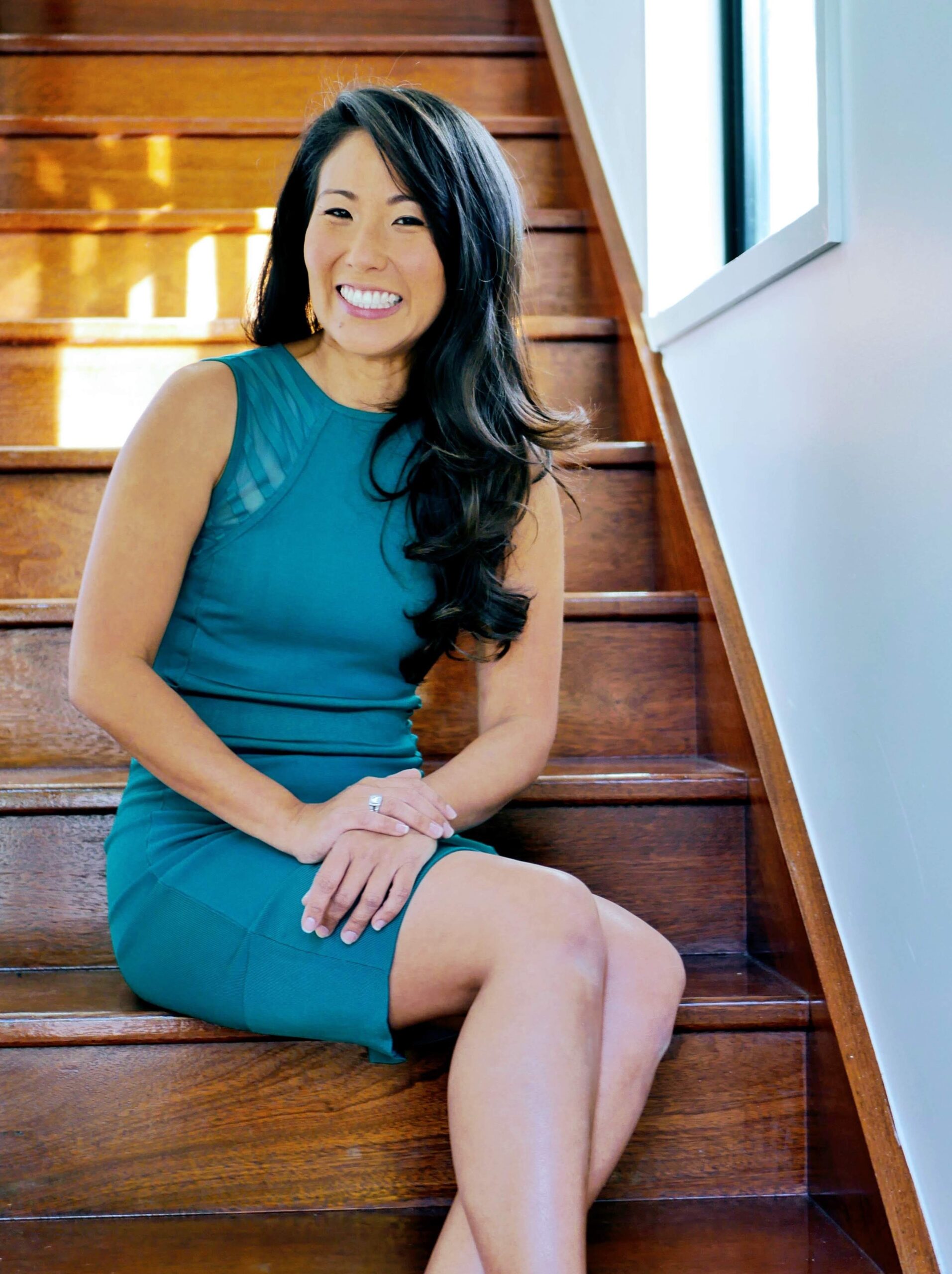
Dr Olivia Ly Lesslar is Australian-educated and has a Bachelor of International Relations with a triple major including French and Diplomacy, and a Bachelor of Medicine, Bachelor of Surgery. She finished her hospital residency in 2016 and has completed postgraduate studies in skin cancer medicine and clinical nutrition management. She is currently undertaking a Diploma in Clinical Hypnosis and Strategic Psychotherapy. Her medical registration is in Australia.
Dr Olivia has interest and expertise in preventative medicine, psychoneuroimmunology, biohacking, and complex conditions like neurodegeneration, cancer, allergies, and the emerging pentad of MCAS – Dysautonomia – Hypermobility – GI dysmotility – Autoimmunity. Her unique skill set is in problem-solving multisystem, chronic conditions.
“Yes to Life’s whole-of-life approach to tackling cancer provides patients with a bright light during the hardest and darkest of times that most of them will ever experience. Their efforts mean the world to those patients and I’m proud to lend them my support.”
Connect with Dr Olivia on the following platforms;
Instagram— @drolivialesslar
Website — drolivialesslar.com
https://liber8.health/safe-space-training/
More about this month’s sponsors:
Thank you to this month’s sponsors for partnering with our show and helping you make your swaps with their special offer:

Ausclimate’s highly recommended range of WINIX Air Purifiers is the ideal solution for cleaner, healthier indoor air. Easy to use, reactive features and settings with a truly comprehensive 4-5 stages of purification, including Hospital Grade True HEPA Filtration and Winix’s unique PlasmaWave® technology. Perfect for smoke, dust, pets, viruses, bacteria, household odours, and allergies (covering a variety of allergens). Breathe easier, sleep better, and feel better. Winix; is the most complete air purifier on the market!

Offer: Ausclimate is now giving all Low Tox Life followers an EXTRA 10% OFF their already discounted prices. Simply enter the discount code of LOWTOXLIFE on check out via: https://www.ausclimate.com.au/
This discount can also be redeemed for over-the-phone orders verbally.
Website: www.ausclimate.com.au
Facebook: www.facebook.com/Ausclimate
Instagram: www.instagram.com/ausclimate


Edible Beauty is a brand I discovered a couple of years ago and a couple of products in the range have become firm favourites. They’re giving us a $79 Exotic Goddess Ageless Serum for FREE which happens to be my fave in their range (ok, it was my idea and Anna said yes – hooray!) Add it to your cart, then all you have to do is spend $75 on whatever else you fancy trying or stocking up on from their range; use code LOWTOXLIFE at check out and hey presto: The price of the serum will magically become $ZERO. They do gorgeous mineral make-up powders, an excellent sunscreen, bronzer drops for an instant glow up, an excellent micro-exfoliant and more.
A little more about Edible Beauty:
- Pure and Edible: All products are made with organic ingredients, vegan, and food-grade ingredients—formulations so pure, you could eat them! BUT also high performance!
- A wonderful planet-conscious business using recyclable packaging, FSC-certified paper, and low-waste, eco-conscious formulations using ethically sourced ingredients.
- Holistic and Synergistic: Each product is naturopathically formulated to promote a synergy between inner health and outer beauty.
- Everything is Pregnancy and breast-feeding safe
Instagram: https://www.instagram.com/ediblebeautyau/
Facebook: https://www.facebook.com/EdibleBeautyAu

Is a water upgrade your low tox priority right now? This month I’m thrilled to bring you an offer from Waters Co – a filter I’ve used for the past decade as have many in our community since. You have 12% OFF FROM August 1 to September 15. Use code LOWTOXLIFE at check out.  Waters Co have a series of filters from their incredible benchtop filters through to their jug and my favourite little travel filter – the Mini Water Man. Waters Co is a highly regarded water filtration leader that effectively removing up to 99% of impurities including fluoride, chlorine, agricultural/industrial chemicals, heavy metals, bacteria, PFAS, mould and odours from tap water. They use technologies such as membrane, activated carbon, ion exchange, bio ceramic, far infra-red and magnets, ensuring clean and hydrating drinking water by also adding in 60 trace minerals. Their commitment to sustainability is evident through the long-lasting filter cartridges, reducing plastic waste. All plastic materials are BPA-free and all plastic in the filter cartridges is recyclable and the filter contents can be tipped into your compost or garden bed. Brilliant!
Their benchtops come in a couple of sizes, with under-sink and shower options too. The more compact models – the jug and the mini are fantastic portable options for travel, fridges or tighter budgets. I love how you can buy the replacement filters and they fit into both the jug and the mini interchangeably – Handy!
Enjoy the offer + the life-changing magic of upgrading your drinking water, with whichever option is the best fit for your home or travel.
Instagram: https://www.instagram.com/waterscofilters/
Facebook: https://www.facebook.com/Waters.Co.Australia/
***
Title show track, by LIOR.
Love the podcast music? You will hear excerpts from Lior’s track “Caught Up” – go check it out on iTunes or Spotify if you want to hear the whole song or album, Scattered Reflections. Co-written with Cameron Deyell, it’s a great song and I love the reflective energy of it – perfect for the show, right? Enjoy. Lior is always touring, so do check out his website. It is wonderful to hear him sing live, trust me.
Low Tox Club – The place to bring your low tox life to life.
Want to join a community of like minds and enjoy all the perks of being in the Low Tox Life inner circle such as an online membership platform, 50% off all our Low Tox courses, an awesome chat group, my monthly Q&A, and special guest star interviews for just $49AUD ($29USD/28EUR/23pounds) per YEAR? We have created a special place and set of resources to help you achieve your goals and it’s a wonderful place to be – MORE DETAILS AND REGISTRATION HERE.
***
If you would love reading like me or you just simply want to go through the full transcript, you can check below.
[Alexx Stuart] (0:00 – 8:19)Complex chronic illness and a broken health system in one show? Today we try. Hello and welcome to the Lotox Life Podcast.
I’m Alexx Stuart, your host, founder of the Lotox movement, and so thrilled to have you join me today for my guest, Dr. Olivia Lesler. Olivia has interests in and expertise in preventative medicine, psycho-neuroimmunology, biohacking, and complex conditions like neurodegeneration, cancer, allergies, and of course this emerging pentad of MCAS, dysautonomia, hypermobility, GI dysmotility, and autoimmunity. Her real amazing skill set is problem solving multi-system chronic conditions, but I want to add to that and say, I think where her skill is, is in helping her patients find agency through things that feel seemingly terrifying and impossible to solve.
She never leaves that piece out. It is very much a patient and doctor partnership in her eyes with the patient having the real skills in the outfit for healing and for returning to a place of safety and trust within the body. And I just really dig her stuff.
So we had Olivia as a guest on our mould festival. I forgot what it was called for a second there last year, where she really focused on talking about how to cultivate a sense of safety in environments that are less than favourable, or if you’ve been medically traumatised by a particular environment or illness in the past, how to not let that hang over your whole life. That’s very much a journey I’m still a student on, having come through mould illness and having reactivations at random times, and it can really mess with your head.
But focussing on cultivating a sense of agency and safety is something that I notice has made me more and more resilient over time. And it’s one of the things we’re going to be talking about today among many. At the start of the show, we’re actually going to try and explore what might be wrong with the way we approach science, research, how long research takes to get to practise, silver bullets, systems that aren’t seeing the whole patient, and the multitude of things that could be going on when someone presents with complex chronic illness.
And then we’re going to dive into some of the parts of chronic illness that would be useful for people out there who are just thinking, why do I do? It’s all so expensive, because that’s a huge part of it as well. So I’ll hook into that in a little minute.
Our wonderful show supporters, brands that help you make your low-tox swaps. I got a message just last week saying thank you so much for introducing me to the sponsor of that month. I think it was BioFirst a couple of months ago.
This cream has really changed my life, and if you didn’t do these little introductions, there might be things I couldn’t discover or didn’t discover, and this has been huge for my son’s eczema. So getting little messages like that is amazing. I know a lot of long-time low-toxers often don’t need these swaps, but I really love partnering with brands to make these swaps possible, because A, it helps us put the show on every week, but B, it helps you do that in an otherwise tricky economic climate for many, make it a little cheaper on the hip pocket, and get you what you need and want to try.
So of course AusClimate, our major sponsor. All of the codes, by the way, are low-tox life now on the podcast, so I don’t need to say it each time. But 10% off with that code, and you have their brilliant dehumidifiers, the Winix air purifiers, and the fantastic new heating range with lots of different options.
You have the wonderful WatersCo water filters. So we think about all the things that we take out often with water filters, and WatersCo technology is able to filter out a market-leading level of heavy metals, PFAS, so the forever chemicals, bacteria, viruses, mould, and a whole bunch of other stuff, and the highest in fluoride removal as well. But they don’t just do that.
They then remineralise the water with over 60 trace minerals, and you can taste it. It’s actually delicious water, whatever size you get, and there is something for every budget. So you have 12% off with WatersCo filters this month, code low-tox life.
And the final offer, I’m so excited about this one, because I was chatting to Anna, the founder of Edible Beauty, when we were planning what we were going to do this month for you guys, and I said, look, the Exotic Goddess Ageless Serum is honestly, it’s like giving your skin a drink of water. So for those fine feathery lines or a little bit of dull complexion, you need deep hydration, fast-acting hydration, and things like hyaluronic acid in there, get it delivered quick. And you can see it straight away.
It’s night and day, that’s all I’m going to say. It’s a $79 product, but if you spend $75 or more, and you add the Exotic Goddess Ageless Serum to your basket, and then you check out and you use the code low-tox life, as long as you’ve got 75 or more other dollars worth of things in there, which I highly recommend, their Eye Serum, their Desert Lime Micro Exfoliating product is so good. They’ve got an excellent sunscreen, some beautiful makeup items.
Of course, their core four system, which includes the Exotic Goddess Serum, whatever else you put in there, code low-tox life, the $79 serum becomes $0. No joke. So that’s an amazing offer from Edible Beauty.
A huge thank you to Anna and her team. And that’s all I have to share with you. So enjoy making your swaps.
If you’re new to all things low-tox, water is always one of the first things I recommend and humidity control is always one of the first things I tell you to do, especially after those showers. And then of course, we always want to feel good in our skin and Edible Beauty helps us do that. So now enjoy this fabulous discussion and exploration with a lot of fantastic ideas from Dr. Olivia Leslar. Olivia, hello. Hi. I’m so thrilled to have you publicly this time on the podcast.
You were a part of our incredible team that helped me bring the Mould Festival to life last year, tackling chronic illness and safety in long hauler type illnesses and how it can be such a factor. And today we will definitely be looking at that psychoneuro piece, but I want to start by asking you, because I’ve just found out today that we both have a huge part of our education in common and it’s not the medical part. It’s the diplomacy, political science, languages part.
How good is that?
[Dr Olivia Lesslar] (8:20 – 8:24)I didn’t know that about you either. This is so, yeah. [Alexx Stuart] (8:24 – 8:40)
And so tell me how, did that start your tertiary education and then you went into med or did you just decide, ah, this is too light a load. I’m going to add some, some arts in here. [Dr Olivia Lesslar] (8:40 – 10:09)
Well, you know, so I, I’ve always been, my, my mother is a, an arts leading person, so she’s a writer, she was a writer and an editor. My father is a vet and an engineer. So I’ve always sort of been both brained, I think.
And I didn’t get into med like I was kind of slated for, I suppose. I had a couple of scholarships in high school, in anticipation of med for uni because my mum died in year 12 and I was pulled out of school for a few months because she passed away in the US. So we went there for a few months.
And so I wasn’t quite sure what to do because I’d always thought I’d do med. And then eventually I did go back to uni to do international relations because I then had this idea in my head that I would do diplomacy. And I did really well in international relations and then got into med that way.
And so I wound up going back to medicine, like how I always wanted. And international relations was a very, was a great degree to have under my belt, especially diplomacy and of course French, because there is definitely something to be said about having a more rounded education for a doctor. I think, you know, we have a lot of doctors for humans as well.
[Alexx Stuart] (10:10 – 10:31)I just think it breaks my heart that they’ve jacked up the cost of humanities degrees because they literally teach you how to have to back up your point in 10,000 words over and over again, and consider learning how to have perspectives and philosophise. Exactly. I think the world could do with a lot more of that. [Dr Olivia Lesslar] (10:32 – 13:48)
That’s right. Because medicine tends to be very didactic, right? These are the facts, you learn it as such, and then you regurgitate it.
I mean, they don’t obviously say that. But I think we can all agree that over the last few years, it does seem like that. And which is bizarre, because in medical school, our professors, several of them will actually say, 50% of what you are learning now is going to be wrong.
We just don’t know which 50% it is. Ha ha ha. And they say it very glibly.
And I’ve heard it repeated several times by several eminent doctors on podcasts and so on and so forth. But when it comes down to the crunch, nobody acts as if they’re at the bottom of the Dunning-Kruger curve. Everybody believes that everything that they say that comes out of their mouth is 100% true, true, safe and effective.
And it’s, it’s, I think that we really need to go back to re-exploring the concept, the fact of the matter, that yes, a lot of what we learn in medical school is probably not as correct as we think it is. And how do we get back in touch with that humility, so that we don’t cause harm? Because that is what I see is becoming more and more of a problem.
Sorry, can you indulge me a little bit? I have a quick storey. I’ve noticed that on social media, I’m mostly on Instagram, so I’ll use that as an example.
I’ve noticed that other doctors will say, you’re fear mongering, or don’t be alarmist as a drop mic. They say that and then they think that that’s that. In other words, there seems to be now this move towards prove that something is dangerous, as opposed to my point of view, which is prove that something is safe first.
And I suppose that there’s, you know, there’s a place for both of these opinions. But when did something can be used, can be let loose on a population before you prove it’s unsafe? Trump, first do no harm.
And I’m actually, me and my research partner are going to start writing a bit of an opinion piece about this, about this drop mic that I’ve noticed a lot of people on social media are employing. The whole, you’re being a fear mongerer, full stop in the storey. It’s like, hang on a second, I’m just telling my followers on my channel about a study that is stating that, you know, some chemicals in sunscreen haven’t been proven to be safe.
And now they’re nanonized. And one application today, you can still find those chemicals in your blood 30 days later. This is an FDA study.
Why is it just posting about the study makes me a fear mongerer.
[Alexx Stuart] (13:48 – 13:48)Mm hmm. [Dr Olivia Lesslar] (13:49 – 13:50)
My rant is over. [Alexx Stuart] (13:50 – 15:00)
No, and I think it’s a justified rant. And sometimes this is where it frustrates me that people don’t have historical context, that people haven’t studied politics in the past and the way we’ve formed democracy as we currently know it. And, you know, in its weaknesses and with its cracks.
And, you know, there were many, many, many people who had to die, who had to put their hands up and say something ain’t right in the roof, boss. I’m sick. I’m feeling sick.
I’ve got this cough like before asbestos was finally given its moment before radium, before, you know, lead, lead in the paint, lead in the petrol, lead in the pencils, for God’s sake, that all the kids were chewing, you know, lowering our IQs. I mean, we could go on and on about how much it takes to try and be the crazy people sounding alarms until someone finally said, you’re a fear mongerer and you’re an alarmist.
[Dr Olivia Lesslar] (15:00 – 15:19)And, and a lot of people don’t realise how much the government relies on a, almost like a complaints driven system because there sometimes isn’t money or even assays in the beginning to test things. [Alexx Stuart] (15:20 – 15:25)
Or sometimes there is money. It’s just the wrong kind of money going to the wrong kind of people. [Dr Olivia Lesslar] (15:26 – 15:39)
Exactly. Or how much government is relying on industry to be honest or to be prudent. And, you know, that’s, we can all see how that can be a problem. [Alexx Stuart] (15:40 – 16:56)
And I mean, so many times we’ve seen it and it’s been beautifully depicted in a lot of dramas over the years in courtrooms based on true storeys, great documentaries these days as well. Sean Penn even put his hand up and said this whole environmental toxin thing ain’t cool. Let’s do something on this.
And it’s about getting loud enough until you can see the elected officials saying to each other behind closed doors, this isn’t going away. And that’s that moment. And we’ve seen it so many times in history.
And I think we are at a crisis point with medicine where governments want to be respected and that’s right, left, you know, name your party. They’re all, they’re all poisoned in some way because of the system. But they want to be respected and yet they keep covering things up, whatever those things are.
And because there’s so much more freedom of information, people find out much more easily. And we’re like, we’re not okay with this. But then, which becomes a problem.
Yes.
[Dr Olivia Lesslar] (16:56 – 17:30)Right. Because nobody really, I mean, more people are watching TikTok videos or Instagram videos and they are watching the news and the news, major news outlets are captured as well by corporate. So, you know, you’re only going to be able to get like three storeys out there and it all has to be click-baity.
So you’re not going to talk about really hard-hitting stuff because people don’t even understand it anymore. So you’re going to talk about which celebrity has had, you know, which filler done. It’s, I don’t even, I don’t even know.
I don’t even know.
[Alexx Stuart] (17:30 – 18:41)It can be very broken when you, when you, when you listen to what we just said and it can be very tough to think, could there ever be a way through this? But I want to ask you, because you go to a lot of conferences, you speak to a lot of people who are more in the pioneering space, I would say. But in terms of just research, this is something a lot of people are really concerned about.
Research funding and dollars. Are you seeing research being done well or better in certain places, institutions, or are there just holes in most things these days? Like, you know, these days we see, name your scientist, does a piece of research, creates a supplement brand around it based on a study or, you know, and then the next thing, and then I’m not trying to pooh-pooh anyone’s work, but I am saying it’s corporatised.
The whole thing’s become corporatised. And I think that’s a huge part of the problem.
[Dr Olivia Lesslar] (18:42 – 20:40)There’s also an issue, I think, where you have a gap between research and clinical. And there’s meant to be this division, because like you said, you can’t be doing research and then all of a sudden you’re selling a supplement based off your research. I mean, the ethics of that are just mind-boggling.
But anyway. And, you know, especially, so I speak in the longevity field a little bit. I am, there are many much more seasoned longevity experts than myself.
But one thing I have found is that you have the researchers and clinicians speaking at the same conference at a longevity summit, for example, and the researchers are talking about molecules and substances that are extending life in mice, for example, exactly the kind of things that they’re studying, which is great. But because they’re sharing the same stage as clinicians, sometimes some attendees don’t realise that there is a lot of work that needs to go into the field before you can translate my studies to humans. And then you get this flurry of activity of people going out to buy these different supplements based off research in mice.
And that creates all sorts of issues. There is a translatability gap that needs to be respected, first and foremost, and not understanding the system, not understanding where the marketing is, where the marketing starts and where the facts begin. That part, I find very disconcerting.
It’s not just drugs.
[Alexx Stuart] (20:41 – 21:26)No, it wouldn’t be. So let’s just say a drug is found to have, or a supplement is found to have an amazing benefit for, let’s say, depression in mice. And everyone’s excited.
The supplement seems even quite safe to like jump onto right now. But what would the best process be when that study is being done? To like, what’s the next step that would be better than all of us jumping on it as if this was truth?
And let’s just roll it out. Because I think this is interesting for people to learn what would actually be correct.
[Dr Olivia Lesslar] (21:27 – 21:38)Yeah, well, I can’t really talk to that because I’m not a bench scientist. And I’m not really involved in the research arm to many things. What I can speak to is that I am a clinician. [Alexx Stuart] (21:38 – 21:41)
Yes. So as a clinician, what do you want to see? [Dr Olivia Lesslar] (21:42 – 22:37)
Right. And we need to start treating the patient in front of us as a whole person, not just the numbers on a page. In other words, it’s been going on for far too long, decades of you have this symptom, therefore you get this pill.
That is complete and utter rubbish. The person in front of you is made up of their environment, their psychology, their family, their biology, their genetics, I could go on and on. Everybody knows this, right?
How would you distil someone down to a number on a page and then to an algorithm that spits out that they get a pill? So even just, let’s say, let’s say paracetamol.
[Alexx Stuart] (22:37 – 22:42)Yeah. Oh, one of my favourite not. Yeah, exactly. [Dr Olivia Lesslar] (22:43 – 24:47)
500 milligrammes, a tablet, one gramme for two. That is the dose that you give to a 14 year old girl who’s got menstrual cramps, and also to a 65 year old man with no liver issues who has a bumping migraine. And it’s not, we have stopped as clinicians, we have stopped saying, okay, what else is going on with your life?
Let’s talk about the migraine. Let’s talk about the period cramps. You know, pulling on that thread and pulling apart that tapestry to then figure out how do we, how do we prevent this from happening again?
What else is, what is this pain telling us, right? Because we’re so used to throwing band-aids on things. And then we’re so confused when people, by the time now, by the time people are 30, they’ve accumulated at least two, three, four diagnoses and are on at least two, three, four pills.
So this whole like, okay, what is the next step once you discover a molecule, et cetera, et cetera, et cetera? That actually, for me, I’m not really that interested in that because I know when it comes to the clinical picture with the patient, I’m never, ever going to be relying on one thing to be helping the patient in front of me. And, you know, I’m really enamoured by psychoneuroimmunology.
And so that was where my expertise lies. And I have colleagues who are much better at biochemistry or who specialise in haematology or in rheumatology or something like that. But a GP or generalist or someone who speaks to a patient with their day-to-day issues needs to respect that there’s so many things that go into a patient and that’s what we need to get back at.
We need to stop being so reductionist.
[Alexx Stuart] (24:49 – 26:40)And so would you say then that it’s really important for us to stop being so excited by one study’s finding? Because I feel like the media jumps on it and then there’s the article on the red meat again, and then, or the, you know, I mean, how many times do we have to fight that one? Then there’s, you know, the medical community who are just desperate to have something to throw at being able to help patients better that looks positive.
You know, I feel like, and then we want the silver bullet. I feel like culturally, professionally, we’re all after a silver bullet. How do we progress to whole body medicine?
How do we actually do that? Is it actually going to be a people’s movement? It feels like there’s a pretty big groundswell already for those of us who are into it and exploring it.
I mean, I remember when I started Lotox Life, I was like, okay, I’m swapping my personal care. I’ve gotten rid of all the additives out of the food. Oh shit.
Home. Oh my God. The way we think about it all.
You know, I was coaching people and then they were freaking out that they weren’t going to be able to eat organic a hundred percent. And I’m like, that’s part of the problem. Like we can’t, that’s part of ill health to stress out so much.
So it really is all interconnected. And I feel like it is conversations like this. It is conferences that you’re going to where the psychoneuroimmunology field is exploding.
Thank God.
[Dr Olivia Lesslar] (26:40 – 31:15)Yeah, thank goodness. So the Gabba Marte, the Joe Dispensers, there are more and more people talking about the interconnectedness and they have the studies to back them up. The problem with the field is that the studies come from all over the place, from psychology, immunology, neurology, right?
And so you have to piece it all together. There isn’t a stream that is PNI at the hospital or medical school, but the more people’s eyes are opened, because all you have to realise is that everything is connected. Once you realise that, once you open that door, then hopefully your mind is asking, what about this?
What about this? You’re asking more curious questions. So I was at a conference last year.
It was a neurotrauma brain trauma conference in Germany. And I actually was speaking to a neurologist who hadn’t even heard of neuroimmunology. Now that’s, I mean, as a student, it was confusing for me.
I mean, maybe it was because he was older or whatever. Um, but for example, when I was in hospital, uh, in Australia during my, uh, residency, there was a paediatrician there who stated at a grand rounds. So he wasn’t presenting at the grand rounds, but he stated at the grand rounds during Q and a, that the brain stops developing after age 25.
Right. Exactly. We know that that’s not so, so there are, right.
So, okay. There are lots of issues with the system for sure that we’re going to have to somehow address. And one of them, in my opinion, is that the kind of conferences that specialists in Australia, that’s, it’s the only system I really know the kind of conferences that the specialists go to, uh, needs to be more inclusive and needs to be, uh, have a wider bandwidth because, um, they go to the same conferences organised by the same pharmaceutical companies, spoken at by the same doctors.
All they’re after is their CPD points, you know, and they just, there’s no incentive in the system for doctors to think outside the box, to be left afield, to explore more questions. There’s no incentive. And actually the incentive seems to be stay in your lane, do exactly as the algorithm says and no more for your patient.
And you will never be audited. You will never have a colleague complain about you because, because in Australia, the number one reason why clinicians are investigated by APRA, which is the Australian health practitioners with regulatory agency is by a complaint from a colleague, not from patients. So there’s a lot of this, you know, dobbing in of, well, I say dobbing in implies that the clinician is doing something wrong.
Actually, a majority of colleagues, when they, when they complain about someone to APRA, it’s because that person is doing something different outside of the algorithm. That’s of course, it is look, of course you have to be safe. And of course the flow charts and what have you are there for patient safety, but there are windows of tolerance and we have to be given some leeway to explore some of these windows with the patients we have in front of us, because we know those patients, right?
I’ll tell you now, those flow charts, the algorithms thrown out by governments and by the college at royal colleges of medicine, they’re not built generally speaking on genetics, epigenetics and so on and so forth. They are meant to be broad strokes. They are meant to hopefully touch the majority of the population, you know, in that bell curve and not everybody fits into the meat of the bell curve.
[Alexx Stuart] (31:15 – 31:23)Mm. And, and then if you try to help someone who doesn’t, you could lose your licence. Yes. [Dr Olivia Lesslar] (31:24 – 32:08)
Right. I mean in Australia that Charlie Teal, that’s pretty much what happened to him. What is the name of the, I’m looking it up now, actually the person that did the first, uh, one of the first massive transplants, like hand, I think it was a hand transplant, was Australian as well.
Um, he got basically run out of town. You don’t hear anything about him. Um, he had to, uh, he, he’s revered overseas and he get, he did when he was alive, he was invited to do a lot of, um, surgeries overseas, but in Australia he was a pariah.
[Alexx Stuart] (32:11 – 32:14)Absolutely toxic is what that is. [Dr Olivia Lesslar] (32:15 – 32:19)
It’s a very toxic, uh, professional environment in Australia. [Alexx Stuart] (32:20 – 33:20)
Yeah. And I can understand why I end up interviewing what I think I’ve probably interviewed over 300 doctors out of our sort of 400, um, interviews. And most, almost everybody I think has said something along the lines of, I’ll never forget in my residency, I questioned why we couldn’t give vitamin D to children in the psychiatry, you know, just to try because we had some research and shut down or, you know, and that is just one storey of bazillions that I’ve heard from doctors.
And I don’t think it’s, um, I don’t think it’s doing people much good, unfortunately, because it’s actually creating a sense of if you want the good medicine, the guys and girls who are thinking outside the box, then you need to be extremely financially privileged.
[Dr Olivia Lesslar] (33:21 – 35:54)You do. Yeah. And that’s the thing.
So, you know, just to put it out there for, I mean, there are lots of patients who ask, uh, why are my, my consults, for example, not covered by Medicare, not covered by insurance and all the rest of it. And this is the simple answer. If someone else pays for your consult, someone else has a say in the consult, right?
Independent thought, uh, you can, well, you can sort of see why the government does it. Basically the government is only going to pay for things that they believe is going to work for the majority of people. Um, and it’s meant to be a safety net.
It’s meant to catch the majority of people. It was never meant to be my understanding that universal healthcare was never meant to be the epitome of advancements, right? It’s the system, the financial aspects to think doesn’t, doesn’t cover that.
So it was meant to sort of be a safety net and to, you know, to help the majority of people with sort of majority of simple ailments. It was, uh, formulated in an era where we didn’t have these chronic conditions that were plaguing patients for decades and decades because it will financially cripple, uh, the government at some point, just like it did in the UK or just like it is doing in the UK. And because Australians have been so used to the government picking up the tab for their medical, uh, uh, expenses, they’re loathed to pay their doctor, uh, you know, privately.
So you’ll find that patients will have a Netflix account, a prime account, you know, a Disney account. They will have a cappuccino every day, but there is something about the population and our mindset where they, they don’t, won’t pay for private, uh, health. Now, of course, I would also be loathed to pay for something that that person is saying the exact same thing as the universal healthcare doctor next door.
But if you’re, if you want an opinion, that’s a little bit different. Um, and you know, that opinion was probably formulated, um, by going to lots of different conferences by going for a lot, doing lots of different courses, et cetera, et cetera, et cetera. Then yeah, you need to contribute to that doctor’s learning somehow.
And it’s of course.
[Alexx Stuart] (35:55 – 37:17)Oh, and I’m, I’m certainly not saying it wouldn’t be worth it. I think the issue is, is that, uh, it’s sad that it, that you guys are all forced into that model, um, where, uh, ordinary people in a housing commission with a mould issue, let’s say, uh, and, and they, they don’t even know you exist a and B if you’re in welfare, because you had to quit your job because you were that sick and now you’re below the poverty line. So you’re collecting payments, like then you can’t pay privately.
So there is a lot of, um, I guess, uh, yeah, there are a lot of aspects to it that are yes. Great medicine is always going to be worth it. And, uh, at the same time, why isn’t great medicine available for everyone?
Because we don’t recognise that doctors should be allowed to look at who’s in front of them and make a call if there’s a consensual mutual, uh, relationship between doctor and patient to do so.
[Dr Olivia Lesslar] (37:17 – 38:00)Yeah. Yeah. And also there seems to be this, uh, um, opinion that I think we’ve mentioned this before off camera that the science is settled, right.
And, and it, it isn’t. So if we’re talking about vitamin D, for example, um, I can show you the studies that correlate increased tonsil size, adenoid size with low vitamin D, right? A weakened immune system with low vitamin D.
I can show you the studies that talk about the fact that our vitamin D, uh, reference range is probably inadequate. In other words, even if your vitamin D is normal, it’s probably not.
[Alexx Stuart] (38:01 – 38:05)And oh my gosh, while we’re here is one 20. Okay. [Dr Olivia Lesslar] (38:06 – 40:05)
Well, I mean, so I would, I just got mine back last week. So I figured I might as well ask. So I would say yes, but you know, is like, why are we using the same reference range for you?
Um, as well as, um, someone from South India, you know, so these sorts of questions aren’t being asked by the doctors who should be asking them. And because vitamin D isn’t, um, recommended for, uh, you know, these children who’ve got normal vitamin D reference ranges, even though it seems clinically like what’s happening with them, their symptoms might be due to an immune issue, might be due to low vitamin D. Even from the history, the patient isn’t going out in the sun, for example, you know, at all with, there isn’t this room to think.
And if you maintain, don’t worry about vitamin D supplementation, the reference range is fine. I know that your child’s about to get his tonsils cut out. Um, and it’s probably got nothing to do with it.
You’re going to be fine because that, that opinion, even though it’s probably not entirely correct, that opinion is covered by government. That opinion is covered by the, the, um, the workflow from the Royal College. But if you were to step outside and say, wait, hang on a second.
Uh, I saw this, uh, information from the U S or from France or whatever it is. Uh, you know, let, let’s try some, let’s try some supplementation. Let’s see how you go.
You’re, there is room in the guidelines now for a colleague to complain about you. Now, how far that complaint will go is another matter. And I hope never to experience this, but there is room for someone to complain about you because you are doing something outside of the guidelines and it’s ridiculous.
[Alexx Stuart] (40:07 – 40:21)And so what are you guys doing as doctors who feel that this is ridiculous? Is, do you feel like there’s a groundswell or is there just an abdication from the system altogether? [Dr Olivia Lesslar] (40:22 – 42:42)
Well, yes. Uh, okay. So there is actually a, um, a groundswell.
There is a, an organisation called APOS. Australian Health Practitioners Advisory Service, I believe. So APOS is, um, a, uh, organisation that doctors can join where they are actually going to be, uh, somewhat protected as a group.
There are lawyers involved, all the rest of it, against these malicious, non-common sense, um, allegations. Um, because right now, APRA, I’ve not had to thankfully deal with APRA myself, but it does seem from the colleagues who have been targeted by APRA that a lot of the time you are guilty until proven innocent and it is stressful. The number of medical practitioners who commit suicide, Oh, we could call them fear mongers then, couldn’t we?
Right. Who, who attempt to commit suicide every month is actually a lot higher than people realise because of how stressful these audits can be. Um, so when you’re, when an audit is against you, um, you are expected to do all that legwork, go through your records, you know, hire an accountant, hire a lawyer, blah, blah, blah.
You’re meant to do all that whilst maintaining your full-time work. Like it’s, it’s on top, it’s on top of, um, I, I, a very close friend of mine, uh, got audited, um, and it was, it was not a malicious audit. He actually hadn’t done anything wrong.
There was a, God, I don’t know how much I can talk about this. Um, so essentially the government, the government were lobbied by the, I think it was by respiratory physicians so that they wanted to keep the majority of spirometry tests. They didn’t really want GPs doing spirometry for whatever reason, you know.
[Alexx Stuart] (42:42 – 42:44)And what is spirometry? [Dr Olivia Lesslar] (42:44 – 43:28)
Ah, sorry, lung, lung function testing that you can do just in clinic. Um, now a, that was sort of pushed through and this friend of mine is a, an allergist. So he’s not a respiratory physician and he’s not a GP.
He’s an immunologist who did allergies. And of course, as you can imagine, um, inhalant allergies are a big part of what he does. And so he was doing spirometries, but because he wasn’t a respiratory physician and he had, he was doing a lot of these, uh, lung function tests, he got audited and it was one of the most stressful things that happened to this friend of mine.
[Alexx Stuart] (43:29 – 44:02)Um, and anyway, there were a lot, a lot of painful points with this, but, um, does the spirometry get, have to get sent off for, so it’s something you’re doing because you’re trained to do it. So why should it matter that you want to do one, if you want to check your patient’s lung function, how on earth is that risky? Well, so…
Help me understand.
[Dr Olivia Lesslar] (44:03 – 46:02)So in Australia, procedures bag you more money from the government than consults do. So it doesn’t matter what the procedure is, whether it’s a skin check or it’s a lung function test, that’s where you’re going to make more money than just a simple consult. So look, I’m sure the issue is, is much more complicated than I can ever, uh, elucidate.
All I know is that, all I know is, yeah, all I know is that, um, the APUS organisations like APUS, which are bringing together doctors who are frustrated with the system because of the fact that you are guilty until proven otherwise, because it’s basically a star court. There is no organisation, there is no government organisation that oversees the goings on of APRA. So APRA is almost a law unto itself.
It can hound, uh, doctors, it can, uh, uh, leave you for dead. It can do all sorts to you and there’s nobody overseeing what they do to doctors and it’s a very dangerous, scary proposition. So yeah, there are, there are many of us who have joined APUS for example, um, and there are many of us who decrease our volume, decrease our practise because we just want to do less and less and less with, um, with, with the medical system in Australia.
So I do far more speaking now, podcasts or writing or, um, corporate advising or whatever, because it’s just, it’s a very dangerous, um, landscape to be, to be in, um, if you are not, uh, algorithmically driven.
[Alexx Stuart] (46:03 – 47:46)Imagine it being dangerous to do your best to help people. I mean, if that’s not a broken system, I don’t know what is. And so do you feel like, because I really, I don’t want this to be a doom and gloom conversation.
We don’t leave people with a potential sense that we could be a part of a better system. Um, would you love for people to start reaching out to their local MPs and saying, look, I’ve had a chronic illness. I’ve been gaslit.
I’ve been this, I’ve been that I’ve been driven to having to privately seek out people, um, for my healthcare. And that costs me $400 a visit, um, you know, and, uh, like, you know, on and on, like to actually start flooding our MPs with storeys, because I figure no one’s telepathic. Right.
And like I said, you know, these people over here don’t even know you people exist. I I’d say half the MPs in our country wouldn’t have any idea about integrative medicine either. Some do.
And guess what? Some of those had mild illness and that’s why. Um, so, you know, it’s, it really is something that you only know to need when you have exhausted every possible avenue.
And it feels like most of the problems people have today are falling into that category more and more. And so we will need more and more doctors, not less and less, who are equipped to actually support patients.
[Dr Olivia Lesslar] (47:47 – 53:50)So, you know, absolutely, of course, um, people speaking to their local MPs and trying to get a groundswell grassroots movement, um, would be helpful, uh, especially for environmental things like mould. I mean, that is part of the reason why I feel as if things just aren’t moving the way they commonsensically would be moving is because when a government acknowledges that there is a deficit or a problem, they also then become liable for sins of omission, right, which then they have to pay for. Um, and so it’s much easier to sweep something under the carpet and hope that it goes away at some point, whilst you slowly do make changes to the legislation.
And, you know, because if you, it’s a big song and dance and people come out of the woodwork and start suing you from things, for things in the past, it’s a little bit like the infected blood scandal of the 80s or so, right? The number of the thousands of Australians who got HIV or who died because of, uh, essentially blood transfusion, reckless use, reckless abuse of power when it comes to, uh, to, to the blood. They’re still, they’re still fighting for compensation.
They’re still after a royal commission, you know, and it’s just, but if the government, I shouldn’t say the government, but if the powers that be wait long enough, there’s not going to be anyone left to sue, right? And I kind of feel like that seems to be the case with a lot of things. Um, so yes, I, it would be great for groundswell movement, so on and so forth.
However, my message, because I am a simple clinician with patients in front of me. And, you know, my message actually is that we don’t have to be saddled with the chronic diseases that with many of the chronic diseases, and certainly not the severity to which we are saddled with some of these current diseases. Now, if we start taking control of our own health, because the only reason why you would need to, um, see a doctor and then not be able to afford a doctor that can give you the advice that you need about a chronic condition, which by the way, didn’t exist, you know, 15, 20 years ago, like tilt, toxicant induced loss of tolerance.
This is the new diagnosis, right? Mass cell activation syndrome, uh, postural orthostatic tachycardia syndrome, like all these syndromes are new and emerging. They didn’t, we didn’t really have, uh, you know, the extent to which we have them now in our population.
You can’t swing a cat now in a room without getting, hitting someone with pots, or without hitting someone with MCAS, or histamine intolerance, or something like that. So it’s getting out of control. The government and the colleges can’t keep up with these new syndromes coming through.
Um, and I think that when patients realise how much is actually in their control, and they’re able to, you know, take hold of it a little better, then they will, will start to dam the, the tide of patients needing to seek a doctor that’s going to be up, you know, out of their price range anyway. So that’s kind of where I’m at, because I really, the majority of patients who I see now, I can, I can tell you that there is a big chunk of what’s happening that is in their control. They just don’t know it yet, right?
Platforms like yours are a great way for patients to get information, information about changes they can make in their own home, with their own body, that is going to move that needle towards health. And we just need 1%, 1%, 1%. And before you know it, it all adds up and you’ve got 60, 70, 80% of your health back.
You, you give your immune system breathing room and your immune system kicks back in and is able to mop up the rest. Of course, I’m not saying this is for every patient. And I think that one of the biggest problems with for patients now is that there’s so much information out there.
Who do you trust? How do you curate the information for yourself, right? Which is why doctors were meant to be like a guide, to help you curate what you need for you.
So basically, I, the message that I think is important is, yes, do what you can with, you know, your government and with the local doctor. The local doctor knows that you have an interest in nutritional therapy or, or, you know, non-conventional modalities. Maybe they’ll develop an interest too.
And enough people are asking them about sauna, for example. But it’s also becoming health educated, health informed. No, learning this, the signals in the, and the symptoms that you’re having is actually your body talking to you.
And then trying to figure out how to respond to your body in an appropriate way for you. I know it sounds, well, I don’t have a medical degree. How am I supposed to know this?
But there’s actually a lot to be said about the fact that doctors were never meant to be as didactic, do as I say, take, do, you know, take these pills type thing. We were never meant to be this way anyway. Always just kind of meant to be guides, helping the patient come up to the helm, and then, you know, steering the ship with us until such a time as you can steer your own ship.
The, you know, the health system that I’d heard about in ancient China, which I love, is that you pay your doctor when you’re well.
[Alexx Stuart] (53:52 – 53:56)Love, love. Imagine how good. [Dr Olivia Lesslar] (53:56 – 54:41)
And, and like our, our goal is that we don’t see patients. So for me, I have this, it’s an unspoken sort of, like, I don’t write it on my website, but I do tell patients and my colleagues about it. And it’s like, when I am referred a complex chronic condition patient, mystery illness or emergency syndrome, if I can’t figure out what’s wrong with the patient within three consults, then don’t, don’t see me anymore.
Right. Maybe come back in a year after, you know, got more information together, but I don’t want to keep patients in my fold. And then just, you know, because what I know is what I know.
There’s always more to learn, of course, but I’m not doing it at the expense of my patient.
[Alexx Stuart] (54:43 – 56:23)Wow. So let’s talk about health cultivation then, because what you just shared somewhere in there was how much information there is, which means, you know, for every protocol over here about a particular dietary way forward, there’ll be an absolute opposite of that. There’ll be someone saying salt protocol, like do the salt protocol.
And then over here, it would be cut all the way protocol. And then, so of course it is very hard for most people to just go, I’m just going to stop listening to all of it. And I’m going to tune in that in itself is almost a little bit overwhelming.
I think for people to start undertaking, to start trusting when that trust has been so isolated from us through generations and generations of, of disconnection as well, mind you, not just because of social media, a lot of people blame socials for everything. I’m like, nah, disconnection started a lot, a lot earlier than that. And, and so when you have a patient in front of you who does feel like that, that hyper external pool to all the answers are out there and it’s the next doctor’s appointment that I’m going to start to feel better.
What, how do you gently help people back towards themselves? Like what could people be doing that really made us start to go, I know what I need and I’m not going to listen to anyone else. Tell me different.
[Dr Olivia Lesslar] (56:25 – 1:01:44)So there are two things. One is that, you know, I do encourage patients to, because there’s so many health influences out there, right? You find someone who has a similar storey to you, similar, you know, where they live or, or what they look like or whatever it is, then just tune in just that little bit more to what they’re saying about how they got over their illness, for example.
Because there’s something to be said about the fact that, like you said, the vegan diet works wonders for some people and the carnivore diet works wonders for other people, right? And that experimentation is never, is never a waste of time. So in other words, by all means, do your little experiment, try something, try something different, because it not doing anything differently is where you’re going to fall down because you’re going to get the exact same result.
So that’s one. Two is that with all my patients, I will say to them that, majority of the time, the symptoms that they’re getting is actually their neuroimmune system trying to protect them. Not in a way that we understand in 2024, but considering that our neuroimmune system evolved millions of years ago.
And a lot of the time, parts of it is evolutionarily conserved. And that the number one driver of our neuroimmune system is survival, not fulfilment, not a partner, not getting the promotion at work, it’s survival. And you sort of look at it through that frame, that lens, you’re going to start seeing it’s like, okay, so what does a headache, for example, a headache means that you want to close your eyes and you want to rest.
So why is your neuroimmune system doing that? What about your environment is making your body go, okay, I can’t do this anymore. I want to rest.
I want to close my eyes. I want to go into a dark room. I don’t want any more light.
I don’t want any more sound. What’s happening? And then you can say, okay, it’s the usual stuff.
It’s stress, it’s environmental toxins, it’s not enough vitamins, minerals, not enough water, like really basic things. But when you see the symptom, not as your body trying to hurt you, people fighting against their symptoms, fighting the disease, all that kind of stuff. What about it is my neuroimmune system thinking it’s protecting me, you start to see things a little bit differently.
Because as well, your neuroimmune system, when it’s trying to protect you, it’s not necessarily against real threats, it can sometimes be against perceived threats. Because there’s something called the free energy principle. And the free energy principle is that your brain iterates scenarios over and over and over and over again.
So that it’s able to decrease response times, so it’s able to protect you faster and then decrease surprise. What that means is that when you, okay, so a really simple example, from an evolutionary perspective, if you have been exposed to a pollen, and it irritated you, and at the same time, you were unwell with IBS, or you’re unwell with the flu, your immune system is going to tag that pollen and go, okay, that happened at the same time as my immune system was activated, maybe it’s part of the problem. And it tags it once, it tags it twice.
If the immune system sees it enough times, it’s going to go, yep, that pollen’s a problem. So you are actually able, for non-IgE allergies, you are actually able to change how your immune system is activated against certain inputs, whether it’s pollens, whether it’s foods, the number of patients that I’ve dealt with, with these like sensitivities, where the sensitivity actually changes just based on how you’re approaching that food is incredible. I mean, part of it is the work of like Alia Crubb, for example.
So Alia, A-L-I-A, she’s got this in several studies, one of which is that if you say to a patient that a milkshake, for example, is indulgent milkshake, and then another group, you say to them that it is a low fat or a meal replacement shake, a healthy shake, your hormones actually change. The satiety hormone, leptin, ghrelin, it actually changes and insulin actually changes with how you think about whatever it is that you’re being faced with. And so that is, it’s a curiosity, but it’s real.
It’s very real. It’s very true. And it’s in our control.
[Alexx Stuart] (1:01:45 – 1:02:27)And that is so exciting. And at the same time, because I have worked on my psychoneuroimmunoresponses to recover from mould and to not be hit sideways when I go to the post office and look up and see the revolting, you know, like five years ago, I reckon that probably would have set me back for days, if not weeks. Whereas now I write them an email.
I said, this is not a healthy environment for the workers to be working in every day. And you should really get that cleaned. But I didn’t think about it again.
I didn’t think about it until I talked to you. That happened like this afternoon.
[Dr Olivia Lesslar] (1:02:28 – 1:02:29)I’m fine, you know. [Alexx Stuart] (1:02:29 – 1:03:21)
And so I really think there is just so much power in recognising sometimes the slightly unhelpful buddy system body creates for us with the tagging, because I you then need to actually do the work to sometimes undo what are largely unhelpful tagging. It’s it can end up, you know. Yeah.
And so if someone so let’s just say the person who’s sensitive to everything right now, what what is the first layer of the onion? Is it actually working on cultivating a sense of safety? And what is that?
[Dr Olivia Lesslar] (1:03:22 – 1:03:29)So it’s parallel. So it’s you do actually have to decrease exposure to threats. [Alexx Stuart] (1:03:29 – 1:03:36)
Right. Because is that so your body can have like a holiday to actually do the work? Yeah.
Okay.
[Dr Olivia Lesslar] (1:03:36 – 1:03:39)Yeah. It just increases the neuroimmune bandwidth. [Alexx Stuart] (1:03:39 – 1:03:40)
Okay. [Dr Olivia Lesslar] (1:03:40 – 1:09:49)
But whilst you decrease the threats, you also have to increase the safety signalling. So the safety signalling is going to be things that your neuroimmune system will be a little bit like twitchy about, about when you know, are you getting enough protein and fat? Are you getting enough regular meals?
So actually, my theory on that is something called fast, which I’m currently fleshing out. So fast are the five ancient survival threats. So from it, from an evolutionary perspective, right, the things that your body had to worry about that your mind brain had to worry about were predator.
So anything that would be, you know, threatening life, plague, viruses, bacteria, parasites, winter, or any extremes of temperature. And famine. So not getting enough calories or energy in.
And the last is threat or issues or maiming of your eight senses, because your eight senses are a way of your body taking in information and being able to use that information to calculate risk. So those are the five senses that everybody knows. So that’s your, your sight, your smell, your hearing, your taste, your touch.
And the three that people are not that familiar with is going to be your vestibular. So where you are in relation to the ground, so your balance, proprioception, where your joints are in relation to each other. And these two are very important because your body needs to know where it is at all times so that it can run or it can fight if it needs to.
If it has no idea what’s going on, where you’re going, where you are in relation to the ground, and where all the joints are in relation to each other, which happens all the time in people who are sitting down for extended periods of time, or lying down for that matter, for extended periods of time, at some point, you feel like you need to stretch because stretching is a way for the brain to take in that and get that information so that it can calculate, recalculate, okay, where are we?
Where are we? Where are we? Where are we?
Because if your body doesn’t know what’s, your brain doesn’t know where things are, when a threat is presented, it then loses precious milliseconds in trying to figure all that out and then you can run and then you can fight. And the last sense is interoception. So interoception is your ability to know what’s up.
In other words, are you hungry? Are you cold? Are you hot?
Like those sorts of internal workings. So patients who have POTS, postural orthostatic tachycardia syndrome, there is an issue with their interoception. In other words, the mind, the brain, and the body aren’t talking to each other that well.
In other words, they don’t know to restrict, sorry, constrict the blood vessels of the feet as much as it should be doing when you go from a lying or sitting position to a standing position. So fast is about trying to know what the ancient threats are that your ancient brain, i.e. the brainstem cerebellum, might be perceiving and then trying to talk it down from a ledge. So making sure that you are seeing enough natural light, i.e. sunlight, you’re out in wide open spaces because you are not afraid of being seen by a predator, right? Are eating regularly, you’re eating protein, you’re eating fats, because this isn’t famine, this isn’t winter. You are spending time with people that you care about, who care about you, because then you clearly have a tribe, which is always helpful, you know, that kind of stuff. Decreasing the threats, increasing the safety signals, and importantly, talking to yourself.
So for someone whose nervous system is fine, like, you know, they’re not wandering around talking to themselves. But when your nervous system is a little bit funny, I actually talk to myself out loud. The reason being is because your hearing is a very unique sense.
It is, apart from smell, the only sense that we have that can alert us to a threat behind us that we can’t see. So it’s very finely tuned and it’s developed as one of the first senses. So you have the hearing of a 25-year-old when you’re born.
You have the hearing of a 25-year-old at seven months in utero. And it is also the last sense to go when you die, which is why in hospital we always say, hey, keep talking to them, keep talking to them, because they can’t see you, they can’t talk, they can’t really respond, but they can still hear you, right? So there’s something very special about the sense of hearing, such that myself included, and I tell this to all my patients, when something happens, like a mosquito bite, for example, and it starts to swell, if you want to get on top of that, you talk to your neuroimmune system.
Hey, you know what? I know that you’re making me itch and scratch because you want me to remove the threat, but the threat is gone. It was a mosquito.
It landed. I didn’t see it. It, you know, got its little proboscis into me and now it’s, I know that they’re swelling because you want to get the red blood cells there, the white blood cells, and get that lymphatic system moving.
But you know what? The threat’s gone. So you can stand down now.
And I have actually gotten on top of those sorts of things just by talking to my neuroimmune system. Now, this is not black and white. In other words, if I am in a calm state and I’m in a good place and blah, blah, blah, I can get on top of these sorts of things really easily.
When I’m stressed or when I am travelling or whatever it is, it’s not as simple because your system is very much a fool me once, shame on you, fool me twice, shame on me.
[Alexx Stuart] (1:09:50 – 1:09:55)So, you know, I see what you’re trying to do here. [Dr Olivia Lesslar] (1:09:56 – 1:11:41)
Exactly. You know, and that’s why for patients who have experienced ACEs, adverse childhood events, I mean, this is a huge study that’s gone on for many, many years. People should look it up.
It’s an amazing study. Oh, right. Yeah.
Then we can see that people who have suffered traumas, their neuroimmune systems tend to be twitchy. Why? Because it’s suffered the traumas it’s trying to protect you.
It’s trying to make sure that it decreases surprise, that it increases reaction times. So I think that patients, yes, whilst you decrease the threats, also know that at some point you want to reintroduce them because fear is probably the worst of the emotions. So fear of foods, fear of the environment, fear of the this, fear of the that.
You want to go, okay, I have made a decision that I am not going to have gluten because right now my body’s not happy with gluten and it’s going to make me bloat. Of course, we’re not talking about CX here. Okay.
Right. So then I’m going to work on my safety signals. I’m going to do meditation.
I’m going to do these long walks. I’m going to, you know, whatever it is that, that increases those safety signals. And at some point you’re going to say, okay, I feel like I would like to try this pasta because I want this and I, you know, whatever it is that you need to say to yourself.
So personal experience, because I’ve been to hospital with gluten sensitivity. And this is back in the day when gluten sensitivities weren’t even recognised as a thing. Right.
[Alexx Stuart] (1:11:41 – 1:11:43)Yeah. I hear you. Yeah. [Dr Olivia Lesslar] (1:11:43 – 1:11:43)
Right. [Alexx Stuart] (1:11:43 – 1:11:47)
20 years ago, I was a leper for being gluten sensitive. [Dr Olivia Lesslar] (1:11:48 – 1:12:38)
Yeah, exactly. Because it was all in your head and you’re some, whatever, you know, it’s a fad and all that kind of stuff. And now, of course, we know about non, non celiac goose insensitivity.
And we know that it’s, you know, part of it is got the glyphosates and the herbicides. Anyway, it’s a full spectrum of things, but we, we know from lived experience with our patients and ourselves, it’s a thing. What do you do?
So I, I used to be very sick. I think I’ve said this on a few podcasts. I used to be very sick.
I used to have polycystic ovaries and anxiety and depression and asthma and hay fever and all sorts. And at some point I, I got better. But now I can have pasta, no problem.
Where I used to bloat up and six months pregnant. And at one point it was so bad with the cramps and the pain that I wound up in hospital.
[Alexx Stuart] (1:12:38 – 1:12:48)So, but I hear you on the cramps. I never wound up in hospital, but I used to cramp terribly and I don’t anymore. [Dr Olivia Lesslar] (1:12:48 – 1:14:15)
Yeah. Yeah, exactly that. So people need to know it’s possible.
It’s possible. It’s possible. It’s possible, right?
Because so many of us are caught in a where these things are happening to us. These things are happening at us. We’re getting all these symptoms.
We’re fighting our body. We can’t get the help that we want. Like it’s just, it seems as if everything is stacked against us.
But once you just a little bit, right? Start to realise that, wait, hang on a second. My body’s trying to protect me.
What does it think it’s protecting me from? Okay. Let me give you a little bit of a holiday, but we are in charge and we’re afraid.
Okay. So let’s then increase these safety signals. I’m going to go through a period where I’m going to really look after myself, you know, blah, blah, blah.
And then you start to slowly see that because you’re exhibiting less fear, fear drives pro-inflammatory molecules in the body. Because it’s evolutionary concept. That’s what you do with a threat.
You increase inflammation because that’s, you know, in the short term it’s protective. And anyway, then you decrease the inflammation that’s, you know, inflammatory molecules that are running around your body. And you realise you’re not as reactive.
That’s where the gratitude practises come into play. Right. And if you, you know, fall off the waggon a little bit or, Oh, okay.
Hey, you know what? That’s okay. Thank you so much for increasing inflammation because you think there’s a threat.
What happened is, you know, and so on and so forth.
[Alexx Stuart] (1:14:15 – 1:14:22)It’s so nice. You got my back and I really love that about you, but the thing is like we’re fine. [Dr Olivia Lesslar] (1:14:22 – 1:14:30)
Yeah. And, uh, I I’ve seen remarkable shifts in patients because of that. [Alexx Stuart] (1:14:30 – 1:15:21)
I, I mean, you talked a little bit about this when we got together talking mould last year and, uh, and I have taken some of the self-talking, uh, suggestions and they have absolutely helped me quell, uh, you know, like the, the buddy system freak out. I’m just going to, I’m just going to put your mind at rest, little buddy there. Uh, we’re actually fine.
We just moved house and that’s, it’s probably just kicked up a bit of dust and, you know, fair enough that that would make you think, Oh, dust mould bad. This is, this is bad, bad, bad. And then fine watching TV as if I’d never even had an inkling that I was going to have an inflammatory cascade, right?
[Dr Olivia Lesslar] (1:15:21 – 1:16:08)I’m like, I’m teary now because it matters. It matters. Our neuro-immune system is trying so hard for us in this age with so many threats and, you know, bless it’s cotton socks.
Like it’s, it’s trying so hard that sometimes it gets just that little bit too twitchy and then prevents us from living like normal people in today’s world. But when we start working with our neuro-immune systems, actually it can calm down a little bit. Then you add in all the things that you talk about, you know, the swapping out the chemicals for the more natural stuff, the, you know, the better air flow, the better, the better life, all these things.
And you wind up living a beautiful, happy existence in your immune system. Yeah.
[Alexx Stuart] (1:16:09 – 1:16:35)And I think, uh, you know, like, so would you say stress is really something that confuses our body system? Yeah. So if you find yourself reacting all of a sudden all the time and it’s, Oh my God, what is wrong with me lately?
One thing on top of another, we go to the stress. What is stressing you out? What I mean, it’s Chinese medicine, right?
They’ve been talking about it for 6,000 years. There must be something to it.
[Dr Olivia Lesslar] (1:16:38 – 1:18:03)But you’re absolutely right. Because the interesting thing about stress, whether it’s psychological stress or physical stress or emotional stress, stress is going to elicit the same biochemical response. This is outside of the same electromagnetic response and frequency responses in your brain and all that.
This is just the biochemical part of things. In other words, if you lose your car keys, there’s going to be a little bit of adrenaline, there’s going to be a little bit of cortisol. I can feel that feeling.
I know that feeling. If you are being hunted by a sabre tooth tiger, it is that same hormones that are going to be your body. Yes, the amount is a lot more.
But when you have the fight with the husband, as well as losing your car keys, and then your child falls down and breaks their arm, and this and that, and this and that, your system doesn’t get a reprieve from those chemicals. And your ancient brain goes, Holy shit, are we in the middle of a famine, a plague, a war? You know, like, what is happening?
Why is there no reprieve? Don’t you worry, I’ve got your back. I’m going to increase the tension until I can find the threat.
And then before you know it, mass sales, let’s go, go, go, go, go.
[Alexx Stuart] (1:18:05 – 1:19:48)Oh, my God. And so maybe it’s not such a great idea to devour social media on, on like really big news days like everybody does. I genuinely think this is a huge part of it.
I used to indulge in so much more political content, big bad news happening. I remember like being on Twitter when Osama bin Laden was shot and like just being glued to it all for like five hours, because whoa, baby, it’s all going down. And now it’s not that I don’t care for a peaceful world.
I think it’s just that my view has shifted on how that gets cultivated. And it actually gets cultivated by saying, that’s not healthy. I can’t even affect, I can’t even affect any of that anyway.
So what’s my mind going and doing worrying about all of that? That doesn’t make me a careless human, but that’s, you know, but now we’re told we’re careless humans for not knowing what’s going on in every single global conflict infinitely intimately. But in my ancient life, I wasn’t in my tribe going, Hey, I think there might be other continents.
And on those other continents, I bet they’re fighting over there. Let’s worry about that. Like we didn’t, but the modern human is, and we have to kind of broaden our realisation, I think of just how much these inputs are impacting us.
I mean, of course they would. It’s amazing we’ve lasted this long still standing.
[Dr Olivia Lesslar] (1:19:49 – 1:20:57)I actually detox off mainstream media and TV and all the rest of it for maybe about a year or so. And one day I was at my, this is my ex-partner’s house. And I was in bed and he was in the living room watching Border Patrol.
And just the sound of the music and how they talk at, you know, at things and at each other and all the rest of it. I realised that my heart rate was sort of going up, but I didn’t, I hadn’t put those two things together. So I just thought that I wasn’t tired.
So I went out, sat with him and I was watching and my heart rate went through the roof. My blood pressure went up because I, you know, had no ring. And I realised that it was, if you detox yourself off that kind of stuff, even just 10-15 minutes of a mainstream media TV show, movie can really elicit that sympathetic fight flight response.
I was so amazed at how sensitive I was to it after that.
[Alexx Stuart] (1:20:58 – 1:21:16)Yeah. Well, it’s like detoxing people off synthetic fragrances. And then you go to your grandma’s house and then she’s using the sheets and the cuddly this and the, I mean, every possible fabric softening tool you could, you know, and then you feel winded like, Oh my God, I can’t breathe. [Dr Olivia Lesslar] (1:21:17 – 1:21:31)
Yeah. Yeah. I actually find it very difficult with Uber.
Yeah. And their artificial fragrances that they pump through those things. I feel so sorry for all these like endocrine disrupted drivers.
I teach them.
[Alexx Stuart] (1:21:31 – 1:21:51)I can’t help it. I’m like, look, I’m going to share something with you. You can take it or leave it.
But if this was my job sitting in this enclosed car, this many hours of my week, I would want to make sure that wasn’t going to impact my ability to have babies one day. Do you want me to talk to you about it? They’re like, what do you mean?
[Dr Olivia Lesslar] (1:21:52 – 1:22:14)Yeah, it’s, it’s, it’s really bad. And more and more companies are trying to have these signature fragrances so that when you walk in, it’s going to remind, you know, it’s going to make, put you in a state to buy more things or whatever it is that they’re trying to do. Kukai is, has a very specific fragrance.
A lot of hotels have that too.
[Alexx Stuart] (1:22:14 – 1:22:44)Yeah. The Pullman hotels. I remember they.
Oh, yes. Oh my God. And I’ve written to them a bunch of times and yeah, I just, you can’t.
Yeah. Anyway, I mean, synthetic fragrances is where we’ve ended up certainly by no intention, but suffice it to say, if we fill our world and our lives with too many things for too long that don’t serve us let’s try and realise that earlier than needing a wake-up call.
[Dr Olivia Lesslar] (1:22:45 – 1:22:45)Yeah. [Alexx Stuart] (1:22:46 – 1:22:50)
That’s where I’d like for us to end. Don’t you think that’s a nice place to end? [Dr Olivia Lesslar] (1:22:50 – 1:22:52)
I think it’s a beautiful place to end. Yeah. [Alexx Stuart] (1:22:52 – 1:23:42)
Let’s cultivate some safety for each other. Let’s teach our little buddy that he doesn’t need to be such an overreactive shit bag sometimes and let us be free and happy and light and joyful. And I think it’s no accident that the voices that are talking about cultivating that are getting louder because we’re onto something.
So I really appreciate all of your wonderful work and sharing for all the conferences that you go to and speak at as well, because, you know, those are things that not everybody can go to, but they give you hope that medicine might be headed in a pretty cool direction. And so from where we started broken system to where we ended empowered people, that is the path forward.
[Dr Olivia Lesslar] (1:23:43 – 1:23:45)Yeah. Thank you so much. I really enjoyed this chat. [Alexx Stuart] (1:23:46 – 1:26:43)
Me too. Thank you. I hope you loved today’s show as much as I loved bringing it to you.
I want to remind you that if you are someone who craves a low-tox community that is judgement-free full of empowerment, has health professionals and building health professionals that can support you as well as me in their answering questions multiple times a week, I want to invite you to join the low-tox club for the price of less than a cup of coffee a month. You have an annual membership for $49 Australian. So it’s about $30 US or Euro that allows you to have a member master class every single month with a health professional or global expert from the podcast where we have them to ourselves for an hour to ask questions and deep dive further.
You have the beautiful supportive chat group. You have Q and A’s with me, me answering questions. We read books and talk about them and a whole bunch more.
You can head to lowtoxlife.com, hit the explore tab and join the club is the very first option on that list. Of course, we have over 10 evergreen courses that you can jump into anytime, whether it’s navigating everyday low-tox swaps with our go low-tox signature course, whether you have kids and you’re wanting to know how to best support them with our low-tox kids course, whether you’re planning a family and looking at a healthy low-tox preconception journey, reducing inflammation, especially the chronic kind with our inflammation ninja course, many, many other courses. You can again, head to lowtoxlife.com, hit the courses tab and you’ll see all of the options, which includes a business course, my low-tox method programme. A lot of people don’t know, but I was doing a lot before starting low-tox life in 2009.
And I was a business consultant across hospitality, health, retail and cosmetics. I have been in business consulting for a very long time. So I absolutely adore helping people move into the low-tox space or develop their low-tox businesses.
So that’s a way I can support you. And then of course, there’s our wonderful social media communities at lowtoxlife on Instagram. And of course the website with over 250 gluten-free recipes, blogs, downloadable PDFs to help you navigate, wanting to get rid of synthetic fragrances in your school or office.
I could go on. So head to lowtoxlife.com, see what takes your interest or fancy. And thank you so much for being a part of our podcast community.
I love, love, love reading your reviews. I appreciate every follow and subscribe. And I want to just remind you to finish off that if there’s anything you heard that you found interesting from medical or scientific perspective, it is intended as education only.
Please always chat to a health professional who knows you and your situation best. I’ll see you next week. Bye.
