






About this show:
This week we talk MILK with Matthew Evans – the dairy kind, the plant kind and the many aspects to consider when considering either.
- Do you consume dairy products?
- Do you have issues with lactose, casein or both?
- Do you think plant milks are nutritious and planet-friendly?
- Do you think plant milk has a lighter footprint?
- Do you think Raw milk is safe? Dangerous?
We go everywhere on the topic of milk and Matthew’s research into the topic for his latest book, MILK, is thorough and revealing as well as appealing to the deep thinker and person who wants a truer food system.
Enjoy and let me know what you found most interesting about this exploration.
Alexx Stuart
Founder of Low Tox Life and the Low Tox movement
Join me on Insta @lowtoxlife
Questions we explore in the show:
- As a farmer you look to not only feed people but nourish the land that nourishes the people – what have been some of your biggest lessons in how that works best?
- Let’s talk about Myrtle and all the gifts she gives you that you describe so well in the opening pages…
- What did you feel made it important to look beyond Myrtle, at the bigger picture of milk and write a book about it?
- You describe a brilliant turnaround of a new bub on the farm when they found their mum and got the milk they needed. One of the biggest talking pieces today on reducing dairy/quitting milk is “We’re not meant to drink/eat the milk of another species”. Your answer to that and many questions people have about milk is of course: It’s complicated, here’s a book about it all… how long have humans been drinking the milk of other species and making products from it?
- Is part of where we’ve gone wrong with milk, the corporatisation of it? The productisation (ultra-processed formulas, plant milk in phthalate-lined cartons, PFAS lined pumps with factory-farmed cows’ milk flowing through it and then those lines cleaned with bleaching disinfectants, not iodine solutions anymore… so many issues – where to start unpacking all that is wrong with the spectrum of most modern milk – plant or cow’s?
- Raw milk – why so controversial!? Has politics and industry made it seem to be the dangerous food it is clearly NOT when you research the topic properly?
- All milk comes with a consequence – important to think about when deciding to drink any kind of milk… can you provide us a bit of a 101 “questions we can start to ask ourselves?” (feedback loops)
- If one were having to go for a supermarket milk from an access/budget perspective – is there a best of the supermarket bunch by type?
- Any label/information clues we can watch for to know we’re choosing something better?
- Nutrient density – you uncover quite a few miraculous nutritional miracles about milk in the book – care to share a couple of them that blew you away while researching?
- Fats – your research led you to “milk fat is not bad for your heart and could, in certain cases, be good” Do you feel disillusioned by the state of modern nutritional research and vested interests?
- Politics and milk today – anything you care to share about how milk gets caught up in political positions and lobby groups and what the average Joe can do to play our role in a freer milk distribution and choice reality?
***
Thank you to this month’s show sponsors for helping you make your low tox swaps easier:
@ausclimate gives you 10% off their range for the whole of 2024, with brilliant Winix Air Purifiers, the best Dehumidifiers I’ve ever used and their new energy-efficient heating range. code LOWTOXLIFE https://bit.ly/ShopAusclimate
@waterscofilters From August 1 to September 15 you have 12% off all new @waterscofilters water filters, including their under-sink and shower filters. Use code LOWTOXLIFE at the check out. Filter out all the nasties, add back in 60+ trace minerals + upgrade your water. Enjoy! https://bit.ly/3WJvOgd
@ediblebeautyau s a naturopath-crafted personal care & makeup brand with plenty to rave about. They’re giving us a $79 product for FREE which happens to be my fave in their range (ok, it was my idea! Hehe) Add it to your cart, then all you have to do is spend $75 on whatever else you fancy trying or stocking up on from their range; use code LOWTOXLIFE at check out and hey presto: The price of the serum will magically become $ZERO https://bit.ly/3yxNC4u
Be sure to join me on Instagram @lowtoxlife and tag me with your shares and AHAs of this week’s episode.
***
About Dr Matthew Evans:
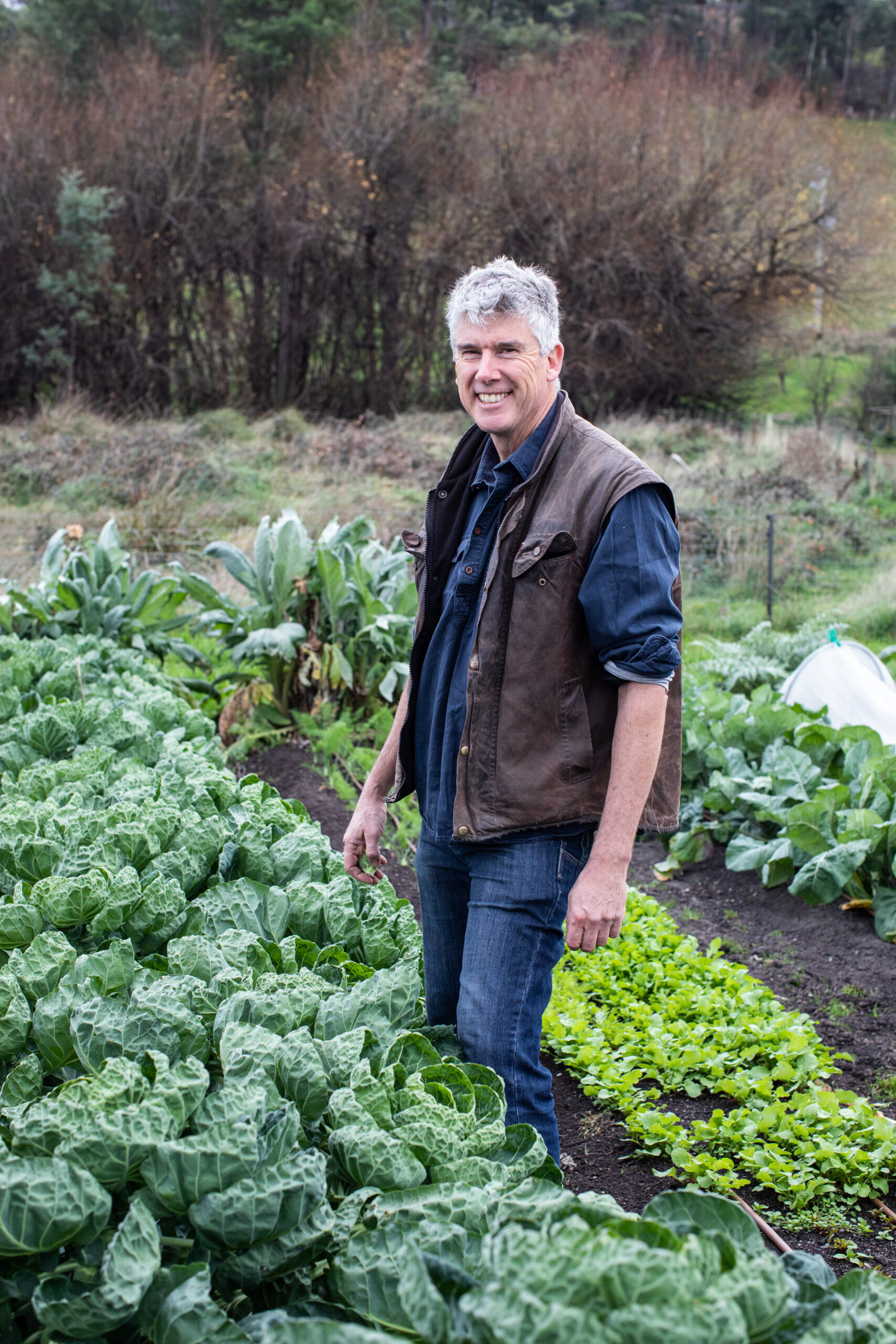
Matthew Evans is a Tasmanian food writer, television broadcaster and chef who lives and works on Fat Pig Farm, a soil-to-stomach regenerative farm and restaurant. He’s been the host of six series of Gourmet Farmer and two documentaries on SBS TV. Matthew is the author of 15 books on food, including On Eating Meat, and his latest cookbook, the updated and revised The Real Food Companion. His book SOIL is a hymn to the remarkable, and underappreciated bit of Earth that gifts us life. His most recent book, MILK, unpacks the truth and lies behind the original superfood.
Website — https://fatpig.farm/
His Books are also available on Amazon.com for US peeps.
More about this month’s sponsors:
Thank you to this month’s sponsors for partnering with our show and helping you make your swaps with their special offer:
Ausclimate’s highly recommended range of WINIX Air Purifiers is the ideal solution for cleaner, healthier indoor air. Easy to use, reactive features and settings with a truly comprehensive 4-5 stages of purification, including Hospital Grade True HEPA Filtration and Winix’s unique PlasmaWave® technology. Perfect for smoke, dust, pets, viruses, bacteria, household odours, and allergies (covering a variety of allergens). Breathe easier, sleep better, and feel better. Winix; is the most complete air purifier on the market!

Offer: Ausclimate is now giving all Low Tox Life followers an EXTRA 10% OFF their already discounted prices. Simply enter the discount code of LOWTOXLIFE on check out via: https://www.ausclimate.com.au/
This discount can also be redeemed for over-the-phone orders verbally.
Website: www.ausclimate.com.au
Facebook: www.facebook.com/Ausclimate
Instagram: www.instagram.com/ausclimate

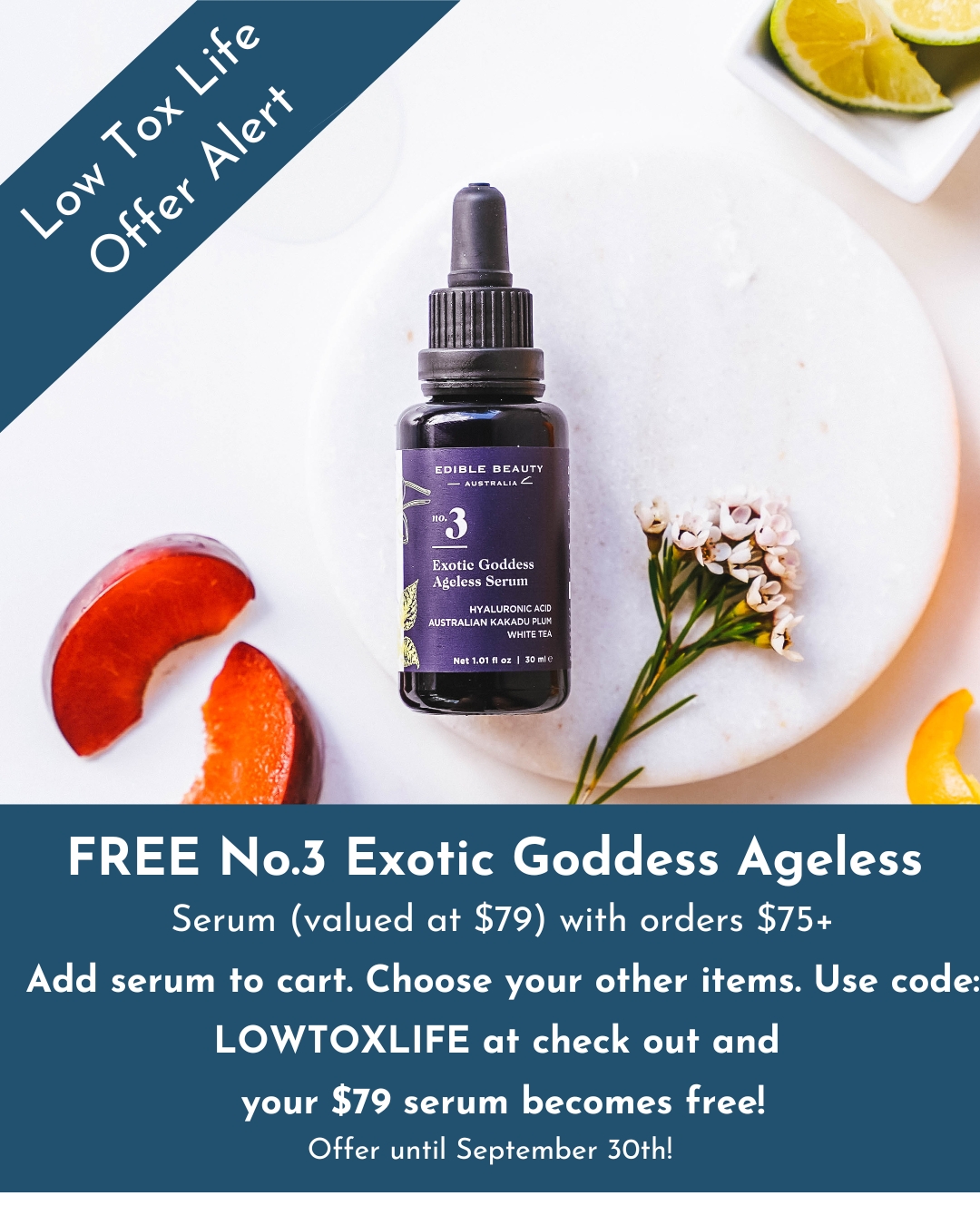
Edible Beauty is a brand I discovered a couple of years ago and a couple of products in the range have become firm favourites. They’re giving us a $79 Exotic Goddess Ageless Serum for FREE which happens to be my fave in their range (ok, it was my idea and Anna said yes – hooray!) Add it to your cart, then all you have to do is spend $75 on whatever else you fancy trying or stocking up on from their range; use code LOWTOXLIFE at check out and hey presto: The price of the serum will magically become $ZERO. They do gorgeous mineral make-up powders, an excellent sunscreen, bronzer drops for an instant glow up, an excellent micro-exfoliant and more.
A little more about Edible Beauty:
- Pure and Edible: All products are made with organic ingredients, vegan, and food-grade ingredients—formulations so pure, you could eat them! BUT also high performance!
- A wonderful planet-conscious business using recyclable packaging, FSC-certified paper, and low-waste, eco-conscious formulations using ethically sourced ingredients.
- Holistic and Synergistic: Each product is naturopathically formulated to promote a synergy between inner health and outer beauty.
- Everything is Pregnancy and breast-feeding safe
Instagram: https://www.instagram.com/ediblebeautyau/
Facebook: https://www.facebook.com/EdibleBeautyAu

Is a water upgrade your low tox priority right now? This month I’m thrilled to bring you an offer from Waters Co – a filter I’ve used for the past decade as have many in our community since. You have 12% OFF FROM August 1 to September 15. Use code LOWTOXLIFE at check out. 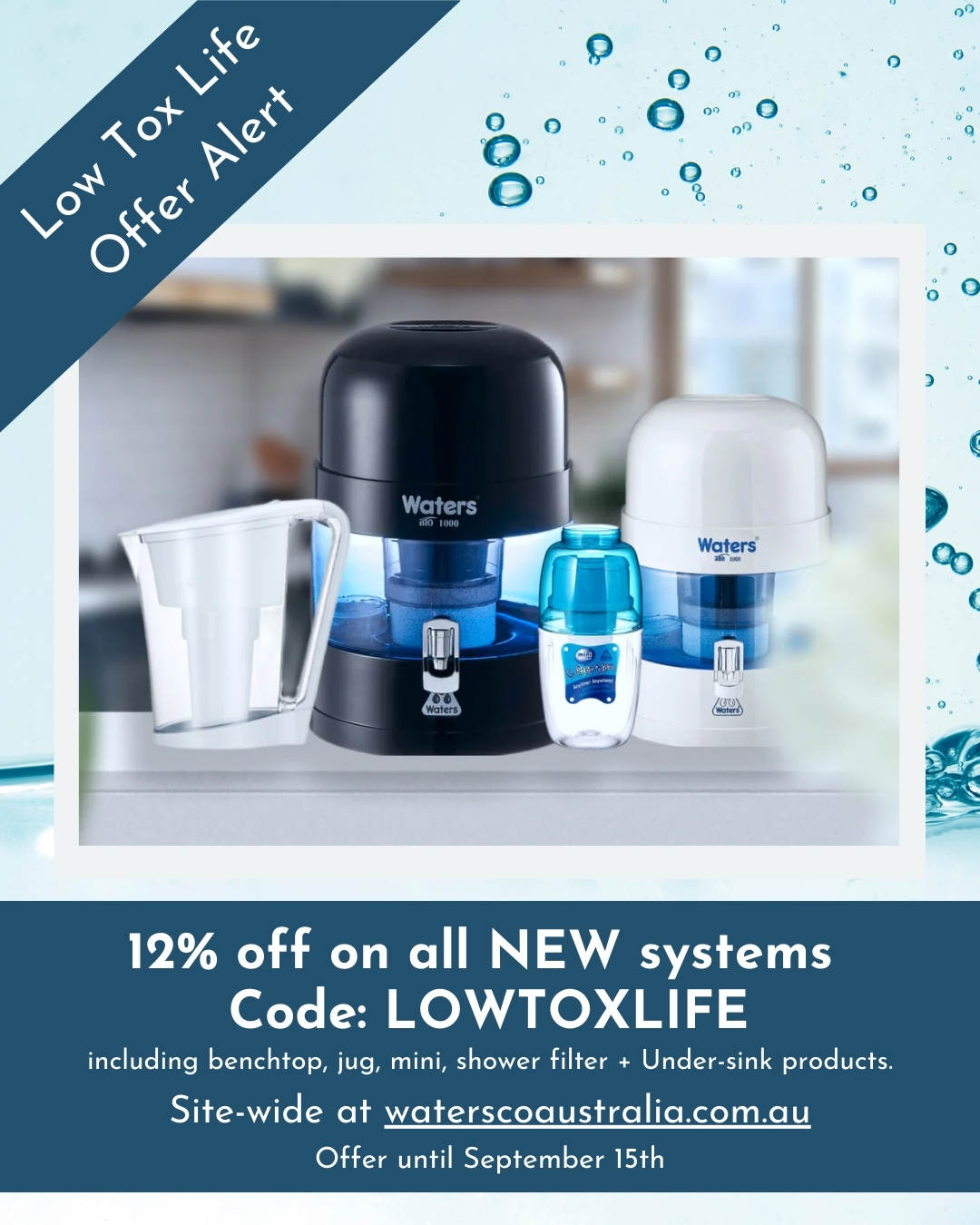 Waters Co have a series of filters from their incredible benchtop filters through to their jug and my favourite little travel filter – the Mini Water Man. Waters Co is a highly regarded water filtration leader that effectively removing up to 99% of impurities including fluoride, chlorine, agricultural/industrial chemicals, heavy metals, bacteria, PFAS, mould and odours from tap water. They use technologies such as membrane, activated carbon, ion exchange, bio ceramic, far infra-red and magnets, ensuring clean and hydrating drinking water by also adding in 60 trace minerals. Their commitment to sustainability is evident through the long-lasting filter cartridges, reducing plastic waste. All plastic materials are BPA-free and all plastic in the filter cartridges is recyclable and the filter contents can be tipped into your compost or garden bed. Brilliant!
Their benchtops come in a couple of sizes, with under-sink and shower options too. The more compact models – the jug and the mini are fantastic portable options for travel, fridges or tighter budgets. I love how you can buy the replacement filters and they fit into both the jug and the mini interchangeably – Handy!
Enjoy the offer + the life-changing magic of upgrading your drinking water, with whichever option is the best fit for your home or travel.
Instagram: https://www.instagram.com/waterscofilters/
Facebook: https://www.facebook.com/Waters.Co.Australia/
***
Title show track, by LIOR.
Love the podcast music? You will hear excerpts from Lior’s track “Caught Up” – go check it out on iTunes or Spotify if you want to hear the whole song or album, Scattered Reflections. Co-written with Cameron Deyell, it’s a great song and I love the reflective energy of it – perfect for the show, right? Enjoy. Lior is always touring, so do check out his website. It is wonderful to hear him sing live, trust me.
Low Tox Club – The place to bring your low tox life to life.
Want to join a community of like minds and enjoy all the perks of being in the Low Tox Life inner circle such as an online membership platform, 50% off all our Low Tox courses, an awesome chat group, my monthly Q&A, and special guest star interviews for just $49AUD ($29USD/28EUR/23pounds) per YEAR? We have created a special place and set of resources to help you achieve your goals and it’s a wonderful place to be – MORE DETAILS AND REGISTRATION HERE.
***
If you would love reading like me or you just simply want to go through the full transcript, you can check below.
[Alexx Stuart] (0:00 – 7:57)milk products or dairy products, today is going to be a very interesting show for you. Hello and welcome to the Lotox Life Podcast. I am Alex Stewart, your host, founder of the Lotox movement and so excited to have Matthew Evans back on the show today.
Some of you long-time listeners will remember Matthew and I have talked about soil on the show before, he’s a regenerative farmer in Tassie, he is a multiple book author, I think he’s well over 10 books now, he is a chef by trade, he was Australia’s chief restaurant critic for the Sydney Morning Herald many years ago, he used to terrify me and my colleagues when we were in hospitality and I am so excited to have him back.
He has a new book out called simply Milk and when Matthew attacks a subject, and by attack I don’t mean vilify, I mean when he tackles it, better word, he does not leave any stone unturned and you can be sure that you receive a comprehensive review of the topic at hand, all the factors that play into that topic and how we might make our best, most well thought out choices when it comes to everyday things like our products that we put in our baskets and trolleys and the subject of milk is obviously quite a hairy one these days because of climate change and a corporate hijacking of that subject, if I may permit myself to say, that often vilifies a point blank stance on things like say things that come from a cow, where everything is nuanced, of course it is, and if we’re only going to consider corporate solutions in our planet getting warmer, then we’re not actually considering all of the power that we have to align as best we can with nature and regenerate and Matthew is one of those farmers who does that from his corner of the world, growing topsoil, not just creating food and I really love giving voice to this because for me it never makes the front page news and yet is some of the most empowering and inspiring groundwork being done every day to heal, regenerate and cool our planet and so while we’re not necessarily talking about regenerative farming as a focus today, it does come up a couple of times, I’m really thrilled to have had this chat with Matthew about milk and I know you will love it. It is for the deep thinkers, it is for people who aren’t going to be triggered by political agendas or you know whether you do or don’t consume a product.
I really invite everybody to just listen calmly and take it in and be curious. I think with the outrage on the internet these days we can easily kind of be triggered as soon as something’s different from what we know or what we’ve subscribed to but we are always, all of us able to learn more, reassess, balance our thinking, add in more perspectives and I really hope this show does that no matter whether you are an anti-plant-based milk person or a pro dairy person or vice versa, I really think this conversation is for everybody.
So I’m going to hook into it in a little minute. We’re at the pointy end of the month of August which means Aussies, you only have a little bit of time to make the most of this month’s podcast offers. These brands come together to not only sponsor the show so I can put it on for you every week but to also help you with your low-tox swaps and stock-ups wherever you’re at on your low-tox journey.
So of course we have AusClimate, 10% off, Code Low Tox Life, the best dehumidifiers and air purifiers that I’ve used thus far in my journey and I am so happy to share that they have that 10% off for the entirety of 2024 for you. Then we have EdibleBeautyAustralia.com and on Edible Beauty’s website when you put the exotic goddess ageless serum, wanted to get the name right, worth 79 Australian dollars in your cart and then you add a couple of other products to the value of $75 or more and then when you check out you put the code LowToxLife in the coupon box, your exotic goddess serum becomes zero dollars. That is right, you get one of my all-time favourite hydration plumping serums packed with hyaluronic acid and antioxidants for free as long as you spend $75 on other things in the range and you are spoilt for choice on this beautiful site, naturopath founded and created products that are literally so pure you could eat them, however of course they also perform which is something we often worry about when we move off the prestige mainstream cosmetics right, but the diamond eye serum, oh my gosh I love that stuff, the desert lime micro exfoliant, the sunscreen is so good, you go have a little hunt, $75 in your cart and the serum, code LowToxLife at the checkout will make the serum free, that’s a $79 gift, very cool, thank you to Anna and the team at Edible Beauty. Next and lastly, Waters co-filters, I know a lot of you were thinking oh gosh I’m gonna plan for that the next time they’re a sponsor because I did say to some of the people who were like I really want a good filter but I can’t get it right now budget-wise, I told you they would be back and they are now back, 12% off all filters in the range, code LowToxLife, we have the Mini Waterman which is my go-to for travelling for work or holidays, it’s fantastic and what I love is the Mini Waterman’s filter when you buy the three pack is interchangeable with the jug which we also have because the boys take that one camping or we take it down to mum and dad’s when we’re staying there for a long time over Chrissy and New Year, keep it in our bathroom for the morning glass of water and we have the 10 litre benchtop for our drinking and cooking and we have the shower filter.
I have been a Bonafide Waters co-filter customer for about 13 years and the research is incredible, they spend a tonne on it in terms of independent testing as well as independent research to find a way to take out the most amount of contaminants while adding in the most amount of trace minerals, the result is a beautiful, hydrating, deeply nourishing water and you can absolutely taste the difference from your very first sip, 12% off code LowToxLife.
Speaking of sipping things, shall we talk milk? Let’s do this conversation with Matthew Evans, enjoy. Matthew Evans, hello.
[Matthew Evans] (7:58 – 7:59)Hey Alexx, how are you? [Alexx Stuart] (8:00 – 8:23)
Good thank you, I just always love chatting to you on the show because I always remember a time where you were literally the scariest individual that I could ever interact with in my years in hospitality as the chief critic of the Sydney Morning Herald and it’s just so nice to know you’re a lovely bloke and you like writing about nerdy things and today we’re talking milk. [Matthew Evans] (8:24 – 8:26)
Yes, quite nerdy I think, I’ve gone quite nerdy on milk. [Alexx Stuart] (8:27 – 9:05)
You have and of course you’ve become a farmer in the many years since and I kind of want to start there because something that you talk about in your latest book, which of course is on milk, is that as a farmer you see a chief objective of farming to not just nourish the people but nourish the land on which you farm and I wanted to ask you a question about that so people could get a sense of what that means and what type of farmer you are.
I would call you a regenerative farmer but of course under that there are a lot of different ways that can be done, so what does it mean to you?
[Matthew Evans] (9:06 – 10:36)So I guess what I’m trying to do here is, or we’re trying to do here because I certainly don’t work on it alone, is try to nourish the soil that nourishes us. So every time we grow something there’s a little bit of mining that happens I guess with growing stuff, you take some things away like some iron and some calcium, magnesium, whatever you take out of the soil but there’s a lot of that locked up in the ground still and what we try to work out is how can we grow food not just, I think of the Malakadie people, so this is Malakadie land, the Huon River people, they’ve been fire stick farming, altering the landscape for 43,000 years so I try to think, well can this patch of land grow food for, I can’t think 43,000 years, can it do it 4,000 years into the future?
400 years is probably better for my brain and to do that you need to look after the land. So since white colonisation we’ve lost about half the topsoil on this land, maybe a bit more and so can we grow food not only not lose topsoil but grow topsoil and so what we do that in a range of ways, in the garden we bring in compost and we grow a range of different crops because every plant gives something to soil and every plant takes something from soil and on the rest of the farm we do that using livestock, so we move animals around because livestock can move fertility uphill really quickly, they can take something that’s going a long time to break down like grass or leaves and you put it through the stomach of an animal and it can break it down much quicker in you know six months earlier, so you can cycle nutrients much quicker using different techniques.
[Alexx Stuart] (10:37 – 10:39)It looks like it’s working for you from the pictures. [Matthew Evans] (10:41 – 10:47)
The farm has, we’ve grown topsoil while growing about 10,000 meals a year. [Alexx Stuart] (10:48 – 10:48)
Amazing. [Matthew Evans] (10:49 – 11:04)
Yeah look we’re no experts, we just followed a few pointers from much more experienced and wiser people than us and tried to work out how you could translate that into our little corner of the world and 95% of the time it works. [Alexx Stuart] (11:05 – 11:51)
And you know it’s so, it’s always so grounding to hear storeys of farmers doing this Matthew because what we see in the media especially talking about climate change is it’s been hijacked by the corporate idea of what we need to do to fix things and we need to create new technologies and look there is a place, of course there’s a place for that, but the idea that we’re not actually putting people like you and your colleagues who are growing topsoil on the front pages at least in equal measure blows my mind because that’s actually where the groundbreaking work is being done on the daily and it’s the most connected to the way it always should be. [Matthew Evans] (11:51 – 12:39)
Yeah I think it’s sometimes it’s frustrating as a farmer to see you know whether we can you know test the so-called soil on the moon or whether we can grow food on Mars and at the same time because we’re not investing in the right way or doing things perhaps in the way we should, paying enough for food perhaps or you know supporting the farmers to do a good job. Meanwhile we’re turning you know the only world that we have evolved to exist on we’re turning that into a moonscape and that’s a real worry for us in a big picture sense but how do we do that day by day just like anyone you know listening to this you just deal with what you’ve got in front of you so is that how you choose your food, how you grow your food, where does it come from and you know not just your food but everything and how does that impact the globe? [Alexx Stuart] (12:40 – 13:14)
Yeah and we’re going to unpack the humble carton of milk. So I guess we need to start by talking about your lovely Myrtle and the many gifts that she gives you. You talk about her so beautifully in the start of your book and I just wanted you to share the just give people a sense of how crazy magical it is that you can milk this cow and care for them and what you can get in return for that care and love is just it just blows my mind on the daily. [Matthew Evans] (13:15 – 14:36)
Yeah and to me it’s the original alchemy so so outside the window just in front of me here I can see green grass now grass is made of a sugar and sugar is energy indigestible form and that grass grows just using like the original you know miracle which is photosynthesis so sunlight, air, water, soil and grass grows so it you know it captures all of the carbon out of the atmosphere, nitrogen out of the atmosphere and becomes this product but you and I can’t digest that grass or so it’s energy indigestible form but not by us.
A cow then goes eats that grass and within a day or two produces milk and milk is not just milk, milk is cheese, milk is mascarpone, it’s clotted cream, it’s yoghurt, milk is sort of all these other things and so this stuff around me here this you know carbon dioxide in the air, gases in the air that’s mostly what milk is made from and but it has to go through this process of you know photosynthesis grass and through a cow and I think that’s why I got interested in milk because it is utterly miraculous that it’s incredibly nutritious, it’s the most complex lipid fat known to humanity that that we just comes from essentially from thin air as long as we you know use nature does its processes correctly.
[Alexx Stuart] (14:37 – 14:54)Yeah and I guess one of the the chief things that we hear so often is but we’re not meant to drink milk or eat milk products from other species that’s not how nature designed it you’ve just been talking about nature so how do you explain that? [Matthew Evans] (14:54 – 17:29)
Yeah yeah it comes up quite a bit that that one that we’re not designed to drink it and because it’s fascinating so like what I wanted to do with the book was to say let’s agree on what milk is which is a little bit hard because scientists struggle so there’s you know cockroach milk and flamingo milk and all sorts of other milks that I sort of cover but but essentially let’s say it’s milk from a mammal let’s let’s agree that this is a wondrous substance this is packed full of super great things that are designed to nourish the young of that animal so why would we drink the milk of a different species than us and why would certainly why would we drink it as adults because you know 200 years ago before we had infant formula they knew they could keep babies alive if they had a goat at the orphanage and you know it would allow the the baby to suck on goats milk so so we know that other milks have kept babies alive but why as adults and so that it was one of the questions I had as well so you know what has it done for us not only gastronomically culturally but why biologically and it turns out that well actually a third of the world is designed to drink that milk a third of the planet have inherited a gene and there’s actually five different times this gene evolved so it happened independently in five different corners of the world three times in sub-saharan africa so it’s not a white person thing once in that gene was taken up in the population at crazy rates scientists don’t know why but it was taken up at the same rate as resistance to malaria so we that allows us to to drink to digest lactose into adulthood so a third of the world’s population have that capacity so we can we can digest a lot of the proteins you can still have a glass of milk a day even if you’re lactose intolerant and most people can consume the proteins but this allows me to drink a litre of milk a day it’s quite insane so my very dna is actually designed to consume milk in its entirety you can’t say that my dna has changed to consume kale or to consume chickpeas or or pretty much anything else it’s a very weird anomaly um and so that’s a strange you know you can have that argument and you can you can choose not to drink milk that’s fine i really don’t care whether you drink milk or not or consume dairy or not people have biological you know ethical reasons for not doing it that’s fine but at its core we you know a lot of us have adapted and changed and we are actually designed to consume milk in its entirety yeah and it perfectly explains why some [Alexx Stuart] (17:29 – 17:46)
people have their come to jesus moment oh my gosh i’ve never felt better when they removed dairy from their diets uh and conversely why people like me get to say thank you ancestors because sour cream is literally my favourite food under the sun and i would die if i had to give it up how great is [Matthew Evans] (17:46 – 19:06)
our cream like we’re just the best thing in the world i know look and i get it that some people this is the thing that some it isn’t great for everybody and it isn’t um you know everybody has their own issues like i used to be vegetarian right i couldn’t eat that many chickpeas and lentils without being a menace to the world right like i was it was not good clear the room yep i can’t eat a lot of chilli right you know i can eat a bit that’s my biology and i have to tailor what i eat to that and i think that’s where dairy can fit in we know that three quarters of the world’s population actually get a substantial part of their nutrition from dairy so that’s only with a third being able to digest it in its entirety but you can that’s because of the sugars and we can ferment the sugars through you know making yoghurt’s only got half the lactose hard cheeses have none of the lactose left in so the cultures have worked out how to use dairy and and um but each of us has i guess may have little um things you know that may make it harder for us to digest here we may have little um not not necessarily just the intolerance to lactose but it might be an allergy it might be mild or it might be serious to some of the proteins um that exist in milk so other people those proteins are only doing them good for some people that might be an irritation and they might have a limit to how much they can have or they may not be able to have any dairy but that’s finding your own little place and there are tests you can do for a lot of [Alexx Stuart] (19:06 – 19:32)
things these days yeah of course and and would you say in researching the book i’m curious to see how much came up around the link between the processing of dairy in modern terms and this massive escalation of people having issues with it that maybe their grandpa or grandma didn’t and then all of a sudden now the grandkids do yeah that’s a that’s a really interesting one [Matthew Evans] (19:32 – 21:25)
because pretty much everything that we do to dairy um uh say well let’s use cow’s milk as the easy example so everything we do to cow’s milk after it comes from well everything from the the breed of the animal to the way the animal is kept and it’s fed to what happens to the milk you know as it comes out of the cow and what happens to its process affects its digestibility and the benefits it has to our system so every time it’s pumped through a different pump every time it goes through a pipe every if you feed a cow more grains and dry matter and not enough fresh greens um if you uh homogenise milk so that’s where you um you disperse the fat so it doesn’t form cream on the top you change not only the the structure of the fats be saying change the structure of the proteins when we pasteurise milk so that’s the heating of milk to kill pathogens um we change the structure of it again the fats and proteins and they are digested differently in the body and so we know that certain people have less response they can digest certain milks easier so it might be a2 which is a brand but it actually relates to um one of the proteins casing in milk um some people do much better on unhomogenized milk um you know there’s there’s a lot of evidence around this so everything we’ve done has i guess lessened milk’s goodness um and and some of that’s trying to lessen its you know dangerousness because because you know um a lot of people did die at various points in time when we when we didn’t understand how nutritious milk was and not just nutritious to us but nutritious to all the dangerous bacteria that might kill us so so things like pasteurisation came about for a reason but the downside of it is i guess they take out some of the nutritive benefit of uh the milk and some of the um immunomodulatory benefits of milk the things that help moderate our immune system [Alexx Stuart] (21:25 – 21:44)
and so knowing that and knowing how much processing happens uh if one goes to the supermarket today and wants to try and make the best choice they can with what they’ve got because they love milk or their kids do or whatever is there a good choice we can make [Matthew Evans] (21:44 – 22:26)
in that environment yeah look the first thing is to have a full fat milk so generally most of the evidence shows that a lot of the benefits you get from milk are from the full fat version the second thing would be to um look at the usual things you’d probably look for if you if you care about what you eat so is it organic or biodynamic you know is it from a single herd is it from close by and and um and going for unhomogenized so the milk you buy in australia always has to be always has to be heat treated to kill pathogens so um and but but they’re all often homogenised homogenised is the fat you want the cream sitting on the top old-fashioned that i grew up with and you know probably a lot of your listeners have never maybe never seen but the cream rises to [Alexx Stuart] (22:26 – 22:31)
the top when you when you just know i remember the little red foil caps on the bottles we had [Matthew Evans] (22:31 – 23:16)
the gold tops which were the in canberra i used to deliver the milk the gold tops were the cream on the top the red tops were not the blue ones were um what we call hog slop um uh skim milk or low-fat milk um you know uh yeah so so they’re the sorts of things that you’d be looking for and but luckily there are a couple of um dairies around who actually pasteurise at a lower temperature so and that leaves a lot of the um bioactive compounds in the milk so that instead of pasteurising at 72 degrees they do it at 65 degrees there’s a time temperature correlation so they have to do it for longer but all you need to know is that milk tastes better unhomogenized and pasteurised at a lower temperature and it has more in it that’s good for you if it’s done [Alexx Stuart] (23:16 – 23:26)
at a lower temperature and unhomogenized yeah and these are all things that we can actually reach out to companies and ask about if we can’t readily see it on a label yeah like i think jimmy’s [Matthew Evans] (23:26 – 23:56)
milk in sydney is um pasteurised at 65 degrees i think there’s a company in western australia um doing uh quite um quite large scale um pasteurising at a lower temperature and working with scientists to um to uh to show the benefits of doing those kinds of things so it does exist um if you if you’re stuck just go for the branded milk ideally one with cream on the top ideally from you know a local brand that you heard that you you might have heard of there’s lots of them [Alexx Stuart] (23:56 – 25:06)
appearing around australia now which is great yeah there are it’s much better than it used to be uh and in terms of red tape and farming and people wanting access to raw milk like people recognising well i i feel like i deserve that i feel like i should be able to get it why can’t i get it you know if i have a direct link to a farmer why can’t i buy it from them why why does that farmer not get to sell it to me um these are a lot of questions that a lot of people have around finding optimal sources um and you know for a lot of people that i’ve spoken to the wish list is i get to go to my market store holder i know my farmer and i get to buy raw milk why can’t we make that happen in america it seems there’s some states yes some states no uh australia we seem still pretty hard line although we’ve started to move a little on cheese i’ve seen especially in tassie with a couple of brands so where are we at there and what are some of the um i guess concerns you have talking to farmers all the time what are you guys talking about yeah i did we call [Matthew Evans] (25:06 – 27:32)
it um the new moonshine uh because it’s you know it used to be you know dry you know when they banned various places people were smuggling you know um hard liquor around and and now it’s people smuggling raw milk and for us it’s actually a real worry because you know i i i i looked up some raw milk once where they were selling it online and it was delivered this was in western australia they deliver it to your door and they put it in a shady spot spot with a two-week use by date right so raw milk is a living product so it comes from a living animal it’s a living product there’s lots of things in it that are um uh beneficial bacteria that are really you know potentially good for you there’s lots of good proteins in there that are unaffected by the being heated which is really great but there’s potentially things that can go wrong and so we we think that raw milk um should never be older than three days so there are problems with people trying to sell it illegally i actually i’m this weird sort of person i actually think raw milk should be legal the farms should have to go through some pretty test you know strict testing um you can’t this in europe they do you can’t feed silage so it’s a it’s a form of fermented um hay essentially that you’re not allowed to feed to the animals because they know they’re more likely to get sick um i think um we should have all of these rules around that and you and people should be able to take their own container to a farm and buy directly from a farmer i think that would be a really great thing but at the same time i think no one should buy it because when i see the people around me who are trying to buy raw milk they’ll come here and and they might tell me oh i just bought some milk up the road or around the corner and i’m like well where is it now and they’re like just sitting in the back of the car i’m just going to pick the kids up and go you know to bunnings for three hours and it’s like no no no no no no no this is a living thing this is really you know and and so i think we we can learn how to deal with it but i think a lot of people kind of don’t necessarily understand it but look let’s face it we are all trusted with raw chicken right raw eggs they have health implications if they’re mistreated oysters bloody hell oysters like seriously you know like there are pretty i love oysters but there’s a risk associated with oysters just as there is with raw milk so it’s funny how and even as a commercial in a commercial kitchen as a chef i’m trusted with these things that are potentially dangerous but not with raw milk so i think i think it’s a hang up from from when milk was badly treated 100 plus years ago yeah yeah and we hopefully have [Alexx Stuart] (27:32 – 27:38)
the maturity to actually set up some rules and live by them yeah yeah look at yeah yeah so it’s [Matthew Evans] (27:38 – 28:01)
it’s not milk that’s dangerous it’s people that are dangerous um and and and you can’t you know like some people don’t wear seatbelts whatever like you know you only do so much but uh in essence i think there’s there’s a lot of benefits to raw milk in a dietary sense that we are missing out on because we don’t have access to it and only well only farmers have access to to their own milk yeah [Alexx Stuart] (28:01 – 28:29)
yeah and would you say that um that it’s frustrating in farming circles to not just have a government that understands well let’s put this rule in place and if we do it this way then it could be safe and could the resistance to doing that be coming from larger more um corporate bodies uh that don’t want that personalisation capability of people getting more stuff directly [Matthew Evans] (28:30 – 29:33)
yeah yeah yeah definitely i think it comes from from bigger farms and bigger corporations because they don’t want that and they don’t want risk you know so they try to to limit any risk and there is a risk to raw milk because of what can happen once people you know they may not have a bottle they may not refrigerate it properly might keep it for two weeks who knows what they’re going to do with it um and so they’re they’re worried about that and it’s a it’s of no benefit to them to to they think to to to let to allow smaller more um health focused uh people to maybe um offer it i have to say i’ve never met a dairy farmer who doesn’t drink the milk out of their bat right who just goes and dips a jug in they don’t go to the supermarket and buy a pastries milk when they’ve just got 10,000 litres waiting for the truck to come and pick it up so they you know and you don’t read about dairy farmers dropping dead all the time so we kind of know this product is is pretty good even before um yeah you bring in some stricter rules around the sort of milk that could be sold and stricter testing um so look i think i think there’s vested [Alexx Stuart] (29:33 – 30:02)
interests that would stop it happening are stopping it happening yeah and and that’s kind of uh a little uh idea that if this is important to someone listening right now like have that conversation write the email to your mp say makes me sad that i can’t directly support a local farmer when we know uh you know just as you’ve said they’re not dropping dead drinking it so why do you think i will if i look after it properly yeah and the milk you’re buying you know like it’s [Matthew Evans] (30:02 – 30:59)
it’s it’s pretty good but like anything it’s gone through a series of processes there are you know chemicals used in in the processing plants there are chemicals in the packaging there’s a whole array of things you know that go on in that that are you know not necessarily good for the planet let alone your body um that you could be short-circuiting if if you were interested and this is not you know i’m not saying you should just be able to walk down the supermarket aisle and have 16 types of raw milk for sale this is very much the people who are actually really into it and think think it’s going to be worth pursuing can put some effort into it the farms who think it’s worth pursuing can put some effort into it and those two could come together and come up with a system that that doesn’t make people sick and provides um consumers with what they are honestly people are just gagging for this oh yes i can tell you right now yeah i just got yesterday oh can you sell us some milk well no no i can’t but you can milk a cow [Alexx Stuart] (31:00 – 32:24)
um a free milking day at the farm well not free you need to make some money um okay so i want to move to uh uh consequence around milk because that’s something that you really deeply researched in the book and is very fascinating because you talk about how all milk and all things we call milk has consequence um and that’s an important factor when you’re deciding whether to drink it or not or whether you’re deciding to drink what kind uh you know and then even the perception of consequence like you go to a cafe now and if it’s the type of cafe that browns upon milk because that’s the current team at the moment and they’re anti-dairy for whatever reason um then you could ask for just regular cows full fat thanks and get a look so and so they’re thinking about consequences that perhaps the next person’s not thinking about and we’re all perceiving different consequences what did you find to be some of the most important things for us to consider when choosing anything that’s either called milk ylk ylke i mean you know the list goes on for the many different iterations of the stuff what did you find well i guess one of [Matthew Evans] (32:24 – 35:24)
them is that pretty much all of the plant milks are in long life packaging so they might put them in the fridge because they want to pretend that they’re really um you know fresh and whatever but they don’t need to be in the fridge and they generally have six to seven layers of virgin materials so stuff that’s harvested from mines and from the world you know um from the world and generally petrol and and derivatives and that kind of stuff and uh and lay it up and pretty much unrecyclable so you’ve got this incredible waste stream the plant milks are generally made from um you know for example there’s a waste product so so when you get a litre of oat milk you end up with 200 grammes of waste oats so those oats for every litre of oats 200 grammes of of oat milk 200 grammes of waste oats so you know do something with that and like it would have been better if a human ate the oats let’s face it um you know that’s nutritionally uh for the planet that’s a much better use of the world’s resources but that’s okay they’ve been watered down the water is then trucked around it’s mixed with some other chemicals to make it into oat milk the 200 grammes of oats has to go somewhere so it either gets thrown in the bin or it might get composted but generally gets fed to pigs you know so that so it supports the animal industry um and and some people find that apparent because they’re trying to drink the oat milk because they think it’s going to stop the animal industry but it it doesn’t it just feeds into the animal industry i guess one of the things that that people one of the consequences that people aren’t realising is that that the the substitute milks are not milk um they are either doing you very little good or potentially harm as if there’s emulsifiers in there and some of the fats that are in there um you know they can be really bad for the emulsifiers interfere with your microbiome the things that feed your gut and we know that your gut is really intimately tied to your brain and so we know this is this is going on so the plant milks are doing either very little good or potentially harm whereas generally the dairy is doing you probably good potentially great good and people kind of forget that so when you’re doing comparison you know you can say oh well cow’s milk has more emissions um in terms of carbon but well it has you know into let’s compare oat milk which is the big one at the moment yeah but it has three times as much protein and that protein is bioavailable you have to drink eight glasses of oat milk to get the same calcium as you do from one glass of of milk you know so so you can’t so if you extrapolate you know eight times more carbon emissions to get the same goodness is it does it look as as fancy and and the other thing is i think there are vested interests in in both sides there’s you know big dairy companies and you know dairy they’re wanting to say you should drink more dairy and i don’t necessarily think we we need to drink more dairy and nobody has to have dairy i don’t think that’s vital you know aboriginal culture existed for 60,000 years without dairy you know the americans you know they they didn’t have dairy until colonisation you know southeast asia has you know people can exist without it if you get rid of it what do you replace it with and then [Alexx Stuart] (35:24 – 35:37)
especially for that third of the world that you talk about uh being quite um like not majority nourished but it forming a big part of the nourishment of the overall diet yeah a massive [Matthew Evans] (35:37 – 36:32)
part like they found in the uk so this is the great example where plant milks and vegetarianism and veganism have taken off over the last 10-15 years hospitalisations in the uk tripled in a 10 year period okay for vitamin deficiency vitamin deficiency so so so hospitalisation for vitamin i got free frame that hospitalisation for vitamin deficiency tripled in 10 years in the uk right so so so and and the researchers blame plant milks for a large proportion of that because people are saying oh that’s made my coffee white or i can put that in my tea that is nutrition well it’s not nutrition most of those people are women of childbearing age so you know they’re pretty it’s a pretty pivotal moment in people’s lives um uh when they’re you know trying to have children around childbirth um so it’s a pretty you know scary number so this taking dairy out has real [Alexx Stuart] (36:32 – 36:39)
world implications and then what we put in there instead it has to equal that yeah yeah that’s the [Matthew Evans] (36:39 – 38:41)
thing so you can take something out and and a lot of these things they how they promote themselves is what what they’re not and what they’re not is dairy um not saying what they are so if your almond milk your almond milk might be two percent almonds right so i love almonds lots of good stuff in almonds i got a you know five kilos just delivered from south australia of this beautiful heritage variety of delicious almond i love them but i’m not gonna put two percent you know into a look you know 20 grammes in a litre of water and and think i’m getting the nutrition from it um uh if i want nutrition of almonds i’ll just eat almonds so you can’t compare those substitutes to real dairy in in any great sense and i think the other consequence that i that i really i try to do a fair bit in the book is go through follow the money like who is investing in cell milks who’s investing here and oakley so oakley is the world’s biggest oat milk brand so the you know one of the major shareholders in oakley is china resources now where does china resources because oakley’s always lecturing us about our carbon emissions china resources you know a chinese state-owned coal mining company right lecturing dairy farmers on carbon emissions right so so it’s all you know you can you can believe you’re doing good you can virtue signal you know saying you’re doing this but there is nuance to everything so there are some oat milks that are better than others there are some that you know haven’t travelled as far there are there are almond milks that have you know nine percent almonds not two percent um you know there there are dairies that that that keep cows in sheds their entire life and they never get to walk around in the sunshine and eat eat green grass and then there are dairies that that match that picture in your head of you know that the the grazing animal in the verdant pastures so everything has i guess nuance to it and everything has consequence um what we have to decide is well what’s the consequence on me on the on my community on the planet around me and what do i value the most [Alexx Stuart] (38:42 – 39:50)
yeah and a huge part of it is actually connecting yourself to the truth of what you’re consuming as well and really doing that work because it’s very easy in our headline culture now to think oh yeah good for the planet good you know and you just you just start believing it because you see it everywhere or someone important says it or someone famous says it and and then there you are after your yoga class having an oat milk latte thinking you’re a good human because that’s the storey that seems to be being told by the loudest and most people at that time um but are you and you know it’s like i always say to families trying to ditch additives you know yes it might say gluten-free dairy-free uh you know high protein all the things that it might say with big ticks to make it look like this very positive choice but they’re cheesy puffs they’re still processed bs uh junk and they’re not going to do you any favours look on the back look at the ingredients and as you’ve just said which is obviously a bigger piece of work if people really wanted to dig in followed the money [Matthew Evans] (39:51 – 41:25)
yeah and that’s the thing that there is this um this fashions we know you know dairy’s not about to die you know it’s but there is this sort of sense that oh you know let’s put the boot into this because it’s so bad and so evil but but if you you don’t have to consider what i like to do is people consider the basics so if you’re going to replace your fresh milk in your tea your coffee whatever with it with a plant-based milk you just need to know one thing that plant milk is ultra processed food it is food that your body does not recognise as food right so there’s lots of things in there the way it’s been pulled apart the way it’s structured the way it’s been put back together your body does not recognise that as as as food and and get the nutrition out of it so we know ultra processed foods are essentially bad for us we should limit them in our diets so it doesn’t mean like i love a tim tam right i’m you know you’re human yeah yeah but but don’t look at that as being food your plant milks are not food in the sense that your body recognises whereas dairy is food and yes some people’s body recognises it and say and say whoa hang on i don’t like that protein but most of us you know can digest some dairy um even if you can’t digest the sugars you know have cheese aged cheese has no lactose so if you’re lactose intolerant you can have as much cheddar as you like you know have as much parmesan as you like so there are ways to use that but you know you don’t have to use dairy but don’t look at [Alexx Stuart] (41:25 – 44:09)
fake dairy as food yeah great point excellent point um i want to bring up politics next because it you actually had it in your points and then i thought oh no we don’t really need to talk politics but it kind of feels like it’s an interesting place to explore because we have this polarised reality right uh and we have like the mega dairy corporations of the world who want all the freedom in trade of the world to continue to operate in uh the questionable ways that they do both ethically and all driven for profit and sometimes you would find actually most of the time that they would be say to the right of the political spectrum and then you have to the radical left side of the spectrum like let’s try not to ever harm an animal when we eat uh which is uh completely devoid of reality if i mean you know in your book soil you talk about the snow pea farmer farming for the vegan food but he has to kill 150 deer to operate that farm and protect the crop for the salad that you want to eat that’s apparently cruelty free and you know and like so we have these spectrums uh in our polarity at the moment and they almost seem on the very edges to be as as removed from where we need to be as the other camp is but for completely different reasons uh and then everyone just wants really good food and not to have sick kids Matthew so like in the middle like can we just have a sister that stops fighting and shouting at each other and trying to silence the other and can we just have real food like could we maybe make that the Venn diagram situation um how do we get there from everything you researched it like it is genuinely perplexing uh and troubling to so many of us who just want to provide great food for our families and support good farmers and to know a direct relationship uh where there’s transparency and ethics it it sometimes seems impossible for so many and ironically in the region areas regional areas where they’ve only got a giant supermarket to shop in uh in a mining town let’s say where you don’t have the kind of soil you can even grow food in like I’ve spoken as you would have in many different areas where the challenges are many and we just want good food and this weird politics uh landscape that seems to stop that from being [Matthew Evans] (44:09 – 44:47)
easy yeah look and the politics it’s weird and it’s it’s um look and it’s not sexy like just saying you know what your grandma would have recommended you know like it’s just not interesting um to most people like it’s it’s you know it’s it’s kind of like we when we talk about soil and they they’re in you know I can I was going to something recently they’re trying to grow how are they going to grow plants on Mars they’ve just you know Australian government’s put millions of dollars into this programme to grow plants on Mars right they’re going to send up like a one kilo tub up to the moon it’s going to cost I don’t know two million bucks or something just to send that little thing up and but you try and get some money to grow a nutrient-dense carrot right [Alexx Stuart] (44:47 – 44:53)
it was like oh no that’s boring or to feed the 50 of Aussie kids going to school without [Matthew Evans] (44:53 – 47:19)
breakfast yeah yeah yeah yeah exactly yeah so so it just and it that’s I think where the problem is so I’ve got this really weird thing going on at the moment where you know because I’m researching milk I said to my wife you know are you buying a new bra she said what are you talking about I’m getting these pads for bras and then I’m like putting in in my computer or mammary glands or you know I’m like oh the other day because because it is politics because there’s these images of in the U.S. these these neo-nazis essentially people with neo-nazi tattoos on their on their chests that yeah they got their shirts off and they’re dancing around in front of the cameras drinking milk as a sign of you know sort of white supremacy and I’m like what hang on how does milk end up in why is milk can seen seen as you know but I’m terrified about what my search history is going to you know bring up now the ASIO but look why is that you know milk was used as a like part of the temperance movement to keep us all pure you know yeah cornflakes you know that that milk probably just stopped us touching yeah and lower the testosterone like there’s it’s got a checkered past doesn’t it yeah I’m like wow that’s what I that’s I guess what I wanted to do with this book is say look leave your baggage behind right like we’ve all got baggage you know I’ve got my biases I milk a cow for crying out loud you know like I’m pretty biassed but um but I’m biassed for me in terms of you know I think it milk and is you know dairy cows are good for my farm and milk is it works for me I don’t care what other people do but try and forget your bag and just go look you know milk is utterly utterly remarkable whether it comes from you know an echidna from from a woman’s breast from a cow and what it is designed to do for us as young animals is utterly amazing whether we drink it or use dairy as adults is a moral question it’s a biological question you know there’s a lot of it’s a gastronomic and cultural question but um don’t forget don’t don’t demonise milk because it’s not milk that it’s us bringing our baggage to to the topic that um that makes it political and and and makes it about about you know self-identification or you know being being frowned upon for ordering cow’s milk with you with your latte um you know closing the name latte meaning um milk love a bit of cynicism [Alexx Stuart] (47:22 – 48:26)
it’s it’s so true I really like that leave your baggage at the door and actually try and work out what it is uh when it’s good when it’s not so good and what it definitely isn’t I mean from there you can decide is it something that works for me biologically is it something that I’m allergic to and I really shouldn’t touch but should I make it therefore bad for everybody no and I think this is something we’re doing a lot in this uh climate change wars um stuff that you just constantly see coming out um unfortunately the guardian uh is it’s just as bad at this as anyone um clamping down on cows as the uber evil um kind of uh nemesis of us all in climate change and I just feel like there isn’t space to actually explore what good farming and and actual dairy was and is and could be if [Matthew Evans] (48:26 – 50:07)
we left the baggage at the door yeah and that’s that’s exactly how I feel with in terms of there um we we tend to say that that somehow dairy is inherently bad and plant or other you know replacement milks are inherently good in some parts of the media and that’s not true but a lot of it is how how it’s done and I’m very interested in how dairy was done and it was done inefficiently and it’s still being done quite inefficiently in lots of parts of the world but these are people who utterly depend on a very you know one one in four farmers around the world has a dairy dairy animal that they rely on like this is not they’re taking stuff we can’t eat and turn into something we can it’s it’s amazing so but what but how have we gone too far in intensifying have we you know I think I think we forget life when we’re doing this we forget the life of the cow and the calf we forget the life within within those animals in terms of their microbiome we forget that the life the ecosystem the biodiversity that can exist in and around a dairy farm but if we don’t do it right we don’t end up with those things and then the life within the milk that stuff that that that builds our immunity that builds our robustness that that makes us resilient that exists in can exist in milk but if we’ve forgotten all the other bits of life getting up to that point and then and then we annihilate the life that’s in the milk well are we getting the best dairy that we should get for us for our land and for our society yeah I mean something [Alexx Stuart] (50:07 – 51:17)
that I thought of as you were talking about the dependency on a dairy cow is I read a statistic recently around how many small holder small micro business female farmers depend on that for a sense of independence and ability to to to feed their families when say there’s no father in the picture and to to just clamp down with this one size fits all milk is bad actually denies a huge percentage of people independence freedom security and I think we often forget that because we’re in our own little you know bubbles in in cities often where we’re so disconnected from the realities of the world and what it means to just make a an offhanded just quick comment about how dairy is awful it’s poisonous it’s toxic it’s cruel it’s you know whatever as a general statement and we miss all the nuance of it yeah and you can be in your inner city cafe [Matthew Evans] (51:17 – 52:03)
and order a you know a hemp milk latte that’s absolutely fine but don’t demonise those people in sub-saharan africa who are totally reliant on one goat and that that goat’s ability to to transform you know things that are completely indigestible to humans into nutrient dense life-giving you know life-giving in every sense from not just the nutrients but the immune boosting properties of the dairy that they get from that animal and I think that’s the risk we run is if we demonise dairy um you know we run the risk of of of um and saying that we got to get rid of dairy of of marginalising that even the most vulnerable people on the planet absolutely Matthew thank you [Alexx Stuart] (52:03 – 52:52)
this book is incredible and it’s so thorough and nerdy as I said to you before we hit record that I just think everybody who’s curious about the subject and just unpacking to the ends of something we never get to the absolute end of course but you do a bloody good job of trying to get us there to really understand on a deep level the significance of it as a food the significance of how badly we’ve gone wrong in so much of the production of that food or its fake nouveau counterparts um and and really also for me what I’ve taken from this is um is understanding that one size fits all once again is probably the worst thing humans could [Matthew Evans] (52:52 – 53:19)
ever try to do as an idea yeah it never does yeah dairy is such a big thing like if you’re just saying you shouldn’t eat one type of vegetable or something but dairy is is a massive component of a lot of people’s lives and if we’re going to get rid of it or we’re going to alter what’s in it by changing how we feed the cows and you know do it in a negative way then there are real world repercussions as we saw with the um the UK experience so far [Alexx Stuart] (53:20 – 56:20)
thank you so much great to chat to you again thanks for having me see you alex i hope you loved today’s show as much as i loved bringing it to you i want to remind you that if you are someone who craves a lotox community that is judgement free full of empowerment has health professionals and building health professionals that can support you as well as me in there answering questions multiple times a week i want to invite you to join the lotox club for the price of less than a cup of coffee a month you have an annual membership for 49 australian so it’s about 30 us or euro that allows you to have a member master class every single month with a health professional or global expert from the podcast where we have them to ourselves for an hour to ask questions and deep dive further you have the beautiful supportive chat group you have q a’s with me me answering questions we read books and talk about them and a whole bunch more you can head to lotoxlife.com hit the explore tab and join the club is the very first option on that list of course we have over 10 evergreen courses that you can jump into anytime whether it’s navigating everyday lotox swaps with our go lotox signature course whether you have kids and you’re wanting to know how to best support them with our lotox kids course whether you’re planning a family and looking at a healthy lotox preconception journey reducing inflammation especially the chronic kind with our inflammation ninja course many many other courses you can again head to lotoxlife.com hit the courses tab and you’ll see all of the options which includes a business course my lotox method programme a lot of people don’t know but i was doing a lot before starting lotox life in 2009 and i was a business consultant across hospitality health retail and cosmetics i have been in business consulting for a very long time so i absolutely adore helping people move into the lotox space or develop their lotox businesses so that’s a way i can support you and then of course there’s our wonderful social media communities at lotox life on instagram and of course the website with over 250 gluten-free recipes blogs downloadable pdfs to help you navigate wanting to get rid of synthetic fragrances in your school or office i could go on so head to lotoxlife.com see what takes your interest or fancy and thank you so much for being a part of our podcast community i love love love reading your reviews i appreciate every follow and subscribe and i want to just remind you to finish off that if there’s anything you heard that you found interesting from medical or scientific perspective it is intended as education only please always chat to a health professional who knows you and your situation best i’ll see you next week bye
