







About this show:
The most common question I get that comes up is about how to “clean” mold!? (Pro tip: switch to saying remove not ‘clean’ or ‘kill’.)
Michael Pinto has been in the business of identifying harmful hazards in the home from mould to asbestos, to lead and more, for over 40 years, and now semi retired, I cheekily thought he might have time for me to data mine his experience – and he said yes! We cover:
- Knowing how detailed you need to go in your cleaning when it comes to mould and the people in your house (ie, do you have a ‘sensitised’ person)
- Vacuums
- Cloths
- Chemicals
- Steam cleaning ins/outs
And so much more…
So, if you’ve ever wondered about how to thoroughly clean your home when it comes to finding a bit of surface mould, or when you’ve moved somewhere new to ensure it’s properly clean or maybe after remediation when you aren’t able to pay for the whole-home clean up?
This one’s for you!
More about our guest… Michael A. Pinto served as the CEO of Wonder Makers Environmental. Although based in Kalamazoo, Michigan, Michael’s acknowledged expertise in dealing with a wide variety of indoor environmental issues, as well as safety and health concerns, has led to helping clients around the world.
With six books and over 230 published articles in his 45 years as a professional, Michael has specialized in “translating” difficult technical material to make it understandable to the layperson. Over his career Michael has developed hundreds of training programs and technical presentations; training over 12,000 students.
As would be expected, Michael has a number of professional certifications including Certified Safety Professional (CSP), Safety Management Specialist (SMS), Registered Third-Party Evaluator (RTPE), Certified Mold Professional (CMP), Certified Forensic Operator (CFO), Fire Loss Specialist (FLS) And Environmental Risk Specialist (ERS). Michael can be reached at map@wondermakers.com.
You can also connect with Michael on the following platforms;
Website— https://www.wondermakers.com/
And a list of articles he’s written to help contractors https://www.wondermakers.com/Education/Articles/Quick-References-for-Contractors

Alexx Stuart
Founder of Low Tox Life and the Low Tox movement
Join me on Insta @lowtoxlife
Questions we explore in the show:
- Are buildings getting more toxic?
When it comes to mould, a lack of regulation presents so many issues in terms of poor, wrong, or incomplete work in resolving mould issues. At the same time, regulating the industry would also raise questions about whether that regulation was accurate/best outcome or just going to cause more problems if someone needs things done differently to ‘the way that’s been decided it has to be done’ – Your thoughts? - Can we talk through some of the things people get told when it comes to a real estate agent, landlord, cleaning company or remediator might say that don’t fix the problem such as: My list and you might have more: 1. “We’ll fog the place and get rid of the mould for you”
- We’ll do an Ozone treatment, it will kill all the mould, and your problem will be solved”. “*An insurance rep comes in, smells the air, takes 1 air sample, doesn’t see any mould and the sample comes back fine and says* You don’t have a mould problem, I’ve seen/tested your home and it’s fine”. “We’ve fixed the pipe leak and replaced the patch of drywall + repainted the wall – no more mould problem, you’re welcome!”. “You just need to keep on top of your cleaning, let me drop you around a couple of bottles of bleach to help” (a personal landlord gaslighting favourite!)
- How do we deal with a system weighted against people who are sickened by a building? (bullet 5)
- If it is not mold, what is the next most likely contaminant making occupants sick? (bullet 11)
***
Thank you to this month’s show sponsors for helping you make your low tox swaps easier:
@ausclimate gives you 10% off their range for the whole of 2024, with brilliant Winix Air Purifiers, the best Dehumidifiers I’ve ever used and their new energy-efficient heating range. code LOWTOXLIFE https://bit.ly/ShopAusclimate
@therahealth Nordic Naturals have a reputation as one of the purest, best-tested fish oil supplements in the world and one we’ve had in our family for 16 years. A big thank you for sponsoring the show and growing bigger while staying good and true. https://bit.ly/4eJERnw
Be sure to join me on Instagram @lowtoxlife and tag me with your shares and AHAs of this week’s episode.
***
About Michael Pinto:

Michael A. Pinto served as the CEO of Wonder Makers Environmental. Although based in Kalamazoo, Michigan, Michael’s acknowledged expertise in dealing with a wide variety of indoor environmental issues, as well as safety and health concerns, has led to helping clients around the world.
With six books and over 230 published articles in his 45 years as a professional, Michael has specialized in “translating” difficult technical material to make it understandable to the layperson. Over his career Michael has developed hundreds of training programs and technical presentations; training over 12,000 students.
As would be expected, Michael has a number of professional certifications including Certified Safety Professional (CSP), Safety Management Specialist (SMS), Registered Third-Party Evaluator (RTPE), Certified Mold Professional (CMP), Certified Forensic Operator (CFO), Fire Loss Specialist (FLS) And Environmental Risk Specialist (ERS). Michael can be reached at map@wondermakers.com.
You can also connect with Michael on the following platforms;
Website— https://www.wondermakers.com/
And a list of articles he’s written to help contractors https://www.wondermakers.com/Education/Articles/Quick-References-for-Contractors
More about this month’s sponsors:
Thank you to this month’s sponsors for partnering with our show and helping you make your swaps with their special offer:
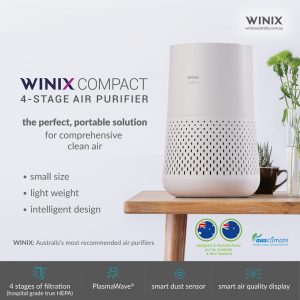
Ausclimate’s highly recommended range of WINIX Air Purifiers is the ideal solution for cleaner, healthier indoor air. Easy to use, reactive features and settings with a truly comprehensive 4-5 stages of purification, including Hospital Grade True HEPA Filtration and Winix’s unique PlasmaWave® technology. Perfect for smoke, dust, pets, viruses, bacteria, household odours, and allergies (covering a variety of allergens). Breathe easier, sleep better, and feel better. Winix; is the most complete air purifier on the market!
Offer: Ausclimate is now giving all Low Tox Life followers an EXTRA 10% OFF their already discounted prices. Simply enter the discount code of LOWTOXLIFE on check out via: https://www.ausclimate.com.au/
This discount can also be redeemed for over-the-phone orders verbally.
Website: www.ausclimate.com.au
Facebook: www.facebook.com/Ausclimate
Instagram: www.instagram.com/ausclimate

Something that has been a staple in our house for 15 years is Nordic Naturals. I’ve not been without it for 16 years. Genuinely. My naturopath had me on it during pregnancy, and since Seb was a little dude, our paediatrician has had him on the Arctic Cod Liver Oil for brain and immune support and so we both take our teaspoon at breakky like the great grandmas used to get their families to do. It’s a mainstay for me due to my family history that shows I benefit from added support for both brain and vascular systems as well as all the good lifestyle measures. It’s a great wellbeing all-rounder.

The Nordic Naturals Arctic Cod Liver Oil liquid is:
- Made from 100% wild Arctic cod (Skrei)
- No other fish oils or synthetic additives are ever used
- Has always been derived from sustainably sourced 100% wild Arctic cod, containing only naturally occurring vitamins and essential fats and nutrients, no other fish oils or synthetic additives are ever used.
- Every step of production from boat to bottle is managed by Nordic Naturals to ensure that their oils are of the highest quality, exceptionally fresh, stable, and effective. If you’ve smelt how gross rancid fish oil is from a cheap supermarket brand, you will know what the difference of a high-quality fish oil is! Rancid oil ingestion is never a great idea.
- They’re a great company that’s found a way to grow ‘good’ instead of grow and dilute quality which often happens.
Do you regularly take a fish oil? Have transparency and peace of mind on the quality front? If you don’t, Nordic Naturals is widely available to give a try, Alexx x
October 1-31st = 15% off Arctic Cod Liver oils at https://therahealth.com.au/
Find it for better prices at a retailer near you which can be located by using the Thera Health store locator – https://therahealth.com.au/store-locator/
***
Title show track, by LIOR.
Love the podcast music? You will hear excerpts from Lior’s track “Caught Up” – go check it out on iTunes or Spotify if you want to hear the whole song or album, Scattered Reflections. Co-written with Cameron Deyell, it’s a great song and I love the reflective energy of it – perfect for the show, right? Enjoy. Lior is always touring, so do check out his website. It is wonderful to hear him sing live, trust me.
Low Tox Club – The place to bring your low tox life to life.
Want to join a community of like minds and enjoy all the perks of being in the Low Tox Life inner circle such as an online membership platform, 50% off all our Low Tox courses, an awesome chat group, my monthly Q&A, and special guest star interviews for just $49AUD ($29USD/28EUR/23pounds) per YEAR? We have created a special place and set of resources to help you achieve your goals and it’s a wonderful place to be – MORE DETAILS AND REGISTRATION HERE.
***
If you would love reading like me or you just simply want to go through the full transcript, you can check below.
[Alexx Stuart] (0:00 – 9:07)Do you have questions about cleaning and removing mould? Today’s show is here to help with a 40 years plus industry professional. Hello and welcome to the Lotox Life podcast.
I’m Alexx Stuart, your host, founder of the Lotox Movement and today is show 402. Welcome to new listeners, massive welcome to people who’ve been with me over the years and if you have, well a massive welcome to all of you actually, and if you have just a couple of seconds, if there’s a show that’s meant a lot to you over the years or today’s show is that first one that does a five-star review wherever you listen to podcasts genuinely is the best way to tip your bartender in podcast land and I really, really appreciate you taking the time. I read those comments and reviews every couple of months and it’s just so lovely to see that the show matters to people, so thank you. Now today we are talking cleaning and mould removal and we’re doing that with Michael Pinto.
He is an industry professional for removing toxic and hazardous and biological hazards from both commercial and private buildings and he consults to people all over the world because he understands that it’s not just a hazards issue, it’s also about the people who have been exposed, their health journeys and sometimes the sensitive compassionate needs of the clients in that space. So I came across Michael’s work through a past show guest actually, the wonderful Mike Rubino and when I saw them chatting I thought, gosh there are many more questions I have for Michael and I’m going to have to get him on the show myself. Luckily he’s semi-retired now, he has a bit more time to help us out and what I love about this show is it’s not going to be only going to be helpful for people who are trying to cut through internet information about mould removal and the worst word you can use with mould, killing mould.
If you’re still of that bent then it’s about cleaning and gently removing and safely removing mould. Killing mould makes mould pretty angry and you can end up releasing a lot of toxins into your environment by way of mycotoxins, so that is why even though exit mould and bleaching products that you get from the supermarket might cosmetically make you think, oh the mould is gone, you can often have actually created a more toxic environment by using those sorts of products, never mind the effect of bleach on the lungs as well. So we talk about a lot of different solutions today and the second reason I’m really excited about this show is not everybody has the cash when there is a mould situation, maybe you’ve been through a flood, maybe you’ve had a leak in your roof, not everyone has the cash to deal with both the remediation and or the full commercial grade cleanup. But there’s so much you can do and even if there’s a sensitised individual in your house like me in my house, then there might be someone who’s less sensitive, who with some light PPE equipment and some good tools and knowledge can actually make your home safer after one of these events.
Or if you’re just moving in somewhere and you know you’re a sensitive individual, some of the prep work you can do to make sure that environment is low mould. Of course we can’t be mould free, we are the planet earth, mould fungi are in our environment but it is kind of like when we talk about the gut bugs and E.coli actually playing a great role as a very minor player in the ecosystem. You don’t want E.coli to blow out into unhealthy levels in the gut because then that can cause all sorts of havoc. Fungi is the same and the problem with the built environment of course is it can run really easily if we’re not careful, if we don’t have a preventative approach, if we’re renting and we don’t have control perhaps over the maintenance schedule or if we’re homeowners and we simply just don’t know how to look after our homes to prevent mould and to deal with it when it shows up or to deal with a leak when that shows up. So today’s show will hopefully help you feel clearer, less overwhelmed.
If you want to continue the conversation, mould comes up often in our LOTOX club, it’s a very low cost membership, $49 for the entire year and in there we help. I help a couple of times a week personally spending two, three hours answering questions but our members are the loveliest, most non-judgemental, people from all walks, people from all levels of experience of leading a LOTOX life as well as just experience being many different types of individuals on our beautiful planet. So if you want to join that conversation, join our beautiful monthly masterclasses where we often unpack show topics in more depth with health professionals, with building professionals, head to lotoxlife.com, hit the explore tab, LOTOX club is the very first option you see in that drop down, I’d love to see you there. If you wanted to look up Michael’s work, he’s published over 230 articles for 450 years and he’s not that old, 45 years as a hazardous removal professional, he’s the CEO of the Wondermakers and while they’re based out of Michigan, as I said he helps people all around the world. So I will put a link to that massive list of articles, a lot of them are really helpful for contractors as well. So if you’re getting some contract work done around the subject of mould and other hazards, then you actually have some fantastic articles that Michael has written to help contractors do their jobs to the best of their ability, really really resourceful.
So I’ll hook into that in a little minute. Of course we can’t do this show without our sponsors and when we talk about mould prevention, AusClimate, our major sponsor, helps you with a huge range of dehumidifiers of all sizes. I say start at the absolute minimum with a 16 litre, using in your small bedrooms, using after showers, in bathrooms, using near kitchens if you’re doing a lot of cooking and there’s a lot of steam and you don’t have enough ventilation in there, the 16 litre is fantastic.
Up to the 35 and 50 litre for the bigger open living dining kind of spaces or a garage or a basement situation or a lower level if you’ve got a house sloping down on a hill, you’re really going to need those more powerful motors in the bigger units. The good news is they’re often on sale and the extra good news is your 10% off with the code LOTOXLIFE works on top of that. Enjoy.
And then joining us for October, TheraHealth, the Australian distributors of one of my favourite all-time supplements, Nordic Naturals Arctic Cod Liver Oil. I’ve been using the Nordic Naturals range for over 16 years, I started in my pregnancy, I never stopped and there’s a lot of health professionals that seem to trash and blanket trash fish oils but the problem is not all fish oils are the same of course and Nordic Naturals are incredible when it comes to stringency of in-house testing, independent testing, purity and ensuring that they have a high quality oil that isn’t going to oxidise. Never buy the cheap fish oils from the supermarket folks, do not, or from the pharmacy for that matter or from online. If anything’s super super cheap in fish oil land, chances are you don’t have those reassurances that a company of the calibre of Nordic Naturals, of the sustainability mission of Nordic Naturals has with their Arctic Cod Liver Oil.
It’s a beautiful product, we take a little teaspoon every morning and you have 15% off at the TheraHealth website if you’re in Aussie with the code LOTOXLIFE otherwise Nordic Naturals is something you can find all over the world. Now let’s hook into today’s episode on cleaning and removing mould and expanding our vocab of what we can do to move the needle. Enjoy.
Hello Michael, how are you?
[Michael Pinto] (9:07 – 9:10)Well I’m fine thank you, what a blessing to be here with you. [Alexx Stuart] (9:11 – 9:59)
I’m so thrilled to have you here, you know I’m plucking you out of semi-retirement and we’re going to use that incredible body of work that you have done over the decades to help people feel like they have more agency, more literacy around when you think you’ve got mould, you know, it’s such a minefield. But as I was looking you up, you actually and your company have dealt in all sorts of remediations of toxic substances, not just mould and we’re going to dive into that a little bit more as well. But I kind of want to ask, because it feels like it’s all happening now, is it just that there’s an awareness that our buildings can make us more sick or do you believe our buildings are also getting more toxic? [Michael Pinto] (10:01 – 12:39)
Actually the quick answer to that is probably both and as you said I’ve been, and sometimes almost like Don Quixote, early in my career talking about indoor air quality and arguing against, you know, some of the contaminants or how to deal with some of the contaminants a little bit more effectively. But it goes all the way back to the, you know, genesis of the asbestos industry and then I cut my teeth there and then lead and radon and indoor air quality, chemicals, infection control all the way through and of course mould and things like that. But the fact of the matter is that there is distinct similarities between some of these indoor contaminants in terms of how we address them and then there’s wild differences so that if you try and apply something exactly from lead for example to mould, you’re likely going to have some problems there.
Although there are, you know, certainly things from the lead that we can apply. So it really was a fascinating journey for me but you’re absolutely right. I mean I think my expertise goes way beyond mould and I oftentimes deal with clients where we find out that the mould may be contributing but may not be the main contributor to their issue.
So had one a little while ago where, you know, and I’m sorry I’m paddling on just a little bit but you know there’s cross sensitivities and that has become so imbued in me in terms of watching for this that most of the time it’s the mould is the primary one and then they become cross sensitive to chemicals or they come cross sensitive to electromagnetic fields or I mean all sorts of things, right?
A couple weeks ago it was the exact opposite of that. The mould is what was in the news and this woman thought that that was causing her problems and as we worked with her and was talking with her it was actually a chemical explosion in her house which was causing the primary sensitivity and then the secondary sensitivity of course is to the mould because once your body systems are screwed up it doesn’t matter what it is that screws it up, right? Once your body’s not functioning on that square level, so to speak, then all sorts of problems can cascade from there.
[Alexx Stuart] (12:39 – 13:08)Yeah, absolutely. My Chinese medicine doctor talks about how we are a castle when we’re healthy and things can chip away at the crescelations and kind of wear us down and once you’re exposed any army can come in and benefit from your weakened state and I really think that’s such a great analogy to help you understand why am I sensitive to everything all of a sudden. It’s because the whole system is weaker. [Michael Pinto] (13:09 – 13:59)
Yes, and I want to thank you for pointing out about your Chinese doctor because that’s something that I have promoted. I’m not a physician by any means but what I do understand and what I’ve seen over the decades is that there’s a whole bunch of different modalities that help people depending on where they are and what’s bothering them and things like that. So, you know, when somebody says, well, what do you think about the crystal mats that people lay on and that’s supposed to help them and it sounds like voodoo and blah blah and they’re expensive and the answer is, you know, again, I’m not a physician so I’m not going to give medical advice but I’ve seen too many things like that that are non-traditional, non-western medicine be helpful to people. [Alexx Stuart] (14:00 – 14:01)
Oh, a hundred percent, yeah. [Michael Pinto] (14:03 – 14:21)
You know, giving people drugs to cure them and I understand that, you know, even in the bouldering and there’s different binders and things that we give but, you know, just going the route of big pharma many times just doesn’t appear to be the best case in my opinion. [Alexx Stuart] (14:22 – 15:02)
Yeah, it’s there for save the day. I mean, antifungals can be amazing but I agree like if you’re also talking about rebuilding, re-fortifying a system, that’s not something that western medicine tends to be the best at anyway so that does tend to happen in those. It’s interesting you use the word traditional.
I kind of think of Chinese medicine as way more traditional given it’s been around for how many thousands of years but yeah, exactly. I think we often just grow up with what’s normal in our culture and so we go there and then there’s a whole bunch of other stuff that’s going to be perhaps more beneficial or at least complementary.
[Michael Pinto] (15:04 – 16:10)Well, you know, and I don’t want to sound too negative and I don’t want to pick on my doctor friends or anything like that but it’s just like contractors and everything else. I mean, there are doctors who know what they’re doing with, you know, mould sensitised individuals and there are doctors that do not. There are contractors that know what to do with moulds, you know, impacted houses and offices and stuff and there’s contractors that do not and, you know, this is just if I can tell a short story.
Yeah, go for it. Years ago, I said, oh, you know, I think I’m really onto something here with the mould and I just, I’ve got to get this message out and so I spent a lot of time talking to the allergists in the whole region where we were which is, you know, up in southwest Michigan and the reaction from most of the allergists was pretty cold and one of them actually said, this is a quote, he said, but if we, you know, put them in touch with you and you fix the environment, then they won’t come back for allergy shots.
[Alexx Stuart] (16:11 – 16:15)Oh, wow. Screw up the prescription model. [Michael Pinto] (16:16 – 16:31)
Yeah, I said, well, yes, that you can put it that way but isn’t that the goal? We want to get them off the allergy shots and he did not answer that somewhat rhetorical question of mine. [Alexx Stuart] (16:32 – 16:33)
Yeah, wow. [Michael Pinto] (16:33 – 16:35)
An actual statement from a doctor. [Alexx Stuart] (16:36 – 16:49)
That’s awful. Yeah, it’s awful. But it also proves that the model of practise is also the wrong model if it’s not about trying to get people well in the long term. [Michael Pinto] (16:50 – 17:32)
Right. And, you know, no doubt they’ve got a practise to run and, you know, how much money they put into their education and all that. I understand all of that.
But if you lose sight of the patient and what’s best for the patient and you start thinking of it in terms of your business, it doesn’t matter whether you’re a consultant or a doctor or a contractor or a non-traditional medicine person or equipment manufacturer. You know, there’s great equipment out there, but sometimes that piece of equipment isn’t for this customer. And yet the equipment manufacturer will say, well, our stuff always takes care of everything.
You know how that goes.
[Alexx Stuart] (17:32 – 18:42)Yeah, yeah. Let’s talk about that regulation and just how many shades of grey there are in we fix mould type companies and claims. Because on one hand, I can see that regulating an industry that’s somewhat cowboy where you really don’t know what you’re going to get and people can say they’re certified, but then you find out it only needs to be one person in the company who’s gone through the certification for the business to be able to say, you know, there’s so many issues with how unregulated it is.
But then on the flip side, if we regulated it, who gets to decide? And do we do it the same way for everybody? What if it’s not going to work for that person that way?
As you said, how do you feel as an industry professional of like over three decades about that grey area and trying to get the best outcomes for a more consistent level of care and actually fixing the problem, not just either covering it up or getting rid of a few things on the surface?
[Michael Pinto] (18:43 – 22:11)So first of all, I’d say it’s a great question. And it’s one spent literally, I think, at least a decade thinking about and trying to adapt my position in the industry to make some sense of that. And the best answer I can come up with is this is that a lot of the mould remediation that’s done, certainly in the United States and in Australia and other countries that I’ve, you know, have some experience with is done at least okay, if not well, but and the caveat there is for the non-sensitised occupant.
And so the minute you add in somebody who has had their body system damaged by the mould or the mould is like I said, we talked about earlier, you know, cross contaminant to something else that’s damaged their system. The minute you add that in, that’s a whole different level. And so, you know, there’s just, again, my opinion, I know lots of there’s great contractors out there, that if you’ve got mould in a bathroom or something like that, they set up a great containment, they’ll do the removal properly, they’ll clean that bathroom, they’ll use whatever, you know, system or chemicals that, you know, they’re most familiar with.
And generally, those jobs are done very well. The difficulty is that that’s a standard mould remediation. And a sensitised individual can’t get by with just a standard remediation.
Because so now we fix the source, and it’s in the standards, I’m sure you’re familiar with the S-520 and everything. But that condition two, which is the, you know, extra spores that are distributed from the condition three area that’s around the house and everything. So that bathroom has been mould contaminated for four months.
We clean that bathroom. That’s great. That’s what everybody’s paying for.
Maybe there’s some insurance coverage, maybe there isn’t, you know, all those things that play into this. They do a great job there, they leave and the person is still sick. And they think, well, that contractor, pardon my expression, the contractor sucks.
He didn’t fix my problem. And the answer is, well, not necessarily. They fix the source of the problem.
But there’s too many of them that don’t appreciate the extra level that they have to go to with sensitised individual, nor does the until they’re really, really sick and really do some, you know, work and get ahold of somebody like you and see some of these programmes and stuff. Too many of the sensitised individuals or their spouse or somebody in the mix there. Maybe somebody who isn’t sensitised says, well, I’m not going to pay $10,000 to have my whole house cleaned.
It’s crazy. This is a $3,000 remediation in the bathroom or $4,000. And they want another $10,000 clean my whole house another $12,000.
And it’s just yeah, because it’s a whole house. It’s a lot of work, and they’re gonna do it right. But if they did that, they’d spend that $12,000 plus that $4,000, they’d spend $16,000 just using this as a, you know, as a rough analogy.
And the person gets better as compared to spending the $4,000 and then going back later and having somebody else come in.
[Alexx Stuart] (22:11 – 22:16)And well, then you just spend the $16,000 on personal health care and never getting well. [Michael Pinto] (22:17 – 22:29)
Yeah. And now we’ve got to bring the old dog in. And now we’ve got to do this.
And now we got to do that. And you end up spending 12 of that additional 1000 on more testing research.
[Alexx Stuart] (22:30 – 22:30)Yeah. [Michael Pinto] (22:30 – 23:16)
You know, and, and that was the funny thing. A lot of my clients, quite honestly, would look at me like, don’t you do the testing? Don’t you sell testing?
Sure. Yeah, we do. Why do we need it?
You know, here’s the situation. Here’s what you’re experiencing. You’ve already told me your symptoms get worse when we get in the living room, kitchen, you know, fill in the blank there, clean it.
Why do I need to test it? If your body is telling you that you don’t feel well in the house? What test is going to be more sensitive than that individual who is telling me that they can, they can actually feel where the, you know, where some of the problems are?
[Alexx Stuart] (23:16 – 24:09)Yeah. That almost puts a lump in my throat because I’m one of those people. Yeah.
Yeah. And it’s really hard when you have been sensitised and you are that person. And I appreciate we have some science now on the psychoneuro hypervigilance aspects of chronic sensitivities, but I can tell you when there is mould in a room, if I’ve, if I have to sleep there for a few days or I just know I can feel it.
My central nervous system feels it. My heart feels it. My sinuses, everything just goes, Oh, yep.
There it is. And so, so what is that extra level of cleaning, Michael? Like what, what are the agents that are used?
Like how do you truly clean a space for the sensitised individual?
[Michael Pinto] (24:10 – 24:33)So the first thing I would say is that, you know, there’s a physical aspect to it. And although I appreciate a lot of chemicals that are out there, I appreciate a lot of people that have fogging agents. I mean, there’s, including dioxide, there’s all sorts of stuff that we can use.
There’s a salt solution. Concrobium has a, you know, food grade salts.
[Alexx Stuart] (24:33 – 24:34)Oh, I love concrobium. [Michael Pinto] (24:34 – 25:33)
That’s been one of my favourite discoveries. Yeah. Yeah.
Yeah. And, you know, in terms of trying to be non-toxic while you’re dealing with these things, there’s, there’s different levels that you can deal with. But if you substitute the quick and the dirty, well, we’re just going to fog this, or we’re just going to spray this for the hard work of actually removing the spores and the mycotoxins and the fragments and the endotoxins and, you know, all the different things that are out there that are as a result of this water damage, mould contaminated area, you know, going back to the previous example that was in the bathroom that then spread up. If you don’t get rid of that, you know, I’m not aware with all of the good contractors and all the good manufacturers I know, and all the good stuff I know, I’m not aware of any magic bullet and actually where you just fog it and it’s going to take care of it without cleaning it.
[Alexx Stuart] (25:34 – 25:46)Yeah. And so what does cleaning look like? Are you talking about like getting every single item?
Is it all like, what does the actual process look like when you, when you don’t leave a stone unturned?
[Michael Pinto] (25:47 – 27:06)Yeah. So the first thing I would say is that it also is a matter of just using a little common sense. And I talk about this in my class all the time.
So take me, for example, I’ve got my clothes are in a bureau drawer. The majority of my clothes, you know, I got someone hanging up in the closet things. Well, things that are hanging in the closet, if that’s an impacted area, you probably need to clean those.
But quite bluntly, how often and for how long do I open the drawer where my socks are? 30 seconds a day while I pick up the and maybe two minutes, you know, after they come out of laundry and, and my wife or I fold them and actually put them away. I mean, that drawer for an entire week is probably open less than five minutes.
I don’t ponder my socks. It’s like socks or a white pair of socks, right? So do I do the sensitised individuals have to go to that level?
Do they have to pull everything out of their bureaus? Do they have to pull everything out of every cabinet? You can see like the office here behind me in our, in our home office, which pull everything out of here to clean it as part of a detailed mould remediation.
And the answer is, it depends on the individual.
[Alexx Stuart] (27:07 – 27:20)And I guess with your example of the bathroom, it could also depend on how far away the bathroom, like if it’s the en suite of that room, then maybe, but if it’s on the other side of the house, and it’s just a tiny bit of trail contamination, maybe not. [Michael Pinto] (27:21 – 28:13)
Right. And the key is the broad, flat surfaces, right? Walls, floors, ceilings, countertops, you know, the, the front of the cabinets behind me there, that sort of stuff, because that’s, you know, where the dust is going to collect.
It’s going to be, you know, static electricity. It doesn’t look dirty. And I hope it doesn’t.
No, no, all good. But on a microscopic basis, you know, when we go and take a tape sample, if you’ve had that contamination, like we’ve been talking about in the bathroom, down the hall here, it wouldn’t be unusual to find a little bit on those, you know, cabinet fronts there. So broad, flat surfaces, and they need to be cleaned.
And quite honestly, HEPA vacuums is not the best cleaning method.
[Alexx Stuart] (28:15 – 28:15)What would be? [Michael Pinto] (28:16 – 28:20)
Well, see, the HEPA vacuums are designed to get the gross debris. [Alexx Stuart] (28:21 – 28:33)
Yeah. And they’re a good day-to-day cleaning tool, though, still, right? They are, yes.
You don’t want to just keep. Yeah, I don’t want everybody thinking they have to throw out their HEPA vacuums. No, no, all good.
Just clarifying.
[Michael Pinto] (28:34 – 29:11)We’re talking specifically about the detailed cleaning for the sensitised individual. Like the whole house cleaning. And, you know, the HEPA vacuums is the first step.
And as you said, very useful as your day-to-day cleaning tool so that you’re not just re-spreading the small spores and mycotoxins and things like that. But if you actually get into the science, particularly how the mycotoxins work, and some of the other small fragments and things, they have a, for lack of a better term, I mean, there’s all sorts of scientific terms, but I’m just going to call it static electric cling is probably the best way.
[Alexx Stuart] (29:11 – 29:11)Yes. [Michael Pinto] (29:12 – 29:58)
Yeah, yeah, yeah. Right. So they cling, they’re tiny, they don’t have a lot of mass to them.
And so when the vacuum brush goes over it, and that goes to suck it up, they don’t have enough mass for the air to actually release it from the surface. So the cleaning tool of recommendation from our end, and it’s been that way for at least five years, if not closer to seven or eight years, the microfiber cloths, and we really, really recommend the disposable microfiber cloths, the washable ones that they use for cleaning cars and things like that. Those are good.
But by the time you wash them a few times, you’ve actually damaged them, and they’re not picking up like they should.
[Alexx Stuart] (29:59 – 30:02)They need to have that static intact. Is that what you’re saying? [Michael Pinto] (30:02 – 31:06)
Well, that’s it. If you actually look at how a microfiber cloth is made, it’s really bizarre. I think the science is amazing.
There’s two different types of thread or yarn in there, and they’re essentially lined up kind of next to one another, if you will. So the one has like a positive charge, and the one has a negative charge. So the negative particle gets picked up by this piece, and the positive particle gets picked up by this piece.
So like I said, that’s why we recommend the disposables, because when you take them out of the package, that ability to attract all that stuff is intact. And then once it gets filled up, even if you wash it or shake it out, you’re impacting that static electric charge, again, for lack of a better term. It’s all forces and all sorts of things in there if you really want to be specific about it.
[Alexx Stuart] (31:06 – 31:11)But yeah, I’m sure there’ll be some nerds out there taking a dive. Yeah. [Michael Pinto] (31:12 – 31:15)
Makes me sound like I’m some, you know. [Alexx Stuart] (31:15 – 32:41)
No, no. And I just think it’s like we struggle in the low-tox space, because if you are low-tox and unwell and chronically unwell due to these sorts of more complicated environmental issues, you can feel really guilty using disposable stuff that’s made out of petroleum and just like chucking it in the bin. And I really have compassion for that moment, but I always remind people as well, nothing is black and white, and you are of no use to yourself or anybody else if you are literally in the foetal position on the floor and unable to live.
And I think you’ve got to get well. And it’s OK that that’s not always going to be amazing, sustainable, recyclable, reusable choices. We are trying to get that mould out of that building right now.
And then go do your fantastic tree planting activities on the weekend and, you know, minimise your plastic around the home. Like there’s a million ways you can do a great thing once you feel fantastic again. And are we putting anything on the microfibre cloths?
I see some professionals recommend like a sticky, just a simple Castile soap type to really make it sticky. Or are you going nude microfibre cloths over the surfaces? For the most part, I like your term, the nude microfibre cloths.
Like there’s nothing on there.
[Michael Pinto] (32:41 – 34:33)Yeah. And I would say if you need a cleaner and, you know, remember things are going to be different. So when I’m doing ceilings and walls and cabinet fronts and everything, there’s countertops.
For the most part, that’s just nude. Just make sure when you use microfibre cloth that you put it on a mop pad or something. You don’t want to just put your hand on it, because if you look later and there’s, you know, a dirt pattern in the shape of your hand, it’s telling you that you’re only using like 5% of the surface of the cloth.
The other thing is that when you put it on a mop pad or some sort of holder, that microfibre cloth, you always want to take a Sharpie marker and put an arrow on one edge of the holder. So that as you’re cleaning, you’re always moving in one direction. You don’t want to go like this, right?
Because then you’re cleaning and you’re moving back. So then you’re picking up a bunch of stuff on the microfibre and then you’re leaving 10% of it behind when you move back. So it’s always that S pattern that goes back and forth.
And the simplest way to do that, like I said, is, and I’m surprised the manufacturers haven’t done this with their mop pads and stuff, but just take a Sharpie marker, put a big arrow on one side, and that’s your leading edge. And then you clean with it that way. The good manufacturers always put their mop pads on a swivel, right?
So that you can make that turn real easy and keep everything going in the right direction. So they know what they’re supposed to do, in my opinion. I like to talk to my manufacturing friends over at Comtec and tell them that they need to do that.
They could use that in their plastic pretty easily.
[Alexx Stuart] (34:33 – 35:46)Yeah. And Michael, a lot of people live in towns and regional areas on properties in the middle of nowhere where maybe they can get a neighbouring town professional to come and, you know, remediate and clean out the bathroom and waterproof it and retile it and do all those things. But they’d probably be hard pressed to find professional mould cleaners, right?
Like that becomes tricky in regional areas. And I’m sure you have helped people long distance know what they might be able to do themselves. And what you’re describing there with the nude microfibre on the mop and doing the ceilings and walls, would you be like, can we just run through the non-sensitised person in your house could go in and do this kind of regimen for cleaning?
So people feel empowered to actually think, oh, wow, so I could technically save money if I learn how to do this, or I could actually do this for my partner or my kid who’s sensitised because there are no other options. Like those people come up a lot and say, I just can’t get anyone out my way.
[Michael Pinto] (35:47 – 36:02)Right. And part of the, well, first of all, you’re absolutely correct. People can do it themselves.
We, and I know that this stinks because we usually tell the sensitised individual that we do not want them doing the cleaning just because.
[Alexx Stuart] (36:03 – 36:03)Oh, definitely not. [Michael Pinto] (36:04 – 36:40)
Even if you put it on a three foot pole on a mop head, you’re still, your breathing zone is, you know, three feet away from where you may be disturbing it. And as good as those microfibers are and everything, you’re still going to put some of that up in the air. So, but one of the things, the other things that we’ve done, if you don’t have that partner or family member or somebody or friend, I mean, we’ve had all sorts of situations like that, where they just, a church group have heard about the person, you know, being hurt and needing some help and come in and, I mean, talk about, you know, exhibiting Christ to somebody who needs some help. [Alexx Stuart] (36:40 – 36:41)
That’s amazing. [Michael Pinto] (36:42 – 37:14)
But the other thing that we’ve talked to them about is just call the molly maids and don’t just hire them, call them and talk to them about what you want them to do. And it may be that the sensitised individual has to purchase the microfibers and the mops and that sort of stuff, two or three of them, perhaps, and then bring them in and talk to the cleaning crew about how they’re going to do this. [Alexx Stuart] (37:14 – 37:21)
Yeah. So you do all the research as the sensitised person, and then you do the really detailed brief. [Michael Pinto] (37:21 – 37:31)
Right. There’s plenty of videos out there. The company that I recommend, and I don’t know if I can say this on your…
Of course you can. Yeah, absolutely.
[Alexx Stuart] (37:31 – 37:31)Okay. [Michael Pinto] (37:32 – 38:28)
And I know that they do distribute into Australia and New Zealand and stuff is Contec, C-O-N-T-E-C. They’re huge in the hospital space because they developed all of this for the infection control side. So remember way back at the beginning of the conversation, I said, some things apply from one industry to this, some things don’t.
Well, a lot of stuff from the infection control side really makes a lot of sense for the mould sensitised individual. So the C-O-N-T-E-C, they have a line of products called Primera, that’s going to be the mop heads, smaller mop heads, disposable microfibers that go on there. And it’s a really neat system.
There’s others that are out there as well. What I wouldn’t do is, and again, I’m not trying to pick on anybody, I’m just telling you…
[Alexx Stuart] (38:28 – 38:30)This is your opinion and you are entitled to it. Go for it. [Michael Pinto] (38:31 – 39:02)
Yeah. I’m not trying to dog anybody, but I would not go with the Swiffers or the generic Swiffers. If you look at those cloths as compared to one of these Contec or one of these other ones that are designed for the healthcare industry, for the infection control, the ones that you see for the infection control are probably three or four times as dense.
And so that’s going to give you a whole bunch more little openings, if you will, for the small particles to pick up.
[Alexx Stuart] (39:02 – 39:05)So not all microfiber is created equal. [Michael Pinto] (39:07 – 40:39)
Right. And then cost-wise, if you’re doing it right, does it cost you any more to use on a room five good microfibers as compared to 25 Swiffers? Because if that’s what you’re going to use, you need to change it out way more often because it gets loaded up faster than the other ones.
So I don’t think, or I know from our experience doing those sorts of comparisons for people, there isn’t that much of a cost difference. It’s like we talked about before. It really goes back in my mind, and I tell this to my clients all the time, do it once, do it right, be done with it.
That’s going to be the most cost-effective and it’s probably going to be the most helpful to your health. Don’t keep circling back around because, and I’m not trying to tell people that they just have to spend a whole lot more money or anything like that. It’s a lot of times it’s like anything else in life.
As I said, get the quality, do it once, do it right, and then be done with it. And if you find, I’ll show you where that comes from. Years and years ago, when I first started in the safety profession, I was a volunteer firefighter and the first captain I had on the fire department, his theory was go big, put it out, go home.
I think that’s what influences my…
[Alexx Stuart] (40:39 – 40:40)The spirit of that stayed with you. [Michael Pinto] (40:41 – 40:45)
40 years later, I got to give credit to my fire captain. There you go. [Alexx Stuart] (40:45 – 41:43)
Well, there are always those people, I’ll share one from my very first boss. She always said, planning and preparation prevents piss-poor performance. And I’ve just always remembered that.
You really want to plan. And so in something like this, of course, you want to plan, you want to research, you want to make sure using the best quality cloths, and you’re going to really align with the person who is coming to clean, that they understand the brief, and they’re not going to take shortcuts and that there are medical reasons it has to be done this way. And if you feel more confident, even get them to sign something, really be thorough.
I think we often, especially when you’re unwell, I’ve experienced this myself, where you’re still trying to be nice and just not be too much of a burden because you’re so used to being a burden. And I think you have to advocate for the right job being done here.
[Michael Pinto] (41:44 – 41:55)Well, I think it goes deeper than that. It’s not just because you don’t want to be a pain to somebody. They’re wore out.
My sensitised clients, I mean, they don’t sleep well.
[Alexx Stuart] (41:55 – 41:59)You literally just don’t have the energy to, yeah, it’s true. [Michael Pinto] (41:59 – 42:32)
Yeah. So to have the energy to follow through on these things is a huge issue as well. That’s why, you know, oftentimes, if there’s a family member or spouse, or somebody who’s not impacted, and somebody we can educate so that they actually believe a sensitised individual is not just faking it or, you know, just so many things I’ve heard in the past about, you know, actually being disrespectful of their own spouse and stuff. [Alexx Stuart] (42:33 – 43:19)
It’s huge. One of the, I coach in complex mould illness to just help people separate the wood from the trees, know who they can trust, build a bit of language. But the number one thing people say is, can you help me figure out how I can convince my husband this is real?
Or can you help me figure out how I can convince our fire warden? I actually had a firefighter recently, and he was saying the wall fell in and you could see the mould in the drywall that fell in on where they were sleeping. And they literally just wanted to just put more drywall up and paint it.
That was it. And so that it’s a real challenge for people to convince other people that it’s a problem.
[Michael Pinto] (43:19 – 44:15)And I do want to, you know, emphasise, like you said, that a lot of times it is the female that sensitised and the male that’s not. But that’s not always the case either. I mean, we had what I actually wrote an article about a few years ago, a situation where the husband, I mean, was just debilitated.
He would go to work, and he would come home. And all he could do is sit in his, you know, chair in the evening, and he just couldn’t do anything else. And, you know, the wife wants to go out, and they want to do this, and they want to do that.
And they want to take the kids here and there. And he just does not have the energy and really kept telling her there was something wrong with the house. Well, she’s the keeper of the house, right?
She’s been impacted by it. And so she’s, you know, a little irritated that he says.
[Alexx Stuart] (44:15 – 44:59)Yeah, almost defensive. It’s like, am I not cleaning well enough for you? Or yeah, it can create a lot of friction.
And I think we just have to remember that it’s the people we signed up with. And so let’s just actually have some compassion here what they’re trying to say. I’m very lucky.
My husband’s not sensitive. And he is our go to guy for when the shit hits the fan in our family. Because my son is mildly sensitive, and I’m very and, and he, he has remediated closets where an air conditioner has leaked.
And I’ve told him exactly what to do. And he just gets in there and does it. And I just feel super grateful, because not everybody has that experience.
[Michael Pinto] (44:59 – 45:37)Right. And this in this couple that I was talking about, where the wife was disrespecting the husband a little bit. What actually turned it around is that their first child was a girl.
And she grew up, she didn’t have any problems. Their second child was a boy. And by the time he was two, he was exhibiting the same symptoms that dad was just lethargic in the afternoons, and wouldn’t go better when he you know, went out to daycare and things like that.
And when the mother realised that there might be something environmental that was impacting the child.
[Alexx Stuart] (45:38 – 45:40)I remember that’s what it takes. [Michael Pinto] (45:41 – 46:55)
Yeah, I remember her calling me and crying to me on the phone. Because, you know, I’ve been in the conversations with her and her husband and trying to explain this to them. And she just wasn’t buying it.
And then months later, she’s calling me and crying because she’s now recognised those symptoms in her son. We got the house clean. We didn’t do it.
We’re consultants. We helped her, you know, her and him get it sorted out. And they did much better.
Everything was said and done. Both the husband and the son were well. But it was fascinating in that case.
Because like I said, typically, it’s females that seem to be a little bit more sensitive. And in this case, the genetics was going in the opposite direction. It was the husband and son.
And just to finish the story real quick, as they were going through the cleaning and everything, the mother in law came over and was of course, going through all of that. And then she realised that that was also the problem that her husband had. So it was three generations, it would have been, you know, grandfather, father and grandson, all on the male side.
And none of the females had that.
[Alexx Stuart] (46:57 – 48:03)Yeah, I mean, my grandmother, we’re from Mauritius on my mom’s side, a tropical island near Africa. And we, my mom tells the story of how at the end of the summer, when they would leave the beach house and go back into the town near the tea plantations, tea plantations are notoriously wet and humid and mouldy. My grandmother would come over with a depressive state for, you know, and there’d be mould on furniture inside because the house had been locked up for a couple of months in the summer.
And I yeah, I’m convinced you are, we are passing it down. And you do see I had an auntie who passed away a few years ago. She was bipolar, depressed, but no one ever thought environment, you know, with either of them.
And I just think I feel so grateful that the penny is dropping. And we’re actually starting to think about how we can support people because we’ve often just in the past discarded the person for being crazy because no one else is sick, but you know, there’s, there is a genetic.
[Michael Pinto] (48:04 – 49:54)And that’s the term that’s used. And this goes back years and years ago. I don’t know if you’ve ever read or heard anything about Dr. Eckhart Johanning. Yeah. So 25 years ago, I had an opportunity to meet Dr. Johanning and actually convinced him to come and be a keynote speaker at a conference that I was chairing. And back then, he was talking about those percentages that have held up over time.
And now that we have the genetics to be able to, you know, so about 20%, maybe as much as 25% of the population, and that varies by population group. It seems to be less on the Asian side, but more on some of the Caucasian sides and things. But about 20 to 25% of the world’s population have the genetic variation that makes them more sensitive to mould on one of the genes of the two that that seems to create this.
And about three to 5% have both those genes that are, are a little wonky. So I don’t want to call them defective. I mean, that’s just how we are.
Yeah, exactly. But just like some people are prone to high cholesterol, and we don’t blame them for that. We, you know, we treat them, we explain to them where you’re coming from, or some people, you know, high blood pressure runs in your family.
So we need to be more careful with you than somebody else. Well, we should be thinking the same way with the mould sensitised people as well. And when you track it back to the genetic, and now that you can actually have the, like I said, the testing that helps people understand that it’s, it’s a huge step forward.
[Alexx Stuart] (49:54 – 50:12)It’s a massive step forward, because you have that evidence piece. Huge. I want to talk about, then we’ve, we’ve done the cloths on the ceilings and the walls, you mentioned conchrobium.
When does that then come in?
[Michael Pinto] (50:14 – 50:16)Typically, and I was going to jump back to this. [Alexx Stuart] (50:16 – 50:25)
I’m not going to let anything go. Yeah. 400 odd times.
Yeah.
[Michael Pinto] (50:28 – 50:44)So yes, chemicals being used with the microfiber cloths, primarily on floors. And, and that’s if the floors are, you know, have something on them that needs more than just a physical wipe. [Alexx Stuart] (50:45 – 50:54)
And when you say floors, does that mean more than something that needs a physical wipe? Are we talking carpets? Or are we ripping up all carpets, ideally? [Michael Pinto] (50:54 – 51:36)
Well, yeah, carpets are not going to respond to the microfiber cloths. No, of course not. You’re back to HEPA vacuums and multiple passes with a HEPA vacuum.
If they do it right, there’s very good success with, you know, carpet cleaning, hot water extraction, but make sure it’s a truck or a van mount, because that’s going to be a lot hotter water. And it’s going to be a lot more suction coming out than using the portable ones that, you know, they wheel in with the tank and everything, or that you rent from the hardware store or the grocery store or anything like that. Those leave way too much water in the carpet.
[Alexx Stuart] (51:37 – 52:07)I was going to say, I mean, I remember a real estate agent saying when our air conditioning leaked and my husband ended up doing the remediation, because we just said, you guys can just stay away with those suggestions. Thank you. Goodbye.
She said, but we would have carpet cleaned. And, you know, when you’re on the top floor of a no lift building, you know, that means one of those heavy little water machines that’s just going to make the mould problem like billions of times worse because of the moisture addition.
[Michael Pinto] (52:08 – 53:12)Yeah. So, you know, and I’m glad you mentioned that because there are situations where you can’t use a, you know, most of the professionals that I talked to that use truck or van mount carpet cleaners tell me that’s two or three stories maximum, you know, they could get the hoses up and have the right suction in the water and the heat and everything. So if you’re in a multi-story building and you’ve got carpet and stuff, you may be forced to use one of those portables.
But, you know, there’s a whole science of drying people. So to think that you can go in and clean these carpets and then, yeah, well, just turn on the air conditioning and, you know, in 24 hours, it will suck the extra. No, it won’t.
But there’s dehumidifiers and there’s fans and they actually have to treat that carpet cleaning almost like a small water loss and get it dry. Because, again, if you clean it and dry it within 12 to 24 hours, the likelihood of any sort of mould growth is going to be very low.
[Alexx Stuart] (53:13 – 53:23)Yeah. Well, that’s reassuring. So bring in a good either commercial or at least a 50 litre dehumidifier that’s got a powerful motor and dry the room out properly. [Michael Pinto] (53:24 – 54:12)
And somebody who knows how to use it, somebody who actually is going to have a like a pin moisture metre so they can get down into the pad of the carpet so they can read it and make sure they’re leaving it in there because the top of the carpet will feel dry. Oh yeah, this is like Sahara Desert dry. But you go down, you know, particularly a really nice carpet, a plush carpet that’s on a good pad, that can be, you know, the reality is it can be an inch and a half to two inches thick.
Yeah, I want a pin moisture metre down in there telling me that it’s dry down to the subfloor. That may take an extra 12 or 24 hours, but that’s still better than leaving that damp down there because three weeks from now, you’re going to smell the mould.
[Alexx Stuart] (54:13 – 54:20)No, thank you. And so would Concrobium then be something you could mop a hard floor with? Would that be where it had come in? [Michael Pinto] (54:21 – 54:49)
Yeah, although I would just spray it. Anytime we talk about using a chemical, whether it’s Concrobium or Comtec has a citric acid cleaner, there’s a lot of good ones that are out there. But any of those that you’re going to use, typically we say get it in a small spray bottle and then you need to use it on the floor for spots and or you just want a better cleaning on the floor.
Spray the floor, don’t spray the mop in. And then realise…
[Alexx Stuart] (54:49 – 55:04)Yeah, something like Concrobium, like it’s an encapsulator, a membrane sort of situation happens and then you’re removing it essentially with everything it encapsulated. Is that… that’s sort of how I understood it when I first learned about it, but I could be wrong. [Michael Pinto] (55:04 – 55:33)
Yes, it is. I don’t like the Concrobium for the cleaning with a microfiber mop because, like I said, it’s salts. And so when you’re spraying that, there’s microscopic particles of salt.
So what are you doing? You’re putting something on the floor that the microfiber mop now has to pick up. And so you’re filling the microfiber mop with the salts rather than filling it with, you know, mould or whatever else that material is on the floor.
[Alexx Stuart] (55:33 – 55:39)So are we back to the nude microfiber mop head situation for hard floors first? [Michael Pinto] (55:40 – 56:49)
Well, you can, but again, if you need some additional cleaning, you just use a different style of cleaner, one that is a chemical rather than a dilute, you know, particulate solution. So in that case, like I said, citric acid cleaners, there’s other acids. I’m trying to think, of course, is escaping me right now, but, you know, dilute acid solutions and things like that that will cut through the grime.
Of course, you can always use, you know, the hydrogen peroxide style cleaners are going to be on the alkaline side rather than on the acid side. But just about anything that doesn’t have a particulate in the solution will be your ticket to a solution that you want to use on hard floors with the microfibers. You don’t want to overwhelm the microfibers with the salts and stuff.
So one other thing I’ve got to mention here, as long as we’re talking about that, that rules out all of the quaternary ammonium compounds.
[Alexx Stuart] (56:50 – 56:55)I was going to ask about that. Interesting. Okay, why?
Because of the salts?
[Michael Pinto] (56:56 – 58:29)Yeah, it’s the same sort of, well, chemically, I’d have to talk to my friends about that. I’m not sure if it’s a, well, it might be a salt. But I know it’s a particle of some sort.
And there’s been fascinating studies in the hospital, where they measure the amount of quaternary ammonium compounds in the mop water. And then they, you know, because some of the systems there in the hospitals for wet mopping, they fill a bucket, and then they just stack a whole number of the microfiber cloths in the well of the bucket. And then they put their mop head on it and take one out, and they clean it, throw it away, and then they keep going down.
And they’ve done these studies where they showed at the beginning, and I’m just using round numbers here, you know, there’s 1000 parts of active ingredient in the water. Then they put all these microfibers in. And by the time they get down to the third or fourth one, the residual water has three or 400 parts instead of 1000.
Because those microfibers have actually absorbed and held on to the quaternary ammonium. It’s actually if you want to do a little bit of research on that, all you have to do is punch in quat binding. See all sorts of articles about that in the hospitals and the healthcare facilities are all over that now because the quaternary ammonium compounds are primarily what they use.
And yet now they’ve migrated to these microfiber mops. And when you take the two and you add them together, it’s like all of a sudden you got two good things. But when you add them together, they’re actually a negative rather than a positive.
[Alexx Stuart] (58:30 – 58:45)Yeah, wow. Okay. And so I keep coming back to then, like, why is concrobium good?
What are we actually going to use it for if we’re not going to use it on the mop on the floor? I’m going to use it on the walls. Is that for cleaning objects?
[Michael Pinto] (58:46 – 59:28)Well, the concrobium a lot of times we use that as a post cleaning. So we clean everything up, and then you lightly spray the concrobium on it. And not enough so that you end up leaving a white film because you can spray too much or you can fog too much, but you put a little bit on there.
And then it’s, it’s another one of the, you know, products that are out there that protects your surfaces and keeps the mould from growing over time in the future. So, you know, our thought is always, remember I said, do it once, do it right, be done with it. Do it once, do it right, be done with it.
But if you can also add a step in there that keeps you from having to do it again. Yeah.
[Alexx Stuart] (59:29 – 59:31)So it acts as a preventative. [Michael Pinto] (59:32 – 59:47)
Yes. So concrobium, in my mind is more of a preventative. I’m sure they would argue that it’s also a cleaner.
But for me, it’s a little bit more of a preventative. So that’s why we recommend people use it.
[Alexx Stuart] (59:48 – 59:58)Okay, nice. Like we’ve almost been on the right track. So I feel like, cool, that’s a refinement piece there.
We just need to adjust when we’re bringing that in.
[Michael Pinto] (59:59 – 1:01:09)And I just want to mention this too. If somebody is talking to you about something in the mould arena, particularly for a sensitised individual, and they can’t explain it, so it makes common sense, then you want to be very careful, you know, a lot of buzzwords. And, you know, if the first thing they do, like I said, a few minutes ago is throw around, well, we need to defeat the Vanderwaal processes and all of that sort of stuff.
That’s just, yeah, that’s just malarkey. Okay. They should be able to take this down, explain it to people.
And then you can make your own decisions that way. And more importantly, as I said before, you can now start talking about classes of chemicals. So instead of saying, well, is this one product, the one that I want to use, you just kind of back up and say, well, that if you look at it, it’s got this long name that says something 1, 3, 5, 8, 7, quaternary, blah, blah, blah.
That’s a quaternary ammonium compound. You don’t have to be a scientist.
[Alexx Stuart] (1:01:09 – 1:01:10)No, you can spot it. Yeah. [Michael Pinto] (1:01:11 – 1:01:43)
You kind of spot it by looking at that. Whereas if you look at some of the other ones, like I said, the concrobium is going to be salts, the citric acid, the hydrogen peroxide, all of those are going to have different chemistry to them. And you can start choosing classes of chemicals because we don’t know, you know, from a consultant standpoint, although with the internet, there’s a lot of stuff that’s available all over, but we don’t know what’s most frequently available in Australia, for example. [Alexx Stuart] (1:01:44 – 1:01:49)
And does white vinegar sit in with citric acid as a class? [Michael Pinto] (1:01:50 – 1:02:15)
Well, white vinegar is definitely an acid and we often will recommend that. The difficulty is, as you might say, think if you go to the grocery store, there’s like 10 different versions of it. And I don’t want to pick on any particular store, but you go to the discount store and it’s going to be, you know, one and a half percent acid. [Alexx Stuart] (1:02:17 – 1:02:20)
So what is the ideal acid figure that we’re looking for? [Michael Pinto] (1:02:21 – 1:03:12)
Yeah, on vinegar, you should be looking five or 6%. But seriously, I mean, it’s essentially they’re diluting it down because they’re selling it at really cheap price and it’s still vinegar and it still meets. I don’t know what the official definition of vinegar is, but it must meet that according to, you know, here in the United States, the Food and Drug Administration or something.
But yeah, for what we’re trying to do, you need to get a better grade of some of the products. Same thing with hydrogen peroxide. People tell me all the time, well, I can’t find a product.
Can I just go to the drug store and get hydrogen peroxide and either mix that or use that myself? I said, sure you can. But I wouldn’t even send it to the drugstore.
I sent them to the beauty supply store.
[Alexx Stuart] (1:03:13 – 1:03:16)What percentage are we looking at for hydrogen peroxide? [Michael Pinto] (1:03:17 – 1:03:36)
Drugstore at the max, you’re going to see seven, eight, nine percent, which is still pretty strong. But remember, it’s used for wound care, so they don’t want to like burn your skin or anything like that. You go to a beauty supply store, you’re 20 or 25 percent hydrogen peroxide.
That’s…
[Alexx Stuart] (1:03:36 – 1:03:40)Now we’re cooking with gas when you’re trying to… [Michael Pinto] (1:03:45 – 1:04:01)
And even if you don’t use it at 25 percent, even if you cut it one to one, get it down to 12 percent, that’s still going to be a little stronger than what you can get out of the bottle there at a drugstore at even seven or 10 percent. And it’s most likely going to be a lot cheaper. [Alexx Stuart] (1:04:02 – 1:04:16)
And is that the kind of thing we could then use to clean? Like, I don’t know, I’m looking at my dump, my workout dumbbells over there and, you know, so really getting a thorough clean on a surface. [Michael Pinto] (1:04:16 – 1:04:18)
Excuse me. There’s that snooze. [Alexx Stuart] (1:04:18 – 1:04:21)
There it is. It finally happened. Yes. [Michael Pinto] (1:04:23 – 1:04:31)
So that’s the other thing. Hydrogen peroxide is going to be good against bacteria and the other microorganisms and things as well. Awesome. [Alexx Stuart] (1:04:32 – 1:04:36)
Oh, my gosh. I feel like we’ve covered so much cleaning ground. So good. [Michael Pinto] (1:04:37 – 1:04:38)
Hang on. [Alexx Stuart] (1:04:38 – 1:04:39)
Hang on. [Michael Pinto] (1:04:41 – 1:05:47)
Well, hydrogen peroxide, you want to hold it in the original bottle until you’re ready to use it. It’s going to come in a brown bottle. It’s going to be broken down, deactivated by light.
So, you know, if you’re mixing it one to one and you’re putting it in a quart spray bottle, you know, put a few ounces in and then add a few ounces of water and then use that and realise that tomorrow morning, if you go and pick up that spray bottle, because now you’ve got that much left in the bottom of it, that’s water. Wow. Yeah.
So it might smell like the hydrogen peroxide in there, but as far as it doing anything, breaking down the microorganisms or releasing the mycotoxins, which is what the hydrogen peroxide is really good at too, is breaking the surface mound of the mycotoxins so that the microfiber mops can pick it up. Yeah, that sits in there for more than a few hours, particularly if it’s, you know, a light coloured bottle like most of the sprayers are. Yeah, yeah.
And it’s just, it’s basically just water at that point.
[Alexx Stuart] (1:05:48 – 1:05:58)Smell it. Could a dark bottle green, where I’ve got like a really dark, but, or are you like, is the point here, mix it and use it and then it’s done? [Michael Pinto] (1:05:59 – 1:06:09)
Exactly. Whatever you’re, whatever you haven’t used, just dump it out. Loud and clear.
Again, I’m not trying to be wasteful. I’m not trying to.
[Alexx Stuart] (1:06:09 – 1:06:12)Oh, no, we’re trying to get people well here, Michael. [Michael Pinto] (1:06:13 – 1:06:50)
And as you said, I mean, there’s a place for putting on our ecological hat and trying to be, you know, earth friendly and all of that. This is not the place to be quite as earth friendly on some of these things, because as we talked about, you’ve got a person’s health that’s in the balance here. So we don’t want to, we don’t want to have to go back and redo it because we, you know, either neglected because we don’t know how many people even know about that or heard about that, that they, that they can’t leave that in the bottle overnight or anything like that. [Alexx Stuart] (1:06:50 – 1:06:51)
Yeah, exactly. [Michael Pinto] (1:06:52 – 1:06:54)
Education first and then follow through second. [Alexx Stuart] (1:06:55 – 1:08:41)
Yeah. So good. Such good information.
Can we talk about, and this happens a lot in when people are renting and I live in a city where the rental is high. And I’ve connected with a lot of people over landlords and real estate agents and what they say they’re going to do to come and fix a mould problem is. And, you know, there’s been so much gaslighting in my time, even I was accused of not being good enough at cleaning my house.
So, you know, our couches were going green and there they were screaming at me for being bad at keeping my house clean. I’m like, clean every week. So, you know, and I think like then you get the agent or the landlord that actually says they’re going to do something.
And I want to step you through a couple of common ones that get said and how we can empower someone to maybe ask a couple more qualifying questions or point out why they think it’s not just a surface mould issue, but there’s something in the walls, you know, to really get better at pushing back. Like it just, you know, not being aggressive or anything, but just saying, unfortunately, what we’ve seen in this place is not going to be fixed by a surface treatment, like fogging, let’s say. So when someone says, don’t worry, we’ll send someone in to fog the place.
And your mould problem will be fixed. What are the top couple of observations someone could share or extra questions they have in that scenario to make sure that might be all that’s needed or to point out that that’s not going to cut it?
[Michael Pinto] (1:08:42 – 1:09:42)Right. So, and I hate to sound like I’m, you know, a regulatory agent or anything like that. But one of the most effective things that we’ve seen over the years is to educate that landlord, that, you know, apartment maintenance manager or whatever it is, and, you know, having a copy of the S-520 and just going through those three definitions.
I mean, it doesn’t have to be a long deal. You just have to say, look, this is the document that pretty much worldwide is normally accepted as the way that we want to do stuff. And look at what we’ve got here.
We’ve got condition one, condition two, condition three. And condition three is source material. And condition two is the, you know, deposition from the source material.
You’re talking about coming in and fogging. You’re essentially addressing condition two.
[Alexx Stuart] (1:09:43 – 1:09:44)Yeah. [Michael Pinto] (1:09:44 – 1:09:54)
And that may work. But if we skip over condition one, if we don’t find out where the source is coming from, and in a rental unit, it may not be their apartment. [Alexx Stuart] (1:09:55 – 1:09:56)
Exactly. [Michael Pinto] (1:09:56 – 1:13:25)
Could be upstairs or downstairs. Yeah. So, you know, I mean, that certainly complicates things for the rental people.
And I feel sorry for them. And I deal with them all the time. But we also have to educate them so that they understand we, before we do any fogging, we need to at least look around the common areas where there could be source material.
If we haven’t taken a flashlight, that’s, you know, quite honestly, it’s not as complicated as a lot of people think. Take a flashlight, move all the stuff that we store underneath the kitchen sink and the bathroom sink, because all of our hair products and all of our deodorants, all that stuff is in there. And use a flashlight, look around, check that baseboard on the cabinet, make sure it’s not soft or that there’s not something going on there.
I mean, there’s only, what, half a dozen, if that many, sources of water in an apartment. A couple of bathroom sinks, kitchen sink, shower, bathtub. Laundry, yeah.
Yeah, I mean, it’s not that complicated. Now, it is a few minutes of effort. You have to move the washing machine and, you know, look back there and see how the connections are, make sure they’re not leaking, make sure there’s no mould on the bottom.
There that’s hidden by the washing machine. You might need to, you know, tap on the wall of the shower just to make sure that it’s, you know, solid underneath the tile or the vinyl that’s there. I mean, there’s simple stuff that you can do.
The other thing that’s really straightforward in the shower, pull back the ring that, you know, covers up the hole where the showerhead, and use a flashlight in there and actually kind of look in there and see if you can see any black. Take a swab and, you know, just a cotton swab and run that in there. If it comes out black, it’s like, you know what, we probably have an issue here with a source.
And yes, and I’m not denigrating my fellow consultants and inspectors and stuff, and they’ve got all sorts of cool equipment we can use. We can use, you know, infrared cameras and, you know, drill small holes in the wall to do wall cavity samples and things like that if we need to. But quite honestly, it’s mostly a visual with a flashlight.
Look at the water sources, see what’s around. If you can get through all of those and there doesn’t seem to be any, you know, source material there, then the other thing I would say is talk to the sensitised individual. Find out if there’s a specific area of the apartment or the rental unit that they feel bad in.
You say, well, you know, it’s bad, but I feel worse when I’m in the bedroom. I feel worse when I’m in the living room. Well, bedroom and living room, there’s probably no water sources that are supposed to be there.
So then we start looking around, you know, is it grade level outside? Is it, like I said, does the bedroom back up to the apartment next door? Does it back up to their bathroom on that side?
You know, a lot of times when you just narrow it down a little bit, there’s a logical approach that people can follow to find out if there’s something going on.
[Alexx Stuart] (1:13:25 – 1:14:14)Yeah. And that’s so empowering to have your own little investigation set. And I’ll add a little blog I did a few years ago on visual clues.
And I know you have a tonne of articles that I’ve also grabbed the link for because you’ve got them neatly hyperlinked. And it’s a great list because it spans both consultancy work, remediation work and the personal work that people can do themselves. So, yeah, so good.
And I mean, we could talk forever. I feel like there’s a part two coming on, Michael, but I just feel so much clearer for people to actually start to have some agency even around what a good deep clean looks like after you’ve fixed a problem. That’s just gold.
So I really appreciate you.
[Michael Pinto] (1:14:15 – 1:15:07)Well, thank you for that. This is just, like I said, decades of experience trying to help people with all sorts of indoor contaminants. And, you know, the reality is that many times it’s not as complicated.
I will say, however, sometimes it is. I don’t recommend that anybody do like trauma scene cleaning or drug lab cleaning or anything like that. I mean, fentanyl can kill you with just a speck.
And so there’s things for the professionals and there’s things that the well-intentioned amateurs can do. And as I said, I would think the infection control stuff and the drug lab sort of stuff would be the ones that you want to stay away from. The mould, though, there’s lots of things that people can deal with effectively just by being intelligent about it.
[Alexx Stuart] (1:15:08 – 1:15:44)Yeah, so good. And so good to know we have professionals to help us when we are finding it hard to investigate or when there’s a clean piece at a water source that needs to happen and we need to identify exactly how bad the damage is. For me, it’s just all about everyone being more literate about what actually fixing and removing mould looks like and then cleaning the finer surfaces afterwards, because as a sensitised person, like if you don’t do all the bits, then it’s you can’t be well there.
So thank you so much for your work, Michael. And I look forward to chatting to you again soon.
[Michael Pinto] (1:15:45 – 1:16:01)Well, thank you for having me on and just again for all the work that you do in this field. It takes, you know, a whole group of people to make sure that we’re making progress. And I’m thrilled to be able to chat with you anytime. [Alexx Stuart] (1:16:03 – 1:18:58)
I hope you loved today’s show as much as I loved bringing it to you. I want to remind you that if you are someone who craves a low-tox community that is judgement-free, full of empowerment, has health professionals and building health professionals that can support you, as well as me in there answering questions multiple times a week, I want to invite you to join the low-tox club for the price of less than a cup of coffee a month. You have an annual membership for $49 Australian.
So it’s about $30 US or Euro that allows you to have a member masterclass every single month with a health professional or global expert from the podcast, where we have them to ourselves for an hour to ask questions and deep dive further. You have the beautiful supportive chat group. You have Q and A’s with me, me answering questions.
We read books and talk about them and a whole bunch more. You can head to lowtoxlife.com, hit the explore tab and join the club is the very first option on that list. Of course, we have over 10 evergreen courses that you can jump into anytime, whether it’s navigating everyday low-tox swaps with our Go Low Tox signature course, whether you have kids and you’re wanting to know how to best support them with our low-tox kids course, whether you’re planning a family and looking at a healthy low-tox preconception journey, reducing inflammation, especially the chronic kind without inflammation ninja course, many, many other courses. You can again, head to lowtoxlife.com, hit the courses tab, and you’ll see all of the options, which includes a business course, my low-tox method programme. A lot of people don’t know, but I was doing a lot before starting low-tox life in 2009. And I was a business consultant across hospitality, health, retail, and cosmetics. I have been in business consulting for a very long time.
So I absolutely adore helping people move into the low-tox space or develop their low-tox businesses. So that’s a way I can support you. And then of course, there’s our wonderful social media communities at lowtoxlife on Instagram.
And of course the website with over 250 gluten-free recipes, blogs, downloadable PDFs to help you navigate wanting to get rid of synthetic fragrances in your school or office. I could go on. So head to lowtoxlife.com, see what takes your interest or fancy. And thank you so much for being a part of our podcast community. I love, love, love reading your reviews. I appreciate every follow and subscribe.
And I want to just remind you to finish off that if there’s anything you heard that you found interesting from medical or scientific perspective, it is intended as education only. Please always chat to a health professional who knows you and your situation best. I’ll see you next week.
Bye.
