







About this show:
“What would it look like for you to be fully recovered” asks Dr Robert Bray of his patients. Powerful question. How would it look for you?
A trigger warning if you are sensitive to trauma, violence or suicide topics. Hugs to you and it might not be for you (although for the same reasons, it might very well be for you).
This show explores Thought Field Therapy a form of ‘energy psychology’, something that Robert added to his tool kit since learning the Therapy from its creator, psychologist Dr Roger Callaghan, in 1996. Robert found that the therapy, a form of specialised “tapping” and muscle testing in combination with counselling and psychotherapy, added what was often missing for the people he saw stuck in loops with their physical or mental health.
It’s a fascinating show where we cover how it can help first responders, military people in active service or retired, victims of abuse and people with chronic illnesses.
If you join us on YouTube (yes, finally the show is on there now too!) you will see me try the therapy for myself with Robert taking me through a mini-session – your ever willing guinea pig 😉
If you’re in a negative mental or physical health loop, join me for this one. Very interesting and hopefully to someone out there, very helpful!
Your host and founder of the Low Tox Life,
Alexx Stuart
Founder of Low Tox Life and the Low Tox movement
Join me on Insta @lowtoxlife
Questions we explore in the show:
- TFT is the basis of energy psychology
- TFT can be easily applied in many situations and surroundings
- There are no counter indications for the use of TFT
- People from young to old can benefit from TFT
- No language/gender/cultural limitations
- supportive to first responders and others working in high stress positions
- Forms of TFT have been studied + evaluated and there are over 200 peer reviews on it’s effectiveness
- Supports healing physically, mentally and emotionally
- It can be incorporated into other types of therapy
- TFT has many levels of training and application
***
Thank you to this month’s show sponsors for helping you make your low tox swaps easier:
@ausclimate gives you 10% off their range for the whole of 2024, with brilliant Winix Air Purifiers, the best Dehumidifiers I’ve ever used and their new energy-efficient heating range. code LOWTOXLIFE https://bit.ly/ShopAusclimate
@ediblebeautyau has a bumper Low Tox Swaps Aussie beauty offer with 40% off their huge Black Friday sale + extra freebies depending on your cart amount, such as the Body Whip, LED wand, Silk pillow case and mystery gifts – Code LOWTOXLIFE and you’ll see it as an extra 5% off their already loaded 35% off. Massive thanks to Anna, Daisy and their team for the extra low tox love. Enjoy!
Be sure to join me on Instagram @lowtoxlife and tag me with your shares and AHAs of this week’s episode.
***
About Dr Robert Bray
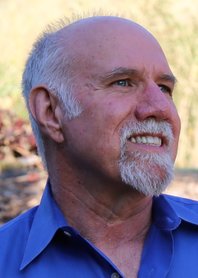
Robert L. Bray, Ph.D., LCSW has worked in the field of traumatic stress recovery for over 40 years. Beginning as volunteer on a crisis hot line and throughout his professional career, he has always focused on the impact of traumatic stress on the mental and physical health of individuals, families, and communities. Dr. Bray has extensive experience as a clinician helping in recovery from natural disasters, criminal acts, and domestic violence of all types. He has been training, writing, and developing Thought Field Therapy since 1996. Dr. Bray’s book “Heal Traumatic Stress NOW: Complete Recovery with Thought Field Therapy – No Open Wounds” provides a consumer-friendly self-help guide to anyone struggling with overwhelming stress. He is also an approved ICISF trainer
You can connect with Dr Bray on the following platforms:
Website: https://rlbray.com/trauma-assessment/
Facebook: https://www.facebook.com/ThoughtFieldTherapyCenter
YouTube: https://www.youtube.com/user/DrRobertBray
More about this month’s sponsors:
Thank you to this month’s sponsors for partnering with our show and helping you make your swaps with their special offer:

Ausclimate’s highly recommended range of WINIX Air Purifiers is the ideal solution for cleaner, healthier indoor air. Easy to use, reactive features and settings with a truly comprehensive 4-5 stages of purification, including Hospital Grade True HEPA Filtration and Winix’s unique PlasmaWave® technology. Perfect for smoke, dust, pets, viruses, bacteria, household odours, and allergies (covering a variety of allergens). Breathe easier, sleep better, and feel better. Winix; is the most complete air purifier on the market!

Offer: Ausclimate is now giving all Low Tox Life followers an EXTRA 10% OFF their already discounted prices. Simply enter the discount code of LOWTOXLIFE on check out via: https://www.ausclimate.com.au/
This discount can also be redeemed for over-the-phone orders verbally.
Website: www.ausclimate.com.au
Facebook: www.facebook.com/Ausclimate
Instagram: www.instagram.com/ausclimate


Edible Beauty is a brand I discovered a couple of years ago and a couple of products in the range have become firm favourites.
A little more about Edible Beauty:
- Pure and Edible: All products are made with organic ingredients, vegan, and food-grade ingredients—formulations so pure, you could eat them! BUT also high performance!
- A wonderful planet-conscious business using recyclable packaging, FSC-certified paper, and low-waste, eco-conscious formulations using ethically sourced ingredients.
- Holistic and Synergistic: Each product is naturopathically formulated to promote a synergy between inner health and outer beauty.
- Everything is Pregnancy and breast-feeding safe
Instagram: https://www.instagram.com/ediblebeautyau/
Facebook: https://www.facebook.com/EdibleBeautyAu
***
Title show track, by LIOR.
Love the podcast music? You will hear excerpts from Lior’s track “Caught Up” – go check it out on iTunes or Spotify if you want to hear the whole song or album, Scattered Reflections. Co-written with Cameron Deyell, it’s a great song and I love the reflective energy of it – perfect for the show, right? Enjoy. Lior is always touring, so do check out his website. It is wonderful to hear him sing live, trust me.
Low Tox Club – The place to bring your low tox life to life.
Want to join a community of like minds and enjoy all the perks of being in the Low Tox Life inner circle such as an online membership platform, 50% off all our Low Tox courses, an awesome chat group, my monthly Q&A, and special guest star interviews for just $49AUD ($29USD/28EUR/23pounds) per YEAR? We have created a special place and set of resources to help you achieve your goals and it’s a wonderful place to be – MORE DETAILS AND REGISTRATION HERE.
***
If you would love reading like me or you just simply want to go through the full transcript, you can check below.
[Alexx Stuart] (0:00 – 10:00)Maybe you’ve heard of thought field therapy. Maybe you haven’t, but if you’ve heard of tapping and psychotherapy, then today’s time to talk about thought field therapy. And I will put in a trigger warning.
We do discuss difficult traumatic events in today’s episode. Hello, and welcome to the Lotox live podcast. I am Alexx Stuart, your host, founder of the Lotox movement. And I’m thrilled to welcome you to show 409 where I chat today with Dr. Robert Bray. He is a PhD doc. He has a master’s in counselling.
He began his volunteering on a crisis hotline when he was much, much younger. And throughout his professional career has always focused on the impact of traumatic stress on the mental and physical health of individuals, families, and communities. So he’s always been working with natural disaster victims, criminal act victims, domestic violence, suicidal ideation.
And in 1996, he came across thought field therapy. And ever since he’s been training, writing, and developing in that space. And we unpack why thought field therapy felt important for him in his work with patients.
And he has a brilliant book that explains the theory and practise of healing traumatic stress now. And he encourages us to think about, to be brave enough to think about what complete recovery looks like. That was a really big moment for me when I heard him say that through his work that I was researching when I was getting ready for the show.
Why? Because I know as someone who has been through medical trauma, like the kind that mould illness can put a lot of us in where you wonder whether this is it, whether you’re eventually just going to cark it, die, because you can’t possibly feel worse and still be alive. It’s incredible to me how grateful you can feel about literally anything better than that.
And while that can have a beauty to it, because it can, like I always come from a place of gratitude for anything better than that. I really do. At the same time, when I heard Robert say that, it made me realise that there is actually a limitation to that gratitude belief, if you like, in that you also might not realise you deserve much, much more.
For example, I celebrate when I crack six hours sleep if I’m in water damage. I deserve better than that. I actually deserve eight hours sleep.
I am built to be able to get eight hours sleep biologically. And so why aren’t I shooting for that? Why don’t I feel like I deserve that?
Why am I celebrating so much less? And that’s just a tiny example, but I am celebrating so much less right now. We moved in May.
I started having symptoms. This will be news to the community, but I’m sharing it because it comes up in today’s show. And I realised that I was better off on the couch, a little bit better off on the couch.
And so the issue is actually in the master bedroom and we can’t find the issue, but the testing has come back with a small amount of stachybotrys, aspergillus and cotomium, so definitely no good. But we cannot move right now. That is the reality for a lot of people who are in this mould trap, if you will.
It gets harder and harder to because you’ve drained savings. You’re also trying to do life, work, family. It’s hard.
So it’s not simple. And that comes up in a domestic violence example today, which we unpack in the show. And so I’m okay on the couch means I’m not actually shooting for better, right?
I think that’s interesting when people have been traumatised that we actually stop shooting for better because anything better than the worst is better. So I don’t know if that lands for you, but it definitely landed for me. And I cannot wait to hook into this show, which we shall in a minute.
But I also want to point you to Dr. Bray’s free resources because he has some really interesting self-assessments that you can do and fill out that then land you in like places where you can then do some interesting tapping experiments and have a little taste of thought field therapy. Essentially thought field therapy is energetic medicine brought to the psychotherapy field. And we explore a whole bunch of different scenario-based examples where we then kind of distil what’s happening there and why we’re choosing that and why we’re bringing that in.
Really, really interesting stuff. So that’s happening in a minute, but I want to remind you of your Oz Climate offer. It is coming towards the end of 2024.
And we’ve had this incredible special from them, 10% off, including our over and above sale prices. LOTOX Life is your code. So if you need dehumidifiers, which if you live in Australia and it’s now November, yes, you do, do not wait for big rains, floods.
And when everything is out of stock, get one now and get a large one like a 35 or a 50 litre if you have big open square meterage in your home. They have their Winix air purifier range. I love their little four stage compact air purifiers for bedrooms.
Fantastic. They have air circulators now as well to keep the air circulating and fresh, which also actually helps to drive humidity a little lower. So very helpful there and ensure that you’re getting air exchange.
And then the heaters, I love them, but not so important right now for us in November in Australia. So that’s that. Then we have Edible Beauty who’ve come on as a Christmas sponsor and boy, is it a Christmas present.
You have 40% off site wide with Edible Beauty Australia. The website is ediblebeautyaustralia.com. They also have a UK and a US option, 40% off code LOTOX Life.
They have a fantastic skin quiz. It’s a gorgeous LOTOX beauty brand, and it’s not even just 40% off. They actually have an incredible amount of extra freebies depending on what you spend after the discount.
So for orders $120 or more, you get the brand new lift me up body whip, which is a gorgeous gotu kola shea butter body whip, very light, but very hydrating at the same time. Gifts over $250 if your order is. You get the new vegan silk pillowcase, the lift me up body whip and a bonus mystery gift.
And for orders over $300, the new LED eye wand, the pillowcase and the body whip and a mystery gift. So basically what I’m saying is if you are running out of a couple of things, or if you’re in the middle of trying LOTOX face and body care products for the first time, why not try Edible Beauty this month? Because that offer is crazy and so, so generous from Anna and the team.
A huge thank you to them. It is absolutely fitting the holiday season brief and your code is LOTOX Life. We have all the details in the show notes so you can visually see what that offer means.
I know I just shared a lot, but hop to it and make the most of it. And now I just want to remind you that any new LOTOX club members in Australia are getting a free LOTOX Life food if you join the club from now until the end of the season, mid-December. You have to obviously fill out your address when you’re a new club member and I will be popping in LOTOX Life food, my second book, as a gift to welcome you to the club.
It’s a brilliant club, great support in the group space, excellent masterclasses every month where we bring podcast topics to life and of course you have some shopping perks and a crazy broad archive to go through with all our previous masterclasses and ebooks that we make for our members available to you for just the price of a cup of coffee a month. That’s it, $49 a year. You save that and some and then of course you get the benefit of being a part of a community that focusses on our overlaps not our differences and moves forward to live our best LOTOX lives.
So I look forward to welcoming you there if that takes your fancy. And now let’s talk Thought Field Therapy with Dr Robert Bray. Hello Robert, how are you?
[Dr Robert Bray] (10:00 – 10:05)Well I’m doing pretty good given that this is the day after the elections in the United States. [Alexx Stuart] (10:06 – 10:47)
Yes, I could imagine there’s an election hangover with half the country feeling super excited about the massive party they had last night and the other half feeling, you know, deflated, sad, grieving and this is the nature of democracy, long may democracy at least continue. And I want to just jump straight in. Thought Field Therapy is something we’re going to unpack gradually but in the context of something like this that’s just happened that affects so many people, a population all at once for the better or worse, how can we use it to navigate these times? [Dr Robert Bray] (10:47 – 10:51)
Have you ever done Thought Field Therapy or done any tapping? [Alexx Stuart] (10:52 – 10:59)
I have done some tapping, absolutely, and we’ve had a couple of wonderful psychologists over the years on the show talking about it, yes. [Dr Robert Bray] (10:59 – 14:41)
Good. So you have a sense of what the power of this is, it helps us to be able to alleviate our internal reactivity to what we’re exposed to, whether that triggers something that’s coming at us or whether that trigger is something that we’ve initiated in our own memories. And so the idea here is that if you can calm the system, if you can calm the body and the bottom of the brain, I define the brain in two parts, the top and the bottom, it’s not traditional physiology here, but the top is where you can reason, the top is where we’re able to take information in and create a formulation of the world, the abstraction as we understand it, and to be able to work with those abstractions with reason and with direction and to be able to arrive at an analysis and a plan and a plan of action that will drive what we actually do with our behaviour.
Now, the problem is that the top of our brain often cannot be working because the bottom of our brain and our body take over, and it takes over in a way that is going to help you survive. And that’s what the bottom of the brain and the body is about, it’s about survival. It’s not about reasoned thought leading to a strategy, a plan of how to make the world better for ourselves and the people we love.
And so, what TFT does is it brings the body to a point where the bottom of the brain stops interfering with being able to use the top of the brain. Now, that’s important because the top of the brain is where we have language, we have the ability to pretend that we understand other people or share enough of reality that we can then be able to negotiate it together. So, what tapping does primarily is alleviate that overwhelming feeling that takes over.
You know, my tagline for many years was healing the pains of the past and transforming the fears of the future into plans of action. And being able to do that is what I’m about. So, I’ve been doing this since 1996 when I first learned it from the originator of Thought Field Therapy, Dr. Roger Callahan. Okay, so the question was, how do we use this to help people not be in such a place of anger and rage and ending up in these kinds of conflicts that cause pain and don’t respect one another? The way we do that is by getting to what’s underneath all of that rage. I always tell people that anger is a defensive emotion and that you have to look under the anger to understand what’s really going on with the person.
And it may be abandonment, it may be jealousy, it may be fear, and fear is really the big one. So, we tap to be able to alleviate those overwhelming feelings so then we can begin to engage. So, if I’ve got a couple coming in and they’re just not dogging each other, well, why aren’t you dogging each other?
Well, because it’s too powerful. The guy says, I’m not going to talk about that. You know, well, why not?
Well, because if I do, it’s going to go nowhere.
[Alexx Stuart] (14:41 – 14:43)Or I’ll get shouted at. [Dr Robert Bray] (14:44 – 15:46)
Or, you know, he’ll say it doesn’t do any good, it’s useless, or she’s just going to come back at me worse. Okay, so I hear those feelings, all of those feelings. Let’s tap together.
And you bring those feelings down by healing some of the past assaults that have happened to this person either by their spouse or somebody else. And you heal that so that they’re not so reactive to what’s going to come next, or their fear of what’s going to come next. And so, even though he says, I’m not going to talk about it, you know, a few minutes later, they’re having a conversation about where the anger comes from.
And mostly, if you look underneath the anger, it’s about feeling hurt. So then you can have the conversation about, oh, we can change this, you know. And that’s what I think is so powerful about this, is it puts people in a place where they can begin to interact in a different kind of space in a non-violent way.
[Alexx Stuart] (15:47 – 15:55)And so, I feel like we need tapping for polarisation. Well, I think… Yeah, it’s… [Dr Robert Bray] (15:57 – 17:08)
Now, understand the way I think… Now, I take a pro-symptom position in regards to any work I’m doing, which is to say that there’s a purpose to why you do what you do, even if it’s dysfunctional in a number of different ways, or relationship ways, or whatever. You came to that because it was the best choice in front of you at that moment that you developed that response.
And that… So, before, in a pro-symptom position, kind of therapy, coherence therapy, or some of those other things, you have to start with understanding fully what’s going on underneath that. And you don’t ask somebody to give up a symptom, whether it’s anger, or whether it’s conflict avoidance, until you fully understand what that function and that plays in their life, and then have a way to help them be able to deal with it in a different way.
I’m sorry, you’re going to have to interrupt me freely here, because… It’s all good.
[Alexx Stuart] (17:08 – 17:42)No, I think what I’m hearing is that people can have their safety mechanisms, being at the bottom of the brain, protecting themselves, and those can be outwardly seeming to be negative, in the sense that they don’t move anyone forward, because you’re avoiding things, or you’re shouting at people, or you’re abusing people in a comments thread on the internet, whatever it is. Well, and so you don’t engage. You don’t engage, exactly. [Dr Robert Bray] (17:42 – 17:47)
And if you don’t engage, then you’re stuck where you are, and they’re stuck where they are. [Alexx Stuart] (17:49 – 17:54)
And so, the tapping is like our circuit breaker, if you will. [Dr Robert Bray] (17:54 – 19:11)
Well, the tapping is going to bring down that emotion to a point where you can start to say, okay, I understand what’s going on, and it’s all right for me to engage in this. I’m safe enough. I’m not triggered to a point where I can’t do this.
I do a four-day training twice a year, where I teach people everything that Roger Callahan taught me about thought field therapy, and then the stuff that I’d come up with over the last… I started in 96. And the name of my training these days, it used to be advanced thought field therapy training.
What I call it now is engaging fearlessly. It’s learning how to manage these internal experiences that you’re having, so that you’re not afraid to engage. I was amazed when I figured out that I could take on any client coming through the door, because I had confidence in my ability to use thought field therapy to manage my own feelings and to manage the client’s feelings.
So, that’s why I call it engaging fearlessly, because that’s what I want people to get from it.
[Alexx Stuart] (19:11 – 19:18)Absolutely. That’s a much better name, because it says what’s on the box. That’s what’s going to be happening.
Yeah.
[Dr Robert Bray] (19:19 – 19:55)And so, the idea here is that when we’re either triggered by some external thing or triggered by some internal process, that we start to feel overwhelming emotion. Now, that could be sadness. It could be grief at the deepest level.
It could simply be, oh, I know what this looks like. I need to respond in this way to keep this person happy, so that I don’t have that thing happen to me that happened before. And that comes from early learning, inner child kinds of stuff.
[Alexx Stuart] (19:56 – 20:03)Yeah, that zero to seven that we were just taking it all in like sponges. Yeah. Right. [Dr Robert Bray] (20:03 – 21:03)
And so, you have to find a way to help that internal child who was so damaged, so hurt, who gets the feelings going. And I operate from the perspective, if there’s a challenge between or conflict between what’s at the top of the brain, what we think, and what’s at the bottom of the brain and the body, what we feel, what always wins is what we feel. I mean, so part of that is beginning to recognise the importance of doing that.
And so, if an inner child, the younger part of you gets triggered and starts to take over, you’re not going to talk them out of their feelings. You don’t talk people out of their feelings. They find a different experience and then the feelings will change.
But say you had a kid, can you talk your kid out of feeling what he feels? Yeah.
[Alexx Stuart] (21:05 – 21:07)Not my 15-year-old, no. [Dr Robert Bray] (21:08 – 21:38)
Right. Well, at any age, I’ll tell you one of the greatest violences I think that happens and damage that happens is happens in so many families, which is that when a parent says to a six-year-old, stop it. You don’t think that way.
This is how we think. Don’t say that stuff. Right.
Or the kid says, I’m feeling alone. I’m feeling scared. I’m feeling hurt.
And the parent says, no, that’s not what you feel.
[Alexx Stuart] (21:38 – 21:40)Or there’s nothing to worry about. [Dr Robert Bray] (21:40 – 22:25)
Don’t be silly. That to me is violence because that’s saying that you don’t have a right to your own feeling. You don’t have a right to your own thought.
You don’t have a right to giving expression to those things because that’s what it means to be free. That’s what it means to be truly a human being, experiencing life in the fullest sense. We get that.
We get to think our thoughts and give expression. We get to feel our feelings and give expression. We get to make choices about our behaviours and what we do.
And the only limiting factor is that you don’t get to do violence to others. So anyway, I’m sorry.
[Alexx Stuart] (22:25 – 22:59)No, you actually made me think of Viktor Frankl just then in his book and recount of the concentration camps and what he observed in the people that made it out and the people who didn’t. And people who felt a sense of freedom to hope within themselves and to not have that taken away from them and to really own that freedom was one of the key factors that played into surviving those situations. [Dr Robert Bray] (22:59 – 23:39)
Well, and also the factor that, you know, he would say if somebody’s decided they’re ready, they would rather they die than somebody else die and they step up. You know what? That’s their form of freedom as well.
Right. That’s the freedom they have to live their life and to die their life as they choose. And you can’t take that away from people.
So these are the kind, you see, I’m 72. Actually, I’m 73 now because my wife’s birthday has happened already. And as soon as she turns the next year, I’m that age too.
You’re close behind.
[Alexx Stuart] (23:40 – 23:40)Yeah. [Dr Robert Bray] (23:40 – 24:06)
Yeah. Well, and, you know, I don’t want people thinking that, you know, I was taken by an old woman or something here. But, you know, one of the things about being 73 at this point and being able to look at the world is to understand what it is that’s really important.
And how do we get there? And the choices that we make are probably in some ways more important than the lives we live.
[Alexx Stuart] (24:08 – 24:19)So what do you mean by that? Well, choices that we make more important than the lives we live, because isn’t the choices that we make the makeup of the lives that we live? [Dr Robert Bray] (24:20 – 27:59)
Well, but you have to understand, I’ve done a lot of work with first responders. I’ve done a lot of work with military people. I’ve done a lot of work with special forces people over the years.
And, you know, they make a choice to say, I am going to love my brother. I am going to love my country. And that choice they make is more important, whether they live or die.
I was talking about how law enforcement, special services, but think about the mother. I had this client once who said to me, I was many years ago, this evening before I had tapping, I was doing a group for the Navy for a domestic violence group. I’m having this conversation with this woman about, hey, you know what?
Stop doing this. You know, it’s not worth it. No matter what you’re doing, it’s not worth it for you to take those kinds of beatings.
And it’s going to affect her life. And so, you know, we felt kind of a relationship and I was trying to help her think about what she could possibly do and whatever. And at one point she says to me, she said, you’re saying I’m crazy because I’m staying.
But let me tell you my situation. I’m 20 years old. I have three children under four.
I have no family in this town. I have no support system in this town at all. And you’re telling me that I should leave my husband and go live where?
Well, we can help you with shelters. We can help you find other kinds of things. And she’s going, yeah, I’m going to take my three kids and live in a shelter.
And then what? You know, I got no family. I got no place to go.
And so she’s telling me, and at some point she just says, so who’s crazy? You telling me to leave or me saying I’ll take a beating once every six months for my kids. That was a choice she was making because she didn’t have a better option.
Now it pisses me off. She didn’t have a better option, but it’s always stayed with me because again, it’s staying with this idea that the choice that she was making in terms of what she thought was best for her children was more important than what was happening to her. Now, the good news is she didn’t end up dead and the kids did have that.
Now, so we started talking about strategies. Okay. So from now on, whenever he comes back to the home port, he’s going to spend a week in a hotel before he comes to see you or before he comes home.
So we started trying to talk about some things about that. But the reason that we’re talking about, it’s not because of the tapping. I didn’t have tapping at that point, but it helped me understand this idea that she’s making a choice about what’s important to her.
And even though living that was really dangerous from my perspective. I’ve got a lot of stories about domestic violence in the military, but the point here is that what it means to be free is that you have to have access to your own feelings. You have to have access to your own thoughts without being afraid to let that happen.
And then real freedom is when you get to give expression to those thoughts and feelings and those choices that you make. So I’m not quite sure where we go.
[Alexx Stuart] (28:00 – 28:29)Yeah. No. So, but I want to unpack this because it is something a lot of people often say, like, why don’t they just leave?
And it’s not as simple as that, but also is it. I worry that in that situation, was she really allowed to be free to express herself? Because if she was.
Oh God, no. No. I mean, it’s like saying to her.
[Dr Robert Bray] (28:30 – 28:31)I’m so glad. [Alexx Stuart] (28:31 – 28:35)
Okay. Because I was like, hold on. I’m not getting a lot of freedom out of this situation. [Dr Robert Bray] (28:36 – 28:41)
So no, the freedom was her choice to care for her kids in that way. Got it. [Alexx Stuart] (28:41 – 28:45)
That was, that was where she felt she had agency. [Dr Robert Bray] (28:45 – 28:46)
Right. Right. [Alexx Stuart] (28:46 – 28:47)
Yeah. [Dr Robert Bray] (28:47 – 30:05)
You know, it’s like, you know, I would never say to a child who was beaten or abused in some way that, you know, you could have done something different. Well, no, if you could have done something different, you would have, but that’s where then you get stuck. And this is how I have to be in the world to be alive, to be safe.
And, you know, and once you get that kind of frame, once you learn that to see the world through those perceptions, that’s what happens in the bottom of the brain. We have this information flowing in and then we filter it to see what can happen. And then very quickly we learn what’s the safest, best way to deal with it.
And that’s what our brains are supposed to do. But the problem is, is that then it’s like later on, we’re still seeing it the same way because we’ve altered the lens. We’ve altered the filter by which we see things coming in and we are still responding to it as though we are that child.
But to help somebody be able to say, Oh no, I’m not that child anymore. You know, I don’t have to do that. Like I did when I was nine.
[Alexx Stuart] (30:05 – 30:15)And so as a therapist, you come across thought field therapy. Why were you looking for it in the first place? May I ask? [Dr Robert Bray] (30:16 – 30:29)
Well, I started doing this stuff. When I was in college, I was a volunteer to drop in hotline centre. Now back then, what that meant is we were taking phone calls.
Yeah.
[Alexx Stuart] (30:31 – 30:35)I remember that family ties episode where Alex had to do that for community service. [Dr Robert Bray] (30:36 – 32:55)
Yes. And so, you know, I learned early on that a lot of what we struggle with is from the outside. So I began to learn the basics of crisis intervention, which is how does one respond to traumatic stresses that break us or may break us?
And how do we begin to do that? So I learned crisis intervention, you know, when I was 20 years old. And then over the years I’ve developed skills and understanding and moved into traumatic stress recovery, which has always been my speciality.
And so when I talk about helping people, I talk about it in a professional sense, we’re doing crisis intervention, which is to help someone be able to retain their previous homeostasis or to regain it. And then there’s counselling, which is then you develop a relationship with somebody over time as they begin to adapt to this new reality that they’ve experienced. And you begin to be the mentor, the supporter, the person who can point you in the directions, and all of that is counselling.
And then there’s what I call psychotherapy, which goes back to what I was saying earlier about how we learn to filter the information coming in and how we learn to react to it and how that forms and shapes how we are in the world. And what you do in psychotherapy is you go in and you say, no, let’s take the information in a new way. No, let’s learn there’s a better response to it than it was then.
And to do that requires rewiring of the mind in many ways. And that’s what I call psychotherapy. So when you’re getting professional help, you’re getting crisis intervention, counselling, or psychotherapy.
And the problem is oftentimes that gets confused. Somebody comes to you for crisis intervention, you start doing psychotherapy with them. That’s a mess.
That’s just going to go nowhere.
[Alexx Stuart] (32:56 – 33:01)And so you felt you were drawn to the cocktail of how everything worked in synergy? [Dr Robert Bray] (33:02 – 34:43)
Well, yeah, yeah. And the thing was, is that, so I have a master’s in social work. And I learned a lot of different approaches to this kind of stuff, and was doing your standard cognitive therapy.
I was doing inner child work. I was doing the stuff that you learn. And then at some point, because I’ve been doing a lot of trauma, and I was seeing how it wasn’t working, get people unstuck.
I came across, a colleague shared to me with me about what tapping was. And when I learned that, I said, this is a game changer, right? Well, it’s 25 years ago now, 30 years ago.
30, yeah. And I threw myself into it. And so I worked with Roger Callahan, who was the innovator of the first tapping sequences that came out, and set up the first protocols for this is how you use this.
And he was guided by kinesiology muscle testing, and then developed these protocols using that to be able to identify what is the tapping pattern that’s necessary to alleviate overwhelming emotional distress. And so I stayed with him. I taught with him for years.
When Callahan techniques needed a training, and they didn’t want to go, they’d send me. And so I know a lot about how this was developed, how it works, and what works and what doesn’t work. And so, but again, it’s because I’ve always, I’m kind of a trauma junkie.
I don’t know what to tell you.
[Alexx Stuart] (34:44 – 34:46)I was- Yeah, can we unpack that? [Dr Robert Bray] (34:46 – 36:16)
Why do you think trauma for you? What- Well, look, I was- What landed you there? I was, well, in high school and college, I was a lifeguard.
And then for a couple of seasons after I finished my bachelor’s degree, I was a wildland firefighter. And so I always kind of thought, you know, this is what men do. And so being there to help when help was needed always seemed like the right thing to me.
I mean, it never occurred to me that, you know, the way I was raised, I thought for sure I would be in the military early on. But my father was in World War II vet, uncles were at D-Day, uncle was in Korea. I mean, I always was raised with this idea I was going to be in the military.
And so there was part of me that was just, you know, wanting to, but it turned out that at the point that it was time for me to do that, I said, no. I said, it was the Vietnam era. And I just said, as much as I would want to serve my country in that way, it doesn’t make any sense for me to go kill and to die for what they’re putting out as important reasons.
And I was lucky enough to have a roommate who was a Quaker. And he kind of taught me about a different way. His father had been a conscientious protector in World War II, which was not…
[Alexx Stuart] (36:16 – 36:19)Oh, wow. That would have been really tough to do. [Dr Robert Bray] (36:20 – 36:31)
So anyway, so I like excitement. I like stepping in and doing the stuff that’s a little risky, but it’s what you need to do to help somebody. [Alexx Stuart] (36:32 – 36:51)
And we all find our different ways of helping. It’s not to say that a military choice is a bad choice. It’s that we’re all trying to find our way to show up in a true sense of purpose around what we do.
And you found yours.
[Dr Robert Bray] (36:51 – 38:08)And doing crisis intervention stuff was a way to do that, whether it was directly with victims, children, adults of crime, or whether it was law enforcement who in the course of their work or firemen in the course of their work were exposed to life and death events that exceeded their capacity to cope, broke them. And traumatic stress is… When they talk about trauma in the medical world, they’re talking about tearing and ripping of flesh.
When we talk about trauma in the world that I’m in, we’re talking about the ripping and tearing of the individual psyche. And sometimes it just becomes too much and you can’t function well. And I’ve always said to people when they say to me, what do you do, Bob?
I say, well, think of me like a tow truck driving down the road of life and suddenly you get smashed or suddenly you go off the road and you can’t get back on the road, you’re stuck off. I said, my job is to get you back on the road of your life. Yeah.
That’s a good job.
[Alexx Stuart] (38:09 – 38:31)And so… Well, I feel good about it. Yeah.
And can we unpack then, because so many people who know they need to do some form of trauma work, right? Maybe they know they actually experienced an event that society would call traumatic, either a big car accident, abuse, war, the things that…
[Dr Robert Bray] (38:31 – 38:32)Natural disaster. [Alexx Stuart] (38:32 – 39:08)
Disaster, exactly. Fires, I’m telling you, wildfires, I get it. Yeah.
So there’s that category. Then there’s the category of something I’ve experienced, medical trauma through mould illness and living in a humid city and being beholden to landlords who don’t fix buildings properly. And so over and over again, it all falls to you to try and solve these problems that are actually other people’s responsibilities.
So I felt a lot of trauma around that. So…
[Dr Robert Bray] (39:08 – 39:13)Well, yeah. And it does fall to you to do it because no one can do it for you. [Alexx Stuart] (39:13 – 39:35)
They are not. And then there’s someone going through cancer and that knocks them sideways, even if they recover in inverted commas, the psyche perhaps has not. And we could go on, we could be bullying kids, things that we go, oh, don’t worry about it.
Don’t let them get you down. It’s like, well, it is kind of smashing their psyche. So, and so…
[Dr Robert Bray] (39:35 – 43:08)Well, I’ve always had a kind of a, you know, I’ve worked with a lot of environmentally sensitive people because they find themselves saying, they’re telling me this isn’t real. I mean, this is like somebody, you know, 40 years ago has fibromyalgia, and they’re being told that doesn’t exist. It’s not real.
And you’re not really in pain, you know, and it’s like, it falls on them to figure out, I’m going to have to do this for myself because nobody is identifying it yet. And, you know, and if you find yourself in a toxic world, which I love about your title, I get that. My wife is, I like to say it, my wife is one of 16 people in a state of 35 million who is ultimately responsible for air quality regulation.
So she is on the California Air Resources Board. She has been there for a while. And it’s about how do we, how do we clean up?
You know, it’s environmental justice, which means we have a right to clean air. We have a right to clean water. We have a right to a clean work and play environment.
And so she’s been doing this since she started the Environmental Health Coalition, a nonprofit here in San Diego, you know, over 40 years ago in our back room. Wow. So anyway, I’m very much into the idea that that the environment can create toxins.
Now, one of the things I’m just going to go here, I don’t know what you want to do. But one of the things that we do in Thought Field Therapy is at the advanced level, we deal with something called individual energy toxins, individual energy sensitivities. And what that means is that some people, you know, a poison is something if anybody eats it, and they get enough dose, they’re going to die, right?
An allergen is a kind of thing that can be a poison. If you get enough of it, and you can die with an anaphylactic shock or a whole lot of the things. But that allergy is a medical condition.
The good news is now they have a way to test your blood to tell about that. But at another level is what we call individual energy sensitivities. And these are things that you can’t do a scratch test for.
But your body reacts because it is sensitive to that particular substance, that particular and it can be ingested or inhaled or contact. And so what we do in Thought Field Therapy is we, you know, people are coming in and saying, well, I’m depressed. Okay, why are you depressed?
Well, I got no energy. Okay, what’s going on? You know, why don’t you have energy?
And well, I don’t know, you dig around, you dig around. Well, you know, maybe you’re sensitive to your laundry detergent. And when you are exposed to it, that your system begins to shut down in some ways or is not effective in how it processes stuff.
And so when Thought Field Therapy, we do what we call the seven second treatment, which helps neutralise the symptoms. We don’t eliminate the sensitivity. Your body has it for a reason.
And we try to say to you, let’s neutralise the symptoms in this moment and then stay away from it if you can.
[Alexx Stuart] (43:08 – 43:10)If you can, yeah. [Dr Robert Bray] (43:10 – 45:43)
Well, that’s the problem. And, you know, and if you do have a sensitivity, your body will respond in a very powerful way. And the stressors in your life make effect.
There’s this great study that I want to say Potter, I can’t remember the citation, but she did this great thing. She was studying pollywogs and seeing how much pollution they could tolerate before they would die or not be able to continue to grow. So she had a pile of pollywogs and she put some poison in there and she’d watch how many would die and how many wouldn’t die.
And then she did this interesting thing of she did the study again. This time she put a stuffed owl or hawk, I can’t remember what it was, something that eats pollywogs, right? Or some bird that does that within sight of the pollywogs.
And what she found was that what was a lethal dose before that changed radically because when you put them under the stress of you’re going to get eaten by a bird, your capacity to manage the stress of the pollutant goes way down. And so that always made perfect sense to me that if, you know, you’re living in a house and you got a loving family, you got a, you know, a good man who’s taking care of you, who’s making sure you have good food, making sure that, you know, your kids are cared for and life is not stress other than the fact that you got that mould, right? You’re going to probably do better if you’re in a low-stress environment that now if you’ve got that mould and somebody is beating down your door, somebody’s threatening your kids, somebody’s saying you don’t have money for food.
I mean, that raises your stress, which then reduces your tolerance for that particular toxin. Now, this is all theory because I’m not a cell biologist and I’m not, but I seen that’s fairly true that a lot of times- It can be, absolutely. Oh, absolutely, absolutely.
I’m sorry, I went down a different road, but in thought-feel therapy, we acknowledge that and we do muscle testing for those sensitivities and it’s very powerful.
[Alexx Stuart] (45:43 – 46:06)And given we have so many people in our community who have various environmental sensitivities or food allergies or dust mite, grass, you know, all the things, and given we’ll be able to put this on YouTube, can we do like a little- Well, the problem with the seven-second treatment is that it’s very specific to the individual. Okay. [Dr Robert Bray] (46:06 – 46:10)
But let me see if we can find, what are you sensitive to? [Alexx Stuart] (46:10 – 46:12)
I’m sensitive to mould, definitely. [Dr Robert Bray] (46:13 – 46:16)
Okay. So, and are you exposed to it right now? [Alexx Stuart] (46:17 – 46:17)
Yes, unfortunately. [Dr Robert Bray] (46:18 – 46:22)
Okay. And so, can I do muscle testing for you? [Alexx Stuart] (46:22 – 46:22)
Okay. [Dr Robert Bray] (46:23 – 46:30)
So, this is doing it remote. I just use my finger, so you’ll see the finger bobbing up and down or not. [Alexx Stuart] (46:30 – 46:30)
Okay. [Dr Robert Bray] (46:32 – 47:10)
So, what I want you to do is just take, is the mould in the place you’re at? All right. Take a breath in and say, the mould in this air.
The mould in this air. Okay. My finger doesn’t move, which tells me you’re sensitive to the air right now.
And I’m wondering if you can rate how that makes you feel. If you rate, for example, your energy, your clarity, your, however you want, how do you know when the mould is really getting to you?
[Alexx Stuart] (47:11 – 47:20)That I go from being a 10 out of 10, regular, like super happy, healthy person, full of energy and full of beans to like a two. [Dr Robert Bray] (47:21 – 47:37)
Okay. So, smell that again and tell me what you’re at. Zero to 10, where are you at right now?
I’d say I’m at a five. Okay. So, what I want you to do is say, that mould, I want to be over this.
[Alexx Stuart] (47:38 – 47:41)That mould, I want to be over this. [Dr Robert Bray] (47:41 – 50:22)
All right. So, start by tapping your hand. The mould, not only, it causes reversal when you think about managing it.
So, we’re tapping the side of our hand to do that. Now, go back and say, I want to be over this. I want to be over this.
Okay. See, my finger waggles now. And again, I’m testing for you as surrogate.
So, I want you to say, that mould, I should treat on breath out. That mould, oh, should I, you mean I should say that on breath out? Yeah.
Just say, I should treat on breath out. That mould, I should treat on breath out. Okay.
So, it’s either in or out. Now, the way the seven second treatment looks is you’re going to put one hand in the back of your head here on the bump and the other hand on the forehead. And what you’re going to do is you take a breath in and then hold your head as you breathe out, release and breathe in.
And then hold your head again and breathe out slowly. Release and breathe in, hold and breathe out. Release and breathe in, hold and breathe out.
Now, stop for a second. Say, that mould. That mould.
I want to be completely over this. I want to be completely over this. Touch right here under your collarbone.
There, just touch. Take a full breath. Okay.
Stop. So, just wondering, how do you feel right now? Down that zero to 10 scale we were just talking about.
Probably like nudged up to a six. Okay. So, you felt some movement in the right direction.
So, let’s see if we can do a little better. Now, it’s hard because you’re being exposed to this thing we’re trying to help you with. Normally, what I would say to you is, get the hell out of there, get some clean air going on and let’s not do this.
But that’s the situation you find yourself in. So, say, that mould, I will be over this. That mould, I will be over this.
Okay. So, tap here under your nose. That mould, I will be over this.
That mould, I will be over this. Okay. Say, that mould, I should treat on breath out.
[Alexx Stuart] (50:23 – 50:25)That mould, I should treat on breath out. [Dr Robert Bray] (50:26 – 51:14)
Nope. We’re going to do it on breath in this time. So, what you’re going to do is, you’re going to hold your head as you breathe in.
Release and breathe out. Hold and breathe in. Release and breathe out.
Hold and breathe in. Release and breathe out. Once more.
Hold and breathe in. Release and breathe out. Say, that mould.
That mould. What do you notice now about your energy? And just stay honest with it.
I mean, there’s a lot of things going on here.
[Alexx Stuart] (51:16 – 51:24)It’s weird. I feel more focused on how tired I am than before. And less… [Dr Robert Bray] (51:24 – 51:26)
So, you’re more in touch with yourself. [Alexx Stuart] (51:26 – 51:34)
Yeah. And less so on overwhelmed, I guess. [Dr Robert Bray] (51:35 – 51:47)
Less overwhelmed. That’s probably a good thing. Now, I know there’s a lot of things we can do with this, but I don’t want to get too caught up in it. [Alexx Stuart] (51:47 – 51:51)
No, no, of course. I just wanted to give people a little window into… [Dr Robert Bray] (51:51 – 52:12)
Well, of what that looks like. And we’re probably not getting… I would like…
I like to get dramatic changes when I do this stuff. But the important thing here is that I would recognise that because you’re sitting in the source of the stress. And so, my question as a therapist, if I were working with you, would be, why in the hell are you still living there?
[Alexx Stuart] (52:14 – 52:20)Tenth house in six years is why. You run out of money. [Dr Robert Bray] (52:20 – 52:29)
Well, okay. And now, just notice when I ask you that question, when you said that, what did you feel? [Alexx Stuart] (52:30 – 52:32)
I felt angry, actually. [Dr Robert Bray] (52:32 – 52:34)
Yeah. You’re showing it, girl. [Alexx Stuart] (52:34 – 52:38)
You’re showing it. Yeah. I was like, screw this.
It’s the worst.
[Dr Robert Bray] (52:38 – 52:39)Exactly. [Alexx Stuart] (52:39 – 52:40)
Right. [Dr Robert Bray] (52:40 – 54:01)
But now notice… So, let me show you what tapping would look like for that angry feeling you have. Now, I’m not saying there’s anything wrong with you being angry.
I think righteous anger is a powerful tool. But right now, I don’t need you to be angry with me. So, just notice that anger is zero to 10 as you think about your situation.
How angry do you feel? I’d say probably a six. Okay.
So, just say… Okay. So, let’s just do a basic tapping pattern.
Tap the side of your hand, tap on your nose, beginning of the eyebrow, under the eye, under the arm. And in thought field therapy, this under the collarbone, this is what we call the basic crisis tapping pattern. Index finger.
I’m not doing muscle testing for it. I’m just having you tap this pattern, see what happens. If it doesn’t work, we have a lot of other things to do.
Tiny finger under the collarbone. Now, tapping the back of your hand between these two small knuckles, go down that belly about a half an inch or so. Over one, over one.
Yeah, between the pinky and the ring finger.
[Alexx Stuart] (54:01 – 54:02)Yeah, got it, got it, got it. [Dr Robert Bray] (54:03 – 55:24)
And then you’re going to go down and you keep tapping while you do nine things. Close your eyes for a moment. Open your eyes.
With your eyes, look to your left and down. Look to your right and down. Whirl your eyes in a big circle all the way around the room.
Good. Back the other way. Hum.
Count out loud. One, two. We’re just shifting a thought from one side of the brain together.
One, two, three, four, five, six. And we’re just going to repeat what we did. Okay.
And this is without doing any muscle testing. I just want to see what we can do to help you with that anger. Under the eye.
Under the arm. Under the collarbone. Index finger.
Under the collarbone. Tiny finger under the collarbone. So, Alex, just think about the situation.
My probing question. Yeah. And notice what you feel now.
[Alexx Stuart] (55:26 – 55:34)I definitely feel calmer. And I noticed I was able to take a really good, deep breath like you can when your vagus nerve is better toned. [Dr Robert Bray] (55:34 – 55:38)
Exactly. Yeah. So what was the number would you say is right now? [Alexx Stuart] (55:39 – 55:42)
On the anger front? Probably. I’m not angry. [Dr Robert Bray] (55:43 – 55:58)
Right. Now, there’s the advantage to doing TFT is now that you’re not angry, I feel like the interview can continue without waiting for you to think about that. [Alexx Stuart] (55:58 – 56:01)
Yeah, it wouldn’t have been good mojo, would it? No. [Dr Robert Bray] (56:03 – 56:53)
So, but that’s part of the idea. And that’s a standard tapping pattern that we do. Now, in Kallion Techniques Thought Field Therapy, we have 14 different patterns that we use.
And that’s the most common what I just did with you. And that’s part of what differentiates it from emotional freedom technique or other tapping techniques. In EFT, there is one tapping pattern.
They don’t use the nine gamut series. They don’t use they don’t repeat it. They just do the same pattern over and over again, which I don’t want to say anything bad about EFT, I think is really a good application of Meridian Point Simulation Therapy.
And a lot of research says it is.
[Alexx Stuart] (56:54 – 56:55)Yeah, absolutely. [Dr Robert Bray] (56:55 – 58:09)
Yeah. But for me as a professional and as somebody who is trained in this, if it’s not working, it’s going to work in most cases. But if the tapping EFT is not working, you need to add something to it.
And that’s what I love about TFT is what we add to it is defined by your inner wisdom, your inner healing through muscle testing. Everything we do in TFT has a muscle test. It has a muscle test to see what we should do.
And then we have a muscle test to see did it work? So we that’s the advantage to dealing with when you find yourself in a situation where just not getting it or it keeps coming back and you’re trying to figure out why. And, you know, it’s fine if you have what I would call a simple trauma.
You know, EFT is in most cases going to work just fine for you. And I don’t want to give you the impression that I don’t think it’s worth doing because it is. But I’m just biassed to the idea that as a professional, I want to be able to go deeper with people when it’s not working.
Got it.
[Alexx Stuart] (58:09 – 58:40)Yes. And so if we could come back to the general knowledge that someone has that they want to do work and clean up their trauma, you from. I like your like return to and then maintain homeostasis a bit more technical, but I really resonated with that because that’s the crisis.
That’s the focus.
[Dr Robert Bray] (58:41 – 58:41)Balance. [Alexx Stuart] (58:41 – 59:36)
Exactly. Then. You’ve talked about bringing in all the different tools, and I love that because I think often people get sold a tiny, very focused silver bullet situation and then they’re like, well, why isn’t it working for me?
And that can perpetuate a sense of shame in a person, failure. I’m the problem, which traumatised people already got plenty of that going on, and they definitely don’t need more. So I have a question around.
Oh, I’m sorry. Auditioning. Therapists or even like scrutinising programmes you see on the Internet and and really just making sure we we don’t victim blame ourselves when something doesn’t work, because I’d imagine.
[Dr Robert Bray] (59:37 – 59:38)Right. [Alexx Stuart] (59:38 – 59:39)
You see that a lot as well. [Dr Robert Bray] (59:39 – 1:01:44)
When I train people in any kind of therapy, but especially in using TFT at the at the most basic level, it’s like an eight, ten hour course that we teach people this basic tapping pattern I just did with you and some other tapping patterns without any muscle testing. You don’t have to touch anybody. It’s pretty straightforward.
And the protocol for when we’re going through this step, when you get to step 15 and it’s not working, then the response is what I teach people is you say, I am sorry for my lack of skill. I am sorry that I haven’t been able to help you in this moment. I want you to know it’s because I don’t know how to do more.
But there is more in thought field therapy that could be done. And there is more for you beyond tapping that can be done to make you better. And it’s really important that you understand that the failure here is not you as a client.
It’s me as a therapist. And to really bring that home. And so that’s how I train people to do this stuff, because you’re right.
The last thing you want is the thing that turned me off to EFT is many years ago, Gary Craig was one of the, he’s the innovator of this stuff. And I went to one of his workshops, and he would bring 10 people up on the stage. And eight out of 10, it worked wonders.
It was just, that’s good, you know. But there was a couple of other people there that it didn’t work. And so then he would say, well, keep tapping.
And he would have an assistant take him off and keep tapping. And in the end, there was no change. And so there you stand on the stage with 10 people, eight of them have just had a miraculous event.
And two of them are going, shit, there it is, me again. There’s something wrong with me.
[Alexx Stuart] (1:01:44 – 1:01:50)That is what I wanted to bring home here, because people are out there thinking that every day. [Dr Robert Bray] (1:01:51 – 1:03:54)
Yeah. And you don’t, you really have to understand that nobody brings that on themselves. Nobody wants to be miserable.
So part of that is understanding that, again, we are the way we are for a reason, for a purpose. And if you can begin to understand that, you can begin to say, there’s a better way. There’s a better way now.
And I’m not alone in this. It’s when, you know, in my book, where I talk about how post-traumatic stress kills, because it does kill. And the way it kills is through suicide.
And whether that’s directly, or whether that’s the slow, addictive process that kills you, or whether it’s putting yourself in a dangerous situation where it happens, or whether it’s bringing a gun to it. But the thing to understand is, is that when I say to people who are worried about, you have a loved one who has suicide kind of thinking going on, because that’s how bad it is for them, is to remind them that suicide occurs most often when there’s two conditions exist. And one condition is a loss of hope.
And the other condition is a loss of connection. If you have connection, somebody’s smiling at you and saying, I want you to keep trying, it’s going to give you that hope, right? If you’re without connection, and you can find in who you are and how you see your place in the world, in the universe, that there’s some hope for you, you’re okay, you’re going to make it.
But when those two conditions happened at the same time, that’s when people are most at risk. I’m not saying that they will, but that’s something that I look at with when I’m trying to do a lethality assessment for some of these voices.
[Alexx Stuart] (1:03:54 – 1:04:02)And then with all the tools that you have, Robert, that you can use, how do you know where to start with someone? [Dr Robert Bray] (1:04:04 – 1:05:59)
Well, you start with them where they are. It’s like, you start with, so why are you here? What is the help you would like?
See, to me, therapy is about change. So my first question to a new client is, so if this therapy works today, what will be different at the end of this hour? If this therapy works over time, what will be different at the end of that six months or that year that you want?
Because if we can’t make a change, then why bother? And so that’s where I will start with people is, what do they want? And then as they start to talk about that or what they want to change, you will see the emotion starting to take over.
Then you tap, bring the emotion down. Then you go back to, where did that come from? And you begin to probe some more.
And then you tap again. And sometimes the question is, oh, when I saw that emotion happening, how old did you feel? How long ago was the first time you ever felt that emotion?
That will immediately take us to the inner child work, to the original injury or wound, or at least the one we can get to now, because people aren’t going to go to the deepest stuff until they have some confidence that you can help them. People turn down help because it’s like working with somebody who smokes tobacco. You know, it’s kind of like how many times have you tried to stop?
And now I’m saying you should try to stop because I got something that’ll help you. Well, no, I’m not interested because they know that nothing works. And it’s just the most miserable thing in the world when you’re withdrawing from nicotine.
[Alexx Stuart] (1:06:00 – 1:06:02)Oh, I know. I remember it well. [Dr Robert Bray] (1:06:02 – 1:06:05)
Yeah. Oh, do you? Congratulations. [Alexx Stuart] (1:06:05 – 1:06:19)
Good for you. 20 years ago now, I think. And my goodness.
Yeah, that was a rough, a rough couple of months. But yeah, I mean, best thing I ever did, of course, but very tough. I can completely concur.
[Dr Robert Bray] (1:06:20 – 1:07:02)And I get it. My wife smoked for she was well into her 20s. Well, probably.
Yeah. So she smoked for 15 years, probably. And she stopped.
And for her to stop, she had to have strep throat and she had to be miserable for a long time. And to this day, she would say, if I could have one and not get hooked, I’d have another one. You know, not such a strong desire.
But early on, it was. So I get it. I get it.
That nicotine was never my drug. I was heavily addicted to marijuana for a long time.
[Alexx Stuart] (1:07:02 – 1:07:04)Really? And how did you break away from that? [Dr Robert Bray] (1:07:04 – 1:07:48)
Thought field therapy. One of the things that made me say, this is what I want to pursue, is I’ve been smoking on a regular basis for probably 20 years since I was in college. And so when I went to my training with Dr. Callahan, I said, I’m going to test it. I’ve always been the kind of guy that if I won’t use a technique on myself, if I don’t see a result, I’m not going to bother my clients with it. So that’s when I made the urge to go away through the tapping. And that’s when I realised, oh, there’s a better way to cope with my life than being high.
So I know that it works for addictions.
[Alexx Stuart] (1:07:49 – 1:08:18)Yeah. Wow. And so would you say that talking alone, thinking about the people contemplating suicide that you’ve seen with addictions and breaking away from them, if you’re just talking, big feelings come up, the tapping then helps with the processing of the feelings instead of adding to the trauma.
Is that the difference?
[Dr Robert Bray] (1:08:18 – 1:08:55)Yes. And it’s, see, the thing is, is that when the feelings come up, the feelings are designed to stop you, designed to stop you from thinking about it, from recognising you have a different place from being able to process it. And so the tapping, when you do it properly, helps you heal those wounds so that you can begin to stay engaged in the conversation without being angry about the fact you had to move.
No, I just realised we’ve been at this for like over an hour. I didn’t know.
[Alexx Stuart] (1:08:56 – 1:09:42)We have. It’s all good. I think it’s been fascinating to explore the topic and for people who want to learn more.
And you have a few videos on YouTube, which I was watching in my research. And I just find the way that you teach and talk very peaceful and calming, which the world needs a lot more of in wellness and health. I find a lot of anger and a lot of you must do this.
Otherwise it’s all going to turn to poop, you know, and there’s a lot of fear. And I just, I cannot believe that that would be the way forward towards health and mental health. So I really appreciate your work and having you join me on the show.
[Dr Robert Bray] (1:09:45 – 1:09:53)I’d love to talk more with you. And if there’s other things we can talk about, you want to do it again. I’m very open to doing that. [Alexx Stuart] (1:09:53 – 1:09:59)
Well, we’ve got our masterclass coming up where people will be able to ask you questions, which will be amazing. [Dr Robert Bray] (1:10:01 – 1:10:03)
And maybe we’ll do some tapping together with them. [Alexx Stuart] (1:10:04 – 1:13:03)
Exactly. That’s my plan. I hope you loved today’s show as much as I loved bringing it to you.
I want to remind you that if you are someone who craves a low-tox community that is judgement-free, full of empowerment, has health professionals and building health professionals that can support you, as well as me in there answering questions multiple times a week, I want to invite you to join the low-tox club for the price of less than a cup of coffee a month. You have an annual membership for $49 Australian. So it’s about $30 US or Euro that allows you to have a member masterclass every single month with a health professional or global expert from the podcast where we have them to ourselves for an hour to ask questions and deep dive further.
You have the beautiful supportive chat group. You have Q and A’s with me, me answering questions. We read books and talk about them and a whole bunch more.
You can head to lowtoxlife.com, hit the explore tab and join the club is the very first option on that list. Of course, we have over 10 evergreen courses that you can jump into anytime, whether it’s navigating everyday low-tox swaps with our Go Low Tox signature course, whether you have kids and you’re wanting to know how to best support them with our low-tox kids course, whether you’re planning a family and looking at a healthy low-tox preconception journey, reducing inflammation, especially the chronic kind without inflammation ninja course, many, many other courses. You can again, head to lowtoxlife.com, hit the courses tab and you’ll see all of the options, which includes a business course, my low-tox method programme. A lot of people don’t know, but I was doing a lot before starting low-tox life in 2009.
And I was a business consultant across hospitality, health, retail, and cosmetics. I have been in business consulting for a very long time. So I absolutely adore helping people move into the low-tox space or develop their low-tox businesses.
So that’s a way I can support you. And then of course, there’s our wonderful social media communities at lowtoxlife on Instagram. And of course the website with over 250 gluten-free recipes, blogs, downloadable PDFs to help you navigate wanting to get rid of synthetic fragrances in your school or office.
I could go on. So head to lowtoxlife.com, see what takes your interest or fancy. And thank you so much for being a part of our podcast community.
I love, love, love reading your reviews. I appreciate every follow and subscribe. And I want to just remind you to finish off that if there’s anything you heard that you found interesting from medical or scientific perspective, it is intended as education only.
Please always chat to a health professional who knows you and your situation best. I’ll see you next week. Bye.
