







About this show:
Ali Daddo and Mary Doube are on a mission to support women world wide in feeling less alone and more empowered on their peri+menopausal journeys with their Aviiana platform. It’s crazy to think that we weren’t talking about this just a handful of years ago – in today’s show when I mention I did a show on Perimenopause with Dr Carrie Jones a few years ago, Mary said “Wow how groundbreaking” – there was nothing 6 years ago online. I did that show because people in our community had begun to ask and talk about it. The topic has become a mainstay since then. Thank GOSH. GenX decided: Nope: Women will not suffer silently right when they need more support and more answers than ever.
Capacity, mood, tolerance, ability… they can feel like they disappear overnight. Everything can feel like it hurts, bones can break, shoulders can freeze, ears can itch, your mouth can burn or taste metallic, periods can become heavier, lighter, disappear, come back, weight can p-ile on, depression can set in, anxiety can feel unbearable… and? Some women can breeze through seeming not to experience much.
This show, is 3 women chatting very honestly about our experiences, sharing insights, and what’s helping us through it. I hope for the mid-lifers and beyond in our community, it will provide a good “oh thank gosh it’s not just me” as well as a good giggle at some of the shares.
We also hope it provides a little kindling for you to decide that this could be an epic new chapter – minus the toxic positivity if you’re in the thick of it.
Your host and founder of the Low Tox Life,
Alexx Stuart
Founder of Low Tox Life and the Low Tox movement
Join me on Insta @lowtoxlife
***
Thank you to this month’s show sponsors for helping you make your low tox swaps easier:
@ausclimate gives you 10% off their range for the whole of 2024, with brilliant Winix Air Purifiers, the best Dehumidifiers I’ve ever used and their new energy-efficient heating range. code LOWTOXLIFE https://bit.ly/ShopAusclimate
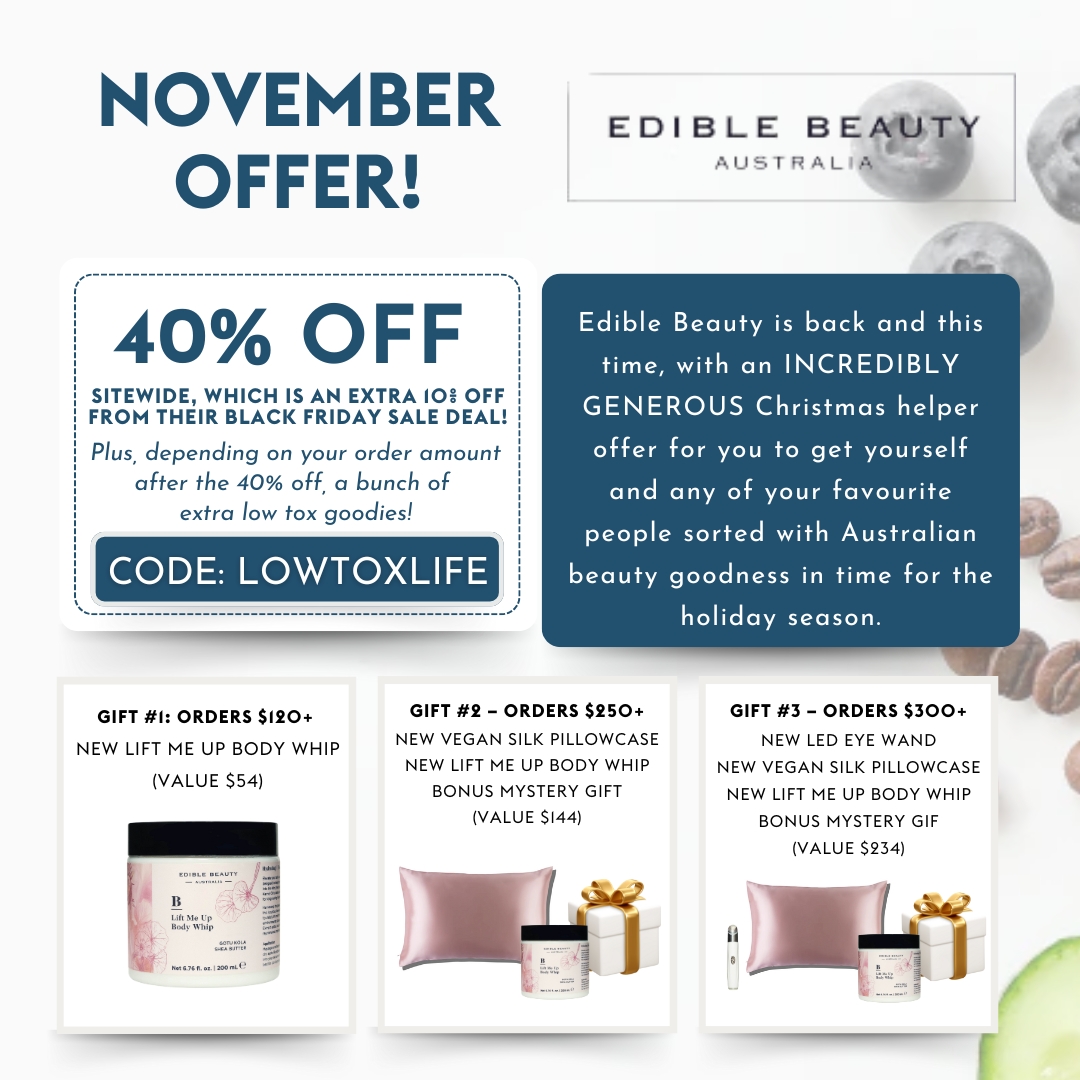
@ediblebeautyau has a bumper Low Tox Swaps Aussie beauty offer with 40% off their huge Black Friday sale + extra freebies depending on your cart amount, such as the Body Whip, LED wand, Silk pillow case and mystery gifts – Code LOWTOXLIFE and you’ll see it as an extra 5% off their already loaded 35% off. Massive thanks to Anna, Daisy and their team for the extra low tox love. Enjoy! https://bit.ly/Edible_Beauty
Be sure to join me on Instagram @lowtoxlife and tag me with your shares and AHAs of this week’s episode.
***
About Ali Daddo and Mary Doube
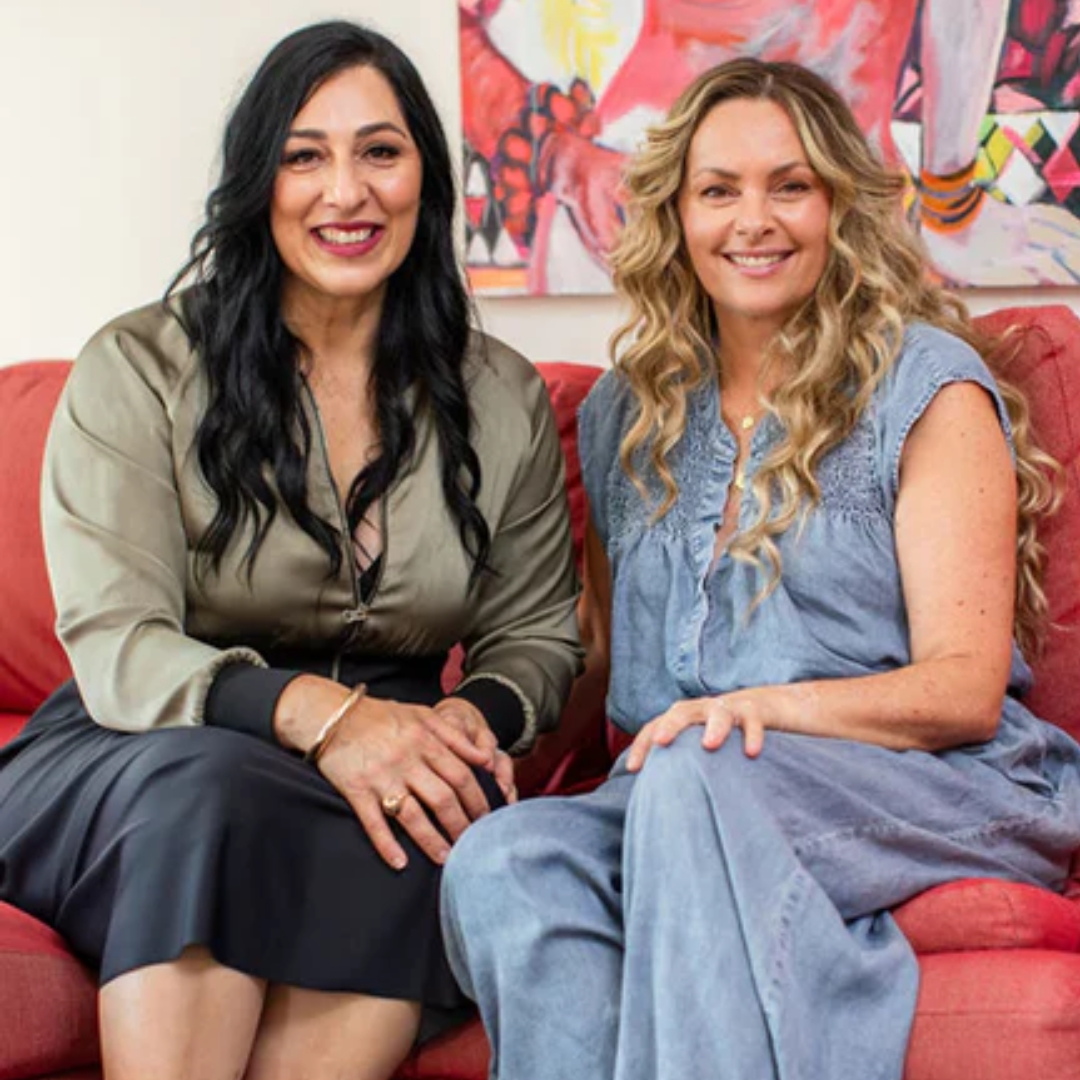
Ali Daddo and Mary Doube are the founders of Aviiana. With a groundbreaking focus on Peri/Menopause. Co-founded by Ali Daddo, celebrated author of Queen Menopause, and Mary Doube, creator of the “Strong Formula” program, Aviiana is dedicated to empowering women through their midlife journey. Combining expertise, personal passion, and innovative wellness solutions, Ali and Mary are breaking taboos, driving conversations, and helping women reclaim their vitality, strength, and confidence. Aviiana is more than a brand—it’s a movement for thriving beyond 35.
Website: https://aviiana.com.au/
Aviiana – https://www.instagram.com/aviianaofficial/
Ali Daddo – https://www.instagram.com/alidaddo/
Mary Doube – https://www.instagram.com/marydoube/
More about this month’s sponsors:
Thank you to this month’s sponsors for partnering with our show and helping you make your swaps with their special offer:

Ausclimate’s highly recommended range of WINIX Air Purifiers is the ideal solution for cleaner, healthier indoor air. Easy to use, reactive features and settings with a truly comprehensive 4-5 stages of purification, including Hospital Grade True HEPA Filtration and Winix’s unique PlasmaWave® technology. Perfect for smoke, dust, pets, viruses, bacteria, household odours, and allergies (covering a variety of allergens). Breathe easier, sleep better, and feel better. Winix; is the most complete air purifier on the market!

Offer: Ausclimate is now giving all Low Tox Life followers an EXTRA 10% OFF their already discounted prices. Simply enter the discount code of LOWTOXLIFE on check out via: https://www.ausclimate.com.au/
This discount can also be redeemed for over-the-phone orders verbally.
Website: www.ausclimate.com.au
Facebook: www.facebook.com/Ausclimate
Instagram: www.instagram.com/ausclimate

Edible Beauty is a brand I discovered a couple of years ago and a couple of products in the range have become firm favourites.
A little more about Edible Beauty:
- Pure and Edible: All products are made with organic ingredients, vegan, and food-grade ingredients—formulations so pure, you could eat them! BUT also high performance!
- A wonderful planet-conscious business using recyclable packaging, FSC-certified paper, and low-waste, eco-conscious formulations using ethically sourced ingredients.
- Holistic and Synergistic: Each product is naturopathically formulated to promote a synergy between inner health and outer beauty.
- Everything is Pregnancy and breast-feeding safe
Instagram: https://www.instagram.com/ediblebeautyau/
Facebook: https://www.facebook.com/EdibleBeautyAu
***
Title show track, by LIOR.
Love the podcast music? You will hear excerpts from Lior’s track “Caught Up” – go check it out on iTunes or Spotify if you want to hear the whole song or album, Scattered Reflections. Co-written with Cameron Deyell, it’s a great song and I love the reflective energy of it – perfect for the show, right? Enjoy. Lior is always touring, so do check out his website. It is wonderful to hear him sing live, trust me.
Low Tox Club – The place to bring your low tox life to life.
Want to join a community of like minds and enjoy all the perks of being in the Low Tox Life inner circle such as an online membership platform, 50% off all our Low Tox courses, an awesome chat group, my monthly Q&A, and special guest star interviews for just $49AUD ($29USD/28EUR/23pounds) per YEAR? We have created a special place and set of resources to help you achieve your goals and it’s a wonderful place to be – MORE DETAILS AND REGISTRATION HERE.
***
If you would love reading like me or you just simply want to go through the full transcript, you can check below.
[Alexx Stuart] (0:00 – 10:51)No woman should have to do the midlife transition through to menopause and beyond alone, and yet so many feel very alone and confused. And today’s show is here to be a warm comfort, an injection of hope. It’s such a great conversation.
Hello, and welcome to the Lotox Life Podcast. I’m Alexx Stuart, your host. Today is show number 410, and I’m thrilled to have two gorgeous new friends join me.
We met earlier this year, Ali Daddo and Mary Dube, the founders of Avayana. And they have created a platform for perimenopause through to menopause and beyond to support women with this transitional phase in life and to build community and a sense that you are not alone, no matter how you are experiencing this phase. Some, as Ali says in today’s show, seem to breeze through and many do not.
And it’s really just such an important time to feel that you have the support and the tools you need to have an experience where you can actually appreciate the sense that it is the dawning of a new, exciting chapter, which many women can very often feel. I know from talking to my friends, I know from some of the thoughts I’ve had, and I know from talking to both Ali and Mary in this show, many moments can feel very dark and very much like you don’t ever have a bright side or a silver lining coming. And it’s really important to recognise that while also knowing and believing that that might not always be the case.
And it’s only through support conversations and a growing of awareness that we can do that. So if you have a midlifer in your life, please share this show with them, share it with as many people as you can. Look, we’re not speaking about this topic today as medical professionals.
We’re not talking about the hot new supplements that you can take or the protocol you need to do. That is absolutely not what this conversation is about, but it is one to raise awareness, to share frank openness, and to have a good giggle as well as also talk about things that are working for each of us personally, as well as moments that we’ve had realisations and penny drops and a sense of trust in the crazy process that this sometimes is. I really genuinely hope you love it.
I love that Ali and Mary have come together to create their Aviana support platform for women and to create a sense of community where people can share all sorts of experiences and symptoms and other people can chime in and say, Oh my gosh, me too. I thought like I was going nuts with that one with the metallic mouth or whatever you might be experiencing. So what I also love is that they are doing this out of a passion for advocacy for the human experience of transitioning into this menopausal phase as a woman.
Ali is an educator by background and trade over two decades of work with families and children. Mary is an engineer by trade and they have decided that this is about meeting a moment in a new phase of their own lives to then make things easier and more helpful and supportive for millions of women around the world. It’s by no means an ad for that platform.
I adore them. We met earlier when they were launching it and through a hilarious sequence of me arriving ridiculously late for the event of their launch as well as then, which is so classic Perry stuffing up and getting things wrong for me. And then that moving to us chatting and having a real kindred spirits conversation where I popped a piece of popcorn in my mouth.
It got stuck in my throat in just that weird way. I ended up having a hilarious coughing fit that ended up feeling and sounding like I was coughing up a lung. And we somehow managed to become friends through me showing up at my absolute worst.
And that is how I know they are such good humans for sure. And, uh, instant kindred spirit. So I know that’ll come through in the chat today.
A reminder, we are now also on YouTube. So feel free to jump through the link that we’ve popped there in the show notes to watch the episode. If you’re more of a visual person and we’ve started back cataloguing shows, you’ve got about 25 there now that you can watch, which I’m so excited about.
I think we have something like 20 subscribers at the moment where I mentioned this. I haven’t really talked about it much because we’ve wanted to get more history up there before making a bit of noise. So I really appreciate every subscriber who joins us on YouTube.
It would just be great if you could jump on there, like a bunch of episodes, make a little comment of a show that you really enjoyed. Oh my gosh. I would love that.
Thank you. But of course you can listen to this anywhere. And actually you probably are.
Uh, so I’ll hook into that show in a little minute, just two quick sponsor messages, because remember without the sponsors, you can’t get your low-tox swaps and we can’t put on this show for you every single week. Uh, so they are immensely important to us. And the amount of people that have shown appreciation through DMs or saying, Oh my gosh, I got my dehumidifier and like it took 20 litres out of my daughter’s room overnight.
Uh, those sorts of messages, um, really just make me feel so happy to know that people are discovering great low-tox products for healthy homes, for healthy skin, for healthy everything. So today I just want to mention Ozclimate our major sponsor of the year, uh, 10% off. They’re already often discounted prices.
So it can end up being a ridiculous bargain when you add your code lowtoxlife at the checkout, uh, dehumidifiers, Winix air purifiers, and they’ve now also got air circulators, which are fantastic for creating air exchange. If you live somewhere quite low to the ground, or if you’re in lots of stacked apartments and the airflow can be a bit tricky, depending on the floor plan, an air circulator almost feels like a fan. I find them more effective than fans actually.
And now they have been added to the Ozclimate stable as well as portable air conditioners, heaters, um, which you probably won’t need till next year, but they’re such good little ones. Uh, we, we bought one of the little column heaters, just perfect for a study or a bedroom this year. And it’s pretty, I’ve never had a pretty heater.
They’ve somehow managed to do it. So there’s Ozclimate lowtoxlife 10% off. And again, with the code lowtoxlife, you have the crazy good edible beauty deal, uh, that runs until mid December, December 14th, you have this one 40% off on their website.
Um, I can highly recommend if you’ve been looking for a lowtox perfume, they have this gorgeous sampler coffree. And with that 40% off, it makes it very inexpensive. And I’ve actually found a lowtox perfume.
I like everyone’s got very different ideas of what smells you like. I like citrusy kind of fresh ones. And I found one in their sample kit.
I’m so excited. Uh, and my son, teenager 15, who hates sunscreen with a passion has given edible beauties SPF 50, the all clear. I was as shocked as anyone was to hear that he was completely fine with the texture.
So if you have been struggling to find a good lowtox sunscreen at 40% off, that is an amazing way to try a very high quality glides on texture, mineral based sunscreen. It’s gorgeous. Of course, there’s the core for skincare range.
Uh, there’s the fantastic, um, exotic goddess ageless serum in there that I adore. It’s the number three and the beauty reset drops act like basically those retinol products that can have some serious side effects. Uh, the beauty reset drops do not.
And they are really, really effective. Fantastic to pop on at night for a good treatment overnight. Uh, so lowtox life 40% off for that one.
And now let’s talk midlife and beyond with the wonderful Allie and Mary. I hope you enjoy the show. Hello, lovely Allie and Mary, how are we doing?
I’m good, Alex. Nice to be here with you. Oh, it’s so good.
We have had our own offline chats, uh, a few times now and had a really good time. Good ahas good, like, Oh my gosh. And most importantly, I think good laughs because laughs get us through lots of things.
And I wanted to bring you guys on the show a, because I just love the work you’re doing. I love the collaboration you’ve created and the space for women and their families to start to really understand and move through this phase a bit more empowered, but I want to start and you guys decide who goes first. I want just a little something about initial realisations, moments where you were like, Oh, is this what that is?
And what it looks like for you personally? Um, because I don’t know about you, but very confronting and so much rationalisation before I went, Oh, this is what that is. Okay.
I was trying to bring it down to all sorts of stuff and actually no, no. Um, so Mary, why don’t you go first?
[Mary Doube] (10:51 – 14:02)Good to me. Well, apart from saying we might need some wine and maybe some tissues, but, and I’ll try and keep this the express version, but for me, I’m so you understand the context. I’m 51 now, but I, I got to about 42 and I was, um, those who knew me like quite ambitious and, you know, vibrant character, the person you kind of see today, but in my early forties, something happened.
So my body changed my, um, I don’t know, my universe changed. It was really slow. Um, it started with just a, my level of anxiety just started to rise a little bit.
I had, you know, three kids, you know, they were sort of toddlers and, you know, teenagers at that point, but, um, lack of sleep, anxiety, incredible weight gain, just like sudden. And I got to like, you know, 130 kilos I was, but, but that’s coupled with priority, like letting go, like you become less of a priority when you’re like trying to manage your business, run a family. So it becomes really easy to rationalise, right.
And put it all down to that. Losing my mom. So it was like, was I anxious because of that?
Um, but yeah, and then it developed into, it didn’t take very long, but just crippling anxiety. That was the height of it. And it was really scary.
And I went from doctor to doctor to doctor who said like, no one thought to check my hormones. So it was, you’ve just got this, you know, psychological issues, you’ve got some trauma. And I’m like, but really, I’m trying to uncover and unpack what it what what was going on, what happened in my history.
And I went from, you know, as I said, you know, counsellor to then psychiatrist, who then put me on a very, very heavy dose of antidepressants. And I don’t know what a nervous breakdown is. But I think that’s what happened.
I hit like a like rock bottom. And it was dark, so dark. And for me, it was just like, just a visualisation, which I talk about.
And it was just a crisis moment, where I’m lying there, I cannot get out of bed. I’ve got three kids just fending for themselves. And I don’t want to be on the planet.
And that moment I just had this, I saw Mary, I was like, holy shit, I want to be her. It was this healthy, vibrant, I could see it, it was so powerful. And for me, I just went that moment, I’m going for her.
I don’t know who she is, but I’m going for her. And that was the start of the second phase of my life. So Wow, it’s just amazing.
So I can share what happened next. But it was just like, we’re looking forward to the sequel. Yeah, Perry, you know.
[Alexx Stuart] (14:03 – 14:25)And at what point before I moved to you, Ali, at what point Mary, did you connect this vision of future you and you knew she existed and you wanted to head towards her? Because did it feel like it was a chance moment that that vision happened? Had a doctor connected it with perimenopause?
So you started to understand?
[Mary Doube] (14:26 – 15:01)Nothing. Wow. It was my it was my self throat.
It was like a moment of walking into a strength CrossFit gym, where that was the journey after much after that, where I was like, must be hormones. And then this word Perry was being thrown around. We’re talking nine years ago.
So that’s a long time ago. And no one it was just but then it took me even you like a year or two after that, to kind of everyone was talking about their hormones. Could it be hormones?
Is it Perry? Like, what’s Perry? I’ve never heard of this.
[Alexx Stuart] (15:02 – 29:23)I remember doing it. I know. Right.
I remember my, my, my, my, my gorgeous podcast guest, Dr. Carrie Jones, queen of hormones doing some great stuff on perimenopause these days. We did a show on perimenopause probably about five, six years ago on the podcast. And we were kind of laughing about like, oh, bugger.
Yeah. Reverse puberty. Doesn’t that sound awful?
I didn’t realise I was already at the start of it. And some of the things that I was experiencing were the very things we were talking about, but that is how far out of our reality this stage has been. And our, our cultural chat as women, if you can literally be in a phase, be interviewing a doctor about a phase and still not join the dots, like, geez, what’s it going to take?
Right. Ali. Okay.
What did it take for you? I love that story though, Alex. That’s like, cause five or six years ago, I’m like, yeah, that was, you were ahead of the game.
Groundbreaking except I just didn’t know. Yeah, exactly. But I mean, I tell you, I think that almost every woman I’ve spoken to will understand that story.
I know I do as well. Cause you know, 20, 20 vision in hindsight, I go, oh, that’s what that was when I was going to doctor to figuring out why was my testosterone all of a sudden plummeting? And why was that being called pre-diabetic when I hadn’t done anything different?
And why are my adrenals all shot? Like it was just, but again, no one ever thought perimenopause again, I’d never heard of it. And then I saying thing, you know, life happens.
I moved from America to Australia after 25 years. It was the biggest, hugest upheaval taking three kids and a dog and moving our life back here. And so I felt awful.
I felt, um, sad and depressed and, and, and upset. And I was like, well, it’s because I’ve just moved. Of course, that’s why.
Um, the rationalisation and then it was just, I just spiralled further and further down and, you know, similar story to Mary put on excessive amounts of weight, felt unmotivated, felt, um, really achy and painful. My sleep just almost stopped. Like it just became tiny snippets of sleep and night.
And I would almost dread getting to the bedroom because I knew, you know, when like babies are young and you just can’t wait for the sunlight to come up because it’s like, you’re done with the night. It was, I was feeling that and I’m like, Oh God. And that of course was just taking its toll on everything in my life.
Um, that, that the rock bottom point for me was my whole life has been dedicated to wanting to have children, having children. I work with kids. I love kids.
And my favourite, favourite thing to do is be with children and adore my kids to the ends of the earth. And I remember going, feeling like, I just don’t really care. I don’t care about them.
I don’t care me. I don’t care what happens to them. I don’t think they care about me.
I just don’t think I care about anything. And I think it would be a lot easier for them if I wasn’t around anymore. And I remember thinking it and I wrote it in a journal as well.
The journaling really helped me. And I remember just going, what the hell is going on? Like what something has gone really, really bad.
Um, and it was that moment that I went, this is not you. Actually, this is really not you. Something, something deeper has happened here that you’ve lost yourself.
So, um, and it was during that time that I had, I had heard about perimenopause and I was starting to investigate it. And I was starting to think about maybe this is a book somehow. And, you know, as I always say to Mary, you know, the 10, the 10 people that might actually buy a book on menopause, like who’s going to buy a book on menopause?
Um, little did she know. Um, and then just started writing it and started seeing a therapist, started seeing a naturopath, started seeing, went to see a doctor, went, just started going, okay, searching for answers, searching for answers, doing a deep dive on research, speaking to more women. And the more information I got, the better I felt, uh, cause I knew I wasn’t alone.
I knew this was hormone unrelated. Um, but the more horrified I was at the fact that I’d entered into the worst health crisis of my life and no one had told me and nothing had been said. And there was no information coming from doctors or anyone or sisters or friends or the, or the internet or the society.
It was just like, how did I get here and not know anything about menopause? This is unbelievable to me. It’s not like anyone’s avoiding it if you’re a female.
So that was my, my entry in. Yeah. Wow.
Um, and you know, just listening to both of your stories, um, I had quite a weird rock bottom. I’m going to share. Um, it was a lot of the things that you’re both talking about here and, uh, bubbling along the of my life timeline in my little family was that my son is an only child.
And like, when I say loves dogs, I mean, he is one with all the dogs. Like he is, we know the names of every dog in the neighbourhood. We stop, we chat, we pat, we, you know, we’ve, we’ve done that since he was a toddler.
And so, um, we kinda knew he needed one and that it would be a brilliant companion for the teenage years. You know, as Maggie Dent says, when things really go to shit for a teenager, just shove the dog in the room and take the phone out and they’ll probably come good in about, you know, a couple of minutes. And I just love that piece of advice.
So, um, I thought, okay, we need a dog. Husband started looking for a dog. We were trying to find a rescue.
We’re trying to find a big enough dog that my husband felt was a real dog. I mean, you know, like the conversations were interesting. And one day we found this retriever that needed a home after, you know, growing.
And then the family just could not manage him. They’d had a death and it was just too much for them. And so we, we got Buddy and about, yeah, it was the second day.
And I remember being in the kitchen, just stirring the mints for my bollardays and going, and then Ollie comes home after work and he says, are you okay? And I said, yep, I’m just stirring the dinner. I’m just going to stir the dinner.
It was because I realised what a huge mistake this massive animal was, but, um, it, he wasn’t a mistake. It was that I was going through some things, had no idea how to communicate that or link it to an actual, uh, like biological situation that a hundred percent of women are going through. If we get this old, which is, I mean, what a privilege, right.
Um, but at the same time, the dog was the straw that broke the camel’s backs on back on my capacity. I realised I am not an infinite fountain of woman who does all the things for all the people cares for everybody in every direction. There’s actually now that no, I know.
Right. Crazy. But there’s now a, there’s a finite ceiling to this thing where I had never experienced that limit, but I feel like biology gives us a limit all of a sudden, um, which can end up being an amazing gift, but I think it can also take a lot of support and chat and, uh, unpacking before we then start to be able to put it in the context of a gift.
I just, I don’t want the toxic possibility, positivity vibe. It’s like such an opportunity for us to, you know, really tap into boundaries. I’m like, well, yes, but that doesn’t make it any less tumultuous to get to that point.
And I think we really have to be very real about the tumult of it. Yes. Right.
Yeah, absolutely. And I, you know, there are plenty of women that reach menopause without barely a hot flush and I go, yeah, you though. Yeah.
The amount of women, the majority of women that we’ve certainly spoken to, it has been a bloody rough time and continues to be a rough time as well. And, um, you know, they’re still looking for answers and help and support and yeah, the capacity thing is so, yeah, we’re so used to running and running and juggling and going and ignoring and pushing through. I feel like particularly as women.
And I, I think Perry and menopause just absolutely puts a lid. It gives you that ceiling of like, you actually can not keep pushing. And that’s, that is a good thing because it’s sort of like, I then now need to stop and go, well, what do I need to do?
And go, Oh, I actually need to care for myself. That’s what I actually need. Yeah.
First time ever. Wow. Um, but I’m still learning that.
Like I, I hit, I hit a, I hit a point like a few weeks ago, I was on my way to Mary’s and I was in the car and it was just this one little thing that I couldn’t get this technology thing that I was trying to do. Oh gosh. And I could not make it work.
And I, I just lost the plot. I lost it. I was hysterically crying and I was like, but again, that little voice outside of me was going, Oh, you hit your limit.
You pushed yourself too far. You’re at capacity. And now you’re trying to add something on into that pot that is bubbling over and it’s not working.
So I’m still trying to figure that where that line is before I hit that capacity. I’m still trying to figure out where that balance is. Well, but I think that’s where like, this is really interesting, right?
Because I feel like sometimes from what I know from doctors that I’ve interviewed over the years now on the subject, um, I like analogies and I feel like they help us understand complex things. And I was walking along with a girlfriend talking to her about this very subject, because it’s a bit of a hot topic for all of us. Um, and I said, I feel like ovulation is now, cause I’ve still got my period.
I feel like ovulation is now my roughest point in my month. And it’s, it’s almost like the flickering candescent light bulbs, they’re desperate to try and light up and make it all happen still. So there’s a lot of energy that goes into squeezing that little egg out and making it all happen so much more than before.
And the reserves are low and the panic stations are going nuts in our bodies. And so that is when I have like four days of absolute mayhem, fart, you know, nervous system, everything. And if you throw in a little Qantas check-in and the bag drop not working, um, like I all of a sudden become this lunatic who just can’t get my shit together.
And I’m like, you are the most confident, most experienced traveller out of anyone, you know, and why? And I think it’s like these little flickering light bulbs still trying to make it like it was before for a few years. Like there’s just enough memory in the biology to say, I know it should be like that.
Like it was before, before you fully jump into this next phase. And I think that’s a fascinating kind of way to think about why we have these little moments of SPAC. Absolutely.
And I’ve, I’ve heard doctors explain it really as beautifully as you just did too, where there’s literally saying that that is a physical thing that is actually happening in our bodies that we’re so we’ve got all these eggs and all this stuff, you know, throughout our lives. And as it goes, as we diminish and lose them all, our body’s still trying to do the same thing that it was doing with all the eggs, but when it’s sort of that’s gone. So our body’s working way harder to ovulate and do that.
So you’re, you’re up, you’re absolutely correct. Like it, it is our bodies working over time and causing all of the mayhem of trying to juggle everything. And wait, there’s not, there’s not this lubricant that’s meant to sort of keep things going like it normally does.
We’ve lost that. So it’s like, it is, it, there’s a bit of mayhem for sure happening internally, like physically and mentally too. I mean, it’s a great book called The Menopause Brain.
[Ali Daddo] (29:23 – 29:24)Yes. [Alexx Stuart] (29:24 – 30:19)
So good. I had her on the show this year. And I love that because again, it was just that thing of I’m not crazy.
We’re not crazy. There is physical scientific evidence of how our brains are actually changing during perimenopause and menopause. And that was, again, that was another light bulb, thank heavens, aha moment to go.
Okay. Yeah. You can’t call me crazy because this is actually happening.
This is a real thing. A real thing. Exactly.
And what I find really comforting is that we finally have the research to prove it. Right. Like Mary, in your darkest time, if someone had said, you know, we’ve done a paper on this stage of life and this is totally normal.
Right. Yeah. I mean, we wouldn’t need that right then.
[Mary Doube] (30:19 – 30:36)You’re right. And also the difference, you know, the thing that Ali and I are very passionate about is community. So the community that we’ve created within Aviana, we just see exactly that.
It’s, you know, the Facebook community or the Insta women that just want to share.
[Alexx Stuart] (30:37 – 30:37)Yeah. [Mary Doube] (30:37 – 31:42)
Just want to share what they’re going through. And when someone jumps in and says, hey, I’ve got that metallic taste in my mouth too. Suddenly you’re just like, oh, that’s a weird one.
But it’s just knowing that you’re not alone. And, you know, I thought I was so different when I was going through my thing. It was like, now I just go, mate, this is a common story.
It is. I’m not special. You know, everyone suffered through anxiety.
Everyone suffered through, you know, brain fog and, you know, insomnia. Huge. You know, it’s just how you deal with it in ways you’re going through that phase of life.
You know, there’s so many options now. There’s HRT, there’s just understanding food and understanding movement. And if you just compile all those really important one percenters, I call them the one percenters, then you feel better.
You know how to manage it, that tool belt. It’s establishing that tool belt.
[Ali Daddo] (31:43 – 31:43)Absolutely. [Mary Doube] (31:43 – 32:05)
You know, when I feel foggy, it’s like shit, shut down the computer. I can’t, I don’t even know what my children’s names are sometimes. And I’m like, right out and do a workout.
For me, that’s like where I get clarity, where I get energy, where I get just so much. But, you know, that’s my outlet. So it’s knowing what works for you.
[Alexx Stuart] (32:06 – 32:24)Yeah. And I have a question about that, because strength is something you have definitely made your central sort of, like, is it a coping mechanism sometimes? Like the way you just talked about it, Ben, it almost feels like it’s a bit of a, okay, reset, get strong, get back out there. [Mary Doube] (32:25 – 33:15)
And there’s a lot that goes with that. It is like, it’s proven it, it changes like your brain. So scientifically, it changes your physicality, your psychology, that one hour session or whatever, whatever you’re doing for that hour.
But for me, it’s there’s so much more, there’s, you know, building resilience, confidence, you know, obviously, that feel good, those are that, you know, the hormones, those feel good hormones. But yeah, like, there’s so much, especially, I’ve never felt stronger, more able, fitter, like, how is that possible to be 51 and feel better than your 25 year old body? How is that?
How is that?
[Alexx Stuart] (33:15 – 33:16)You made it possible. [Mary Doube] (33:17 – 33:19)
You know, I’ve, but I’m very consistent at it. [Alexx Stuart] (33:19 – 33:21)
I see you at the gym and your little Insta. [Mary Doube] (33:22 – 34:14)
I see you. Yeah, I see you. And don’t forget, like, I’ve got a really bad knee.
So, you know, I’m 51, my joints are starting to pack it in. But I’m still there. I’m still there working around those limitations.
So you can, you can feel great. It’s not too late. I’m sometimes sitting around women in a group who just have just packed it in.
It’s like, I’m 45. I’m overweight. I’ve got high cholesterol.
I’m done. No, no, no. And I was 41 and I couldn’t get out of bed.
And I was 130 kilos. And I used to wear sunglasses because just in case someone saw my anxiety or my fear, you know, and you can, you can change. You’ve just got to want it.
You know, so.
[Alexx Stuart] (34:14 – 36:09)Who was in your lives, Ali, I’ll ask you first, who was in your life, direct circle that really saw what you needed and how to help? Were you able to even articulate what you needed? Yeah, that’s a really good question.
I not in my direct circle because I wasn’t sure what was happening. I was sort of saying I was telling my husband bits and pieces and the kids sort of, I was telling them, you know, I’m going through something. It’s got nothing to do with you.
I am going through something. I have to say probably the person that helped me the most was my naturopath. And just for the sheer fact, it was an hour long session with naturopaths.
And it was just getting to sort of sit there and cry and go, I don’t know what’s going on. And she’s such a beautiful human anyway. But it was it was that.
And she’s obviously being a woman and similar age. And she knew what was what was happening. So I think it was her that really gave me the most support.
Like I didn’t talk to all my girlfriends were back in America. They’d never mentioned it anyway. But yeah, it was really my naturopath in that hour.
I would spend with her every few months that really helped me. And then when I started seeing a therapist as well, but that was obviously that wasn’t menopause related as such. It was more like what’s happened to my mental health.
But yeah, just having someone who can see you in full mess, I think is one of the most therapeutic things any human can can have. And I think we are still very uncomfortable being with each other in full mess.
[Mary Doube] (36:09 – 36:09)Yeah. [Alexx Stuart] (36:10 – 36:15)
But being a presence rather than like, you know, Mary, did you have someone? [Mary Doube] (36:19 – 38:27)
Hey, people, you know, obviously my CrossFit community’s been really important. But before that, I saw a series of counsellors and psychologists and psychiatrists. But one in particular, I remember talking about my anxiety and fear.
And I was always I used to say, I’m scared of losing control. Like, what if I lose control? That was my biggest anxiety doesn’t even sound doesn’t make sense.
But I had this sense of what if I lost control. So once I was talking through it with a counsellor and Amanda, and she said, All right, stand up. And I went, stand up.
She goes, Yeah, yes, stand up. Show me what this means. Show me what it means when you lose control.
Show me. And I’m standing there. I started laughing.
I said, it’s like being in an acting class. I don’t know. She’s like, I know.
Show me what Yeah, show me what it looks like. And I’m just like, standing there like, still going, what the hell is she talking about? And she said, seeing those blinds behind you see how they’re all broken.
She said, I had a man in here who has bipolar. And he smashed two hours ago, he smashed all those blinds because he was totally out of control. So I want you to show me what that looks like.
And I said, I, I can’t she said, Well, you’re not out of control. You have the control. And it was just like, I’m getting a bit teary.
You know, just a bit of a breakthrough that no, I’m not going to lose control. I’ve never lost control. But just this rationalisation of this, this thing that I couldn’t get past of like losing control.
And then I went, Okay, so what if I lost control? Who cares? So this guy broke blinds.
I’m not going to break blinds. I’m just gonna have a cry. That was you know, I’m such a control freak.
Ali knows that. You know, like, who cares if I lost a bit of control? So that was Wow.
[Alexx Stuart] (38:28 – 38:44)Okay, so what I’m hearing there is that part of this journey is the discomfort of no longer feeling like yourself. And then our mind sees that as I am therefore not in control. Yeah. [Mary Doube] (38:45 – 39:57)
Or, you know, I always had the fake smile, like everyone, how are you? Great. You know, no one knew about the turmoil inside, not even my next door neighbour knew.
And it was when that that moment where I started talking about it with women in, in the early days, I was a you know, a CrossFit trainer, and I was teaching women strength. And I would it was like I was standing on a box going, and then I couldn’t get out of bed. And then and they were just all like, everyone’s crying and sharing their own stories about how they felt their depression and their anxiety.
And it was this kind of forum where we were all secret, like garage door closed talking about this thing about hormones. And at the same time, everyone was like, you’re not gonna say perimenopause out there, are you? And I’m going, yeah.
And then I’m saying dry vagina once and then everyone was like, I can’t believe you know, the DMS were like, man, you’re totally out of control now. And I’m like, fuck it, I’m just gonna say it. I’m just gonna say it.
And then you know, then now it’s you know, how far have we come?
[Alexx Stuart] (39:58 – 40:13)So good. Absolutely. And in such a short space of time, I think it took Gen X to go, ah, no, this ends with us.
We’re not putting anyone else through this kind of secret, like keep up with the Joneses, suffer through it vibe.
[Mary Doube] (40:14 – 40:18)And then another just meeting Ali, the magic of meeting Ali that day, you know. [Alexx Stuart] (40:18 – 43:01)
How did you guys meet Ali? Can you tell the story? Oh, yeah.
So I was, I had put the book out that I thought only 10 people would read. And it was going tremendously well, much to my surprise. And I was doing a talk at the Willara Library and was one of my early ones, actually.
And this lady came up to me and she’s like, Greek goddess, super tall. She had a red, beautiful red coat on, bright red lipstick, long, long black hair. And she’s like, I’m, I’m Mary.
I am strong coach Mary. And I work in this field of menopause and peri-menopause as well. I was like, awesome.
Great. She’s like, can I message you? And I was like, sure.
And I, and she bought a book and I wrote, you know, love you, Mary, go you type thing in it. And sure enough, Mary, absolutely true to her word, followed it up and said, can I just meet with you? I have something I want to talk with you business-wise.
And, and I was like, yeah. And meanwhile, on my side of the fence, I had been doing these talks and I always talk about going to these rural areas and, and doing the talks about menopause to women in these rural country areas. And they were more lost than anyone.
They, they had no doctors. They had no one talking about it. They were suffering to such a great degree and coming to me as if, you know, they had a book that I’d written, which was barely the tip of the iceberg of what they really needed.
And they were like, what can I do? How can I help myself? I don’t know what to do.
Or I’ve, I’ve been, I’ve gone into medically induced menopause, which is a whole other story. You know, no one there’s no support out there for that. And I remember coming home to my husband going, I, I need to do something.
I don’t know what to do. I’ve got to help these women, um, find some kind of support and, and take action and, and give them something. And I don’t know what that can be.
And then enter Mary Dubay with her, um, with this wellness programme that she had already created. And she’s like, let’s build this business together to scale and help as many women through perimenopause and menopause as possible. And it was like, okay, so two strangers walk into a room and start a business together.
[Mary Doube] (43:01 – 44:02)I love it. We, we literally, we were talking the other day and we said, um, you know, we’re in, you know, talking to solicitors about, you know, like real hardcore joining forces here, like two strangers starting a business. And now, I mean, Ali’s my best friend, but you know, what the hell are we thinking?
This could have gone so wrong. But I adore her and, you know, everything we’ve created has been just, just love, you know, just both of us putting it all, all in, chucking it all in. And, and it’s just, we haven’t even started and we’ve got brands lining up.
We’ve got women, you know, our community’s growing just off the scale overnight every day. We’re like, shit, so many new women, just helping women. It’s just, and the men now, you know, it’s, it’s, you know, amazing what we’ve created in such a short time.
[Alexx Stuart] (44:03 – 44:32)It sure is. Um, and let’s talk about the men, uh, Cam, your husband did, Ali, did a fantastic video that went very quickly viral where he talked about how little he’d been told as a man about perimenopause and what that then does. And, you know, we know that this is a period of time where this is the highest point of suicide statistics for women.
It is also the highest point of divorce.
[Ali Daddo] (44:34 – 45:13)Hey there, things I wish I knew before my wife was in perimenopause. How about everything? For starters, how hard menopause would be on her, how her body would feel things differently, how she could no longer sleep, especially in a shared bed with me, how she would feel so alone and that I had no way of fixing any of it.
As a partner to a menopausal woman, we fellas need to learn about what our partners are going through. Perimenopause affects us too, because it can take its toll on our relationships. Check out the blog on relationships on aviana.com.au website for support around this topic.
[Alexx Stuart] (45:14 – 51:02)But why do you think that, um, and I’ll play it in the, I’ll play it in the show, um, pop it in there so people see it. Why do you think that resonated and just took off? Oh gosh, look, I think, you know, obviously you can get your Instagram filled with women talking about perimenopause and menopause and, and sharing their, their heart and their story.
And, and it’s, it’s moving. Um, though, when you hear a man talk about it from truly understanding a woman’s point of view, because I feel like that is so much of what women struggle with is that they feel lonely, even within their marriage. They feel like their husband does not understand.
They feel like their husband just wants them to shut up about it, to push through, like, you’re not sick. What’s wrong with you? Um, and it’s, it, it’s such a, it’s such a difficult one to pin down in so many ways about how you’re really feeling because you’re, it’s not an illness.
You’re not sick, but I don’t feel like myself. I feel like crying. I’m upset because I can no longer have children, even though you, you never wanted more kids, but I’m upset about it.
And they’re like, I remember Cam looking at me going, what? I’m like, I’m sad because I can’t have children anymore. And he’s like, you don’t want any more kids.
I’m like, I know it’s not the point. I’m just sad. It’s not the point.
The classic tag, the classic strap line. Yeah. There’s just so many nuances and layers that we feel and go through and, and that it’s so not as dramatic for men.
You know, we’re taught from such an early age that we’re here for to be fertile, to give children out to the world, to be the femme fatale, the sexy one or the skinny one, everything that women are just constantly in our faces with. And then when without a choice, it all is gone. You cannot have children anymore.
You cannot help but put on weight. Your skin’s gone to shit. Your hair’s gone to crap.
Like how, what is happening? And then you’ve got a husband that is just looking at you going, wow, you’ve put on, not that my husband did, but, but husbands that are there going, well, just go to the, just go to the gym, just stop eating, just stop eating butter. You’ll lose weight or, you know, whatever it is.
It’s like, and they want to try and fix you and fixing me. It’s about loving me through this time. And I think that that was what they heard.
They heard that empathy from him and that, oh, wow. He, he understood he got it. And, and it’s really, really is challenging for our partners.
I do really feel for them because it’s the woman that they, we were a year ago is not this really often, not the same woman. And they are just going, I don’t know what I did. I don’t know what’s going on.
Is she mad with me? Is she not mad with me? Why can’t I breathe in the same room with her anymore?
Like why can’t I sleep in the same bed anymore? Like it’s just so much. So yeah, he really, he really he hit that nerve of the women that really want a man that would be understanding.
So I think that was that little place that I want all men to understand that, but if we’re not understanding it as women, they’re never going to. Yeah. We have to start to be able to articulate it.
And I remember having a family meeting and then having another one because they didn’t get it yet. As you can see on page four, section five point a no. I, I really think, I mean, again, then we can say, oh, but why does it all fall to the women?
We are going through it and through the connections we’re making communities like yours, incredible doctors writing more and more books. And, you know, people are like, oh, this is a bit evangelical, but I’m like, we’ve literally never been allowed to talk about it. Of course, it’s an avalanche kind of like neurodivergence now.
And then all of a sudden everyone thinks it’s a trend, but actually it’s just a whole bunch of people who felt very lonely and silent about what they were going through, who can finally discuss and bond. And that is huge, but then we need a plan and we need to say, well, this is how it is now. How are we going to do this so that we can, we can be loved through it.
I love that phrase. That’s gorgeous. And I think for me, the family meetings, the getting the doggy babysitter, everyone, some hilarious that my dog has a babysitter during work hours, but it’s family friends that lost their retriever.
It’s like a beautiful arrangement. And, and I cannot, I cannot have a being here that goes, Hey, you want to throw a little ball while I’m finally able to focus on my newsletter or whatever else I’m working on, which is now a precious experience focus. So when I get it, I don’t want to be disturbed.
And I think it’s really about tapping into what we need to, to feel like we’re moving through it with the support we have, but with the realistic capacity that has changed.
[Mary Doube] (51:03 – 51:12)You know, I talk about self-love and self-prioritisation. It’s so important because that’s where it starts for me. [Alexx Stuart] (51:12 – 51:41)
So how do you get it? Because I bet there’s a lot of women who aren’t loving themselves at all right now, Mary and feeling that kind of estrangement from how you would rather be and still, it’s like a grieving process, but you have to just re put yourself back together. Different.
That’s a journey and a half. So where you thought you had a divine moment and people might think, Oh, I’ve just got to wait for it, but can we build it?
[Mary Doube] (51:41 – 54:41)Yes, you need to wake up fierce. You have to wake up fierce and decide it’s that decision you make for yourself. And it’s so important.
It’s so important, but it’s and I get how hard it is, but you need to wake up and say, All right, if I’m not good, no one else is going to be good. So I need to help me first. So then I can function, I can focus, I can help my children, help my husband be in a relationship, all those amazing things that we we love.
But if you don’t focus on you first, like, where does how you got to reach in and just fucking look in the mirror and go, right, just look at that person. And just that’s what I did. I looked and I cried my eyes out.
I cried and I cried and I wrote down the date and the time and I said, That’s it. This is it. This is it.
It’s about me. I don’t want to live like this anymore. I can’t.
It’s unfair. It’s unfair for me unfair for my children unfair for my family. And then I just wrote I was like, Right, this is what I’m going to do all those things that I was like, I’m going to I’m gonna, I’m gonna, I’m gonna, I just went now I’m doing it.
And that was it was just the 1% of like, whatever that 1% is for you, I did it. And that made me feel a little bit better than the other 1% was like, right, okay, I’m going to construct a healthy plate. I’m actually going to not drink, you know, just all those things.
I was like, I shouldn’t be I was drinking a bottle of wine, one and a half bottles of wine a night, and I could probably drive hard. I could drive. Like, that’s how tolerant my body became and so toxic.
I was so inflamed. My body was just screaming. And I knew it.
I’m drink like, you know, Christiana was a baby and she said, Mom, do you want to get your wine so we can have bath time like she was associating my first glass of wine, which was getting earlier and earlier and earlier. And then it was those moments of like, the hell am I doing? You know, and a friend who pulled me aside and went, means you’ve just had two bottles of champagne.
And you look and my my best friend, his wife was next to me. We were both drinking at the same rate. She was on the floor.
She was like, and I was like, hurt. And he goes, man, you’re scaring me. That was just those things that I wrote down and went, OK, no alcohol.
OK, I’m going to move. OK, I need to respect, you know, my body. I need to.
It’s just you’ve got one chance.
[Alexx Stuart] (54:41 – 54:44)I love that word, respect my body. [Mary Doube] (54:45 – 55:14)
You’ve got to. I respect my body so much. I thank it for the muscles it creates.
I thank it for the fact that I can reach up and grab that super heavy box, you know, and I go, yeah, like I feel like Superwoman. So and then it builds a little bit of confidence, you know, when you feel better and you can move, you know, can be agile and squat down and reach under. So many women can’t do that.
[Alexx Stuart] (55:14 – 58:22)I know. I noticed myself that that was waning. I’d been a tennis player four times a week right up until last year.
Then I had my foot broke. And then and then when I recovered from that, I got the frozen shoulder thing and like it was just a few things. And then all of a sudden I couldn’t play my favourite sport in the universe.
And that meant I didn’t exercise anymore because I’m not playing tennis. So that lasted about two months until I went, that’s got to change. And I think it is the self-respect piece and working with anyone you need to to rebuild that, because that’s the foundation you need to not have it be the negative self-talk that you suck, you’re weak.
I remember running across the road, you know, how you just kind of see an opportunity, close your ears kids. But you see an opportunity to run across the road through traffic, which of course no one should do. But I have always been able to do that.
And all of a sudden I caught myself thinking, oh my God, it felt like my knee was about to give, or it felt like my ankle was about to twist, just doing a quick dart across a road. And that was a turning point for me. And I think we’ve got to tune into little moments that we really recognise something’s different and not great and not where we would like to be from a strength perspective or activity and be with that.
Because I was with that. And that’s when I signed up for strength training again, like that was the moment where I was like, I’m not going to feel like a weakling darting across the road. And a couple of weeks ago, I had a moment where I got to dart across the road and I freaking sprinted like it was the Olympic hundred and it was confident and I was strong.
And I just thought, God, that felt really light or even just getting up from a chair feels different. And, and I think when we notice it feels different for all the wrong reasons is when we need to sit with that and change something out of a place of respect, not a place of you suck, this is over. The whole conversation needs to, to be flipped.
I think, Ali, how are you with strength? Oh, look, I have stuck. Yeah, I am on my own journey with that.
And it took me a while to, to get there as well. I mean, I went through the same thing. I had a frozen shoulder backed up a couple of years later by another frozen shoulder, broke my foot by simply walking.
You broke your foot too? Yeah. I was a dog.
My dog saw a rat. And so it was just the yank over the step that I was coming down and that was it. Broke my foot.
And I mean, the amount of, I forget the statistics, but it’s something like one in four perimenopausal women will break a bone, lose a tooth or get a frozen shoulder. I was like, yeah, I did. I haven’t lost the tooth.
I think I’m okay there. But it’s like, when you, again, when you read those statistics, you’re like, really?
[Mary Doube] (58:23 – 58:24)Really? [Alexx Stuart] (58:25 – 1:02:33)
For me though, yeah, the, I, I really relate to the, I remember when I was working at school and, well, I still work at school, but I had to run up to the office to get something really quickly. And it was like, I was in mud. It was like, I couldn’t run.
Like my legs were not moving as they should. Like what I, my memory of running was relating to my body. And I was like, this is weird.
You actually, what if you really needed to run for an emergency situation, you would be stuffed. So I was like, okay, that’s something I need to work on. I mean, for me though, it’s really been about, like I’ve told this story before, but I, my youngest daughter said to me one day after I sort of torn myself, you know, a horrible comment about how I looked and wait and blah, blah, blah, blah, blah.
And she just said, I hate it when you are mean to yourself, mom, it really hurts me. And that was, that was my, my turning point because I just, I could hear it when it was out of the mouths of babes, I heard it. And I was like, I am actually hurting my children by hurting myself.
And I was like, that’s wow. Yeah. That is, that is a mic drop moment.
I’m hurting my children by hurting myself. Yeah. It comes back to the respect and the love piece that starts here first.
Absolutely. And whoever you need in your corner to help you find it again, uh, do that because then you can build from there. We can’t build from a place of meanness and lack and it’s not how it was and hanging onto past and yeah.
And telling your kids that they’re perfect and wonderful and look great. When I look in the mirror going, you’re fat, you’re ugly, you’re old and wrinkly. Like they’re like, I don’t believe a word out of your mouth, you know, why it’d be beautiful.
And I can’t. So that was my first thing to, I was, I was like, I am never speaking unkind words out loud again about myself. And I just, that was my first step.
It’s like, okay, I can think them if I need to think them, but it is words have power and I am not speaking it out loud again. And then I just was like, okay, what’s one thing you like about yourself? Just pick one thing.
And I really liked my feet and I was like, okay. And every day I’d go, God, your feet are gorgeous. Look at your feet.
And just that one little thing made it kind of, and I worked from, from there and, and it, you know, and for me also, it’s like, it’s not about, which I’m so, I feel so relieved to feel this way that working, doing exercise and working out is no longer about trying to be a size eight or six and look good in a dress or a bikini. It is just about feeling healthy and strong and having the rest of my life, being able to get the heavy box from above the bed, being able to run across the road. It’s, it’s just completely flipped for me.
And it feels like such a relief to have that change now that it’s like, I don’t care what I look like in the mirror. It’s how I feel that I can do things now. And yeah, like swim and lift things and walk across the beach and not break a foot by just walking.
So that, that really propels me to keep, keep the exercise going and doing the strength training. So Mary is such an inspiration for me. I know it’s like, everyone needs you in their corner, Mary, when it comes to that, because you embody that strength.
And, and I think a lot of people think, oh, well, it’s easy for Mary. Cause like she’s a cross trainer, crossfit trainer. It’s a choice for Mary every day.
[Mary Doube] (1:02:34 – 1:02:57)And I started with two, two kilo dumbbells. So you have to start somewhere and it’s generally super lightweights, but it’s just how far you want to take it, right? How strong do you want to be?
So yeah, it’s just consistency and just making sure that it’s priority in your life. That’s all it is.
[Alexx Stuart] (1:02:58 – 1:07:40)Yeah. A hundred percent. Okay.
So let’s finish by talking about what your favourite things are about this new phase. Um, as you have journeyed, obviously quite a long way through the midlife and into beyond territory. What have you started to notice that has actually become an eventual and we will say eventual gift, Ali, what have you noticed?
Um, I would say it truly is for the first time ever is putting myself first. I was raised from even as a little, little girl, parents went through a divorce. I was with my dad and my dad was very sad and lonely.
And from the age of five, I remember going, this is my job is to take care of him now. You were parentified. Yes.
So I just, for me, it’s like the freedom I feel of just going, what do I want to do today? What would feel good to me to do and actually do it to say, no, I don’t need to go to that family event. No, I’m not.
Um, I can see you today, but it has to be at 1130. Cause I like to be home by seven 30 or whatever it is. I’ve said, I’ve said yes to so many things I haven’t wanted to say yes to.
Um, so that has putting those boundaries in place and, and, and putting my, my needs first is just been such a delight. And then I have so much, um, excitement for, uh, trying new things now. And that was, that’s come as a kind of a surprise.
I don’t know where that’s come from, but I feel like I’ve just lost. It’s like, I’ve lost the judgement of trying new things. I’ve just gone, yeah, I’ll give that a go.
And sure. Why not? I’ll try that.
And yeah, I’ll see what this is like. And I’m so happy to learn this cause I don’t know anything about this, but yeah, I’ll learn that with you. And why don’t we try this class or do this or hike here or whatever it is?
Um, I just feel like, uh, I do feel like a really, a huge zest for life and adventure and is mine for the, for the picking now, which I, I just never had that before. So, Oh, like never even before, before. No, never.
No, I didn’t know if it was cause my focus was always on others. Um, and you know, my, my kids are now pretty grown. My youngest is 18.
And, but I think I just had a lot of fear about trying new things, stupid of not being able to do it. And, you know, all of the judgments that, um, I had in my head and that’s something I’ve worked on a lot is being less judgemental. So, uh, yeah.
So I think that’s that dropping the judgement and just being, just leaning into being a beginner at something is really been delightful. Oh, how lovely. What a beautiful message of hope as well.
Like, cause if people are just starting their journey or they’re in their rock bottom and you’re hearing this, it can almost be impossible to believe that there might be a page turned, um, or that you might have your divine moment, or you might somehow have the support that finally makes you think, okay, new chapter, like, what are we writing here? But it happens. Um, and you know, it sounds a bit fairytale, but I think don’t lose the belief that it’s around the corner is so important.
Absolutely. And, and, you know, this is why it’s so important to have these conversations because women need to know that their life isn’t over at 45 because they’re in menopause. Like, no, no, this is just a, as you say, it’s a, it is just a new chapter.
And if you really, you know, pull in the, the needs and the support that is out there for you, your life can be better than it ever has been. And it’s important to know that. Mm.
We’re just currently in that crazy final scene of the, of the Batman movie where it just really looks like the good guy’s going to cock it and you think, how the hell are they going to come through this? And then the next scene, they’re in a park bench with their arms around each other and there’s happy music and it’s a new dawn. And he’s just trusting that you do get that final scene in the movie.
Yeah. Mary, how about you?
[Mary Doube] (1:07:40 – 1:10:06)I, for me, it’s similar to Ali, but I talk about a warm heart. I talk about feeling fulfilled and fulfilment for me is making choices for me. So it’s ties right back to that self-love and self-prioritisation.
So I used to do everything for everyone else, was in a relationship where I was unhappy. I hated, well, I was sick, call it sick. I was in a sick body.
Now it’s just through choice. So I made that decision that day and I went for it and I was fearless. So I threw away my engineering career for a career in wellness.
Who the hell does that? And if you look at my Mary universe and that warm heart, what does it mean? It just means that I found a partner that I adore and we’re super connected and I met him at 45.
So it’s never too late if you’re in a relationship where you’re unhappy or, you know, obviously there’s the balance. But for me, I just went, nah, can’t do it. I need to find my true partner.
And I did. I was so lucky. But it’s that fulfilment that I get from my work, from Aviana, like every day, I’m just falling more and more in love with Aviana and working with Ali.
So it’s just that feeling of warm heart. And just as Ali said, no, I don’t want to meet that friend that when I’m in her space, irritates me, you know, the vibrations are right. You know, I don’t care if you’re a cousin or a brother, you’re not in my life.
I choose that. So anyone toxic, like really protecting my universe is really important and key for me. And what that gives me is a warm heart.
So having people like Zen, I feel Zen, I manage my anxiety, I manage, you know, all those things, my body, my mind, all those things that bring me joy, they’re priority. So it’s just making those choices, though, those good choices for me at this later stage without the guilt. So I don’t have to do that.
[Alexx Stuart] (1:10:06 – 1:11:37)You know, I don’t have to Constantly that the undertone of the choice is now in the new chapter driven by self-love and respect for self body mind rather than societal expectation. That’s what I’m hearing. So good.
Oh, my gosh, I could and will talk to you for hours, ladies. But I think what we’ve talked about today is just such a beautiful exploration of personal journeys, but also acknowledgement that this is such a universal experience and it just has many different shades in the way it shows up for different people. And I just want to say thank you for being your two awesome selves, getting the word out there and being.
It’s almost like you’re just the big sisters everybody really needs through this stage. And so thank you for doing that for everybody. Oh, thank you so much for the opportunity.
Yeah, to talk. And yeah, for all the work that you do, Alex, as well, it’s just phenomenal. You know, the information that you give out.
It’s so it’s just, again, so wonderful when women commune together and, you know, just get some just get the support that we all need and want. And yeah, it can it can be a stranger on a podcast. You know, that’s the thing about it.
You can. It absolutely can. So, yeah.
Here’s to next time.
[Mary Doube] (1:11:38 – 1:11:39)Thank you, Alex. [Alexx Stuart] (1:11:39 – 1:14:35)
I hope you loved today’s show as much as I loved bringing it to you. I want to remind you that if you are someone who craves a low-tox community that is judgement free, full of empowerment, has health professionals and building health professionals that can support you as well as me in their answering questions multiple times a week, I want to invite you to join the low-tox club for the price of less than a cup of coffee a month. You have an annual membership for forty nine dollars Australian.
So it’s about thirty dollars U.S. or euro that allows you to have a member masterclass every single month with a health professional or global expert from the podcast where we have them to ourselves for an hour to ask questions and deep dive further. You have the beautiful, supportive chat group. You have Q&As with me, me answering questions.
We read books and talk about them and a whole bunch more. You can head to lowtoxlife.com, hit the explore tab and join the club is the very first option on that list. Of course, we have over ten evergreen courses that you can jump into any time, whether it’s navigating everyday low-tox swaps with our Go Low Tox signature course, whether you have kids and you’re wanting to know how to best support them with our low-tox kids course, whether you’re planning a family and looking at a healthy low-tox preconception journey, reducing inflammation, especially the chronic kind without inflammation ninja course, many, many other courses. You can again, head to lowtoxlife.com, hit the courses tab and you’ll see all of the options, which includes a business course, my low-tox method programme. A lot of people don’t know, but I was doing a lot before starting low-tox life in 2009.
And I was a business consultant across hospitality, health, retail and cosmetics. I have been in business consulting for a very long time. So I absolutely adore helping people move into the low-tox space or develop their low-tox businesses.
So that’s a way I can support you. And then of course, there’s our wonderful social media communities at lowtoxlife on Instagram. And of course the website with over 250 gluten-free recipes, blogs, downloadable PDFs to help you navigate wanting to get rid of synthetic fragrances in your school or office.
I could go on. So head to lowtoxlife.com, see what takes your interest or fancy. And thank you so much for being a part of our podcast community.
I love, love, love reading your reviews. I appreciate every follow and subscribe. And I want to just remind you to finish off that if there’s anything you heard that you found interesting from medical or scientific perspective, it is intended as education only.
Please always chat to a health professional who knows you and your situation best. I’ll see you next week. Bye.
