







About this show:
There is so much outrage online and in communities these days – what can we do about it? How can we bridge divides, tackle polarisation and even deal with different ideas on a good life in families (like simply changing cleaning products or ditching processed food and everyone in your family thinking you’re nuts, crunchy and woo woo!)
Enter Dr Kurt Gray; a Professor in Psychology and Neuroscience at the University of North Carolina at Chapel Hill, where he directs the Deepest Beliefs Lab and the Center for the Science of Moral Understanding. He received his BSc from the University of Waterloo, and his PhD is Social Psychology from Harvard University. His research investigates how best to bridge political divides, and the causes and consequences of people’s deepest beliefs, including morality and religion.
We have a brilliant conversation about beliefs, outrage, the role the online world is playing, and how to get better at being less Outraged and starting to find where we overlap and can agree with one another – storytelling is the key to the path forward.
I hope you will feel this speak to you as deeply it did, me, as a subject. I find it very hard to choose a camp because I know in my heart I don’t fit in any of the so well defined camps we see in this polarised world. Anyone fancy joining me asw we venture forward working from our overlaps instead of forcing each other to pick sides and then dehumanise the ‘other’? The invite is open.
See you online to talk about it,
Alexx Stuart
Founder of Low Tox Life and the Low Tox movement
Join me on Insta @lowtoxlife
Connect further with Kurt’s work here:
https://www.kurtjgray.com/
@kurtjgray on X and Insta
Want to support the show?
Free option: Leave a 5 star review wherever you listen to Low Tox Life – thanks SO much!
Paid + Member PERKS: Join the Low Tox Club – monthly practitioner live masterclasses, a suite of low tox store discounts from around the world and the most supportive and lovely chat group on all low tox topics on the internet: Check it out and join here for just the price of a coffee per month! https://www.lowtoxlifecourses.com/offers/YzLXThRQ/checkout
***
Thank you to this month’s show sponsors for helping you make your low tox swaps easier:
@ausclimate gives you 10% off their range for the whole of 2024, with brilliant Winix Air Purifiers, the best Dehumidifiers I’ve ever used and their new energy-efficient heating range. code LOWTOXLIFE https://bit.ly/ShopAusclimate
@cleannectarine is giving you 20% off the beauty and personal care ranges with all orders over $99. Code LOWTOXLIFE (excluding water filters). Try awesome low tox brands such as 100% Pure, Kora, Weleda, Moo Goo, Mukti and more as you make your low tox beauty swaps for 2025.
Be sure to join me on Instagram @lowtoxlife and tag me with your shares and AHAs of this week’s episode.
***
About Dr Kurt Gray
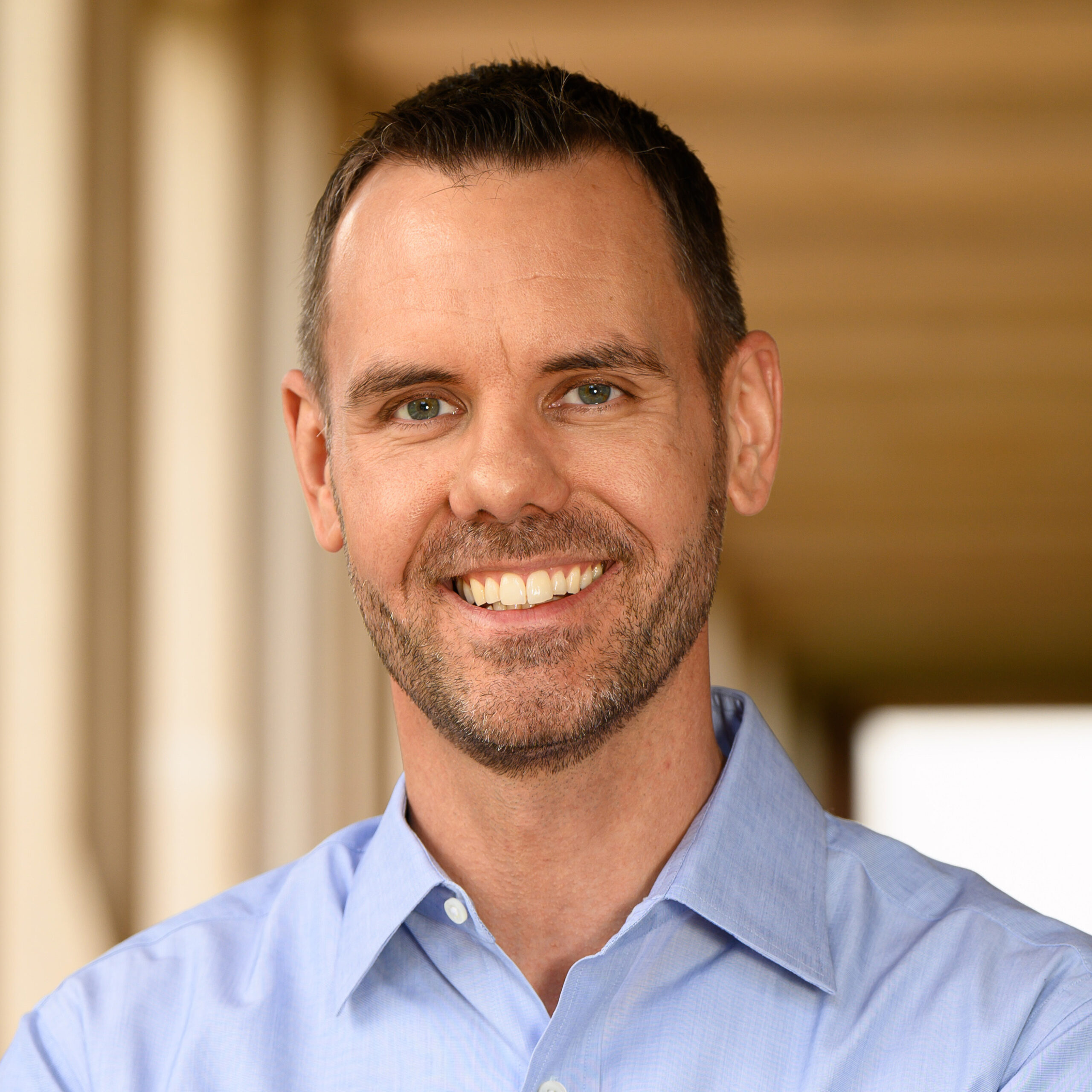
Dr. Kurt Gray is a Professor in Psychology and Neuroscience at the University of North Carolina at Chapel Hill, where he directs the Deepest Beliefs Lab and the Center for the Science of Moral Understanding. He received his BSc from the University of Waterloo, and his PhD is Social Psychology from Harvard University. His research investigates how best to bridge political divides, and the causes and consequences of people’s deepest beliefs, including morality and religion.
https://www.kurtjgray.com/
@kurtjgray on X and Insta
Booktopia: https://bit.ly/3P1NBL0
Amazon link: https://amzn.to/3ZHUFRX
Substack: https://www.moralunderstandingnewsletter.com/
More about this month’s sponsors:
Thank you to this month’s sponsors for partnering with our show and helping you make your swaps with their special offer:

Ausclimate’s highly recommended range of WINIX Air Purifiers is the ideal solution for cleaner, healthier indoor air. Easy to use, reactive features and settings with a truly comprehensive 4-5 stages of purification, including Hospital Grade True HEPA Filtration and Winix’s unique PlasmaWave® technology. Perfect for smoke, dust, pets, viruses, bacteria, household odours, and allergies (covering a variety of allergens). Breathe easier, sleep better, and feel better. Winix; is the most complete air purifier on the market!

Offer: Ausclimate is now giving all Low Tox Life followers an EXTRA 10% OFF their already discounted prices. Simply enter the discount code of LOWTOXLIFE on check out via: https://www.ausclimate.com.au/
This discount can also be redeemed for over-the-phone orders verbally.
Website: www.ausclimate.com.au
Facebook: www.facebook.com/Ausclimate
Instagram: www.instagram.com/ausclimate

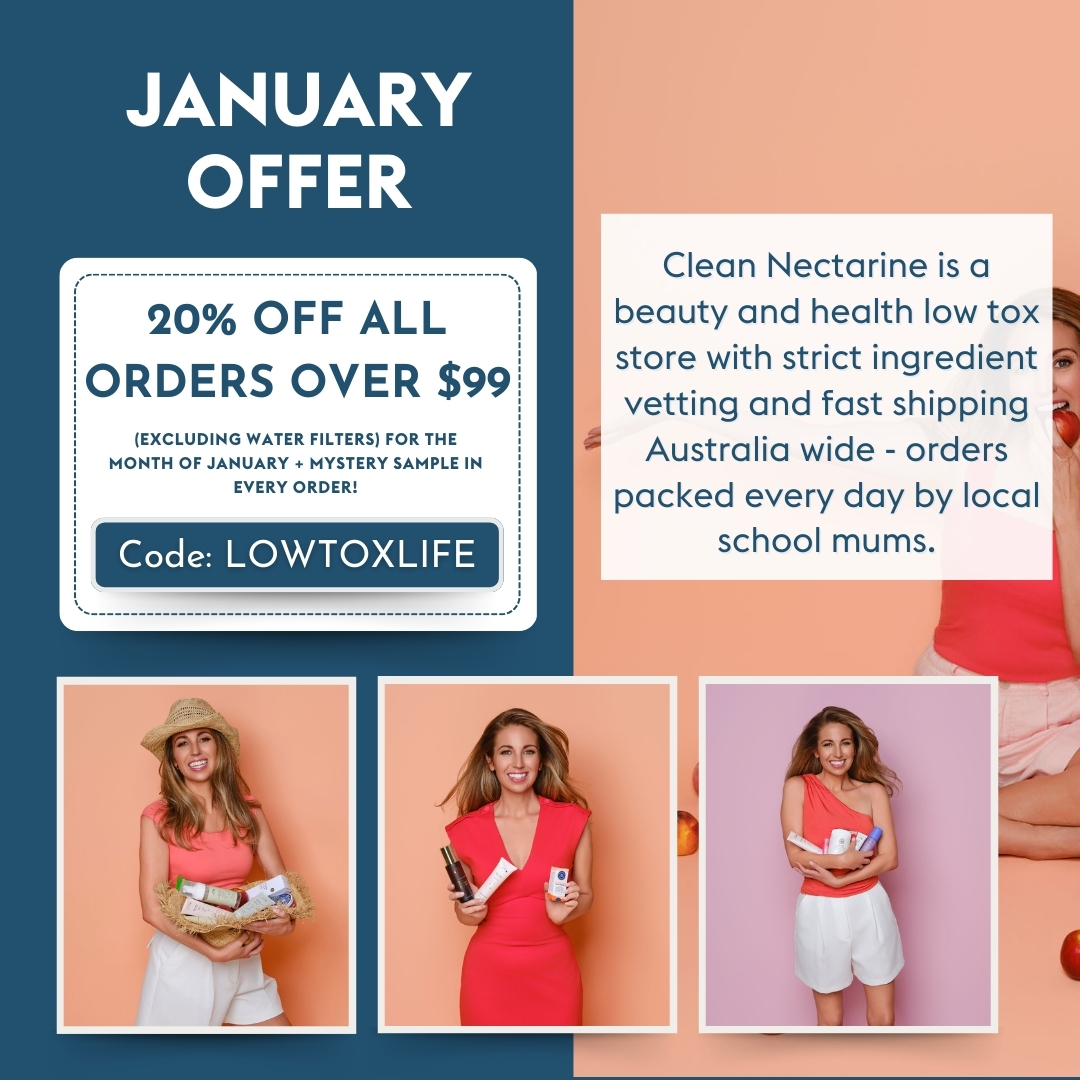
What to say about the good news that my good friend Irene Falcone is back on her terms with a brand new and beautiful low tox store – Clean Nectarine. Clean Nectarine is a beauty and health low tox store with strict ingredient vetting and fast shipping Australia wide – orders packed every day by local school mums. When Irene built Nourished Life to be the huge business it was it was no longer doable on her own. She thought selling it to a big company would be the answer but then had to watch them ruin all her hard work of 10 years and her legendary status as an amazing customer service focused business.
I just love and admire so much her resolve to start all over again on her terms and in a way that will work for her AND her customers.
And to celebrate it? Irene is giving us (Aussies) 20% off store wide with the code Low Tox Life
- This is excluding filters (you still have 12% off those on Waterscofilters website though remember till mid-September with code Low Tox Life)
So many things to love on the site – some of my favourite low tox businesses like Weleda, Mukti, 100% Pure (omg the apple enzyme products – helloooo fresh, vibrant skin!) and the Hurraw tinted lip balms. The only things I wear on my lips that don’t dry them out. I also love the 100% pure make up – the eyeshadows a fun yet natural and make me feel like I’m still wearing my skin, not covering it.
Enjoy taking a look around and making the most of the 20% off this month!
Instagram Link: https://www.instagram.com/cleannectarine/
Facebook Link: https://www.facebook.com/talkingclean
Website: https://cleannectarine.com.au/
***
Title show track, by LIOR.
Love the podcast music? You will hear excerpts from Lior’s track “Caught Up” – go check it out on iTunes or Spotify if you want to hear the whole song or album, Scattered Reflections. Co-written with Cameron Deyell, it’s a great song and I love the reflective energy of it – perfect for the show, right? Enjoy. Lior is always touring, so do check out his website. It is wonderful to hear him sing live, trust me.
Low Tox Club – The place to bring your low tox life to life.
Want to join a community of like minds and enjoy all the perks of being in the Low Tox Life inner circle such as an online membership platform, 50% off all our Low Tox courses, an awesome chat group, my monthly Q&A, and special guest star interviews for just $49AUD ($29USD/28EUR/23pounds) per YEAR? We have created a special place and set of resources to help you achieve your goals and it’s a wonderful place to be – MORE DETAILS AND REGISTRATION HERE.
***
If you would love reading like me or you just simply want to go through the full transcript, you can check below.
[Alexx Stuart] (0:00 – 8:13)If you often find yourself outraged about politics or discussing different beliefs or seeing content online and thinking, gosh, that is deranged or they’re deplorable or they’re too woke. Wow, this show is for you. Let’s come together.
Hello and welcome to the Lotox Life podcast, first show of 2025. A big happy new year as we usher this year in, and I cannot wait to bring you another year of shows. If you are just tuning into the Lotox Life for the first time, Lotox Living is not just about reducing environmental toxins in our everyday life, although of course, I have done a lot of work in this space through courses, education, coaching, and online for many, many years.
But it’s also about the food we eat, the thoughts we think, how our mental health is going and the environment around us. And so you will always find very wide-reaching topics and you will very rarely find extremely definitive or protocolized or radical or too far to any side or too firmly in any camp, anything, because if there’s one thing I know for sure, it is the more you know and the more perspectives you take in, the more you understand that life, science, health, medicine is far more about where we overlap and what we all know for sure, rather than all the different opinions that lie to other side of those overlaps. And so I just love that Kurt Grey is my first guest this year because we are talking about that very thing and how we can actually come together more, how we can actually learn where different people are coming from on subjects that tend to polarise. I grill Kurt on his research in this space for many, many years now.
His new book is called Outraged, which the strap line for is why we fight about morality and politics and how to find common ground. And I feel genuinely called as a human, as someone with a voice and a community to remind us that common ground is how we actually move forward, not fighting each other on the internet or hiding or disappearing behind further entrenched camps and silos where we get to just live in these echo chambers. Kurt explains in today’s show that doing this is actually speaking to our reptilian brains that want us to have a sense of definite, to feel a greater sense of safety, to quell our fears.
It is such a fascinating conversation. He has such a beautiful, approachable way of explaining everything and I genuinely hope you will find some joy, some relief and some peace through this conversation. It’ll make you hopefully think, ah, I could approach talking to that person a little differently or hey, you know what?
I might stop being outraged online, stop commenting and even stop following some of the extreme characters that I follow to any end of any spectrum that you might tend to find yourself gravitating towards because Kurt actually shares something super fascinating that happens to people’s mental health when we do. Oh my gosh. So I’m going to hook into this conversation in a little minute and you have Kurt’s full bio and the link to check out the book if you’re interested in it.
I’ve read it to prepare for this episode and wow, it’s great. So much practical goodness in there. But before I do that, I am delighted to introduce our first partners for the year that help you make your Lotox swaps.
Number one is the wonderful Irene Falcone from Clean Nectarine. She is back. She started this Lotox beauty store just a few months ago and you might know her as the founder of Nourished Life a decade ago or more, which she sold, then went through a whole bunch of roller coasters and heartbreak and the depths and depths of like the worst parts that business owners can go to and she somehow decided to scrape herself off the floor and say, I want to do things my way this time and start Clean Nectarine. It’s the strictest Lotox beauty store. She adds a further 13 qualifying must-not-haves to the usual ones that we all know about now.
And we’re actually going to talk through those in either a live Instagram or maybe on the show even in a couple of weeks. So stay tuned. We have something booked in to do that and I can’t wait to bring it to you.
So the good news is, is you have $20 off with the code LOTOXLIFE across Clean Nectarine, but I will just say not including the water filters because that would actually mean losing money and we don’t want Irene to do that as she’s now building back up a new business. I adore 100% Pure, which is an American brand. I love that she has all the Mukti products on there.
Gorgeous Australian brand. Walida is creeping up in a bigger and bigger part of their range on the store. Go check it out cleannectarine.com.au and it’s for Australia and New Zealand. Hey New Zealanders! 20% off code LOTOXLIFE. And then, again this is sorry this is only for the Aussies, but I definitely have some American and UK, Europe options this year coming up for you with partners.
So finally we’re going to have a lot more people sorted with your Lotox swaps. But for this one it’s just Australia and I’m so so excited because guess what? For the fourth year AusClimate is back with 10% off across the entire year on top of any sales they ever do themselves.
Code LOTOXLIFE, that’s your dehumidifiers, your incredible Winix air purifiers, their air circulators, their heating range and their portable air conditioners, all 10% off, all of 2025, all on top of their sale prices. So so grateful to have them back as a partner. I adore what they do.
I love the whole team, just such good people and I hope that helps you get those appliances into your home that help us have healthy indoor air and reduce and prevent active or future mould. Wow, so excited. So that’s it from my partner announcements, all the details of course always in the show notes.
And let us now talk about how we can be less outraged with each other and start to find out the tools and tips for understanding where people are coming from. Such a great show, gosh I can’t wait to talk with you guys about this in DMs, in the club. Wow, okay here we go.
Enjoy. Hello Kurt, how are you?
[Dr Kurt Gray] (8:13 – 8:15)Good, thanks for having me. [Alexx Stuart] (8:15 – 9:41)
Oh I am excited to have you here and what a brilliant subject to bring to the show in January where we might hope that this year we actually start mending some of the broken pieces of our outraged society. Do you see what I did there? I don’t like it.
It is so sad to me as someone who has really enjoyed political debate my whole life. I’m half French, Europeans, we love a good heated unpack at a dinner party but then we’re like at the end and like see you next time. And then to discover that it’s not like that everywhere in the world and people fight and then they get further apart.
It’s sad to me that we can’t actually debate things anymore and I probably have a couple of Australian friends that I deeply disagree with where we can actually have really interesting fascinating unpacks across different perspectives and respect each other. But that is so rare Kurt. What is happening out there?
Can you just start by maybe sort of unpacking our current cultural situation and maybe how social media has played into things and accelerated these divides where people aren’t even interested in trying to see someone else’s point of view anymore?
[Dr Kurt Gray] (9:42 – 11:20)Yeah you bet and you’re right your experience is pretty rare and that’s because I think traditionally and maybe in France as well we argued about the ideas, about policies, about how society should be structured. But now we’re arguing less about ideas and more about that the other side is evil. So we’ve gone from ideological polarisation which is what political scientists call the arguing about ideas and gone to effective polarisation and affective with an A.
Just the idea that we really dislike the other side. So now it’s less like how should we structure taxes and now it’s your side is bad, blue is bad, red is bad. And because I think one problem is that we’ve created super clusters of identity.
So it used to be that you could be maybe conservative and then you might date someone who’s more progressive or you could be on the softball team of people who had different political affiliations. Now people only want to date those who believe what they believe. They only want their kids to be with those who they believe.
Everything is just totally sorted by politics and that means if you don’t have firsthand exposure, contact, real discussions with someone who disagrees with you, it becomes so easy to demonise them, to dehumanise them.
[Alexx Stuart] (11:20 – 12:15)And dehumanise, exactly. Do you think that’s one of the main issues here? We’re not actually even able to take the time or deciding maybe not to take the time.
I don’t know whether this is happening consciously or subconsciously to recognise that that is a human with human needs. I almost feel like we’re seeing social media turbocharge that because that’s not even just outrage and polarisation in politics. It’s outrage when an athlete doesn’t win a tennis match and they just get a bazillion comments hating on them probably because people are gambling and losing, let’s just say.
But the amount of attack and outrage is just so huge. It’s like we haven’t lost our intrinsic desire to fight and win wars. We’ve just moved it online.
[Dr Kurt Gray] (12:16 – 13:14)Well, let’s think about how it used to be, right? It used to be, I mean 10 years ago but 100 years ago, you would be arguing with people that you saw every day, that you saw face to face, they had real conversations with. And then fast forward to today, we’re arguing with little bits of text on platforms with people we never see and on platforms where they explicitly want those algorithms, right, the people who are behind Facebook and Twitter, they want people to have conflict so they get more clicks.
And it’s just something totally different than what we’re used to and something totally different that makes us fulfilled and happy and calm. Instead, it’s this kind of cesspool of throwing comments at each other as fast as you can to see who gets the most virality metrics. And that’s the situation for stress and for outrage.
[Alexx Stuart] (13:16 – 13:28)So we are stuck between a rock and a hard place if we want to fix it because we spend so much time online. Is reducing our amount of online time one of the keys, do you think? [Dr Kurt Gray] (13:29 – 13:54)
I think so. I mean, and even if you still want to be online, we actually have a bunch of studies on this. We randomly assign people to unfollow just a handful of the most extreme and aggressive accounts.
You know, you know, you know which accounts you’re following. They’re like, you know, it’s like a guilty pleasure. Like, look at this person say these really aggressive things about the other side, right?
[Alexx Stuart] (13:54 – 13:54)Yeah. [Dr Kurt Gray] (13:55 – 14:27)
Everyone knows what these accounts are. And so we randomly assigned half of the people to not follow, unfollow these accounts and instead to follow NASA, you know, pictures of space or National Geographic, pictures of animals. And we found out that unfollowing these really aggressive accounts had lasting impacts on polarisation.
And I think ultimately on this well-being, right, because you’re not bombarded with these aggressive conflict entrepreneurs is one term for them.
[Alexx Stuart] (14:27 – 15:04)Ooh, conflict entrepreneurs that exists everywhere. It’s not just politics. It’s in diet culture.
It’s in medicine. It’s everywhere. I love that term.
That’s fantastic. Well, and it’s not fantastic that exists, but it’s fantastic because it helps us start to realise people have found a way to survive in this crazy modern world and prosper by creating conflict and conflict. We do know is profitable.
We’ve seen so much research on that in big tech.
[Dr Kurt Gray] (15:05 – 15:47)Exactly. And that term comes from Amanda Ripley. She’s a journalist who studies like how, you know, we’re polarised and how we disagree.
And I love it, right? Because it, it really, I think, separates this idea of other everyday people who I really want to understand, and I think everyone should really try to understand each other, everyday voters, from the kind of elites who really prosper from this animosity, from this conflict, right? Whether, you know, diet culture, food, medicine, right?
They want to have this, this like increased conflict. But I think we need to separate those folks from the people who kind of buy into what they’re selling on social media. And I think need to buy out of that.
[Alexx Stuart] (15:49 – 17:02)Absolutely. I started on following accounts that would all jumping on the bandwagon of stitch incoming. So you have like someone, you know, saying some things and it’s not their account and it’s their little face kind of watching it in the background, all shitty and, and stitch incoming comes up and then they give their hot take on how everything that person said was wrong and da da da.
And, and I just, I just thought this is so unhelpful to humanity. I’m going to start unfollowing anyone who does that because it’s, I mean, I studied political science and so I learnt deep thinking kind of had to, to pass. So, you know, I’m used to 10,000 words to back up your points.
That’s like the world I grew up in. And I fear that part of the world we’re now growing up in where people are taking things to be fact, just from reading headlines, which we know media doctors to be a certain way for us to click and read the article so that they can, you know, charge their advertisers. A lot of people don’t understand the system and therefore we’re learning.
We think we’re learning, but we’re actually just skimming.
[Dr Kurt Gray] (17:03 – 18:28)Right. And I think science shows that when people make the decision to share those headlines, they make those decisions based on their social identity, right? Is this part of my group?
Is this the kind of thing that makes my group look good? And they’re not reading it. And I think they’re, you know, it’s not that it gets true or not.
It’s just that they’re, you know, this is what someone who’s in my group does. And I think you’re exactly right about those reaction videos too, right? You’re not generating real content.
You’re not being thoughtful. You’re just saying, I am condemning this for my group, right? I’m a part of this group.
And I’ll say, you know, there’s one more thing about social media that’s so terrible for us, which is, and I’ve researched on this too, it combines a limitless supply of threats every day, you know, a new threat, watch out, you know, there’s like predators in your basement there, you know, whatever. I can’t even create them all because there’s a new one every day. And it gives you virality metrics, which is like a thousand people, no, a million people are worried about this threat.
And so our minds, which are attuned to kind of social information think, oh my goodness, I should be worried about this too. Right. And so adding to the kind of, you know, dehumanising is this whole other idea of now we feel threatened and we think everyone’s panicking.
[Alexx Stuart] (18:29 – 20:11)Oh my gosh. Okay. I have so many questions.
One question, because you’ve mentioned it a couple of times, it’s about being part of the group and therefore everyone else’s other, those of us who feel like, um, the groups started separating and forming these very specific identities where you were no longer able to choose any kind of group. I am in that bucket. I will put my hand up and say, I don’t want to be in any group.
These groups are all like deciding, well, if you’re into that, then it has to be all of these other things as well. And over here, it’s the same. And I think climate change is a great example for me because, um, I’m passionate about regenerative agriculture.
I really think if we focused on ultra processed foods and food waste, this would be far more productive than continuing to demonise cows. Um, but like the political group that I would normally have associated with keep selling us on like processed vegan meats and, uh, you know, a corporatised view of how we fix climate issues instead of regenerating from the ground up. But then the other group, you know what I’m trying to say here?
So you start to then think if you’re a fluid thinker who kind of goes, yeah, I’m with you guys on that, but I’m with you guys on this and with you guys on that. So where does this person in the middle now find their identity? Um, I’m okay with it by the way, but I’m just asking this question because there may be a lot of people who are feeling really like a, a pool type struggle and not wanting to go either way.
[Dr Kurt Gray] (20:12 – 21:23)I think you’re exactly right. So I think there are many more free thinkers, kind of people stuck in the middle, or at least people who are more complex than the media gives them credit for. Uh, I mean, I talk to different people all the time who, you know, you identify with one party or the other typically, but then you spend five minutes talking to them and they say, well, it’s more nuanced than that.
I believe this, but I don’t believe this. And so I think there are so many people who actually have more nuanced beliefs, but I think the problem is, is not only are there not enough parties to kind of separate those beliefs and those parties are, are in conflict, but I also think there’s something with the kind of, you know, you’re in political science, you know, this kind of like nationalisation of our discourse, you know, we’re not really focused on local things anymore, right? We’re focused on like the national politics and the national politics, that discourse is really just about, you know, good, evil, power, powerless. And I think that creates such a kind of, you know, broad brush situation where we can’t really have conversations about local issues or delve into nuance.
[Alexx Stuart] (21:24 – 21:50)Got it. Okay. So can we unpack Kurt beliefs and how they formed?
Because I think that in itself is a fascinating, um, progression, I guess. And then like how hard it might be to change your beliefs. I I’d also like to, to look at that.
Like, what does it take for us to go? You have a point when we’re really entrenched, right?
[Dr Kurt Gray] (21:51 – 21:56)Yeah. That’s the big question, right? What are beliefs?
That’s a, you know, a 30,000 question, right?
[Alexx Stuart] (21:57 – 22:03)I realise we don’t have a lot of time here and that’s probably a one week kind of seminar, but like, give it your best shot. [Dr Kurt Gray] (22:04 – 23:27)
Yeah. I mean, I think a particular, our moral beliefs, right. Or what we’re really focused on.
So all these political arguments kind of at the end of the day, come down to what people think is moral, what people think is ethical, what’s the best choice for them and their family and society. And, you know, in large part, it has to do with how we’re raised, of course, right? Many of us vote the same as our parents.
Uh, we, you know, take as a given what we learn as a kid mostly. But I think, you know, when it comes to morality, a lot of my work really emphasises like concerns about harm. And I think that’s really where our moral beliefs revolve around, right?
We perceive a certain amount or a certain kind of threats in the world that maybe the media or our parents or our religion tells us to focus on. And then our moral beliefs are a kind of reaction to those things. So if I think, you know, I’m in America, if I think like a zombie uprising is inevitable, then I will stock up on shotguns and buy a bunker, you know?
And so that belief is maybe not right, but it’s certainly these like really kind of visceral or intuitive feelings about harm. Those are what get right. And even if you don’t maybe explicitly really agree with them, you just like can’t help but feel like, well, you know, I just, I can’t help but think there’s going to be another disease.
[Alexx Stuart] (23:27 – 23:30)It would be bad though. Yeah, exactly. [Dr Kurt Gray] (23:30 – 23:32)
Exactly. Exactly right. [Alexx Stuart] (23:32 – 23:59)
Oh gosh. Okay. And so our beliefs shaped from a drive to from, from being in touch with our fears or from, from our external forces, I guess it’s a combination.
It’s always external, isn’t it? It could be your parents, like you said, or a media outlet, whatever it is, fear is making you develop beliefs often. Is that what you’re saying?
[Dr Kurt Gray] (24:00 – 25:00)Right. So our moral beliefs are ultimately grounded in kind of perceptions of threat or of harm. And I think if you zoom, you know, way back out to evolution, I mean, it’s really kind of like fear and threats that make us form society.
So the reason to go back to what we talked about in the beginning, you know, you have to be part of this group and the group kind of forces you to believe one thing to belong in this group is because you didn’t believe what everyone else believed and you didn’t get along with everyone else and you got thrown out of the group. You got eaten. Right.
Pure and simple. If you’re like, no, I mean, even today, right. If you get exiled from your family, I think of like Scientology, right.
Folks who like go against the church, you know, they get excommunicated and they’re sad. They lose their family. Right.
And so there’s really this pressure to kind of like conform in a powerful way to protect ourselves from not only, you know, outside threats, but also rival groups who are out to get us.
[Alexx Stuart] (25:01 – 26:04)I remember reading from Renee Brown’s research years and years ago that the single hardest thing you can do as a human is go against the grain of your people. And I remember reading that and thinking, ah, this is why people struggle so much if they’re wanting to make changes like low-tox changes, change the deodorant, change the products in the home that you’re cleaning with and just try and make everything a little healthier for the environment and the people in the house. If you’re the only one who believes that that’s an important thing to do and your teenagers are like, screw you, mom.
And the partner’s like, well, why was my deodorant? It was fine for 30 years. I did it, you know, all the things.
And people struggle when they are that only person. And I have experienced that in that part of work. But if you think about it in companies as well, if you’re the brave soul that’s kind of trying to sense check in a meeting where everyone’s gone one way and you’re like, this really doesn’t feel like the right way.
And you voice that. That’s a huge risk.
[Dr Kurt Gray] (26:05 – 26:26)It is. It is. And so I think, you know, connecting to this work on kind of perceptions of harm, the way to make those changes is to kind of make people aware of the harms that you’re worried about.
So, you know, my wife has switched over everything, you know, no more plastic. It’s all like beeswax. You know, she just has a beeswax bread thing.
[Alexx Stuart] (26:26 – 26:27)Go live. Fabulous. [Dr Kurt Gray] (26:27 – 27:12)
Right. Exactly. And, you know, and and my kids, similar kind of thing are like, oh, can’t we just have the Cheez-Its in a package?
Right. It’s like so much easier. But right.
She’s like, look, you know, microplastics is causing harm. And so I think, you know, again, small scale and families. But I think the example is really apt.
Right. Because the way that’s motivating her beliefs is about harm and the way she’s like communicating those and changing our family norms is through harm. But of course, it’s much harder when you’re not with a family.
You know, I know my wife, you know, loves us and wants us to all be healthy. Right. And she knows that I feel the same way.
But you zoom out to society, it’s much harder to convince people that like, you know, you’ve got the real insight into perceptions of harm because other people might feel different.
[Alexx Stuart] (27:14 – 27:34)Wow. OK, so we’re driven by our reptilian brains that are trying to keep us safe. Super fun.
They’re pretty hard to shake off, Kurt. How do we move forward then to a cat? Is it even possible to evolve to be less fear based and fear driven?
[Dr Kurt Gray] (27:37 – 28:07)Well, there’s a yes. That’s a million dollar question. That’s right.
There’s a yes and a no. So I think at the end of the day, you know, we still have the minds that we developed over the course of millions of years. Right.
It’s hard to shake that Stone Age mind, which is why, you know, we just had a Christmas party. I put out a bowl of Doritos and the kids just crushed them. You know, like we try to eat healthy, you know, we try to eat not processed.
[Alexx Stuart] (28:07 – 28:09)There it is. Yeah. [Dr Kurt Gray] (28:10 – 29:11)
Right. MSG and like esters and beautiful, you know, orange powder and they go to it straight. Right.
And it’s and we know it’s bad for them and we know processed food is bad, but we still crave it. Right. Because for thousands and thousands of years.
Right. We had a hard time getting access to sugars and fats. So we crave it.
And so I think the same thing with our fear based minds, our threat based minds. Right. We’re still going to be afraid all the time.
Right. Which is why parents today, if you live in a very safe suburban neighbourhood and your kids are outside and you see a white panel van drive by, you don’t think, I wonder if there’s like a locksmith that’s lost. You’re like, there’s a kidnapper.
You know, and of course, it’s not a kidnapper. Ninety nine percent of kidnappers are from like, you know, parents or step parents. But we still think that.
And so I think we’re stuck with our kind of harm based moral minds. But there is a way to bridge the gap between my harm based mind and yours if we disagree. And that is through storytelling.
[Alexx Stuart] (29:12 – 29:18)Yes. OK. Can you unpack that?
Because I think this is just so important. I love this part of your book.
[Dr Kurt Gray] (29:19 – 30:54)Thank you. And I know you’re a storyteller, right? And all of us who engage with broader audiences, we’re storytellers and we have to be.
Because even as a scientist, it turns out if you just throw facts at people, it’s not going to work. And we ran a study. We ran a study about politics where we said, what would it take for you to respect someone on the other side in a political conversation?
And what the majority of people say is facts. Give me the facts and I will respect them. You know, don’t give me editorialising.
Don’t give me stories. Just give me the facts. And we say, OK, great.
We ran a study and we said, here are the facts. Yeah, I did. Right.
We get the facts. We said, here are the facts. And they said, those are not the right facts, you know?
Yeah. Right. Because everyone has their own facts.
Everyone thinks the other facts are fake facts. And it’s also the case that, you know, when it comes to morality, questions of values, right, it’s not actually about the facts. Like we think that those facts are not relevant.
Instead, the way to build respect, and we’ve got, you know, 15 studies and one paper that demonstrate this, it’s about stories. It’s about sharing stories that highlight how you, speaking of Brene Brown, vulnerability, right, that highlight how you are vulnerable and highlight how you ground your moral judgments in concerns about harm and feelings of suffering. That’s the kind of stories that we resonate with.
And that’s the kind of stories that lead others to respect our political beliefs.
[Alexx Stuart] (30:55 – 31:32)Wow. OK. So can you take me into these spaces where you were conducting these experiments, not experiments, research?
No experiments. No, exactly. I’m trying to make humans sound like lab rats or something.
And some of the dialogues or like breakdowns of realisation, any healing that happened, like, can you give us at the coalface some really hopeful stories of when people do storytell from the fears and concerns they have, how they’ve been able to rehumanise?
[Dr Kurt Gray] (31:33 – 32:52)So I can tell you about, you know, about experiments first. They are experiments. So, you know, an experiment is anything that just involves random assignment to condition.
So, you know, we’re not dehumanising folks. We just say that they’re randomly assigned to condition. And so this is a study we ran on our campus.
So we have people wandering through campus, passersby, and we had an experimental accomplice who’s an undergrad in our lab, a young woman. And we say, oh, hey, you’re two people walking around campus. Obviously, you know, our accomplice is not walking around campus.
You know, she’s in on the ruse. And we say, would you mind having a conversation about politics? And the passerby says, well, sure, you know, like I can talk to a student.
Why not? And so then we assign them to talk about guns, which is very contentious in America. And usually the participant, the passerby, is pro-gun control, as we live in a kind of progressive area.
And so the confederate or the accomplice is always pro-gun rights. She argues for more guns. And she says, you’re pro-gun control?
I can’t believe it. Anyone who thinks that is un-American, right? So really aggressive, really kind of like, you know, casting their character.
[Alexx Stuart] (32:53 – 32:55)But also quite a normal statement in 2024. [Dr Kurt Gray] (32:55 – 34:56)
Exactly. Yeah, exactly. And then says, well, the reason I believe that is because here’s a statistic about how many times people use guns in self-defence.
That’s a fact. Or my mom once used a gun to defend herself from a home invasion. That’s a story and it’s grounded in harm.
And after saying that story, that just brief statement, we analysed the flow of the conversation. And that participant treated our accomplice as much more rational because they understood that her beliefs were grounded in like the legitimate desire to protect themselves, herself. And they treated her with much more respect because they can understand the kind of harm that she sees below her beliefs.
And so, you know, that’s a very controlled experiment. But we’ve also looked at op-eds in major newspapers, at how hosts treat guests on CNN and Fox News. They treat guests more rational when they bring up stories rather than facts.
And I think the most compelling example, and this is not what we ran, but we work with an organisation called Narrative 4 that tries to build empathy across divides. And they do a story exchange. So how that would go is, if I told you a story about my life, then you would tell me that story in the first person.
So I would say, I was stalked by lynx in the Northern Alberta tundra. And then you would say, Hi, I’m Kurt, and I was stalked by lynx in the Northern Alberta tundra. And so they did this story exchange with someone whose daughter was killed in a mass shooting, and then someone who runs a gun sales website from his home because he has a disability and that’s how he can support his family.
And so they are real political opponents, right? I mean, she watched her daughter die in her arms because of, you know, this man having a, you know, an automatic weapon or semi, whatever, you know, a gun.
[Alexx Stuart] (34:57 – 34:59)Unfortunately, we know the story only too well. [Dr Kurt Gray] (35:00 – 35:33)
Right, exactly. And so during the story exchange where they really owned the stories about harm and took them as their self, you saw a real connection. So the man, his name’s Todd, you know, he starts crying as he tells a story of now his daughter, because he’s taking the story as his own.
And she reaches, Carolyn reaches across and holds his hand in a really touching moment of connection that I think you would only get through stories. I mean, facts wouldn’t do it, but you know, this story, it creates empathy.
[Alexx Stuart] (35:34 – 36:30)Wow. So the old journalism line, just the facts, man, is that kind of what’s got us into this mess? Like, because what I’ve seen from what’s happened in politics in the last sort of 10, 15 years, where the facts are no longer facts and some very artful politicians have blurred the lines of facts.
And therefore, I really believe that has been one of the issues around facts no longer even working because everyone just disses each other’s facts, just as you said, well, they’re the wrong facts when that person was given the facts. Do we, is the way we move forward, I guess the question I have, hold on, is actually, what do we have if we don’t have facts?
[Dr Kurt Gray] (36:34 – 38:11)Well, facts still matter. I want to say, right, I’m a scientist, I trade in facts. And I think their position of as you suggest, is threatened because of different media environments and social media.
But it’s always been the case that it’s hard to convince people with statistics and facts. If you think about how we teach our kids, if you think about how we tell stories around a campfire, we’ve never really been a fact-based species. You know, I teach students statistics.
It’s not easy. To understand central limit theory and what exactly, how do you tell, is something significantly different than something else, right? Those are not easy concepts to understand.
But stories are easy, right? If I tell you a story in prehistoric times of like, my friend went by this cave and got attacked by a bear, you’ll think, I don’t go by that cave, right? So, I mean, that’s a kind of fact in and of itself.
But I think if we start conversations with stories to break through that dehumanisation that we’ve talked about, and then we can kind of talk about the different ideas, the different ideologies with facts. So I think it’s a two-step conversation now, right? We connect with each other as human beings, we storytell, and then we focus on the particular domain of facts that we can kind of agree on matter.
And then we discuss that. So we don’t have a big conversation about morality in general, but we humanise each other and then we talk about a policy maybe.
[Alexx Stuart] (38:12 – 38:29)Okay, cool. I really love the realisation there that we have always been more story-based, because that’s something we can all lean into. If we try to fight on facts and it’s not working, tell a story, share a perspective from something that’s impacted you. [Dr Kurt Gray] (38:30 – 39:13)
Exactly. And I think if you, and I can tell you a story, speaking of storytelling, about how I had a conversation with someone who disagreed with me, and I think if you engage in these conversations with a genuine desire to understand the other person’s position, instead of just trying to win, as you say on social media, people try to win, right? You try to score points.
Then I think you can actually have more respectful conversations where you can kind of push back on things like civility and policy. So the story is, I’m getting into an Uber, going to the airport, and the Uber driver, when I say that I study morality and politics, everyone’s pretty excited to unleash their views on me.
[Alexx Stuart] (39:13 – 39:15)Yeah, you’d be a good conversation starter. [Dr Kurt Gray] (39:16 – 41:07)
Yeah, exactly. And he says, look, that’s super interesting. I’m a Christian nationalist, but not the typical kind.
And I’ve never met a Christian nationalist, let alone the atypical Christian nationalist that he introduces himself as. And so I say, interesting, like, could you tell me what that means? And what you believe?
Speaking of beliefs, right? And so he goes through all his beliefs, how he believes the church should be, and the government, and the family. Super interesting.
I study politics and morality. I want to hear this new perspective. And I listen.
I listen for understanding. And then as we’re getting to the airport, we start to have a conversation about abortion, another hot button topic in America. And he starts comparing pro-choice supporters to Nazis, like brings up Auschwitz in concentration camps.
And I say, hold up. If we’re going to have a real conversation about morality, about politics, we can’t compare people to the Nazis. Like, that’s just not acceptable.
I teach a class on this. I don’t let my students do this. And I don’t think we can do it here because it’s just, it’s not in good faith.
And he says, you know what? You’re right. My apologies.
It’s just hard for me to put my beliefs into words. And, you know, I’ll take a step back. Here’s what I meant.
And now, you know, I understood him. He felt comfortable taking a step back because he wasn’t threatened, he wasn’t defensive. And then we can talk about on a specific issue about like, when, you know, is a foetus viable?
Or, you know, how much should we be concerned about women’s versus foetal rights? Like, you know, these are like actual real trade-offs society needs to deal with when it comes to policy. But we can only have that conversation because he knew I was trying to understand him.
[Alexx Stuart] (41:09 – 41:11)Listen to understand. [Dr Kurt Gray] (41:12 – 41:19)
Exactly. I like to say that if you enter a conversation trying to win, then you’ve already lost. [Alexx Stuart] (41:22 – 41:31)
Yeah, both from an actual perspective, because you’re not going to hear, but also you’ve lost something, you’ve lost an opportunity. [Dr Kurt Gray] (41:32 – 41:58)
Yeah, that’s a great point. That’s a great point. And I think, you know, it bears keeping in mind, like, when’s the last time people changed their beliefs, right?
Speaking of like, going back to our earlier conversation, like the depth of these beliefs, like if I was like, you know what, Alex, Doritos, given how much my kids like it, that’s what we should all eat in society, right? Like, it’s just if they didn’t like them, you know, let’s take a step back.
[Alexx Stuart] (41:58 – 41:59)Yeah, right. [Dr Kurt Gray] (41:59 – 42:24)
You wouldn’t be like, you know what? You know what? Wow, I’m going to change my now my belief is the high talks, you know, the high talks podcast, like, you know, no one ever changes their belief in a conversation, and certainly not from a fact, right?
And so when you think about these, these conversations, the only way you have a chance of convincing someone, as you suggest, is by understanding where they’re coming from, and what might, you know, connect with their values.
[Alexx Stuart] (42:25 – 43:16)100%. I mean, you have, it’s like telling parents that they’re evil if they feeding their kids, white foods, right? But then if you actually took the time to understand some of the intense experiences they’re having with a child with behaviour issues, or who might be on the spectrum and have a dysregulated nervous system.
And the choice is the white foods and a bit of calm, or the headbanging defiance screaming around the house and hitting their siblings. I know what choice I’d be making in those moments. And, and I think just relegating people to being evil, bad or other, I think that’s really one of the huge problems.
And trying to understand perspectives is a key way on the road out of here.
[Dr Kurt Gray] (43:17 – 44:00)Totally agree. And I think that’s a great example, because I write about in the book about how we have this misconception that that I call the destruction narrative, that when we think about those who disagree with us, they’re maliciously trying to destroy society or their family, right? So you could take the perspective of someone eats white foods, they’re trying to destroy their family, right?
They’re trying to, you know, prop up big agriculture, right, all these things. But then if you talk to them, right, and you’re like, they’re just trying to protect their family. And they’re trying to do the best that they can in their situation.
Now you can not only understand them better, but you know, have an inroad for a conversation about their values and connecting with your values.
[Alexx Stuart] (44:01 – 44:16)Yes, so good. I don’t know if our conversation has become ominous, because I saw a black cat cross the path back there. But hopefully not.
I love a good pet appearance in a podcast. Oh, what a cutie.
[Dr Kurt Gray] (44:17 – 44:21)This is Jazz. He is bent on destruction, as far as I can tell, like many cats. [Alexx Stuart] (44:23 – 45:40)
I know the situation. Well, I had a cat so evil, he got relegated to my mother-in-law’s farm. We just couldn’t, he just couldn’t be with us.
We were completely polarised. It was not going to, it was not going to heal. He actually just had to go.
Seems apt to share that for some reason right now in this conversation. Okay, so can we talk about then when we are faced with outrage, we’ve shared something and maybe it’s even from a vulnerable place, but someone has attacked us. What are some of the things that we can do in that moment to try and defuse the outrage?
And that could be online. It could be with someone who’s really brood out of nowhere and decides to defy us with an opposing comment. I think sometimes polarisation is easier because confrontation or like trying to do the harder work to defuse things and get perspectives is just like, oh gosh, yeah, I just, I can’t even deal.
I don’t even know what to do, so I’ll just stay over here with the camp. It just at least makes life a bit more peaceful.
[Dr Kurt Gray] (45:41 – 46:03)Yeah, it’s so hard, right, to have these conversations. You’re worried about being attacked and if you have been attacked. I work with a practitioner who bridges divides in really, really divided communities and he likes to say, it takes a fifth of a second to, you know, cause your fight or flight reaction and it takes 20 minutes to calm it down. [Alexx Stuart] (46:04 – 46:06)
Oh gosh, yeah. Right, it’s really hard. [Dr Kurt Gray] (46:07 – 49:10)
Biology is very much against us already. Exactly, exactly. And so when someone gets outraged at you, if you shared something, you know, like me and the Uber driver a little bit, like the Nazi comment, I mean, I think you need to do your best to not get adrenalized.
And I think the way you do that, unfortunately, is by exposure. And so clinical psychologists know that the way to get rid of your fears is just by flooding those fears again and again, right? So if you’re terrified of public speaking, what you do is you build up in your public speaking experience, you know, first you’re talking to your family and then in front of a few people and then you go up and up and up until you’re, you know, I don’t know, giving TED Talks.
And so, right, when it comes to, you know, these kind of polarisation, I think you need to kind of like build up a tolerance as well, right? Maybe start with someone who disagrees with you a little bit, have a conversation, and then just kind of like work your way to eventually you can do hard mode, like, and I’ll give you an amazing example here where, you know, I don’t think anyone should be asked to do this, but people can do this and this is Daryl Davis. He is a black blues musician who has, over the course of his, you know, decades doing this work, has befriended over, I think, 200 KKK members and convinced them to hang up their robes.
So, right, these people think that he is less than human and are kind of outraged at his, in a sense, very existence. And yet he could sit down with them at diners and kind of patiently, not angrily, explain to them how their views, right, are not right. And he doesn’t do this through facts, right?
He does it through his stories. And one of them might have the view that like, look, I think that black men are intrinsically violent. And so we need to imprison them more because of this.
And, you know, this is a harm-based argument from these KKK members. And so he will, you know, validate those fears, that feeling of fear, but not validate that particular, you know, like odious, racist opinion, in a sense, right? And so we need to disentangle the kind of like opinion from the person behind that, right?
So if someone says something really insulting to you, you can say, what I think you’re worried about is this, you know, I disagree with that opinion, but like where I think you’re coming from is this feeling of harm, these like perception of threat, is that right? And now you’ve given them a chance to kind of explain themselves in a less aggressive way. And you kind of like pushing it towards a conversation.
Is it easy? No, but this kind of like, you know, inviting to share and validate is a kind of like way to move the conversation along, even if it’s hard to do.
[Alexx Stuart] (49:12 – 49:34)Yeah. Wow. What an incredible story.
200 people. That’s amazing. And like, I feel like it’s because he was able to at least acknowledge that they felt a sense of fear around some, some, something or someone that just seems like such a key part of all of this.
[Dr Kurt Gray] (49:36 – 50:36)Exactly. Right. He disentangled their evil views from the fact that they as people were not kind of like deep down evil.
And I think many, many of them, you know, they hadn’t ever had a conversation with a Black person. They hadn’t really had a chance to disabuse themselves of their evil views. And so he gave them opportunity to see firsthand, to kind of like make their own story in a sense with a Black man.
And so I think in kind of like less extreme situations too, that’s also helpful, right? We have a conversation, you express a view. I say, well, I think, I think what you’re saying is, you know, is this right?
And you’re really worried about, you know, the threat of processed foods to your kids. Is that, is that where you’re coming from? Okay.
I think I understand that. And, and here’s where I’m coming from, right? You know, my kids are just so much quieter at parties when they’re eating ultra processed food, right?
Like, now that we’re having a real conversation here about this, right? But that’s kind of the stepside take, right?
[Alexx Stuart] (50:36 – 50:39)Do you want to have that conversation, Kurt? No, just kidding. [Dr Kurt Gray] (50:41 – 50:43)
I can coach you through it. [Alexx Stuart] (50:43 – 50:44)
Yeah, that’s right. [Dr Kurt Gray] (50:44 – 51:06)
That’s right. But you know, you like validate the person and where they’re coming from and then try to say, like, well, here’s, here’s a way that you could think about it and like where I’m coming from. And you know, you’re not trying to persuade me in a sense of you’re making me understand your opinion.
And just by helping me understand you, you have the kind of side effect of persuading me. You’re not gunning for persuasion. You’re creating understanding.
[Alexx Stuart] (51:07 – 51:27)Yes, absolutely. Because if we start to try and tip this to just trying that the main goal being able to move people over and convert people everywhere, then we’re probably going to have far less likely a chance of coming together and simply just focussing on overlapping and understanding more. [Dr Kurt Gray] (51:28 – 52:17)
Exactly. I often I study psychology of religion as well. And you know, there’s this interesting statistic about folks who go abroad and proselytise their religion, like the Church of Jesus Christ of Latter-day Saints, aka Mormons.
And I think their success rate is basically like zero at converting folks, right? Because they are trying to convince people that their way is the right way. And maybe they convince like one or two people, but it turns out it actually really helps them like feel deeply and strongly about their religious convictions is what what it does.
But I think that’s a good thing to think about when you are trying to convince someone you’re more beliefs like it. It’s almost impossible to really convince someone that you are right. Instead, you can just help them understand where you’re coming from.
And they might be interested in curious enough to kind of come along and try to understand more.
[Alexx Stuart] (52:17 – 53:36)Oh, 100%. I remember a friend, I can’t remember, it was a long time ago, but she shared with me like, I am unaware and oblivious. I am aware.
I am now aware and curious. I am aware and seeking more information. I am aware and understanding or adopting.
I am now an advocate. And I am now an activist. And there’s like this kind of wheel of on issues of any kind and beliefs of any kind, I guess you could extrapolate it out on I think the example was more around trying to help people understand that climate change is actually real from a completely unaware place to actually advocating for things and changing stuff about the way we do stuff.
Problem, of course, is then everybody has a different idea of how that needs to look. But so that’s a that’s a work in progress worldwide. But the the I really think that what you’re helping us understand is that you can’t go from unaware, oblivious, I totally believe something completely different to understanding without perspectives, sharing storytelling.
[Dr Kurt Gray] (53:37 – 53:41)And I love the wheel, right? Because I don’t know, seven steps, nine steps. [Alexx Stuart] (53:42 – 53:42)
Yeah. [Dr Kurt Gray] (53:42 – 54:03)
When we have a conversation with someone who disagrees with us, hugely, we think that we’re going to shift them nine steps in a row, right? In one 10 minute conversation or online with like the right hundred and forty character, you know, blast. And it’s it’s crazy, right?
So we should just try to create understanding even to move them one. So I really like that. That break.
[Alexx Stuart] (54:03 – 56:23)Yeah, I think so. And I help business owners with their comms in the low top space. A lot of people who are like, oh, you know, how do I get this product out there or these coaching services?
And we do this whole section on communication and how we can actually choose to be a force against big tech and against having to terrify people. And certainly we do not terrify people with some headline fact or some statistic and then not offer any helpful solutions that are actually going to at least make them know what they could do instead. And and I think just this more deep thinking is what I’m personally craving in our world, because the deeper we can think and the more perspectives we can take on to deepen our thinking is is key to to a greater sense of peace.
Another question specifically on the word outrage. What if you’re experiencing it in your family? And a lot of people are now divided in in who they thought were their people.
And and I’m seeing that happen in a lot of families. How can we move forward with the people we have known, loved, grown up with, married? If these divides have started happening, like kid goes to college, they get exposed to a whole bunch of stuff.
Now they have a completely different point of view to the parents. Now that’s OK. Like I love the example that you brought up.
We we grow up and we start voting like our parents did. I did vote the first election I was able to vote. I voted like my parents.
I didn’t even think about it. And then we got another three years before the next one. And then I was like, hang on a second.
And and then I actually changed my vote. And and in the end, it’s a happy story. So did they.
Right. So because, you know, part of our kids growing up and experiencing the world is actually then making our beliefs less entrenched and more fluid. But I don’t think that’s the norm.
[Dr Kurt Gray] (56:26 – 59:36)I think you’re right. And that is a great story. And I think there’s a couple of things.
So we have some studies on how if you think that your social network, including your family and friends, is very dense and interconnected, then you are going to try harder to figure out those divisions. And what I mean by dense is, you know, the show Friends. Everyone’s friends with all the other friends.
And if like one of those friends, if like Rachel left, then she would not be friends with anyone. She’d be on her own. Right.
And so I think these kind of tight, dense communities really provide the motivation for us to bridge those divides with with our friends and family because we have to. But increasingly, you know, our friends aren’t necessarily friends with our other friends. Right.
People move away. We’re not really embedded in these these dense networks. And so it’s harder than it used to be.
But I think the more you feel like you’re kind of embedded in a network and in some sense you can’t change, I think that’s kind of a good thing. Right. It’s kind of a good thing.
You’re like, I have to make this work. But even if that’s the case, right, you still have to try to make it work. And as you say, how do you make this make you do this?
And I think it’s the same way whether it’s a stranger or a family member. I think the problem with family or friends is that, as you mentioned, you assume that they’re on your side because they, you know, are your people and they’re in your tribe in a sense, but maybe they’re not politically. And so I think, again, what you need to do is you need to you need to first connect.
Right. So at the family gathering at Christmas coming up, you don’t start out, hey, what do you think about immigration? You know, what do you think about climate change?
And especially if they know what you think, because it’s clear you’re just you’re just trying to fight. I think you connect with them as a human being. You reminisce about stories, about that social, you know, connection that you share.
And then once you connect, you invite them to share their beliefs. Right. And I think you could say, look, I know in the last election you voted differently than I did.
And I’m and I’m trying to understand why, you know, it’s like a little hard for me, because as you know, I’m like, I very much believe this, but but I value our connection. You know, you’re my nephew, my uncle, whatever, you know, my mom. And so I just really want to understand.
And then just like the Uber driver. Right. And then, OK, now your mom’s telling you she’s trying to help you understand.
Maybe she’s going to say something offensive because it’s hard to put into words. And you could say, you know, I you know, I feel like this a little offensive to me. You can say that.
Right. But I feel like what you’re trying to express is this. Is that right?
And she’ll say, yes. You say, thanks for sharing, mom. And like, you know, I see it a little differently.
Right. And so these steps I write about are like CIV, which is Civ, the beginning of civil conversations.
[Alexx Stuart] (59:36 – 59:38)I love that we have a blueprint. Thank you. Yes. [Dr Kurt Gray] (59:39 – 1:00:09)
Yeah. Right. So it’s connect, invite and validate.
And like those steps are not hard because you’re just like treats, talk with someone as a human being, talk about their hopes and dreams and like what they got up to the past year, invite them to share and then do a starts us on this path. You know, and conversations are path dependent. If you start off being like, how could you vote for labour?
Right. I don’t know. How could you be a liberal?
Like those things are going to send us apart. But if you’re like, I’m just trying to understand what’s very different.
[Alexx Stuart] (1:00:10 – 1:00:23)So good. So good. And do you think part of.
Our healing is to actually just really get chatting to people in person.
[Dr Kurt Gray] (1:00:24 – 1:00:24)Yeah. [Alexx Stuart] (1:00:24 – 1:00:27)
Leave the comment threads, have the conversations. [Dr Kurt Gray] (1:00:28 – 1:01:09)
Absolutely. And there’s a lot of science that backs us up. So leaving the asynchronous comment threads to even have zoom chats, that’s better because we can have a conversation and we take pauses.
We’re nodding. You know, we’re like, there’s a kind of synchrony here that’s really compelling as compared to just to kind of like you’re throwing text as fast as you can. And I as well.
And so just have a conversation with or do something together. Right. There’s this.
Have you seen this ad, this Heineken ad? No, I haven’t. It’s it’s beautiful.
So is that a Christmas ad? It’s no, it’s it’s kind of old now. It’s just political divides.
Right. But two people come in.
[Alexx Stuart] (1:01:09 – 1:01:12)No, I know the one, you know, that’s a classic. [Dr Kurt Gray] (1:01:12 – 1:01:47)
Right. So they’re strangers. Right.
They come in. They have to build a bar together. And so they build a whole bar and then they put up a couple Heineken’s and then they crack them open and they’re like, oh, you just built a bar.
By the way, you guys totally disagree on, I don’t know, trans rights. Do you still want to have a conversation about it, knowing that you disagree on this issue? And most people are like, yeah, we just built a bar.
You know, we’re connected. We did something together. I know who you are.
You know, you’re the kind of person who works hard and is thoughtful. So, yes, we’ll have a conversation. And so they didn’t start with politics.
Right. They work together first offline.
[Alexx Stuart] (1:01:47 – 1:02:28)Mm hmm. A hundred percent. So it is about actually forming those connections.
And I think we just built a bar as a great example, but reminding each other, hey, we’re family. And I love how you said I value our connection. And you led with that really rehumanising everybody is just such a huge part of at least respecting differences and moving towards focussing on overlaps.
I feel like have you done research on whether people can disagree and then overlap in some areas and how how we can build that back up? I’m curious to know.
[Dr Kurt Gray] (1:02:30 – 1:04:17)There is some research. I think most of it comes from this practitioner space. So the folks that I work with at Essential Partners, you know what what they do in kind of really divided communities is encourage people to see the overlap, as you’ve suggested, but also really think about the kind of tensions or inconsistencies in their own beliefs and values.
So someone may be pro choice, let’s say, but but really feel uncomfortable about the idea of, let’s say, using Plan B as like birth control. I don’t know. You know, just an example.
And so there to go back to the very beginning of our conversation. Right. Like there’s more nuance and differences and heterogeneity in people’s thoughts than like just thinking of like their party would suggest.
Right. You’re like, oh, I believe this in this situation. But like this other issue that’s very closely related, I’m not sure what to think.
Right. And you have to be able to feel safe to do that. Right.
You have to have an acknowledgement that you’re concerned about threat and motivated by protection, not destruction. But now that I see this inconsistency in me and I realise that you feel inconsistency, too. Right.
Like maybe you’re like, well, sometimes, you know, Wonder Bread is all right in this circumstance. Right. Like you’re stranded in the Arctic.
I don’t know. And it lasts a long time. Right.
And you’re worried about what’s going wrong. And you’re like, that makes sense. I’m like, OK, you know, and I can see that, you know, getting food from my back backyard garden is like also good in situations, even if I really like Doritos.
And so now we have like this zone of potential agreement. Right. You’re like, you know, there’s a place for processed food over here.
And I think, wow, it makes sense to have low tax here. And now and now we’re conversing about like these like complexities that exist in our minds and we can move forward.
[Alexx Stuart] (1:04:18 – 1:04:50)And complexities that exist in reality. I think just accepting that complexity is part of the deal is a huge part of this. But I genuinely feel like half of my job now is to make people less scared of the things they saw on the Internet and just walk them back and say, you know, we do what we do most of the time so we can go with the flow some of the time.
We don’t have to be terrified every time we read a study or every time we eat a chip like that is just not a life that is going to be conducive to happiness.
[Dr Kurt Gray] (1:04:51 – 1:04:51)Exactly. [Alexx Stuart] (1:04:52 – 1:05:08)
And so the same is for politics. OK, last question. Do you have a sense of hope, Kurt, that we can actually bridge divides?
Was that part of the driving force for your book?
[Dr Kurt Gray] (1:05:09 – 1:05:57)Absolutely. And I think my research and in some sense my life right at the end of the day, I’m an optimist about human nature. I’m an optimist about the capacity for us to understand each other.
I mean, we can understand, you know, the genesis of the cosmos and the DNA within it, right? We can understand so much. And I think we can also just understand why someone might disagree with us in some way about some hot button issue.
It’s not that hard intellectually, even if, as you say, it’s hard socially. And so I like to think that we can understand each other, especially when there’s actually so many people who are exhausted from political divides and who want to have better relationships with their friends and family. So I’m definitely an optimist.
[Alexx Stuart] (1:05:58 – 1:06:23)Oh, I love it. Well, it’s been brilliant unpacking this subject with you. Thank you so much for joining me on the show, Kurt.
And I talked about your book in the intro. I really think it’s a wonderful tool for all of us, no matter what you believe, what you subscribe to, what you’re terrified of right now happening in our world, maybe it will be part of you actually feeling a sense of optimism, just like Kurt does.
[Dr Kurt Gray] (1:06:24 – 1:06:25)I agree. Thank you. [Alexx Stuart] (1:06:25 – 1:09:21)
I hope you loved today’s show as much as I loved bringing it to you. I want to remind you that if you are someone who craves a low-tox community that is judgement-free, full of empowerment, has health professionals and building health professionals that can support you, as well as me in there answering questions multiple times a week, I want to invite you to join the low-tox club. For the price of less than a cup of coffee a month, you have an annual membership for $49 Australian.
So it’s about $30 US or euro that allows you to have a member masterclass every single month with a health professional or global expert from the podcast where we have them to ourselves for an hour to ask questions and deep dive further. You have the beautiful supportive chat group. You have Q&As with me, me answering questions.
We read books and talk about them and a whole bunch more. You can head to lowtoxlife.com, hit the explore tab and join the club is the very first option on that list. Of course, we have over 10 evergreen courses that you can jump into anytime, whether it’s navigating everyday low-tox swaps with our go low-tox signature course, whether you have kids and you’re wanting to know how to best support them with our low-tox kids course, whether you’re planning a family and looking at a healthy low-tox preconception journey, reducing inflammation, especially the chronic kind with our inflammation ninja course, many, many other courses. You can again, head to lowtoxlife.com, hit the courses tab and you’ll see all of the options, which includes a business course, my low-tox method programme. A lot of people don’t know, but I was doing a lot before starting low tox life in 2009. And I was a business consultant across hospitality, health, retail and cosmetics. I have been in business consulting for a very long time.
So I absolutely adore helping people move into the low-tox space or develop their low-tox businesses. So that’s a way I can support you. And then of course, there’s our wonderful social media communities at lowtoxlife on Instagram.
And of course the website with over 250 gluten-free recipes, blogs, downloadable PDFs to help you navigate wanting to get rid of synthetic fragrances in your school or office. I could go on. So head to lowtoxlife.com, see what takes your interest or fancy. And thank you so much for being a part of our podcast community. I love, love, love reading your reviews. I appreciate every follow and subscribe.
And I want to just remind you to finish off that if there’s anything you heard that you found interesting from medical or scientific perspective, it is intended as education only, please always chat to a health professional who knows you and your situation best. I’ll see you next week. Bye.
