







About this show:
Fashion – Despite what we’ve known for over a decade now, our fashion predicament is getting worse – petroleum-based colours and fabrics, faster and ‘cheaper’ fashion than ever before and awful conditions for most garment workers internationally – and? Landfill from throwing it all away is getting dire.
It’s kind of hard to feel a sense of hope but Jeff Garner, fashion designer and founder of Prophetik (with Taylor Swift and Kinds of Leon among his clients!) is determined to give us that today – with this conversation and with his upcoming documentary, “Let them be Naked”.
If you want to understand:
- Environmental Toxins in today’s fashion world
- Why we need to rethink ‘cost’ when it comes to the clothes we buy
- The magical opportunity to connect with nature on a deep level through our clothing choices
- Why I wanted to take my T-Shirt off, despite it being made of organic linen, by the end of the show?
Well, you’ll just have to take a listen!
Hope you love it as much as I enjoyed this conversation and yes, I feel a deeply renewed sense of agency and hope – Jeff is a treasure of a human. Enjoy meeting him and go check out Let them be Naked, the Film, here.
Alexx Stuart
Founder of Low Tox Life and the Low Tox movement
Join me on Insta @lowtoxlife
Connect further with Kurt’s work here:
https://www.kurtjgray.com/
@kurtjgray on X and Insta
Want to support the show?
Free option: Leave a 5 star review wherever you listen to Low Tox Life – thanks SO much!
Paid + Member PERKS: Join the Low Tox Club – monthly practitioner live masterclasses, a suite of low tox store discounts from around the world and the most supportive and lovely chat group on all low tox topics on the internet: Check it out and join here for just the price of a coffee per month! https://www.lowtoxlifecourses.com/offers/YzLXThRQ/checkout
***
Thank you to this month’s show sponsors for helping you make your low tox swaps easier:
@ausclimate gives you 10% off their range for the whole of 2024, with brilliant Winix Air Purifiers, the best Dehumidifiers I’ve ever used and their new energy-efficient heating range. code LOWTOXLIFE https://bit.ly/ShopAusclimate
@cleannectarine is giving you 20% off the beauty and personal care ranges with all orders over $99. Code LOWTOXLIFE (excluding water filters). Try awesome low tox brands such as 100% Pure, Kora, Weleda, Moo Goo, Mukti and more as you make your low tox beauty swaps for 2025.
Be sure to join me on Instagram @lowtoxlife and tag me with your shares and AHAs of this week’s episode.
***
About Jeff Garner
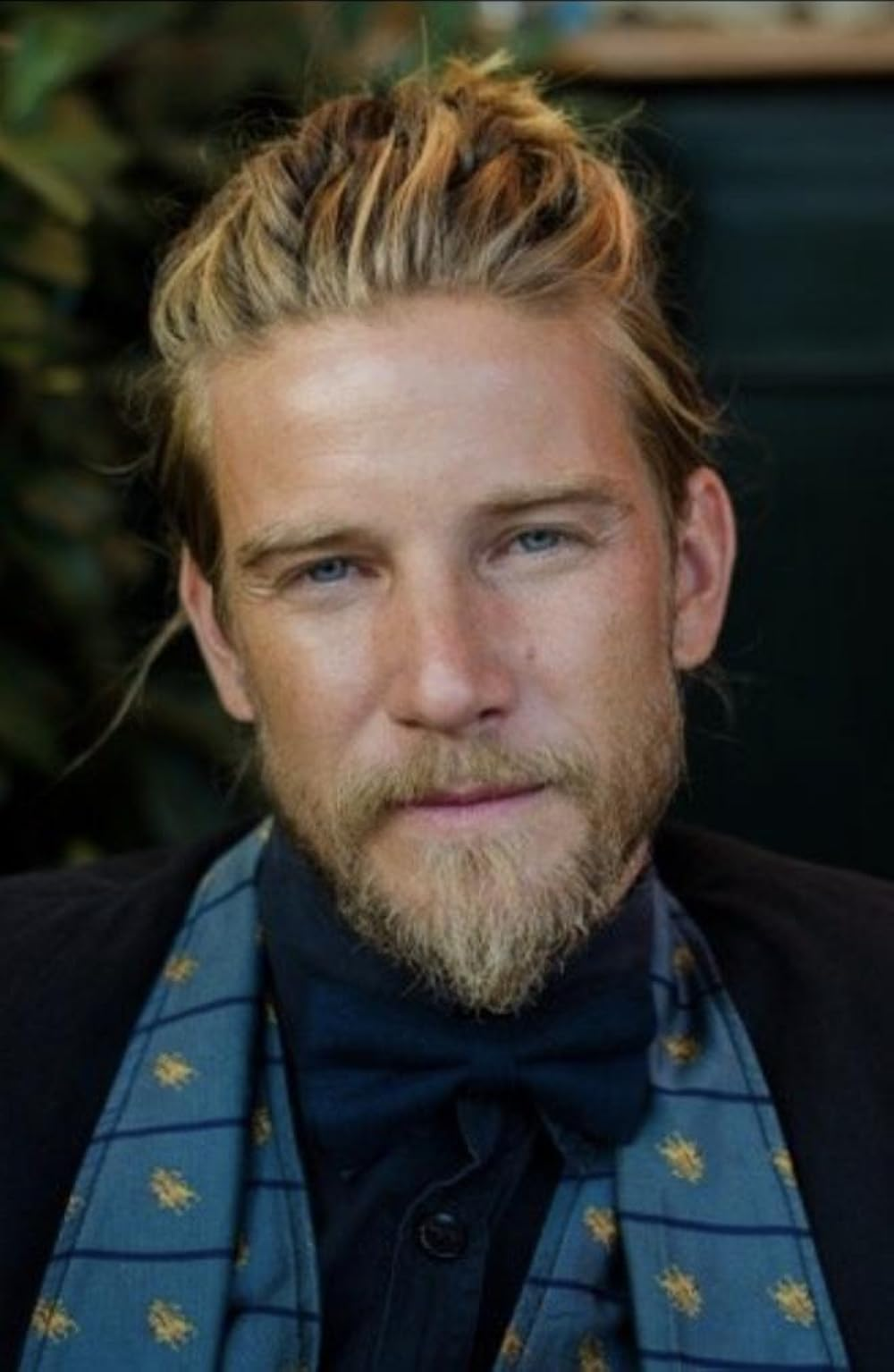
Named one of the 40 top artists in the U.S., Jeff Garner combines his love for the environment and the arts in his fashion brand, Prophetik. Using eco-friendly and plant-based fabrics, Garner has reimagined and redesigned the production of everyday garments. Today, Prophetik is leading the evolution of sustainable luxury fashion and Jeff and his designs have been featured in Vogue, Cosmopolitan, ELLE, and more. Through Prophetik and the documentary “Let Them Be Naked,” Garner hopes to inspire an era of responsible fashion that prioritizes the well-being of people and the planet. A press favorite and a prominent voice in the ethical fashion arena, Jeff has dressed many notable figures such as Taylor Swift, Gisele Bündchen, Miley Cyrus, Kings of Leon, Cara Delevingne, Sheryl Crowe, Kelly Rutherford, Def Leppard and more.
https://www.instagram.com/prophetik/
https://www.prophetik.com/
Booktopia: https://bit.ly/4gnGSH9
Amazon: https://amzn.to/4gKCMbX
More about this month’s sponsors:
Thank you to this month’s sponsors for partnering with our show and helping you make your swaps with their special offer:
Ausclimate’s highly recommended range of WINIX Air Purifiers is the ideal solution for cleaner, healthier indoor air. Easy to use, reactive features and settings with a truly comprehensive 4-5 stages of purification, including Hospital Grade True HEPA Filtration and Winix’s unique PlasmaWave® technology. Perfect for smoke, dust, pets, viruses, bacteria, household odours, and allergies (covering a variety of allergens). Breathe easier, sleep better, and feel better. Winix; is the most complete air purifier on the market!

Offer: Ausclimate is now giving all Low Tox Life followers an EXTRA 10% OFF their already discounted prices. Simply enter the discount code of LOWTOXLIFE on check out via: https://www.ausclimate.com.au/
This discount can also be redeemed for over-the-phone orders verbally.
Website: www.ausclimate.com.au
Facebook: www.facebook.com/Ausclimate
Instagram: www.instagram.com/ausclimate

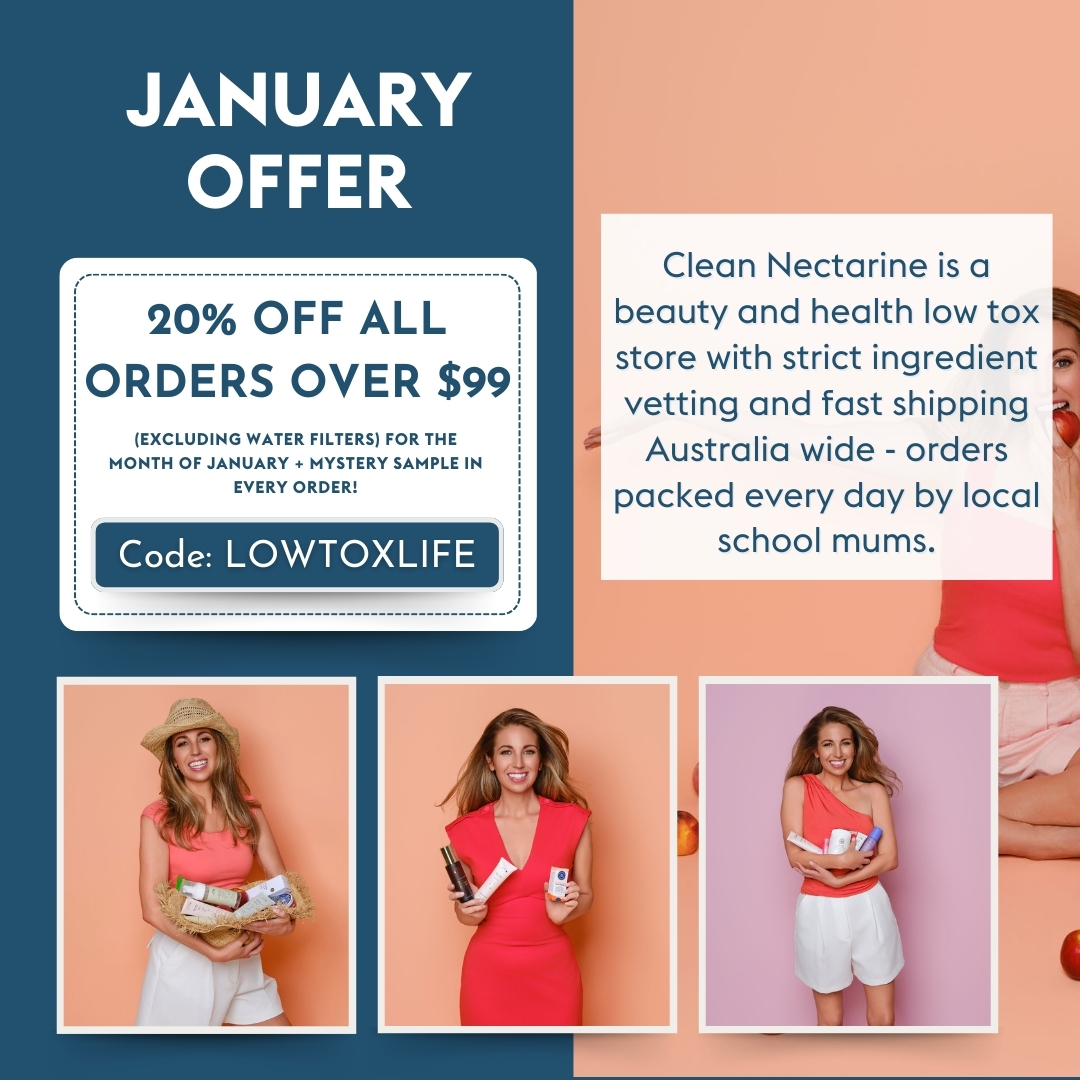
What to say about the good news that my good friend Irene Falcone is back on her terms with a brand new and beautiful low tox store – Clean Nectarine. Clean Nectarine is a beauty and health low tox store with strict ingredient vetting and fast shipping Australia wide – orders packed every day by local school mums. When Irene built Nourished Life to be the huge business it was it was no longer doable on her own. She thought selling it to a big company would be the answer but then had to watch them ruin all her hard work of 10 years and her legendary status as an amazing customer service focused business.
I just love and admire so much her resolve to start all over again on her terms and in a way that will work for her AND her customers.
And to celebrate it? Irene is giving us (Aussies) 20% off store wide with the code Low Tox Life
- This is excluding filters (you still have 12% off those on Waterscofilters website though remember till mid-September with code Low Tox Life)
So many things to love on the site – some of my favourite low tox businesses like Weleda, Mukti, 100% Pure (omg the apple enzyme products – helloooo fresh, vibrant skin!) and the Hurraw tinted lip balms. The only things I wear on my lips that don’t dry them out. I also love the 100% pure make up – the eyeshadows a fun yet natural and make me feel like I’m still wearing my skin, not covering it.
Enjoy taking a look around and making the most of the 20% off this month!
Instagram Link: https://www.instagram.com/cleannectarine/
Facebook Link: https://www.facebook.com/talkingclean
Website: https://cleannectarine.com.au/
***
Title show track, by LIOR.
Love the podcast music? You will hear excerpts from Lior’s track “Caught Up” – go check it out on iTunes or Spotify if you want to hear the whole song or album, Scattered Reflections. Co-written with Cameron Deyell, it’s a great song and I love the reflective energy of it – perfect for the show, right? Enjoy. Lior is always touring, so do check out his website. It is wonderful to hear him sing live, trust me.
Low Tox Club – The place to bring your low tox life to life.
Want to join a community of like minds and enjoy all the perks of being in the Low Tox Life inner circle such as an online membership platform, 50% off all our Low Tox courses, an awesome chat group, my monthly Q&A, and special guest star interviews for just $49AUD ($29USD/28EUR/23pounds) per YEAR? We have created a special place and set of resources to help you achieve your goals and it’s a wonderful place to be – MORE DETAILS AND REGISTRATION HERE.
***
If you would love reading like me or you just simply want to go through the full transcript, you can check below.
[Alexx Stuart] (0:00 – 6:25)Let them be naked. A plea to change our crazy fashion culture. That is today’s show.
Hello and welcome to the Low Tox Life podcast. I’m Alexx Stuart, your host. It’s 2025.
Happy New Year. I’m going to say it for all the shows of January and I’m sorry if you’re listening to this back to the future, but it’s how’s it going to be. So show 414 and I have a brilliant artist.
In fact, this guy is one of the top 40 artists named in the U.S. just recently, Jeff Garner. Oh, it was such a pleasure to spend this time with Jeff and to now be bringing this to you. He is a farm boy who turned Californian and has been very concerned about the state of our fashion culture.
He, in his art and his fashion through his brand Prophetic, produces incredible plant-based eco-friendly fabrics and he breaks down some of the techniques he uses and you see a genuine sense of wonder of nature in the way Jeff speaks and in the way he describes things. And if you haven’t joined us on YouTube yet, I would highly recommend watching this one so you can really read the tone and the depth of his thinking through the visual. I think it’s actually going to be really important.
Plus, we just started YouTube a couple of months ago after eight years. I know it’s never too late, that’s what they always say. So we are jumping in and the gorgeous Elle on my team is back cataloguing whenever we’ve got a spare hour or two in the week to add more shows on there from our past shows.
But we have everything from show 400 loaded, ready to go and a whopping great like 30 subscribers or something at the moment. So it would be awesome to see you there. I’ll put the link in the show notes.
But back to today’s show. So through Jeff’s art, he started to realise that by just having a clothing brand and a small business selling, you know, clothes as much as you can sell natural clothes that are obviously more labour intensive, cost more. But then he breaks down the challenge argument for that today, which I loved.
He realised he just wasn’t making enough of a difference. And he decided to try and rally some troops together to make a documentary. That is how Let Them Be Naked has come to be.
It’s currently doing all the film festivals. It’s about to come out and be available for us to watch. So I will definitely be posting about that in on socials when that day arrives.
I don’t have the specific day yet, but he’s a prominent voice in the ethical fashion arena. And he’s very knowledgeable about toxins through the tragic loss of his mom to breast cancer and the research he did in that space. So I know you are going to love this show.
Jeff has dressed Taylor Swift, Gisele Bündchen, Miley Cyrus, Kings of Leon, Sheryl Crow, Def Leppard, like. And the way he actually started designing clothes was for some bandmates, some friends of his that were bandmates at school, which it’s a great first story because it was his very first realisation. So tell me what you think.
We’re just about to launch into that. Of course, this show could not exist without our wonderful low tox partners. Ozclimate is back for 2025, 10% off their already discounted prices and sale prices.
You get 10% on top with code low tox life. So check out ozclimate.com.au and get preventing mould today with dehumidifiers, get purifying your air at home today with the Winix air purifiers and of course their air circulators, heating and conditioning ranges. Clean Nectarine is also back and you have 20% off site-wide, excluding water filters, but everything else, all beauty, personal care, such a fantastic range.
Irene does a brilliant job with Clean Nectarine and 20% off with the code low tox life gives you a really great way to make some of those swaps you might not have made yet and to try some new products that you might normally think, no, you know, maybe I can wait, or maybe I should just, those sorts of things, right? We deserve to feel great about the things we put on our skin. And some of my top recommendations from her range are the Cora Organics range, Mukti, both Australian entrepreneur-based brands, fantastic to support female-led business of course, and so much more on there.
100% Pure, Walida, some big international faves, everything’s over at cleannectarine.com.au and Irene just rocks. She’s so strict, she ups the ante on what is allowed in that shop. She was absolutely devastated when she sold Nourished Life, her first low-tox e-tailer business, which was huge and went gangbusters.
In that sale, the new owners really relaxed what they allowed in the store and she had her hands tied and had no decision-making anymore and yet was still expected to be the face of the brand, and it was a really tumultuous time for her. I love that she has rode out her non-compete five years and now started Clean Nectarine. It’s gorgeous.
Let’s support her. 20% off means she’s also supporting you, Code Low Tox Life. And now let’s talk about how we can change this fashion situation.
Such an inspiring show. Enjoy. How are you?
[Jeff Garner] (6:25 – 6:27)Hey, good. Thank you for having me. [Alexx Stuart] (6:27 – 7:46)
I’m really excited to chat to you. When your team reached out, I had just heard of the film and I realised we hadn’t done a show on fashion and talked about fashion in a couple of years, and I think it’s a really interesting conversation to rekindle often, because we can get caught up in life, we can start going fast, we can start thinking, oh, it’s just one t-shirt, we can start thinking, oh, but my kid needs it for a play, and it can be very easy to get swept into the cultural norms again and try and make our 80-20 lives like all live in the 20% again all of a sudden, rather than really focussing on change. So my first question for you is why, Jeff, why interested in toxicity in fashion?
And fashion design is obviously your gig. Beautiful clothes, by the way. Oh, my goodness.
Can you share a little bit about your journey, exploring your own desire to make art, but then how to make that, make a positive imprint both planetarily as well as bringing people joy in beautiful clothes?
[Jeff Garner] (7:47 – 8:28)Sure. No, good question. I think honestly, as I do with where I grew up, I grew up in Tennessee on a farm, a horse farm.
So that connectedness to nature kept me grounded in the sense of sensibility of what I create, how it affected others in the environment I lived in. So my grandparents, one was a creator, designer, painter, the other one was a scientist, chemist. I worked in the Manhattan Project.
So I gathered their kind of energy and just I started designing for bandmates out of Nashville. And when I started doing that, I was like, oh, wow, this is a super toxic industry.
[Alexx Stuart] (8:29 – 8:31)And I did you first uncover like what? [Jeff Garner] (8:33 – 11:12)
First thing I did was they asked me, you know, I did, you know, stage clothing, but then they asked me to help with their merchandise. So like Jeff, our merchandise is ugly. We wanted to represent our band.
I was like, cool. So I did the first Mac computer, learned Illustrator, Photoshop. So I designed their band T-shirts.
I did all the sketching and design all the prints. And then I went to print it at a printer. And I’ll never forget this.
I was like, well, what’s what’s the ink made out of? And they’re like, they couldn’t really tell me. So then I looked it up.
I was like, oh, Plastisol. What’s in Plastisol? And what’s this heating process?
And why are these guys wearing masks on the other side of the dryer? And why is this kid who’s like in his 30s look like he’s 16 and breaking out with acne? You know, my mind just works that way.
I was like, why, why, why? I didn’t understand. Nobody could answer it.
And everyone’s like, oh, yeah, we, you know, during the non winter season, we open the windows, but the rest of the time it’s closed. I was like, wow, it’s off gassing. I could barely stay in in the shop to see my T-shirts printed.
I wanted to analyse everything coming off the printer because I wanted to fix things. And then I’ll sell the Nardi chemicals are spraying to clear the screens. And I was like, huh.
So it taught me early on. It’s like, well, OK, they just they choose productivity and cheaper ingredients over what’s safe and, you know, more natural. So I went to Wilflex Inc.
in Atlanta, Georgia and say, hey, can we do organic compound ink? And like, yeah. And so I met another guy who was similar to me and a chemist and background in science.
And we figured out how to do it organic compound ink. And that was great. So it showed me there are solutions.
It’s just not in the mainstream. And obviously that will that ink is more expensive to print than T-shirts. So you’ve got to add a dollar.
But I’m like, what consumer wouldn’t pay more for something that’s healthier for them and the environment consciously? But, you know, there’s some consumers that will some that won’t. But it taught me early on.
Well, my responsibility as a designer creator is that I’m not going to go down that path. I’m going to go down this path and hope people come alongside or see the difference and smell the difference, because now they’re talking about the PFAS that are in that plastic ink. And you think these those little baby T-shirts and they’re printed with this cute little daddy’s girl and they’re off gassing.
And I’m like, you know, and I had a child early on. I was not 20 when my first daughter. So I was in there making her her clothes, too.
And I was like, wow, no, these dyes and this. And anyway, so it started early on in my career. It wasn’t like a shift later.
[Alexx Stuart] (11:12 – 11:12)Right. [Jeff Garner] (11:13 – 11:26)
I just I knew as a farm boy, I was like, I can’t like consciously and ethically. I couldn’t work in my field and be a designer creator if it was going to what I was making would hurt people. [Alexx Stuart] (11:26 – 12:15)
So and I often think, you know, to your to your point of like we would if we knew about it. I often think, well, some people then can’t, of course, like I mean, look at the minimum wage in the US still struggling to get over 20 bucks an hour for a real life of not having to have 15 jobs just because you’ve got a couple of kids. And I think everyone who has the privilege to make the decision should to create market demand, to create scalability.
And a lot of people can stretch. But it’s actually about like moving away from this. I’ve got to have lots of things mentality as well.
Sure. There’s quite a few barriers to break down both psychologically and economically for us to get there. I often think.
[Jeff Garner] (12:16 – 13:05)Yeah, that’s a very common question. I think there’s three tiers. So I think obviously people of means and wealth can afford to buy these, you know, these hemp products or these natural products that are going to cost more now.
Once it flips, it’ll be cheaper, honestly. And then I think there’s a middle tier, you know, we don’t think about is that, you know, for example, it’s like eating out like you can go to the nice restaurant or you could go to fast food or fast food is going to be cheaper, but worse for us and go to a nicer restaurant, probably get something more clean or you go to the grocery, choose what you want to make and go cook at home. So a lot of people don’t make their own clothes.
But for example, like this shirt I’m wearing here, made of hemp, dyed with eucalyptus in my backyard. Of course it is.
[Alexx Stuart] (13:06 – 13:08)Let me just take a second to go do that myself, Jess. [Jeff Garner] (13:09 – 14:42)
I was going to say it’s the easiest dye to create. I can tell you how in 30 seconds. But all that to say is our grandparents used to do that.
Like so this shirt, long sleeve, you know, I’d put a little, little poetic thrills on it, but it’d be a yard and a half. So yard and a half of hemp technically would be $15. Now to dye it from eucalyptus is free, water is free, the leaves are free.
So it’s just my time. So if I wanted to cook at home, you know, then it’s my sew time, you have to learn how to sew, but that’s, this is simple construction. You could make your own clothes and I could be, this would cost me $15 to make.
And this is eight years now. And I ride horses in it, et cetera. So I think we’re missing that.
We don’t talk about that. We talk about buying cheap fashion. So let’s say H&M czar made this shirt, knocked me off, which they always do.
You know, they would charge $10 for this shirt. I can’t even buy the fabric for that amount. If I make it and sell it through prophetic, you know, with my time and sew time and all that stuff, it’d probably be like a $75 shirt.
Right? So that’s, you got $75, you got $10, but I think there’s the middle area, which is $15, $20 to make it yourself. So that’s something I really want to talk about because nobody has talked about it.
And I think we could also focus on that. So there are solutions for people of, you know, that are strapped and live in pay cheque to pay cheque. And it would be fun to you create with your friends, with your family, with their kids.
[Alexx Stuart] (14:43 – 15:38)Yeah. And bringing back an art. Yeah.
Yeah. And I think then I think, okay, I’m challenging it in the sense that it’s healthy conversation because then I think about back to minimum wage, like if you’re then working 16, 17, 18 hour days, we don’t got time to make our shirts. And, you know, so I just, I think our whole system is actually geared towards, I don’t have time to think about it.
I certainly don’t have time to learn how to sew and make something. And I can’t afford to save up. They need it tomorrow.
So, you know, for these harmony days and all these productized days that we now have in our schools, it’s really interesting. So it brings me back to, we need a societal shift.
[Jeff Garner] (15:38 – 15:39)We do. [Alexx Stuart] (15:39 – 15:39)
And yeah. [Jeff Garner] (15:40 – 17:50)
And I agree with you a hundred percent. And, you know, granted, I was a single dad and I learned to sleep four hours a night, do my business, sew up gowns and dresses, get my Isabella to school and make her clothes too. And no, but I was like, it wore me out, but not saying everyone shouldn’t want to do that.
And I get the, and I may offend some people here, but the addiction to convenience, I think we are addicted to convenience and we’re addicted to cheap price points. Because if you, if you look at clothing, we’re still buying t-shirts for $7. We bought t-shirts in the seventies for $7.
Gas, food, hotels, you know, all those things have gone up with inflation. Why hasn’t our clothing? So you’re actually talking about a misconception of true cost.
Cause actually if you base it on the seventies versus 2024, a t-shirt should be $40 now. Should be. And I can honestly, I can make a hemp t-shirt for 40, $42.
So I’m actually in line with where it should be. Problem is we’re still make using cheap ingredients that are toxic and we’re exploiting workers in third world countries with the cheap, you know not fair price, you know, and it’s just like that somebody’s paying for that price point. And so, so if we move, like you said, we need to shift.
So we have a shift and we, we outlaw has to be fair trade, right? Fair labour. And then we are outlawing the toxic ingredients.
So that’s going to shift to where we have to use better fabrics and fair labour. So the t-shirt would be $40. And then you might get people upset at that, but then I think they will buy less because that $40 hemp t-shirt, I guarantee it a hundred percent.
I’ve been doing this 28 years. It will last. And I test everything myself.
I ride horses in it, workout in it, like everything. And those hemp t-shirts last eight to 10 years without one hole. Those, those synthetic t-shirts do not.
[Alexx Stuart] (17:50 – 17:51)No, they do not. [Jeff Garner] (17:51 – 19:20)
H&M, they actually teach their designers design obsolescence so that they fall apart and drive the consumer back into the store. Now, some consumers may not care and that’s fair. And some people just maybe want to wear it three or four times, but then I think, well, we shouldn’t really comply to that behaviour because that’s not, that’s not good for everyone.
You know, we can’t sustain that type of lifestyle. Our, our planet cannot, we shouldn’t have that amount of toxicity around us because the one thing people don’t talk about is like, and I’m, I guess I’m the weird one. I only think about this, but when I’m in a plane and it sounds weird, but everyone around me is off-gassing.
I’m wearing my hemp, my natural dye clothing, but imagine like the old days where people could smoke on the plane. Those chemicals are off-gassing off those clothes. I have no choice but to sit there and receive those chemicals into my system when I strive every day not to have them in my system because we have bioaccumulation levels.
So the idea is to get it, get away from them as much as we can. So if I want to go in public transport, I have to receive that in. Um, so it’s, it’s interesting.
So it’s like, what’s fair there. Then I’ll have more health implications later because I’m travelling a lot and receiving that in. Like I go to the gym, same thing.
People are wearing the Lycra, the toxic workout clothing and, and like hot yoga, for example. And I tell all my instructors, like, can I sit by the window and can you open the window? Like Jeff, that defeats the purpose.
I’m like, yeah, but they’re off-gassing.
[Alexx Stuart] (19:21 – 19:36)And they just look at me like I’m crazy, you know, and, and I think I’m making a whole bunch of people terrified, but I really think it’s such a valid point. You know, we talk about it with fragrance a lot in this community. Like that’s something people understand. [Jeff Garner] (19:36 – 20:49)
Yeah. If you hug someone and their fragrance sticks with you, well, yeah, there, there’s a synthetic component to that that gives it the same power and it’s not healthy. It’s not healthy for the wearer.
And then it sticks on you and then you receive it. So the best way to put it is like secondhand smoke. The ammonia gas is the worst part of it.
So that’s why they outlawed it around buildings and schools, et cetera, because it’s not fair to receive that into your lungs. So I hope we get there one day with clothing, but we’re far away off because people don’t understand that, that they think that like they used to think that the toxic paint that dried on the wall, once it dried, it didn’t off gas anymore. And now they realise people are realising, no, that’s not the truth.
Yeah. And it’s just like, how much longer are we going to go in today’s society and just be duped by the chemical companies that think that these, these clothes are okay with the same chemicals that are found in the paint that are found in pesticides, like, and we’re, we have them on our skin. And then there, and we proven through peer-reviewed science, 37% is absorbed through our skin into our system.
So, you know, it, people haven’t done the off-gassing study yet, but that will be, you know, in the near future, but anyways, so sorry to go off on that tangent.
[Alexx Stuart] (20:49 – 22:16)No, it’s a really important tangent, Jeff. And, you know, I always say, you know, you’ve got to wash your clothes when you get them first, even if they’re good quality, like the treatments in import and export to prevent pests. And there’s just so many parts of the chain that get affected with toxins.
So a lot of people get that, but kind of like the paint drying, like, you know, this t-shirt, gosh, it’s linen. I know that much pure flax linen, but I didn’t think too much other than, Oh, I like that colour. I will be honest.
I really didn’t. So I don’t know. I just have to hope that the French store my sister bought it for from me from overseas.
When they say organic, then maybe that includes the dyes as well, but maybe there’s a loophole that doesn’t like fashion really is. It’s kind of like putting free range on eggs, right? It’s so vague and there’s a lot of space for people to go.
Well, the linen’s organic. That’s what we meant, you know, from a labelling perspective, they don’t have to then disclose that the dyes were as well necessarily, unless it’s got certified. Right.
And so that’s why we have some levels of, of ambiguity that are probably part of the problem because the consumer can’t easily decipher and analyse to decide.
[Jeff Garner] (22:17 – 23:24)Yeah. Yeah. That’s intentional.
There is definitely not any regulation with clothing. People think there is, but there’s not, I could literally put anything I want on this shirt as far as a label and nobody’s going to check it. So, but yeah, I can tell by looking at the shirt, it is synthetically dyed.
It could be what they call it. I’m like listening to you talk and I’m like, God, it could be, it could be low impact, but think of it this way, taking a beautiful, like natural wood wall, and then you put paint on top. It’s going to act like behave like the paint, not the wood.
So the wood is porous in nature or breathe or stretch with humidity, et cetera. The paint once on top fogs up the pores, it’ll behave like that toxic paint. And that’s the unfortunate bit.
So they do one step well, the other step they don’t do well, because quite honestly, and fairly, it’s not on the market. So it costs them, it’s cost prohibited right now to do plant dyes, which is something we’re working on. But I would say, just look for undyed until they get to that place.
[Alexx Stuart] (23:24 – 23:43)Yeah. I’ve never thought to myself, I wore the wrong t-shirt for that interview before, but I do today. My gosh.
Okay. And I do actually tend to towards simpler colours because it actually just feels more peaceful. And I think psychologically that’s telling us something as well.
[Jeff Garner] (23:44 – 24:22)Well, I had six professors over yesterday here at the beach and we were doing, I was teaching them plant dyes and we literally went around the property, grabbed stuff, eucalyptus leaves. We did some indigo and stuff. And they were just smelling eucalyptus and just breathe in as I was heating it up, you let it boil for 45 minutes and they were just loving it.
And they were asking, does it stay on the clothes? And the smell does for the first three or four days. And then eventually it gradually goes away just like a natural oil, but the energy it creates, there’s something to it versus a flat colour that’s made of petroleum.
Yeah.
[Alexx Stuart] (24:23 – 24:42)Yeah. I really think the energetics of clothes is a very interesting subject, different materials and what they give us different natural origins and what they kind of transmit to us. And then we have the opportunity then for our fashion to be grounding, literally. [Jeff Garner] (24:45 – 25:02)
Yeah, no, it’s very true. I, you know, I wear eucalyptus on the plane because, you know, and I reapply the natural oil to it, but yeah, it does something and people comment around me too, you know, just like essential oils that you put on dab on your wrist and, you know, there is something to it. [Alexx Stuart] (25:02 – 25:34)
There is. And so let’s talk about the film because it’s, it’s confronting. I think a lot of people who’d be listening would have watched fast fashion films, read books like Lucy Siegel’s work and true cost and, and other things in the past that woke us up to, well, we’ve got to change some things here.
What did you feel wasn’t yet said that you wanted to express in the particular way you did in Let Them Be Naked?
[Jeff Garner] (25:34 – 26:02)It’s funny. I actually talked to Lucy Siegel yesterday. Oh, did you?
Yeah. Yeah. She’s great.
So she’s actually, she has a bit in the film as well, but yeah, so I kind of, when I got in to this space, I didn’t realise there was a couple of ladies already in that space trying to create a movement. And so I, when I went to London and showed at Fashion Week for the first time, I met Lucy Siegel and I met Livia Firth.
[Alexx Stuart] (26:02 – 26:04)Yeah, I love Livia’s work. She’s amazing. [Jeff Garner] (26:05 – 27:59)
She’s great. I met Susie Cameron later. And so there was this energy going on and they’re like, who’s this guy?
You know, it’s funny. It’s like, sorry, ladies. I just, you know, I just make things of plants and I show them at Fashion Week because they, you know, they were in the space, but they were, you know, they’re writing books and writing articles and doing these contests and nobody was designing and creating and doing a collection.
So I showed it at London Fashion Week and people were like, this is a plant. And it was really cool to visually see it on that platform and see it kind of compete with the synthetics. And anyway, so we all kind of got together and got behind this energy.
And I felt like, you know, through those years, you know, I could only do so much catwalks and you get to 300 people, you get some articles, you get some coverage, but all in all, you maybe reach out, you maybe reach a thousand people. And then I realised, except Shanghai, Shanghai Fashion Week, it was crazy. But I think that basically after my mom, she passed from her breast cancer.
It’s been about, I guess it’s been four years now. So what that did, it propelled me a new energy, new fire to say, okay, I know the only true way to create change is through film because I have a lot of friends in film and I see the impact and obviously it lives beyond you. And I was kind of getting to a point where, and I’ll just be, you know, just transparent.
Like I’ve always invested in myself and I never took on any financing or any money. So I’ve been self-supportive as an artist for, you know, these 28 years, catwalking for 12, 13 of those. Catwalks are not cheap and you never get your money back.
[Alexx Stuart] (27:59 – 28:00)So they really are not. [Jeff Garner] (28:01 – 31:03)
And, and it’s a feat, honestly. And I produce all my own shows. And, um, cause I see it as our 12, 15 minute theatre show that we have to give it our all.
So I would always bring in live bands and, you know, obviously cast all my models and create the vibe, this theme and set the scene at the theatre. You know, I did shows at Ever Oak Castle and I love Chateau Fountain Blue and anyways, but so, but I realised quickly, I was, that was great from an artist’s perspective, but if I wanted to reach the masses, I had to do a film. And so I basically went to Susie Cameron and said, listen, I know we talked about it years ago, cause she’s actually been with me on this beach where I grew up with my hippie dad.
And so we should work together one day. And so I said, listen, I’m not getting younger. I don’t know how much longer I can continue catwalking.
I go, it’s time. We got to pull this film off. And, and, uh, I was already out fundraising through the Redford foundation.
And so they came in and helped me do the final raise so that we were able to start production. And literally a week later, I like shut off and we started filming. I got my small team together and I really thought it was crazy.
Cause we, from start to finish, uh, a year and two months. So we have, we have in the film vessels because I knew it’s all about timing. And, um, so it’s called let them be naked.
So I feel like it’s better to be nude than dressed in synthetics. And, um, and yeah, so it’s been an amazing, amazing response. And cause I already know that there’s counter, uh, documentaries being made from the industry.
So they’re trying to, you know, basically still the narrative and say, Oh, circular, you know, economy is the way forward and recycling polyester. I’m like, Oh, you know, they don’t talk about, can you actually do that? And how much percentage, and, you know, there’s all these smoke and mirrors that are industry is very good at, and they have more money than us and more PR.
So I was like, you know what? I got it for my mom, for my hippie dad that passed for everyone else. I know that’s affected.
I got to get this out there before they try to counter it, to give people back the power of choice. And, you know, whether you believe the science we bring to it or not, you hear stories from people that were affected by Victoria’s secret sprawls, by Delta airlines uniforms, and what actually happened when they tried to bring it to change. And you talk to scientists have been working on this since the seventies and trying to bring, you know, energy and change with it and how they got derailed.
And, and it’s just, it’s like, and you hear about Sydney Ross, who did a study in Fiji with women in bras and did a bra link to cancer. And he got buried and just made fun of, and now he’s living on a, you know, an organic farm and in the big island, Hawaii nudist farm. It’s great.
[Alexx Stuart] (31:04 – 31:07)Literally decided naked’s better. [Jeff Garner] (31:07 – 34:05)
I’m off. I’m off. But it, what it did, it derailed his impact.
He was like, they don’t, nobody wants to receive it. So, you know, he’s great because he was like, you know what, Jeff, I’m old, but I got a fight left in me. So he’s now re-engaged because it is about timing.
And I think people and my hair, you know, hair is rising my arm, but I think people are ready for it. You know, I think we know, know too much. It’s kind of like the Renaissance era where they were like the, you know, the religious sec was hoping everyone’s kind of dumbed down and couldn’t understand Latin.
And then they started realising, you know, learning more and more, they realised like, this is greenwashing and this is not true. And this chemical is toxic. And so I don’t think people will get away with these fake certification programmes anymore.
I think there’s a liability issue when you make a product out of these toxins and you don’t tell people there at least needs to be warning labels or ingredient labels on it, just like food. Because if you’re, if you’re sitting in the sun and you’re sitting in a nylon swimsuit, that’s not a good thing. And it goes in the book and I’d have the book out as well with the documentary, but it goes into the details of that, like why isn’t it good and what it puts into your body.
So without getting into too much in detail, but it’s something that we need to recognise because more, some people are more sensitive than others. So it will affect you differently. That’s why you can’t pinpoint and say, brawls do cause breast cancer.
Do they have, do they have carcinogens in it? Absolutely. A hundred percent.
Does your body receive those carcinogens into the system? 37%? Yes, absolutely.
Now, you know, and then you go into the science of it, like the fatty tissues that are in the breast. So when the body receives those chemicals into the system, it receives it as an oestrogen, doesn’t know what to do with it. So grabs it to protect you, throws it into the fatty tissue to store it.
Well, then guess what you have a nylon polyester bra that doesn’t breathe. So it acts like a warming, it warms up your breast. So it’s like a greenhouse.
And then the constriction from the straps, your lymphatic system are like hoses that are super sensitive. So you put any pressure on them, they shut down. So lymphatic system’s not operating.
So it’s not moving the toxins out. So can you, you know, correlation? Yes.
I mean, it really shows like, but what the wild thing is through all this research with the book and the documentary and three other scientists said it, plus what I’ve researched and found and Randall Fitzgerald helped me with the book, not one study on brawls of breast cancer. That’d be like, oh, let’s, you know, no, it’s not the cigarette doesn’t cause lung cancer. Let’s just skip that.
So it’s like, no, that’s, that is a, that is like an educated preconceived, like, let’s don’t do a study on this. And that when that I found that out and my mom died of breast cancer, I’d be like, wow, this is, this is goes deep.
[Alexx Stuart] (34:06 – 35:48)It’s awful. And I’m so sorry you lost your mom to breast cancer, Jeff, that’s, that’s tough. And, and I think environmental toxins are tricky because it’s like, I call it the soup principle and it’s like, how many ingredients have you got in your personal soup and what can you take out?
Like, what’s easy to take out? Let’s keep taking things out until you’ve got a really simple, very healthful broth. That’s the goal.
But the modern world is a soup full of stuff and it’s quite hard to actually live consciously knowing that and still feel safe, like a deep sense of nervous system health and safety. It can very quickly make you very stressed out and very scared. And I’m always conscious of that as well.
And I think if we’re so lucky that we have so many designers and brands now trying to do better and trying to look at what could be better, I really wish consumers realised just how much of a hold lobby groups and campaign finance played into the reasons we have the world we have today. Things like Citizens United that passed in America, it kind of, things like that made us a bit of an America light over here with how we view chemicals and let them just do their own safety data sheets and say, yep, we’ve tested it. It’s all good.
You know, it’s crazy. And how far away do you think we are from having like having a piece of clothing on a rack, a T-shirt, this T-shirt and me being able to see every ingredient, not just the flax organic linen?
[Jeff Garner] (35:51 – 38:54)I think it depends how this plays out the next five years. You know, the first case we had was underwear this year in the U.S. that they advertised that their product was basically safe and non-toxic. And then they got challenged and they studied the underwear and they found toxins in it and therefore it wasn’t safe and it wasn’t toxic free.
So they won the lawsuit. So it’s the first time that they won because they didn’t make it about the person, the individual’s health. It was wearing it.
They said, you’re advertising as non-toxic. So that scared the industry. So there’s a liability.
So you’ll see they started taking these kind of fake false statements off like organic and natural, but then they’ll say natural. What does that mean? And then those like, well, we didn’t do any additives, but the chemicals already in it, right?
They didn’t add it in there. It came, it was already in the fabric when they made the garment, right? So they get away with it that way.
So, you know, I could go more and more, but I, you know, I do want to leave people with hope. And like you said earlier, you want people to be, you know, fearful, fear-based. And I look at this way, I’m a big horse guy.
So when a horse gets scared, there’s two, you know, there’s different ways that it spooks, right? One is going straight up and the other is doing a sidestep and another one is bucking out. So when the horse goes straight up, the way to get through it is to move the energy forward, you know, and that’s what I’m trying to do with this is like, yeah, I got to tell you all the bad stuff, tell you the truth about things.
And you’re going to go up, you’re going to go up like this, but then I’ll tell you some solutions and where we’re going with it because I’m not leaving you hanging. And we’re going to move, we’re going to move forward with that because there is hope, but we have to work together and all want this together because it will take community. It’s not just Livia and her campaign or Susie and her campaign.
You know, Lucy Siegel in her book, it’s everyone together saying, hey, this is a public health issue and we’re not going to lie still or turn over and we’re not going to forget about it and we’re going to move forward in this. And yes, you need to list those ingredients so I can decide as a consumer whether I want to take the risk and wear that t-shirt, you know, that’s dyed with synthetics that has chromium and petroleum based, you know, toxins in it and, you know, or do I want something that’s undyed? And then you can make that choice.
But right now you can’t even, I went into the store yesterday and they had these hand versions, like which one’s undyed? And they had no idea, you know, and it’s just like, even, and I met with a brand who has organic indigo dyed sheeting and they sent me a pair and they’re like, will you talk about this next time interview? And I’m like, well, let me check it out first because I’m not, I don’t, you know, I don’t sponsor any brands.
I don’t take money from anyone. And I tested out the sheet. It is dyed with natural indigo, but then they put a waterproofing element on it because it’s cotton.
[Alexx Stuart] (38:54 – 38:56)Yeah, exactly. [Jeff Garner] (38:56 – 39:30)
And it wouldn’t go through the sheet. And I’m like, oh, I go, why’d you do that? They’re like, we didn’t know the textile did it.
I’m like, well, why the textile do it? And I do know why, because even organic cotton, it holds water. So it could create a mould thing or when you sweat at night.
So that’s why I think the best sheeting is him. So again, another great solution and answer is like, get him, you know, I tell people three things you can do, detergents, everyone can replace them tonight. They could go seventh generation, Ecos who we interview in our lists are six ingredients.
You can use just borax, but it’s all same price.
[Alexx Stuart] (39:30 – 39:32)Big fan of borax. That’s my favourite. [Jeff Garner] (39:33 – 40:47)
Super easy to do. That’s reason why the fashion industry is, you know, one of the most toxic. It’s not because of manufacturing as many people think it’s because we wash these synthetic clothes every time we wear them.
I wear this hemp shirt 10 times before I wash it. And people are like, oh, Jeff, you smell like a dirty French man. Like they joke, but I’m like, no, I don’t.
And then they smell like, well, we can’t smell anything. I’m like, yeah, because it’s not like right now in the sun, it’s it’s like it’s porous in nature. It’s not holding any smells.
And, you know, and then second thing is sheeting. So undyed cotton, linen, wool, even wool holds its temperature and hemp and they’re out on the marketplace. And the third thing is intimates.
And again, you’re going to find everyone claiming everything under the sun, but only don’t believe any of it. Just undyed. And then natural fibres have no washing, no washes on it, no additives.
And, you know, because the problem is these these companies, if they’re small like me, they don’t have the money to test their in garment. I do want to say that necessarily. It’s not their fault to get like we did testing for the documentary, twenty five hundred dollars to test five chemicals and one fabric swatch.
[Alexx Stuart] (40:48 – 40:59)Yeah. Try to get a small business owner to do that or a corporation who, again, has to answer to a system of profit growth all the time and therefore is always having to cut corners. Yeah. [Jeff Garner] (40:59 – 41:39)
Yeah. Our consumers. So I think we have to mandate that and or have a government agency that has all those testing labs and facilities.
And it’s mandatory that it gets tested before it goes to market. That’s a future goal. But I think we I think we can get there.
Depends what happens next five years, what consumers really care about. You know, but I think we’ll at least have more options out there and on the table, just like the organic food movement when it took place. So, yeah, that’s my hope for the documentary.
It’s like the food ink of industry or really kind of set the bar, let everyone know what’s in it and know the science. And then they’ll they’ll be educated in that in the clothing fashion world, you know.
[Alexx Stuart] (41:40 – 41:47)Oh, well, I think it’s commendable what you’re doing, Jeff. And how do people most easily find the film in the book worldwide? [Jeff Garner] (41:48 – 42:00)
Sure. So the books on like Apple and Amazon, the film’s not out yet in the public domain. It’s in the film festivals right now.
But the website’s LetThemBeNaked.com. So everything up to date.
[Alexx Stuart] (42:00 – 42:02)We’ll definitely put all the details underneath. [Jeff Garner] (42:02 – 42:03)
Yeah. Thanks. Yeah. [Alexx Stuart] (42:03 – 42:04)
Yeah. [Jeff Garner] (42:04 – 42:24)
Yeah. It’ll give updated options. It gives gives you hope like, hey, you could try this or do this.
And, you know, and that’s the goal is that the more options we find and the more people who drive to do it, the cheaper the, you know, exactly. And back in the day made all the army uniforms, the cells, the ropes. I mean, it was the cheapest fabric.
[Alexx Stuart] (42:24 – 42:27)So let’s make it the cheapest fabric again. [Jeff Garner] (42:27 – 42:28)
Yeah, exactly. [Alexx Stuart] (42:29 – 42:52)
Yeah. Thank you so much, Jeff, for spending the time. It’s been amazing getting to know you.
Let them be naked. I’ve never wanted to take a T-shirt off with a man I only just met more. So well done.
I’ll take that as a compliment. Wish you so much luck with getting this out in the world and having a huge impact. And our community is certainly going to be helping you.
[Jeff Garner] (42:53 – 42:56)Amazing. Thank you so much for your support. And lovely to meet you. [Alexx Stuart] (42:56 – 45:52)
I hope you loved today’s show as much as I loved bringing it to you. I want to remind you that if you are someone who craves a low-tox community that is judgement-free, full of empowerment, has health professionals and building health professionals that can support you as well as me in there answering questions multiple times a week, I want to invite you to join the low-tox club for the price of less than a cup of coffee a month. You have an annual membership for $49 Australian.
So it’s about $30 US or Euro that allows you to have a member masterclass every single month with a health professional or global expert from the podcast where we have them to ourselves for an hour to ask questions and deep dive further. You have the beautiful supportive chat group. You have Q and A’s with me, me answering questions.
We read books and talk about them and a whole bunch more. You can head to lowtoxlife.com, hit the explore tab and join the club is the very first option on that list. Of course, we have over 10 evergreen courses that you can jump into anytime, whether it’s navigating everyday low-tox swaps with our go low-tox signature course, whether you have kids and you’re wanting to know how to best support them with our low-tox kids course, whether you’re planning a family and looking at a healthy low-tox preconception journey, reducing inflammation, especially the chronic kind without inflammation ninja course, many, many other courses. You can again, head to lowtoxlife.com, hit the courses tab and you’ll see all of the options, which includes a business course, my low-tox method programme. A lot of people don’t know, but I was doing a lot before starting low-tox life in 2009.
And I was a business consultant across hospitality, health, retail, and cosmetics. I have been in business consulting for a very long time. So I absolutely adore helping people move into the low-tox space or develop their low-tox businesses.
So that’s a way I can support you. And then of course, there’s our wonderful social media communities at lowtoxlife on Instagram. And of course the website with over 250 gluten-free recipes, blogs, downloadable PDFs to help you navigate wanting to get rid of synthetic fragrances in your school or office.
I could go on. So head to lowtoxlife.com, see what takes your interest or fancy. And thank you so much for being a part of our podcast community.
I love, love, love reading your reviews. I appreciate every follow and subscribe. And I want to just remind you to finish off that if there’s anything you heard that you found interesting from medical or scientific perspective, it is intended as education only.
Please always chat to a health professional who knows you and your situation best. I’ll see you next week. Bye.
