





About this show:
Erikas Schwarz, MD is the kind of doctor that once you’vbe spoken with her, you want her to be yours – how ‘bout it, Erika? Gosh I loved meeting this woman, who fearlessly and thoughtfully guides her patients, calls out the medical establishment as cult-like and how we need to look bigger picture and get better reads on research before taking action with patients given it’s people’s lives and mental health at stake.
Dr. Erika is a pioneer in the use of bio-identical hormones for preventing illness and recognizing their direct link to overall wellness and their interconnection with diet, sleep and stress management. She has authored eight best-selling books as well as numerous articles. Her focus on treating patients as a whole person began more than 30 years ago with her understanding that bio-identical hormone replacement is the safest, most effective path to increased health span and to achieve the highest quality of life.
While this show is absolutely not about making statements that ‘everybody should take hormones’ nor is that even the main focus of our conversation, it is about:
Cultivating great patient/doctor relationships and empowering yourself more in your health journey.
I hope you love discovering Dr Erika as much as I did and can’t wait to hear what jumped out most for you,
Alexx Stuart
Founder of Low Tox Life and the Low Tox movement
Join me on Insta @lowtoxlife
Want to support the show?
Free option: Leave a 5 star review wherever you listen to Low Tox Life – thanks SO much!
Paid + Member PERKS: Join the Low Tox Club – monthly practitioner live masterclasses, a suite of low tox store discounts from around the world and the most supportive and lovely chat group on all low tox topics on the internet: Check it out and join here for just the price of a coffee per month! https://www.lowtoxlifecourses.com/offers/YzLXThRQ/checkout
***
Thank you to this month’s show sponsors for helping you make your low tox swaps easier:
@ausclimate gives you 10% off their range for the whole of 2024, with brilliant Winix Air Purifiers, the best Dehumidifiers I’ve ever used and their new energy-efficient heating range. code LOWTOXLIFE https://bit.ly/ShopAusclimate
@cleannectarine is giving you 20% off the beauty and personal care ranges with all orders over $99. Code LOWTOXLIFE (excluding water filters). Try awesome low tox brands such as 100% Pure, Kora, Weleda, Moo Goo, Mukti and more as you make your low tox beauty swaps for 2025.
Be sure to join me on Instagram @lowtoxlife and tag me with your shares and AHAs of this week’s episode.
***
About Erika Schwartz, MD
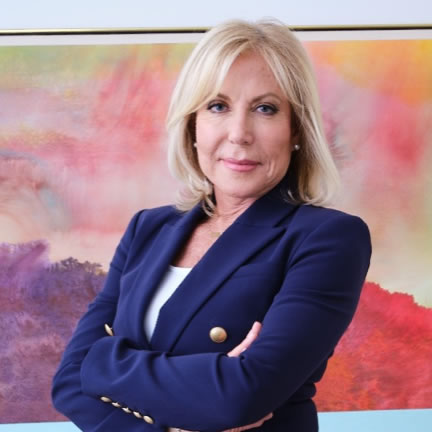
Erika Schwartz, MD is the founder of Evolved Science, a world renowned medical practice based in New York City, built on the recognition that bio-identical hormones are the foundation for better health. Once hormones are balanced, the practice focuses on optimization and longevity through disease prevention, patient advocacy and coordination of care.
Dr. Erika is a pioneer in the use of bio-identical hormones for preventing illness and recognizing their direct link to overall wellness and their interconnection with diet, sleep and stress management.
Her focus on treating patients as a whole person began more than 30 years ago with her understanding that bio-identical hormone replacement is the safest, most effective path to increased health span and to achieve the highest quality of life.
Dr. Erika has authored eight best-selling books as well as numerous articles in publications such as: The New York Times, Wall Street Journal, Daily Mail, Vogue, Town and Country and the New York Post. She appears frequently on TV shows, international podcasts and in social media. She is a distinguished faculty member of A4M, the world’s preeminent longevity and functional medicine organization where she hosts the popular Redefining Medicine podcast.
Dr. Erika continues to spread her message worldwide with the goal of changing healthcare to benefit the patient and eliminate fear from the health care system, Dr. Erika sees patients from all over the world and believes that when given the correct information, patients can take charge and improve their own healthcare outcomes.
Website: https://www.eshealth.com/
Instagram:
@drerikaschwartz
@eshealth
Booktopia: https://bit.ly/404473w
Amazon: https://amzn.to/401yJ5n
More about this month’s sponsors:
Thank you to this month’s sponsors for partnering with our show and helping you make your swaps with their special offer:

Ausclimate’s highly recommended range of WINIX Air Purifiers is the ideal solution for cleaner, healthier indoor air. Easy to use, reactive features and settings with a truly comprehensive 4-5 stages of purification, including Hospital Grade True HEPA Filtration and Winix’s unique PlasmaWave® technology. Perfect for smoke, dust, pets, viruses, bacteria, household odours, and allergies (covering a variety of allergens). Breathe easier, sleep better, and feel better. Winix; is the most complete air purifier on the market!

Offer: Ausclimate is now giving all Low Tox Life followers an EXTRA 10% OFF their already discounted prices. Simply enter the discount code of LOWTOXLIFE on check out via: https://www.ausclimate.com.au/
This discount can also be redeemed for over-the-phone orders verbally.
Website: www.ausclimate.com.au
Facebook: www.facebook.com/Ausclimate
Instagram: www.instagram.com/ausclimate

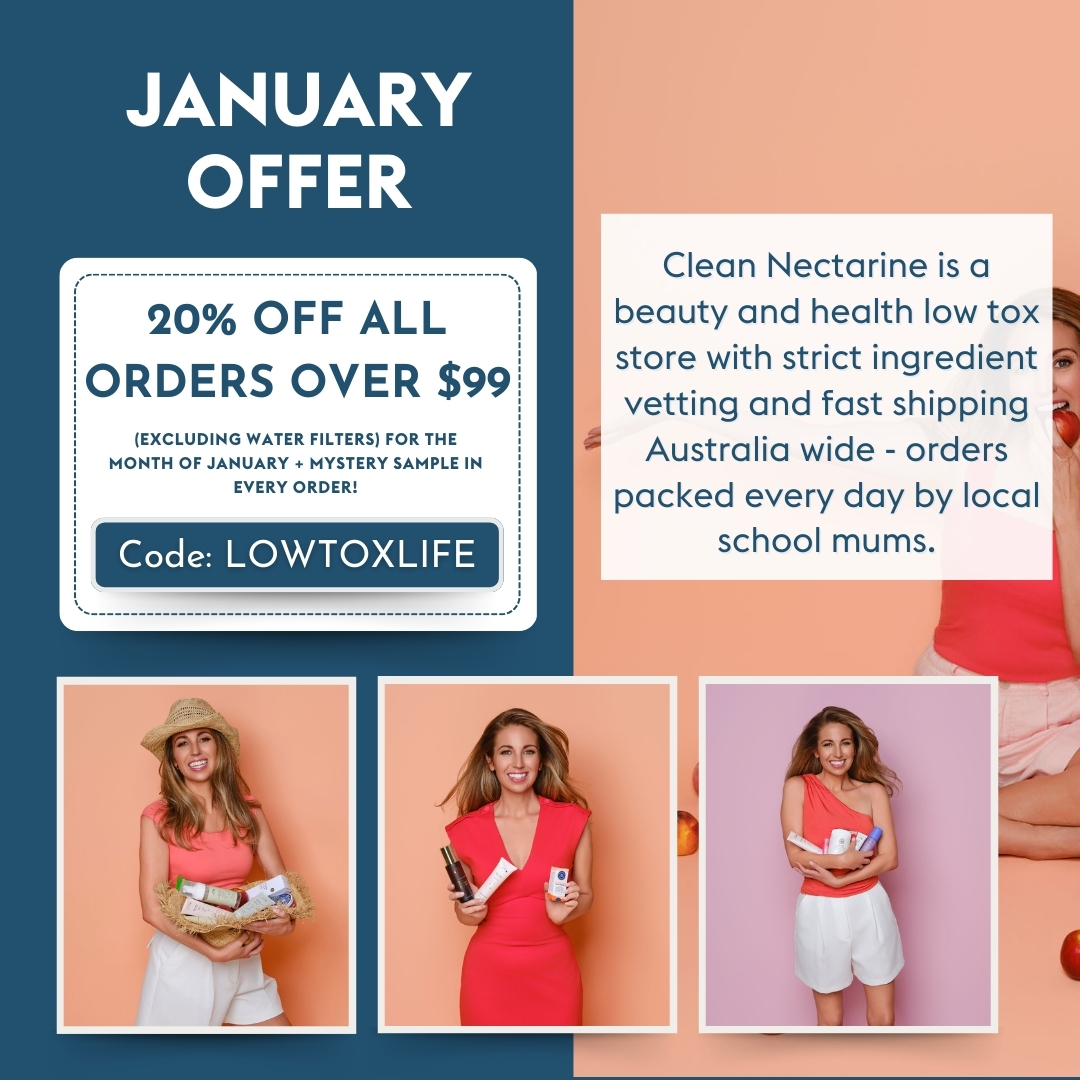
What to say about the good news that my good friend Irene Falcone is back on her terms with a brand new and beautiful low tox store – Clean Nectarine. Clean Nectarine is a beauty and health low tox store with strict ingredient vetting and fast shipping Australia wide – orders packed every day by local school mums. When Irene built Nourished Life to be the huge business it was it was no longer doable on her own. She thought selling it to a big company would be the answer but then had to watch them ruin all her hard work of 10 years and her legendary status as an amazing customer service focused business.
I just love and admire so much her resolve to start all over again on her terms and in a way that will work for her AND her customers.
And to celebrate it? Irene is giving us (Aussies) 20% off store wide with the code Low Tox Life
- This is excluding filters (you still have 12% off those on Waterscofilters website though remember till mid-September with code Low Tox Life)
So many things to love on the site – some of my favourite low tox businesses like Weleda, Mukti, 100% Pure (omg the apple enzyme products – helloooo fresh, vibrant skin!) and the Hurraw tinted lip balms. The only things I wear on my lips that don’t dry them out. I also love the 100% pure make up – the eyeshadows a fun yet natural and make me feel like I’m still wearing my skin, not covering it.
Enjoy taking a look around and making the most of the 20% off this month!
Instagram Link: https://www.instagram.com/cleannectarine/
Facebook Link: https://www.facebook.com/talkingclean
Website: https://cleannectarine.com.au/
***
Title show track, by LIOR.
Love the podcast music? You will hear excerpts from Lior’s track “Caught Up” – go check it out on iTunes or Spotify if you want to hear the whole song or album, Scattered Reflections. Co-written with Cameron Deyell, it’s a great song and I love the reflective energy of it – perfect for the show, right? Enjoy. Lior is always touring, so do check out his website. It is wonderful to hear him sing live, trust me.
Low Tox Club – The place to bring your low tox life to life.
Want to join a community of like minds and enjoy all the perks of being in the Low Tox Life inner circle such as an online membership platform, 50% off all our Low Tox courses, an awesome chat group, my monthly Q&A, and special guest star interviews for just $49AUD ($29USD/28EUR/23pounds) per YEAR? We have created a special place and set of resources to help you achieve your goals and it’s a wonderful place to be – MORE DETAILS AND REGISTRATION HERE.
***
If you would love reading like me or you just simply want to go through the full transcript, you can check below.
[Alexx Stuart] (0:00 – 6:19)What does it feel like to have a great doctor who has a great read on the research and who isn’t afraid to buck trend and thinking when it comes to patient well-being as the main primary goal? Oh my gosh, that is today’s show. Hello and welcome to the Low Tox Life podcast.
I’m Alexx Stuart. This is show 415 and the year is 2025, a huge happy new year to you. I am thrilled to have joining me today, Dr. Erika Schwartz, MD for the Americans listening. She is the founder of Evolved Science, which is a world-renowned medical practice based in New York City. And it was built on the recognition many, many years ago, actually through the entire time that the entire world was thinking any type of hormone replacement therapy was extremely dangerous to women. Very brave doctor indeed.
Uh, but it was built on the recognition that bioidentical hormones are the foundation for better health. Interesting. Right now.
I know we all absolutely have the right to move through life using, not using whatever it is that will help us feel the best we can feel both spiritually, emotionally, mentally, physically. And that is for us to all be discussing with our doctors. Today’s show is absolutely not about telling you, you need to take hormones.
No, 100%. No, I’m just giving you the background of Erica’s practice. And you will learn through this that she’s just such a fantastic doctor.
And as I was speaking with her, I was like, oh my gosh, I want her to be my doctor. The things that I would ask her personally, if I could. Um, but unfortunately I live quite far away from New York city, but those of you who do go check it out.
Uh, she’s an amazing pioneer, uh, and has written many books has actually got a book coming out this year as well, which is very, very good. Uh, I have, uh, the great pleasure of having had a little preview of it and has always bucked the trend of, uh, just going with the flow and whatever science and doctors were talking about and always put patient first. And you will absolutely see this come through.
Uh, she has the goal of changing healthcare to benefit patient and eliminate fear from the health system. She calls, uh, medical school, uh, a cult. And we unpack some of those things today.
And it’s a beautiful tangential look at how medicine should be practiced, what doctors can do to feel a greater sense of agency in a system that often doesn’t allow for agency and, uh, requires everybody to think the same way and not question anything. Uh, that being of course, one of the most unfortunate aspects to modern medicine pressures of doctors, uh, such a good show. So I have all of her details and the clinics details and the books she’s written in the show notes for you, if you’d like to go check those out.
Um, and I really hope you enjoy. We, we move through talking about, uh, hormones, midlife health, thyroid health, cancer treatments, uh, all sorts of things today. And a reminder, of course, this is never a show that intends to give medical advice.
Your conversations are to be had with your personal medical situation and your doctor, uh, and not to be changing anything you do based on what you hear on the internet. Not even this show. It’s always important to have that personalized care.
Uh, but with that, I will move into just letting you know that we have two wonderful partners helping you with your Lotox swaps all of January. One being Clean Nectarine. Irene has founded a brilliant Lotox beauty store, all of your favorite brands, and some you may not have heard of before.
And I love that she stocks two of my favorite budget Lotox brands, Benecos in the makeup and Lavera in the skincare, both absolutely worth a look. I noticed she’s got some fantastic Mugu products in there as well. I know a lot of Lotox peeps love that.
Uh, Walida, uh, what else? Mukti, a hundred percent pure, another great value brand, uh, based from the U.S. 20% off code Lotox life, only excluding the water filters, but everything else is fair game. And you’ll get a little mystery sample in every single order.
Uh, and of course the minimum is $99, uh, for the order to get that 20% off. So I hope you enjoyed that one. And of course Ozclimate back with us whole of 2025 for the Aussies only, I’m afraid.
Uh, and by the way, Clean Nectarine was Aussies and New Zealanders, uh, ozclimate.com.au for all your dehumidifying, air purifying, cooling, and heating needs. They’ve grown their range big time, 10% off with code Lotox life, including when they run sales. So I’m so thrilled that they’re back as the major partner for 2025.
And we have some pretty cool educational materials coming up for you this year to really help get your head around what to use, when, why to use what and all that jazz. Now let’s talk about optimal patient care and health of women. What a fantastic show.
Enjoy listening to Dr. Erica’s wisdom, Erica. Hello. I’m so thrilled to have you here with me today.
[Erika Schwartz, MD] (6:19 – 6:29)Thank you, Alex. I’m so happy to be with you down there. I love it.
I know it’s so great. The magic of technology. How amazing is it?
[Alexx Stuart] (6:29 – 7:11)Yes, it really is. And, uh, what I love about it especially is I get to connect with people around the world who are doing incredible things like you are for your patients and in your work with your books and bring it to an audience that’s kind of sprinkled everywhere. So my first question is why hormones?
I mean, as a doctor, you can go into all sorts of things of course. Uh, and the way we’ve segmented medicine, you could literally just pick your favorite body part and like, pretend that that’s all that matters. Um, which we’re going to talk about what is wrong with that, but hormones specifically interested you.
[Erika Schwartz, MD] (7:12 – 7:52)Um, you know what, because actually hormones keep it all together and make, it doesn’t break it into body parts. It doesn’t break it into, you can look at how they affect the different body parts, but the thing is that hormones affect everything. So without realizing, cause it just, it wasn’t like a really well thought through thing.
I, I wound up starting taking care of everything and hormones are the core of everything. So it was really wonderful. It kept me from getting to that tiny little living on a leaf when there’s a whole tree and a whole forest behind me.
[Alexx Stuart] (7:53 – 8:08)Yeah. And like the way you even just phrase that makes me, I had a picture in my mind of those communication super highways with all the wires and, and yeah, they are the master connectors of our entire system. Exactly.
Exactly.
[Erika Schwartz, MD] (8:09 – 8:36)When your hormones are imbalanced, you could do anything, everything you’re, you know, when you’re young and you’re imbalanced and you’re fertile and you’re sexy and you don’t have wrinkles and you feel great, then everything’s working. And the moment things start short circuiting, like you just said, in this information super highway, then it’s a hormone that hormones are not doing what they should be doing and things start falling apart. [Alexx Stuart] (8:37 – 9:36)
Yeah. And obviously we see a lot of papers on hormones and all sorts of scientific papers around health. And I was curious to kind of start talking about how as a clinician of over 40 years, how do you decide what’s true and what to act on what to bring into your practice and what you think is just like a, you know, sending people down the wrong path, because as we now know with science, there’s way too much money in medicine and it has clouded the noble pursuit of finding out that which we hope to be true and how it evolves over time. Right.
So as a clinician, it’s like such a moving path thing, because some of it’s true, some of it’s funded and skewed. And how do you decide what to bring into your practice?
[Erika Schwartz, MD] (9:37 – 11:38)You care if you care about your patients. So I’ve been very fortunate that I’m kind of in the cutting edge part of it because I’m on faculty at the American Academy of anti-aging medicine. So I get the first dibs on every scientific, everything that happens.
Right. But the interesting thing is that I realized that knowing all the latest and the best doesn’t make it right for you, for the patient. So I think that at the core of the whole thing is caring about your patients.
And, you know, as I was totally unable to give up on seeing patients ever, since I love my patients so much, I realized that if you care, you’re going to make better decisions. And it’s very interesting because it’s very contrary to what conventional medical training would be, because they want you to be distant and they don’t want you to take care of your family, friends, people you care about. And I actually realized that that’s completely fallacious because it’s a fact.
Because if you care, you’ll do a much better job. So that was one of my first revelations many years ago. But I think that now, you know, with so much information coming our way, I think it becomes really important to know your patient, to know who you’re talking to, to be in their lives to understand what their priorities are, what they care about, what’s stressing them, what their lifestyles are about, because then you can actually provide them with information and support that they can use that will benefit them rather than just being a robot, you know, giving them whatever the latest drug that the FDA here has approved.
[Alexx Stuart] (11:39 – 12:12)And I really like the, there was like a subtext for me in what you’ve just said, which is to truly make sense of what is a positive emerging science versus yeah, I might park that until I see a bit more on that. Being a clinician is where you can really have the rubber meet the road because you’re dealing with the humans, not just a Petri dish or an animal study or a funded thing that’s trying to make money to create a certain supplement or a pharmaceutical. [Erika Schwartz, MD] (12:13 – 14:07)
Correct. And, you know, it’s interesting that you’re saying that because at least, you know, when you’re watching on Instagram, for instance, right. And you have the a lot of experts and some of them have experience and they’re good.
Some of them are not, but some of them, you know, just listen, people will follow anything in the hopes for a cure all for the magic pill. But the thing is that if you realize that the individual is different, every one of us is different. So when you see patients, like you said, when the, that’s when the rubber hits the tire.
That’s right. Because that’s when you can actually do good or not. So that’s when you actually are responsible for the outcome.
Because having said that, you can’t, you’re not alone in your responsibility for the outcome. The patient and you should be a team. You should be the doctor I look at as being the quarterback and the patient is really who I’m quarterbacking.
So you want me to give you the information. And if I know you, I’ll give you information that makes sense. And then we have to talk, we have to talk, we have to plan how we’re going to respond to, you know, whatever study comes out.
And, you know, just because there are studies on, you know, silkworms that say that if you give them, you know, I don’t know, rapamycin, they’re going to live for longer or nice by all means. But I don’t know how I would actually have the audacity really to say to my patient here, there’s a study that just came up to saying that, let me try it on you. It would be not quite what I would want.
[Alexx Stuart] (14:08 – 14:31)Yeah. And I’d imagine you would then have a certain like window of risk, like based on what is in the study and what could be the potential downsides. Because sometimes you think, well, it’s a cursor team study.
It’s not going to hurt. Let’s give it a go for your inflammation or hives or whatever, but you know, that was easier.
[Erika Schwartz, MD] (14:31 – 15:12)You know what, that was an easier, I chose rapamycin, which is a big, yeah, exactly. Right. You know, it’s given to suppress your immune system.
And to be clear about that, and I actually was thinking about it, that a patient who happened to be a physician assistant came in to the office a few months ago, and she was taking rapamycin once a week. And because she had read and she, somebody told her who was a biochemist, and she had watched something on Instagram. And I was like, please, please know enough about this.
You can’t do that. This is actually hurting you. Wow.
[Alexx Stuart] (15:12 – 15:13)So something on Instagram. [Erika Schwartz, MD] (15:14 – 17:27)
Well, this is how we, you know, it was interesting because I started doing podcasts for they asked me to do the podcast for a friend. And as I was doing the podcast, I realized that there were really three types of people I was interviewing. And I’m more, I’ve been doing them for a few years now.
So I’ve done a few hundred of them. So it dawned on me, it was like the PhD researcher who’s serious, who actually believes in what he’s doing, who cares, he, she, I don’t care, it, whatever them, they care, and they actually do amazing work. So those people, I was very interested in their work.
Then there were clinicians like myself who actually care, who have experience, who’ve been doing it for long enough to be able to share their information that I also thought were very interesting. And then there were the so-called physician influencers who spend more time on Instagram than they were spending anywhere else. And yet they got from, you know, got main stage and we’re giving a lot of information out.
And I started wondering about some of them because their experience did not match the level of expertise that they seem to be yielding there. And I started thinking that, you know, the public doesn’t know. And not only the public, the physicians don’t know, the practitioners don’t know.
So you have to always, you know, at least it makes you less skeptical, which is great because I think the conventional, the classical medical, you know, the classical medical model was way too skeptical and kept things way too closed. And if you think about it, a lot of the discoveries and good things that came out didn’t come out of the medical schools because they were narrow, right? So that was fine, but you had to kind of start balancing and learning how to balance things.
And I think every, you know, you have to take some things with a grain of salt.
[Alexx Stuart] (17:28 – 18:21)Yeah, absolutely. Especially when you think of the social media model and what gets rewarded, and then it’s got to be a bit more fear-based because otherwise it’s not going to get the attention. So it would possibly make you think if I didn’t take this rapamycin once a week, well, I’m probably going to get cancer or, you know, like I’m not going to live to be 120.
Yeah. And, you know, fear and vulnerability can sell a lot of things. And I think it’s really important that we keep ourselves in check to really understand that so that we have that healthy balance.
And if the screen time on your phone says anything more than an hour a day on Instagram, then your reality is therefore already skewed because you’re taking too much from a curated space.
[Erika Schwartz, MD] (18:22 – 20:10)Right. And then the other thing that you have to think about is that you’re being fed the stuff that you look at. So you’re not going to be fed a broad spectrum of information.
You’re only going to be fed information that fits in the profile of what you were looking at to begin with. So you’re never going to get a broad spectrum. It’s like politics, the same thing.
You only get one perspective. And, you know, I was talking to somebody the other day about, you know, second opinions. So like, OK, I go, you know, I need a knee replacement.
My knee is a mess. Right. I go to an orthopedic surgeon that specializes in knee replacements and he’ll say, oh, yeah, you definitely need it.
Then the second opinion is also an orthopedic surgeon. Well, what do you think he’s going to say? He’s trained in the same way.
He does the same thing. So clearly you don’t have to waste your time because now you’re looking at personalities, you’re not looking at anything else. So I started saying and I said that and don’t let your doctor kill you.
The original version of it, I said, you know, maybe we want a different perspective. You want to go to someone who actually will approach your knee differently. They don’t believe in a replacement because they’re not orthopedic surgeons, but they’re maybe functional medicine.
Maybe they’ll believe in stem cells. Maybe they’ll believe, you know, in PRP. There are all kinds of peptides.
So there are a lot of other ways to look at it. But if you’re going to get a second opinion from the same type of person, don’t bother. But if you’re going to second perspective, then it might open your mind to that, to the fact that you don’t want opinions.
[Alexx Stuart] (20:11 – 20:45)Yeah, absolutely. I love that. And speaking of that book, Don’t Let Your Doctor Kill You, such a good book.
I’m curious because I was researching you, Erica, and I read that you actually had the idea for that book about almost 20 years before you actually wrote it. And instead of releasing it in like the late nineties, you ended up going with Natural Energy, which I believe was your first book, right? So did you feel that it was just too soon, too controversial, too out there at the time?
[Erika Schwartz, MD] (20:46 – 21:51)You know what? Oh my God. Thank you so much for reading that.
So actually I’m working on re-releasing the book because it’s going to be 10 years in 2025. So in March, April, maybe we’re re-releasing it. So I was actually just going to take that piece out of it because now I was talking about a book that was released in 2015.
So the interesting thing is I didn’t think it was too early. I thought it was right. But my agent at the time thought that it was a career killer in my career as a writer, as an author, right?
And because I didn’t have enough experience, I wasn’t known, all this other stuff. And then I write this book called Natural Energy, which is about the way mitochondria work at the cellular level and about L-carnitine and CoQ10, which turns out to be 20 years later, like the biggest thing there is. Yeah.
Right. You were a pioneer.
[Alexx Stuart] (21:52 – 21:53)We just didn’t know you yet. [Erika Schwartz, MD] (21:53 – 22:23)
I’m an idiot. Everybody’s like, what is she talking about? The only people who cared was I was on the Today Show and I got a call from this Japanese company that was making CoQ10 and was trying to import them into the United States, but nobody knew what to do with it.
So they asked me to do some consulting for them. And I wrote a couple of articles for them. That was it.
But it was so funny. It turns out I was too early even with that.
[Alexx Stuart] (22:24 – 22:25)Too early with everything. [Erika Schwartz, MD] (22:26 – 22:36)
I’m in early with everything. I’m just hoping that the new Don’t Let Your Doctor Kill You won’t be too early anymore. And I don’t think it will be.
Just listening to you, I know it won’t be too early.
[Alexx Stuart] (22:36 – 23:54)Yeah. No, the world is definitely ready to hear that message again. I think it’s very smart to bring it out again because there’s an awareness now that, I mean, I even think of some of the wonderful integrative doctors that I’ve seen where if I look back and think about the advice I was given that I acted on, same chance again to have that consultation.
I would not have done what I was told was the right thing to do. And so it’s no one’s fault. That’s the thing.
I think we often then think everyone’s out to get us and we have to be suspicious of everything. Everything we have to build a theory around. No, I disagree with that as well.
And I think the art of your book is actually to really do a lot more thinking as a whole being yourself and make sure you have even footing with your doctor and your team. That is a huge message of yours. How would you recommend if someone’s now reflecting and going, oh, I definitely don’t feel like I’m on a team with my doctor and I feel like I get bossed around and I don’t have time to think about things.
What do you recommend to people to develop healthier relationships and really find the right fit? What does it look like?
[Erika Schwartz, MD] (23:55 – 27:26)Like any relationship, you know, relationship is a two way street. It works. If it’s a one way street, it’s a dead end.
So you don’t want to be in a dead end. Right. So you want to be in a relationship where you’re not being intimidated.
Nobody’s scaring you. Nobody’s pushing the buttons that will trigger you to get scared, to become a victim. So like any relationship, and we’re talking about, you know, like romantic relationships.
Right. But in any relationship, right, friends, you have to learn to focus on finding the positive. If there is no positive, if you don’t feel great when you leave the doctor’s office, it’s the wrong doctor for you.
It’s a doctor. And you don’t want like anything else, you’ll find somebody else. And it’s all about developing your inner strength and your inner ability to.
Pause before you react, pause and say, does this is this kind of an ego injury by this doctor telling me I don’t know what I’m talking about, or is ignoring or discarding what I’m saying? Or is this really something I don’t really want to be part of? And if I don’t be part of, I’m not going to take advice from someone that I don’t feel comfortable with.
So I think the first step is to develop our own self confidence to develop exactly what everybody’s talking about. Whether it is, you know, the morning affirmations, the meditations, whatever you’re doing to build your, you know, look in the mirror and tell yourself you love yourself every morning, whatever you’re doing that is working on your self confidence is what you need to use when you go into the doctor’s office. And if that is not giving you what comes back is feel right.
So if you don’t, is that a good place to pick up? Okay. If you don’t feel confident, if you don’t feel that you could say, you know what, let me think about this.
Let me not react. Because what happens is, you know, it becomes like a, you know, you become like a hamster on on a wheel, right? Because the doctor will say, Oh, you need a biopsy.
And then you go like, Oh, my God, I need a biopsy. Well, maybe I don’t need a biopsy. Maybe I need to step back.
It’s about non reacting, taking the pause, but you’re not going to be able to take the pause, because we’ve been indoctrinated that anything negative needs to be removed immediately, that everything has to be done immediately. And I can tell you from not just 40 years of experience, from having run a major trauma center as my first job, that unless it’s life or death, you don’t have to react, there’s nothing that you have to react. So there’s nothing that needs to be done immediately.
However, in the conventional way of thinking, we’ve been trained to think that everything has to be done instantly, because if we think we probably won’t do it. And if you think you probably won’t do it, and then you know what happens.
[Alexx Stuart] (27:27 – 27:41)Okay. And so like, but what if you find like a malignant cancer, and you do need an operation, like, are you saying, we actually still have time to think in even those situations, I just want to clarify, right? [Erika Schwartz, MD] (27:41 – 28:14)
Yes, you always have time to think, because let’s say, God forbid, they find there is a, you know, there’s a lot of biopsies being done that are unnecessary. And then you have to think about the pluses and minuses of anything, right? Like we’d go for mammograms, and the mammograms, just squash our breasts, expose them to radiation.
And there’s so much scientific support studies showing that they increase the risk, just doing a mammogram increases the risk of cancer.
[Alexx Stuart] (28:15 – 28:23)So in some countries, is it Amster, is it Holland that has stopped making them part of routine care? I was waiting. Yeah. [Erika Schwartz, MD] (28:24 – 32:24)
And you know what, but we’ve read in the United States, we’ve read about this, for the past 20 years, there, there have been scientific, if you go on Google Scholar, you go to Google Scholar, where you get all the scientific literature, you’ll find that there have been study after study after study after study saying mammograms are not benign. So like, I would try my best to have someone get an MRI rather than a mammogram if they need to have. But anyway, the thing is that the biopsies change the anatomy of the breast.
So they increase the risk of breast cancer, too. So there’s, and you know, when you say so going back to what we were talking about, you go to the doctor and the doctor, you have the mammogram, it shows something, whatever, questionable, and you have a biopsy and the biopsy comes back positive. Now, you’ve already increased twice the risk by having the mammogram and doing the biopsy.
But now the doctor will say, okay, now we have to take it out. And then we’ll do chemo and then we’ll do radiation. The thing is that you have time to breathe.
And you have to breathe because we stop breathing. The moment somebody scares us so badly, we all stop breathing. You need to breathe.
You need to take the moment to think, what is my next step? Is my next step the biopsy, the removal of the cancer? Is it the removal of the breast?
Or is it chemotherapy? I can tell you examples in my career where I had, this comes to mind immediately, a 24 year old who was on birth control pills, which increased the risk of breast cancer. And she got a breast cancer.
And we found out, obviously, because she did have a mammogram, we did do a biopsy, because it felt weird. And you know, I believe in examination, breast exams are crucial. We each one of us should examine our breasts.
We should know exactly what our breasts feel like, not wait for someone else who doesn’t live in our bodies to examine. But anyway, what happened is this 24 year old gets breast cancer, and they want to take it out. And I say, I sit down and talk to her and her mother, they were both my patients.
And this was 25 years ago, at least. And I say, listen, I think it’s from the birth control pills. So obviously, you know, everybody’s like, birth control pills don’t cause cancer.
Yeah, they do. Anyway, they increase the risk. So what I would say is, why don’t we get her off the birth control pills.
And then let’s see if chemo can shrink it before you start messing her breasts. She’s 24, by the way, 24. So for some obscure reason, they trusted me.
And I was like putting my heart and soul and my brain into the whole thing, hoping to do the right thing by her. So she stopped the birth control pills. And then insurance wouldn’t cover insurance wanted to have the mass.
And I have to speak to 20 people. At the time, I was the insurance and I had to beg them to let me give her chemotherapy first. PS long story short, we give her chemotherapy, the thing disappears.
This within three months, there was nothing. She never had a recurrence. Obviously, she never went on birth control pills.
She never had a recurrence. She wound up with three healthy children. She’s still a patient in the practice 25 years later or so.
So you have to be able to have the strength, the self confidence, and the ability to think. Now, those are really big, big orders, tall orders. And the world we live in is based on intimidation and fear mongering, as you know.
[Alexx Stuart] (32:24 – 32:45)Yeah, I was gonna say as a clinician, and with the way insurance is set up, and it that really kind of paints the picture of how physicians are now in a spot where they don’t get to think as much as doing great medicine would probably require someone to do. [Erika Schwartz, MD] (32:46 – 33:44)
So you have to find the right doctor. You have to be in the right. First of all, you have to be in the right state of mind.
Then you find the right doctor who is I said to you, the answer was cares. That was key is to cares and then work together. I have a patient, you know, about 15 years ago, doctoral cancer and carcinoma on site to DC is was not considered a cancer in the United States.
It did not go under the category of breast cancers. It just didn’t exist, because it never spreads and it never does anything. 10 years later, in this big attempt of the you know, pharmaceutical, you know, the whole the machine, yeah, machine that we live with, it became a cancer, which is why one of the reasons why we have such an increase in cancers, because we talk about that.
And we say, yes, is a cancer, but it’s not.
[Alexx Stuart] (33:44 – 33:51)So can you just repeat it, Erica, I didn’t quite catch the what the acronym stands for. [Erika Schwartz, MD] (33:51 – 35:23)
Okay. It’s ductal carcinoma in situ. So it’s these is, which never did go on the category of cancer.
So now it’s on the category of cancer. So I had, I have a patient who was still with me. And the beauty of what I do, which makes me get up in the morning and go to work as happily as I do, and that I’m so grateful for is that I patients have been with me for 30 years.
And so that kind of tells you how much I care about them and how much they care about me. And so this woman came in, and she’s been a patient now for 1520 years. And she got diagnosed with DC is this crazy non cancer cancer.
And we wound up she listened to me for some skew reason again. And we wound up finding the pathologist at Columbia, who actually said, you know what, you’re right, she doesn’t need anything. And nothing was ever done about it.
She never had she had a biopsy, because if you have a biopsy, then you can tell what it is, don’t have a biopsy, you can just guess. And I’m sure there are a lot of times that people don’t have biopsies, and we’ll never have the diagnosis. But we’ll live happily ever after.
Or not, who knows, because there’s so many variables, right? So anyway, she’s fine. I mean, she just recently got married, actually.
And she’s fine. She never did anything about it. That was the end of that story.
[Alexx Stuart] (35:23 – 35:33)Right? So you’re saying how much of a percentage of breast cancer diagnoses is this particular type of carcinoma? [Erika Schwartz, MD] (35:34 – 35:36)
It’s not very high. [Alexx Stuart] (35:36 – 35:48)
I can’t give you because I know, but it would have kicked up a breast cancer diagnosis. Yeah. statistic, a couple of percentage points, would you say?
Right?
[Erika Schwartz, MD] (35:48 – 36:11)Yes, absolutely. Absolutely. Which is one reason as I was saying that why we have such an increased incidence in breast cancer.
Well, one of them is that we’ve introduced new pathological reports and you know, diagnoses that previously were not part of a cancer diagnosis.
[Alexx Stuart] (36:11 – 36:22)Mm hmm. Wow. Okay.
And then of course, we have introduced things like birth control pill. We introduced that a long time ago.
[Erika Schwartz, MD] (36:23 – 36:36)That was in the 60s. And that was before they started birth control pills in the late 30s. 90s.
They started they were tested in the concentration camps in Germany.
[Alexx Stuart] (36:37 – 36:40)Yes, of course. Yes. I do know that story. [Erika Schwartz, MD] (36:40 – 37:28)
Right? Right. And I actually got a Nobel Prize for it.
And couldn’t go because there was during the war to get his Nobel Prize, but his name was Adolf Butnant. And he was one of the people who started birth control pills. So they tried them, and they were giving them in concentration camps, then they got approved in the United States in the 40s.
So by the 50s and 60s, they were all pervasive. And then eventually, even though the FDA approval, and I don’t know if you know that FDA approves drugs for six weeks, they don’t approve them forever. For some reason, patients are on the same drug forever, even though there’s no FDA approval for it.
[Alexx Stuart] (37:28 – 37:41)Because the hold on, hold on, hold on, hold on. Okay, the FDA approves a drug. And the usage approval is never a larger window than six weeks. [Erika Schwartz, MD] (37:42 – 38:04)
Like never ever for any drug? No, and no, no, I’m sure there are exceptions. So I would say overall, right?
Also tells you something else that it leaves the reporting on the safety and the efficacy to the manufacturer.
[Alexx Stuart] (38:05 – 38:19)So the six week window, yeah, as well. So that’s all they also have to report on from a safety perspective. Exactly.
And the people are on things like statins, forever, like all the things.
[Erika Schwartz, MD] (38:20 – 38:55)Wow. Yes. Yeah, forever.
And then it’s up to the company to report that there were problems with drug or any kind like, what’s the efficacy of the Prozac you’ve been taking for 30 years? I’d like, what do you think it might be? Personally, I can’t imagine that it would work.
I mean, your body eventually says, Thanks. I’m just gonna let this go through me. It may be toxic to my liver, or my kidneys or something else, but it’s certainly not going my depression.
[Alexx Stuart] (38:57 – 39:12)Well, yes. Okay. Wow.
That’s, that’s huge. And so then when we think of women’s health, this is really interesting because the birth control pills safety data exists around a six week window.
[Erika Schwartz, MD] (39:13 – 40:36)And the birth control pills were supposed to be, they were approved specifically to stop ovulation. They were not there to regulate periods and for all the things we use them for. I don’t know in Australia, but I know that in the United States, every 13 year old who has irregular periods, which is normal, or acne, yeah, or acne, right?
gets them handed out like water. And this is, wait, this is not what the approval is for, to begin with. And then what happens?
Why do we have such an increase in the infertility? What’s going on? There’s so you know, there’s so much Do you know what I do more than anything else, when I first see a new patient, I want taking them off medications, taking out IUDs with hormones in them, because they’re synthetic, because I mean, they’re non human identical.
I take them off medications before I wind up bringing in anything, because there’s so much that is created by the system in our symptoms. So the first thing we do is I take people off of stuff.
[Alexx Stuart] (40:37 – 41:51)And would you say though, that medications can sometimes be a fantastic SOS if someone’s in a really bad way? I know, even in perimenopause, while people are trying to figure stuff out, I’ve had actually a very close friend just do the birth control pill for two months, just so she could think and make a plan and then remove them and then found a doctor who could actually help her. But in that small moment, it was literally a I’ll get to keep my job this way, because otherwise, I’m, I’m a psycho right now.
So like, I just, I think we can often um, people often then tell themselves a story. I always picture our listeners thinking, oh, I’m ashamed. I’m on a medication.
I’m a bad person. I’m a failure. It’s me.
I should be off these, but I can’t figure out how like, I definitely don’t want to leave anyone in the dark yet. And I know you don’t either. You’re such a caring person.
So I just wanted to kind of just bring everybody out there on the journey. And it really is about finding those doctors who care to help you with your long game so that we could get off some of these medications, especially the synthetic hormones.
[Erika Schwartz, MD] (41:52 – 44:20)Of course. Um, I think that, listen, I put people in birth control pills, like if they go on vacations where they just don’t want to period or they want to have sex a lot, then, you know, why not? I mean, I don’t have a problem with short periods of time.
And I think it’s all about doing what’s right for the patient, helping someone like what you just said was so important. And I’m so glad you said it because people don’t realize how conventional medicine works really well. If you use it the right way, same way is like, that’s why I was saying about the six week, you know, approval that you don’t have to stay on anything forever.
You don’t have to stay on anything forever. You can go like people ask, you know, when I put people in bioidentical hormones, how, you know, could I go off of them? Am I ever going to be able to go off of them?
Now the big thing is with the GLP ones, will I ever go off of them? You know, you can go over anything you want. Nothing will happen immediately.
I think sometimes I say to people, listen, go off of it because they’re not sure it’s working. I’m not sure it’s working because they’re not sure. So I’m going to listen to my patient.
So I’ll say, let’s go off and see what happens. And sometimes I’ll say, well, there’s no change. I feel the same with or without, well, then that becomes a little difficult, but we still can deal with it by discussing and figuring out together how we should proceed.
And, and then I have patients who come in who I haven’t seen in years will come back and say, you know, I felt better. And now I look at it retrospectively because unfortunately not all of us live inside our bodies. We have to live inside our bodies and it sometimes takes longer to make the right connections.
And then we’re also tempted to listen to someone else’s opinion that we think that whatever they’re saying may be right. The answer, but it might not be, I mean, people come and make connections all the time. And sometimes I go, is it the right connection?
Is it the wrong connection? I have no idea, but we can figure it out because like, if you care, you work together to figure it out.
[Alexx Stuart] (44:21 – 45:41)Yeah. I love that. You said helping people live in their own bodies.
Uh, you know, often I think women, especially who’ve been taught to externalize to such a crazy degree, um, and ignore our symptoms and be gas lit and nothing’s wrong. You’re fine. And all those things.
And then, and then, so you don’t trust yourself. And I often think some of these awful things that so many women in their thirties and forties and fifties, especially go through after this decades of mental load, caring for everyone and all the things someone gets hit by auto-immune. I got hit by, um, chronic inflammatory response syndrome, uh, with mold.
And like, I mean, we could list them all. I sometimes really, um, not, I sometimes think I know now having spoken to so many amazing doctors, having lived my own experience, a huge part of that is almost the body. Like just fricking shoving it in your face in such a massive way to make you stop.
And this is a big problem and you can’t just sweep it under the carpet and keep going.
[Erika Schwartz, MD] (45:42 – 47:20)No, I think, I think the sooner we learn that we have to take care of ourselves, um, you know, we’re so, you know, because I’m, I’m giving a talk or day for him next this week, actually on postpartum. I’ve been working, I’ve been doing a lot of work in the postpartum, um, area. And it’s like, there’s no one taking care of women after they have babies.
They have no preparation for it after they have maybe six weeks later, you go, I don’t know in Australia, but like you go to the gynecologist or the obstetrician, they say, oh, baby’s fine. You’re fine. Goodbye.
Go have sex. Okay. Completely changed.
I am the same person I was and how are you helping me by sending me back to the world that is no longer the world I know. So, um, so we started working really hard and we actually had our first symposium, um, in San Antonio, I want to say October because who knows what month it is anymore, but on women’s health. And this is like one of the things that specific women’s health, because postpartum is such a specifically important, not just hormonally, but of course hormonally, because everything changes, but it’s culturally, emotionally, physically, societally, every which way everything changes and we need to stop and give the women the support they need to, to,
[Alexx Stuart] (47:20 – 48:09)to belong because not to adapt to the new reality and the new way of living. Yeah. I have my acupuncturist, his wife is Korean and, uh, they actually flew home to Korea for the birth and the care afterwards, because you get to be cared for in the Korean medical system.
If you’ve given birth, the women get brought everything, including the baby. When it’s time to feed, they just lie back and start to read and develop the resources they need for this next chapter. And they sleep when they can.
And the baby gets whisked away as soon as they’ve been fed and they get fed a lot of gelatinous stews. And it was just so exciting to know that somewhere in the world, we still have that wisdom.
[Erika Schwartz, MD] (48:09 – 48:57)Yeah. And you know what? You have to learn from that.
We have to, I mean, if you think about 20, 25 years ago in the United States, we separated people as they got old nursing homes, goodbye, get rid of them instead of keeping them in the home and realizing the multi-generational households fared better from the pregnancy, postpartum raising a kid and kept these people alive longer. So why would you take an older person and get rid of them, put them out of the, out of society, out of the situation and not get their wisdom to expand and make things better.
[Alexx Stuart] (48:58 – 50:53)Yeah, absolutely. I, I had the great misfortune of living 25,000 kilometers away from my grandparents, but where do they live? France and England.
Yeah. Which was amazing for holidays. And I guess, I guess it was amazing from the sense that when we did spend time together, we were living together for like one month, let’s say.
So that was very special. And I was extremely close, especially to my but I see, I do speak French, but I, I see my son who has his two grandmas and one grandpa, my mom and dad and my mother-in-law who are all friends as well. So that’s beautiful.
I mean, very lucky, but they see each other. He pops down on the train for like school holidays. He loves his grandparents so much and they have such a beautiful relationship and it keeps them young and hip and learning all this stuff about his life and generation.
And it’s so beautiful and I can see how powerful that is to their longevity metrics. Like, you know, they’re sharp as tacks and they’re doing all sorts of things and I’m taking him out to dinner still late seventies, one’s about to be 80. And I just think that’s fantastic.
And it’s, I mean, I think Alzheimer’s and dementia have obviously changed the landscape of, well, I actually can’t deal with this if it’s not even my mom or my dad, you know, that’s really tough. But the principle of multi-generational living speaks to what we know in nature to be true, which is biodiversity creates healthy environments. It’s the same with us.
Right.
[Erika Schwartz, MD] (50:53 – 51:25)You know, we’re not taking away the idea that there are diseases, but what I’m trying to take away is the idea that everybody has to be bunched up in that. And that we don’t spend more time at working at avoiding diseases, at increasing the support at all levels to keep people healthy because that actually makes for a much better life. [Alexx Stuart] (51:26 – 51:31)
Yeah. And could probably replace a few medications. I dare say just a few. [Erika Schwartz, MD] (51:32 – 51:32)
Yes. Yeah. [Alexx Stuart] (51:34 – 52:05)
Yeah. Yeah. Yeah.
Okay. And so we’ve talked postpartum. I can’t, I want to come into midlife because you have mentioned bioidentical hormones a couple of times and you’re a fan.
So obviously they are a medication of sorts as well, whether it’s a patch, whether it’s a, what makes the bioidentical hormone a really healthy option beyond this six weeks tested for safety kind of window that we’re talking about conventionally?
[Erika Schwartz, MD] (52:06 – 54:27)Yeah. Well, I think there are a lot of so-called medications that are healthy because your body makes them. And those hormones, bioidentical hormones are part of them.
Before they were called bioidentical, they were called natural hormones because estradiol, progesterone, testosterone are made by your body before menopause. And the hormones that we’re using as I call supplementation rather than replacement is to support, because as you start dropping, those hormones start dropping, you push them up. So the thing is that if you can get them up to where you don’t have symptoms, where you’re protecting your brain, get rid of Alzheimer’s as much as possible, you know, keep your bones strong, um, your cardiovascular system, then you’re actually using the hormones, not just to eliminate the symptoms of like hot flashes, night sweats, insomnia, etc.
Symptoms of perimenopause and menopause. But what you’re doing is you’re actually helping people maintain health. They stay well.
So the bioidenticals are molecularly and that sounds like it gets really like, technical. Yeah. I don’t want to go there.
Because I don’t want anybody to be scared. I want people to be empowered and not scared. So um, they are, they, their molecules look exactly like the hormones when we make them.
Now they’re, they’re synthetic. They’re not made, you know, they’re not from yams. I mean, don’t go buy 10 gallon, you know, 10 pounds of yam, eat them.
It’s not going to happen. It’s not going to do anything. But, um, because they used to promote them as such, you know, everybody’s marketing.
So that’s what we’re doing. These are made in a lab to look exactly like what your body makes. And then your body accepts them.
It’s like fitting a round peg into a round hole, as opposed to a peg in a round hole, which is what we were doing with a non-human identicals. And then this is where it gets complicated.
[Alexx Stuart] (54:29 – 54:33)We got a bunch of nerds out there who love the love, the complicated stuff. [Erika Schwartz, MD] (54:34 – 56:46)
Oh, but this is the most important piece of that. There’s no such thing as class effects. And what went on for decades and destroyed the whole hormone really in this women was the fact that the study that destroyed everything in 2002.
And it was true. You know, the principal investigators came out and said it was wrong. And it was all, you know, the study had no legs to stand on, but anyway, it was about class effect, which means all estrogens behave the same.
So if it is primary or conjugated equine estrogen or ethanol estradiol, which is like what you put in birth control pills or progestins like medroxyprogesterone acetate or whatever these, you know, the weird names, you know, not, you know, they’re not identical. So all of these were bunched together and we were told that there is class effect. All estrogens are the same.
All progestogens are the same. Well, that’s not true because you don’t need science to tell you to prove. If you think about it, that if something doesn’t look the same, it’s not going to behave the same.
Why would anybody buy into it is beyond me. So I didn’t buy into it, which is how I got to being the hormone person, because I was like, wait a minute, when the study went awry, it wasn’t about bioidentical hormones. It was about hormones that didn’t look anything like it.
And those had been around since the fifties. And as it turns out, they were better than nothing because they took off like 7 million women off hormones. And guess what their brains, when their bones, when they’re everything.
And you just kind of sacrifice 7 million women in the United States, which to me is criminal. It’s not even anything else. So the whole point became, we have to educate about class effect.
So in 2011, I was at a conference in Rome tough gig. Yeah.
[Alexx Stuart] (56:48 – 56:53)I love how you named dropped on that. Yeah. [Erika Schwartz, MD] (56:57 – 58:30)
So I went to the conference and it was the international menopause society, which was a lot more evolved, let’s say than the North American menopause society or the American college of studies in gynecology. They were more open-minded and there were a lot of presentations saying there is no class effect because here is the data. And there was a lot of data to support it.
And there were a lot of studies and there still are more studies that came in, but there wasn’t often those days saying that different estrogens behave differently. So you can’t take it or move it, you know, from one estrogen to the next, how this didn’t cross the Atlantic. I crossed the Atlantic.
I went back. I started, I was telling everybody about it. I was, you know, panel discussions with conventional doctors from, you know, big universities.
They never heard about it. So this is where the whole thing went, you know, arrived that they thought that there was no class effect. And I kept on maintaining there is class effect and here’s the proof that there is no class effect.
So everybody behaves differently. So that’s how we got to it eventually. And now it’s getting there, but you know what?
It still hasn’t gotten there because medical school doesn’t train you correctly.
[Alexx Stuart] (58:30 – 59:22)I was going to say like, there’s this sort of cult mindset of the, is this one way you have to think and like, ironically, you don’t get to question which is the scientific method. Let’s question, let’s keep evolving and progressing. And, and so that to me is why you can see these amazing doctors like yourself and the gorgeous menopause, the chicks, like everybody’s out there trying to help women realize, Hey, you got, you just got to find the doctors who care to keep up with the science.
Because if you are being gaslit right now, this is old defunct messaging. And yet people then still go to their primary care physician and they still get met with. Yeah, no, we can’t give that to you because you have a family risk.
Yeah.
[Erika Schwartz, MD] (59:22 – 1:00:08)Right. The plus cancer. And no, not only does it cause cancer, we know that it prevents it, it protects you.
It keeps you at a very different level of functioning. And if your body has hormones in it, as in bio-dental hormones, estradiol, progesterone, testosterone, thyroid, etc. Then you can get off the couch and exercise, then you can stop eating all those sugars, then you don’t have to drink alcohol, then you can actually take care of yourself and sleep at night.
And you can stay healthy. You don’t have to get sick just because you got.
[Alexx Stuart] (1:00:09 – 1:01:26)Yeah. Okay. And so and so in terms of then the bio-dentical conversation, some women will choose to not bring that in.
They will choose to see this as a spiritual rite of passage into a new phase. And that is absolutely their right to do that. But for the women who want to, but are finding it really hard to have nuanced conversations, because like I don’t know about other people, but I have been talking to my friends.
I’m 49. So this is a big part of our chat right now. And some people have been given like the bog standard of micronized progesterone with the estrogel.
And then they can’t take it because they have horrific anxiety. Like it’s too much and something, you know, and their hearts start beating even crazier than they were just in regular perimenopause. And so how do we stay empowered when we don’t know what all the options are out there?
What’s the best way to find doctors who are prepared to then say, okay, well, let’s try a patch. Okay. Let’s try this form.
Let’s try. Because there’s still aren’t that many out there. That’s a huge part of the challenge, right?
[Erika Schwartz, MD] (1:01:27 – 1:03:52)Yeah. And you know what? And there are a lot that are hanging up shingles saying they know what they’re doing.
And they have these websites and to say, we do hormones, but they really don’t know what they’re doing. That’s, that’s a big problem. And that was like, when I was saying about watching these people that I was doing podcasts with and saying, you have no experience, you don’t know what you’re talking about.
And yet here you have a million followers, right? So I think it becomes really difficult. It’s really, really difficult.
I think the way I look at it, and that’s what I say to patients. I mean, I, if I could see the whole world, I would be more than happy to do that. But unfortunately, we can’t, I do have patients in Australia, by the way.
Oh, wow. Yeah. Because we’ve been doing telemedicine for like 20 years before there was any COVID.
So now we got all kinds of releases to do it, but we were doing it. So anyway, the thing is that what I say is work with me for three months. If it’s three months, you don’t feel like your old self from your 30s, and you don’t feel great.
I’m not the right person. And if you think that way about anybody you see, then it makes you more empowered. You feel like, okay, maybe she’s right.
Maybe she’s wrong. Yeah, like any relationship, what I said before, right? Yeah, yeah.
Or maybe it won’t work. But I have three months at the end of these three months, we can evaluate and see, you got this, right? You got this wrong?
Do we want to continue? Or do we want to try somebody else? And I think teaching doctors that healthcare is the ultimate service industry.
And the doctor to know that they’re there, not to bully you, but to respect and be helpful to you and to take care of you, then you’re going to do okay. Because I will tell you that I started doing estradiol and progesterone many years ago. Okay, remember how many days in on the 90s.
And within four or five years, it dawned on me that the patients were doing great compared to where it started. But they could, there was room for improvement. And that’s why I started working with thyroid and adrenal.
[Alexx Stuart] (1:03:52 – 1:04:01)I was gonna say, because it feels like we’re not really talking about thyroid and adrenals in this conversation. It’s all HRT, HRT. [Erika Schwartz, MD] (1:04:01 – 1:05:34)
No, no, no, no. We’re, we’re not going to leave it at that. No, we will.
So then I started working with thyroid and adrenal and people started feeling better. And then I realized, well, why would I not think of adrenal and thyroid? Because they’re part of it.
Because it’s all about the HPA axis, the hypothalamic pituitary adrenal axis, right? And you need your hormones to be released everywhere, right? And then we started talking about diet, we started counting back on sugar.
And that helped. And then we started increasing protein. And that helped.
And then we started giving people some creatine. And that helped with the muscle and the brain. And there’s so much information out there, that you have to kind of tweak as many pieces as possible.
Of course, never ending story, you can wind up taking 1000 supplements, or just say, listen, then we started talking about peptides. That was before there was GLP one agonist. And we were working with them.
And we were working with oral peptides, and they were helping. So there’s a lot of stuff. Now the NAD that everybody’s talking about, we were working with precursors of NAD.
And that would give energy. Then the other thing was sleep, sleep is a disaster. Women in perimenopause and menopause don’t sleep.
It’s Mother Nature’s way of taking us out.
[Alexx Stuart] (1:05:35 – 1:05:39)And it certainly feels like they’re trying to take you out. [Erika Schwartz, MD] (1:05:40 – 1:07:15)
But we’re not going down. We’re not going down. Yeah, no, we’re not.
No, because we have wisdom to share. That’s the key. And we want to support each other and help each other.
So then you said, Okay, so we have to get people to sleep. Well, everybody’s taking sleeping pills. So and they’re sleepwalking and getting into trouble.
So there had to be something better. Well, there are some medications that you can take like diazepam, and all these things that will help you sleep. But eventually, you know, there’s data that says that it may increase the risk of Alzheimer’s, although I’m not so sure it’s true.
But I would look at that because I’m a conventional, I know how to write scripts. So you can do that. The other thing is, you know, then they start coming out with a lot of other things like calcium, magnesium, zinc, you know, belladonna, all kinds of herbals, and all kinds combinations of things.
And they didn’t have to just be naturopathic, they could homeopathic, they could just be naturopathic working together. So there’s a lot of stuff you could do. And the more you do, the better the outcome.
And then thing is, what I said from the beginning that I hope everybody hears is you can take a break, you don’t have to do it all the time. You can just take a break and let your body recalibrate itself.
[Alexx Stuart] (1:07:17 – 1:07:36)I love that, because I think we forget, and then you get so scared that you’re not going to be able to sleep again, that it becomes a crutch. And yeah, you just never want to feel like that person five months ago, who was shouting at everybody because you were getting like three hours of sleep, and it was broken at best. [Erika Schwartz, MD] (1:07:37 – 1:09:01)
Of course, and I think being scared and worrying about how much time you’re going to sleep makes it impossible for you to sleep. Yeah, yeah, I mean, being on a book tour, and having to go to 24 cities in 23 days, or some kind of insanity like that. And that I was, I had to be on TV, it was a PBS thing.
And I was literally obsessed with having to get seven hours of sleep at night. And I was in my 40s. I was like, really, I had to get it right.
And the more I worried about it, the less likely I was to sleep. I totally bombed it. Because, because I sleep, I was so scared that I wouldn’t sleep.
And I hear that people tell me about it all the time. And it’s true. You get so afraid of not sleeping, that you don’t sleep.
So that’s where like meditation and breathing and these beautiful apps that exist on you know, we use insights timer and calm and aura and all these apps where you just either listen to music or you listen to meditation or you listen to, you know, all kinds of support that you get. And you do well, or you can just that’s boring. You can do fine with that.
[Alexx Stuart] (1:09:01 – 1:09:29)Yeah, 100%. And I know, you know, a lot of people say things like aura ring, like you then become too obsessed with your metrics. I think there’s a healthy balance.
And I actually really like going, I didn’t think I was that stressed today. But I can see it’s like right up at the top of the curve. I’m going to do that three minute breathing exercise that suggesting I do because that’s actually a really good idea for my HPA access.
[Erika Schwartz, MD] (1:09:30 – 1:09:43)Exactly. And you know, the aura ring, I want to tell you that the aura ring, I, I’m one of those who I had the aura ring word for a few months, then I was like, forget it, I can’t because it stresses me. [Alexx Stuart] (1:09:44 – 1:09:46)
Ah, you became too attached to the metrics. [Erika Schwartz, MD] (1:09:47 – 1:10:53)
Yes, many minutes of REM how many deep sleep how many or sleep, I’m like, forget it, I get it. And then the other thing is, you know, the continuous glucose monitoring. There are things we can do, which are great.
But do it for a couple weeks. If you get stressed by it, it’ll give you an idea, you’ll know how you’re doing. And then you know, your body probably does the same thing later on.
So you can just do it. There’s so many pieces of information we can accomplish that we can acquire that we can accomplish so much to help us. We do that, you know, like, you know, people like, you know, the grounding, like getting outside and putting your feet on the ground.
Well, when it’s winter, like it’s here, I don’t think I’m going to, but I did it all summer, and I loved it. So you just do it when you need to do it. You know, you have to give yourself a lot of room and say, today, I’m going to do it.
Tomorrow, I’m not going to do it. And it’s okay.
[Alexx Stuart] (1:10:53 – 1:11:04)Yeah, and having that healthy relationship, right? With with information rather than because then you get stuck in the externalization of everything out there knows my body better than I do. [Erika Schwartz, MD] (1:11:05 – 1:11:24)
Right, right. And you know, your body, and the more you spend time working on your own by finding out what’s going on in there, the better off you are, and the more likely you are to do well. So you’re not going to worry about finding the right doctor, because you are the right doctor. [Alexx Stuart] (1:11:24 – 1:11:45)
I love that Erica, what a beautiful place to finish. Thank you for this amazing exploration. I feel like it was just you have the right to, to check in with yourself as your primary carer.
And then develop healthy relationships with others.
[Erika Schwartz, MD] (1:11:45 – 1:11:57)I love it. I love it. Well, so are you.
Thanks for joining me on the show. Oh, my God, thank you for allowing me to come down out there with you.
[Alexx Stuart] (1:11:57 – 1:14:53)I hope you loved today’s show as much as I loved bringing it to you. I want to remind you that if you are someone who craves a low-tox community that is judgment-free, full of empowerment, has health professionals and building health professionals that can support you as well as me in there answering questions multiple times a week, I want to invite you to join the low-tox club for the price of less than a cup of coffee a month. You have an annual membership for $49 Australian.
So it’s about $30 US or Euro that allows you to have a member masterclass every single month with a health professional or global expert from the podcast, where we have them to ourselves for an hour to ask questions and deep dive further. You have the beautiful supportive chat group. You have Q and A’s with me, me answering questions.
We read books and talk about them and a whole bunch more. You can head to lowtoxlife.com, hit the explore tab and join the club is the very first option on that list. Of course, we have over 10 evergreen courses that you can jump into anytime, whether it’s navigating everyday low-tox swaps without go low-tox signature course, whether you have kids and you’re wanting to know how to best support them with our low-tox kids course, whether you’re planning a family and looking at a healthy low-tox preconception journey, reducing inflammation, especially the chronic kind without inflammation ninja course, many, many other courses. You can again, head to lowtoxlife.com, hit the courses tab and you’ll see all of the options, which includes a business course, my low-tox method program. A lot of people don’t know, but I was doing a lot before starting low-tox life in 2009. And I was a business consultant across hospitality, health, retail and cosmetics. I have been in business consulting for a very long time.
So I absolutely adore helping people move into the low-tox space or develop their low-tox businesses. So that’s a way I can support you. And then of course, there’s our wonderful social media communities at lowtoxlife on Instagram.
And of course the website with over 250 gluten-free recipes, blogs, downloadable PDFs to help you navigate wanting to get rid of synthetic fragrances in your school or office. I could go on. So head to lowtoxlife.com, see what takes your interest or fancy. And thank you so much for being a part of our podcast community. I love, love, love reading your reviews. I appreciate every follow and subscribe.
And I want to just remind you to finish off that if there’s anything you heard that you found interesting from medical or scientific perspective, it is intended as education only, please always chat to a health professional who knows you and your situation best. I’ll see you next week. Bye.
