





About this show:
What is your understanding of “Intuition? Do you feel yours is fine tuned?
Well, it turns out what we ‘think’ is our intuition is often instead our:
- Instinct – which comes from fear and keeping us ‘safe’
- Bias influenced by multiple layers of external conditioning
- Suspicion – seeking the pleasure or assuredness of confirmed bias until we find it
- Thought – Rationalisation based on what we rationally know rather than what we intuitively know.
Lately in my own self awareness I’ve been exploring all of these subtly different things that we can confuse with intuition and I found myself asking: Is the cost of ignoring it as great as the power of using it?
And of course, who can help us fine tune our intuition that I can bring on the show…
Enter another new favourite human: Hrund Gunnsteinsdóttir
Hrund is an Icelandic thought leader, author, filmmaker, entrepreneur, and TED/keynote speaker. She is remodelling our understanding of intuition, through the Icelandic concept of InnSæi. She helps individuals and organisations rethink and reshape their relationship with change, uncertainty, and intuition, bringing together some of the world’s foremost research and practices on the fundamental role intuition plays for our intelligence and in our lives. She is the author of InnSæi the book (HarperOne 2025). Co-director and script writer of the documentary InnSæi: The Power of Intuition (Klikk Productions, 2016), shown on Netflix worldwide.
Want to learn more about this week’s guest?
Alexx Stuart
Founder of Low Tox Life and the Low Tox movement
Join me on Insta @lowtoxlife
Want to support the show?
Free option: Leave a 5 star review wherever you listen to Low Tox Life – thanks SO much!
Paid + Member PERKS: Join the Low Tox Club – monthly practitioner live masterclasses, a suite of low tox store discounts from around the world and the most supportive and lovely chat group on all low tox topics on the internet: Check it out and join here for just the price of a coffee per month! https://www.lowtoxlifecourses.com/offers/YzLXThRQ/checkout
***
Thank you to this month’s show sponsors for helping you make your low tox swaps easier:
@ausclimate gives you 10% off their range for the whole of 2024, with brilliant Winix Air Purifiers, the best Dehumidifiers I’ve ever used and their new energy-efficient heating range. code LOWTOXLIFE https://bit.ly/ShopAusclimate
And @weledaaustralia kicks off from March 31 throughout April – A huge 20% off sitewide with the code LOWTOXLIFE. Grab your favourites, make your swaps to a global leader in regenerative practices that produce powerful skin and health results. Enjoy!
Be sure to join me on Instagram @lowtoxlife and tag me with your shares and AHAs of this week’s episode.
***
About Hrund Gunnsteinsdóttir
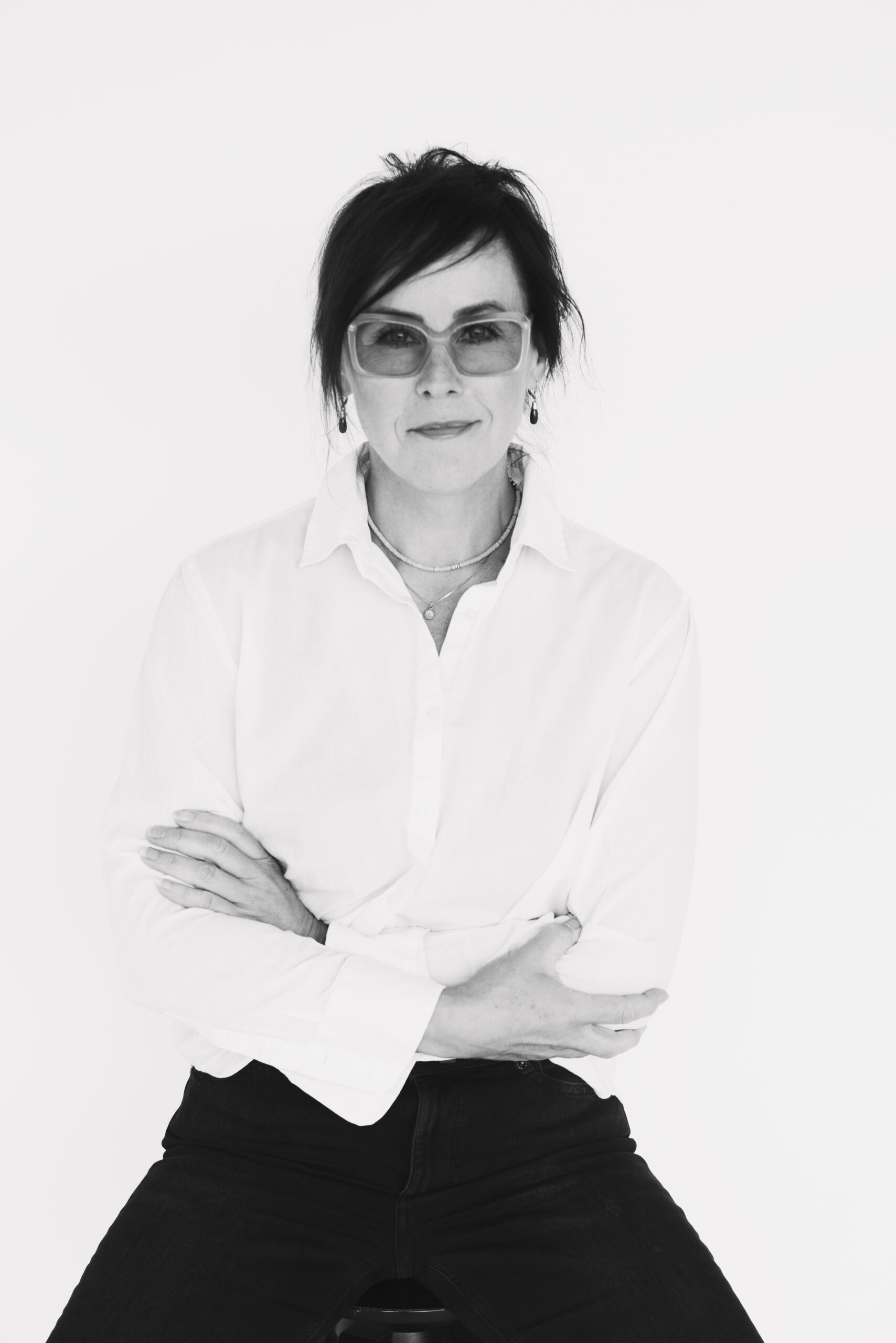
Hrund Gunnsteinsdóttir is an Icelandic thought leader, author, filmmaker, entrepreneur, and TED/keynote speaker. She is remodelling our understanding of intuition, through the Icelandic concept of InnSæi. She helps individuals and organisations rethink and reshape their relationship with change, uncertainty, and intuition, bringing together some of the world’s foremost research and practices on the fundamental role intuition plays for our intelligence and in our lives. She is the author of InnSæi the book (HarperOne 2025). Co-director and script writer of the documentary InnSæi: The Power of Intuition (Klikk Productions, 2016), shown on Netflix worldwide. She designed and directed Prisma, an innovative university diploma program, focused on mental agility and purpose in times of uncertainty, recognised by the Nordic Council in 2010 for best responding to the future of work.
More about this month’s sponsors:
Thank you to this month’s sponsors for partnering with our show and helping you make your swaps with their special offer:

Ausclimate’s highly recommended range of WINIX Air Purifiers is the ideal solution for cleaner, healthier indoor air. Easy to use, reactive features and settings with a truly comprehensive 4-5 stages of purification, including Hospital Grade True HEPA Filtration and Winix’s unique PlasmaWave® technology. Perfect for smoke, dust, pets, viruses, bacteria, household odours, and allergies (covering a variety of allergens). Breathe easier, sleep better, and feel better. Winix; is the most complete air purifier on the market!

Offer: Ausclimate is now giving all Low Tox Life followers an EXTRA 10% OFF their already discounted prices. Simply enter the discount code of LOWTOXLIFE on check out via: https://www.ausclimate.com.au/
This discount can also be redeemed for over-the-phone orders verbally.
Website: www.ausclimate.com.au
Facebook: www.facebook.com/Ausclimate
Instagram: www.instagram.com/ausclimate

About Weleda:
Is a personal care upgrade or re-stock of your faves in your low tox priorities right now? You’re in luck if you’re in Australia, as you have 20% Weleda site-wide, from March 31st to May 3rd. Head here and use code LOWTOXLIFE at check out.
Today, Weleda is the world’s leading manufacturer of certified natural and organic skincare and medicines for anthroposophic therapy. As a pioneer of sustainability, Weleda has followed this trailblazing approach for 100 years. Weleda’s ethical business principles have been recognised with numerous prestigious awards, such as the German Sustainability Award, the Swiss Ethics Award, and the Green Brand Award 2020. Weleda processes several hundred raw plant materials, which are cultivated in the company’s eight biodynamic medicinal plant gardens or sourced from more than 50 long-term raw materials partnerships around the world. Weleda places great importance on ensuring that its supply chains are both environmentally and socially sustainable.
Weleda is a certified B Corporation, joining other companies that want to do business in a meaningful way. Weleda’s B Corp impact score is 106.8 (the median score is 50.8).
Enjoy the 20% off site-wide with your code LOWTOXLIFE and if you have any questions, feel free to ask in the comments.
Alexx x
Website: www.weleda.com.au/
Instagram: www.instagram.com/weledaaustralia/
***
Title show track, by LIOR.
Love the podcast music? You will hear excerpts from Lior’s track “Caught Up” – go check it out on iTunes or Spotify if you want to hear the whole song or album, Scattered Reflections. Co-written with Cameron Deyell, it’s a great song and I love the reflective energy of it – perfect for the show, right? Enjoy. Lior is always touring, so do check out his website. It is wonderful to hear him sing live, trust me.
Low Tox Club – The place to bring your low tox life to life.
Want to join a community of like minds and enjoy all the perks of being in the Low Tox Life inner circle such as an online membership platform, 50% off all our Low Tox courses, an awesome chat group, my monthly Q&A, and special guest star interviews for just $49AUD ($29USD/28EUR/23pounds) per YEAR? We have created a special place and set of resources to help you achieve your goals and it’s a wonderful place to be – MORE DETAILS AND REGISTRATION HERE.
***
If you would love reading like me or you just simply want to go through the full transcript, you can check below.
[Alexx Stuart] (0:00 – 10:41)The power of intuition, or as they say in Icelandic, insær, that is today’s show. Hello and welcome to Low Talks Life. I’m laughing because I have no idea why I said welcome to Low Talks Life.
I never say that. Welcome to the Low Talks Life podcast. I’m Alexx Stuart, your host and founder of the Low Talks Movement, and today we are talking intuition.
I have been pondering the subject of intuition lately, which has led me to explore where we think we are being intuitive, but where we might actually be acting on instinct, bias, suspicion, thought, which is rationalisation based on what we know rather than what we intuitively know, and it has landed me into Iceland. I’m thrilled about this because there I found Hrund, and Hrund Gunstein-Dottir is a thought leader on a global scale, documentary filmmaker, author of Insær, her new book, TED speaker, and working with organisations, public and private sector, as well as leaders around the world on the subject of intuition and its power to connect us all, to do more meaningful and effective work in the world, and, of course, to connect to our earth home. She’s an incredible woman, and through her exploration, which started from a breaking point in her own journey, was born this body of work that is now helping people around the world harness the power of our intuition, and my hope is that after listening to today’s show, you will surely be doing the same, and as I’ve explored this, I have been tuning into my own threads and intuitions about moving forward.
A lot of people who are going through perimenopause and menopause speak about this, oh my gosh, there’s like this break it all apart and put it back together again, better, different, more honed, more intuitive wisdom, and I feel like I’ve really stepped into that part of my life as well, and what I keep finding, and I share this in the show today, is there’s a very common thread, and Hrund helps me unpack the potential in what I’m noticing, and hopefully by my sharing an example, you’re going to see what is that for me, what is that thing, and what does that mean, so I cannot wait to hear what you guys think of this show, and I urge you to check out Hrund’s work, her film, her TED talk, and of course, starting with this show, because it’ll give you a really good baseline, and I have all the details in the show notes about the links to all the things that she’s done, her new book Inseye, which is gorgeous, I mean the cover alone just makes you want to dive into Iceland generally, that’s how I felt, so I can’t wait to share this conversation with you, because I know us lotoxers, who are deep thinkers, can often get lost in deep thought, and we can often be influenced, it’s not, it’s not odd to find ourselves actually starting to come from places of instinct and bias, instead of intuition, it’s quite easy to get off kilter, when we’re not honed, and what stops us from being honed, are of course big pressures, stress, global events, it can be very hard to act and lean into the sea within, and to see outside from that sea within, Hrund is here to help, so I’m going to kick into that in a little minute, I want to remind you our major partner for the Aussies, gives us 10% off code lotox life, across all Oz climate appliances, and their range is huge now, I had a question around smart appliances, because some of their newer things are advertised as being smart, that’s A, because the market really wants it, B, you don’t have to install the app, and connect your appliance to the app, that’s what makes it smart, if you don’t do that, it ain’t smart, it’s just a switch on, switch off, set your mode, regular type of appliance, just for anyone who is worried, who has EMF sensitivity, I just thought I’d quell your fears on that front, but if you haven’t been tuning into Instagram, I’ve just started a series working on specifically dehumidifiers, but we’re going to unpack air purification a little bit as well, as we go, but working on literacy around moisture and humidity control, and mould prevention, because their dehumidifiers, you have one that’s 50 litre, and that’s my favourite, favourite, favourite, because you can actually use that for when the you just did not see coming, it’s powerful enough to really mitigate some pretty serious damage, and so I always say, if you can only get one, get a 50 litre, 35 litre, but of course, anything that you get to dehumidify, especially if you live somewhere humid is powerful, so go check out lowtoxlife on Instagram, because those reels have now started dropping, I’ve got a couple there for you, and we have, starting today, and through to the end of April, 20% off at Weleda, it’s time to stock up on your favourites, Weleda Australia are giving you 20% off all full price items, obviously not packs and things that are already on special, they have just relaunched the rose range, which is my favourite, favourite, favourite moisturiser of theirs of all time, I often joke with the team and say, oh but I’m probably getting to the pomegranate range age, I’m probably getting to the revitalising, the evening primrose, but I keep coming back to rose, I just love it, I find it so invigorating, so powerful, and I want to talk about performance, because a lot of people worry that lowtox, oh he has a 40 something dollar moisturiser going to perform like my old conventional mainstream prestige $190 so and so moisturiser, do you know when I left the brand I worked for in the year 2001, our top selling moisturiser was $589, and I see the ingredients of that moisturiser now, and I am horrified, but we all have a past, it’s not about being angry about where you came from, it’s about being excited about where you’re going, okay, but you know full of hormone disruptors, dodgy preservatives, and irritants to the skin, and one of the tricks I now know in prestige cosmetics is using silicone, lots of different types of silicone derivatives, to basically act as SPAC fillers on wrinkles, that’s how they perform, whereas when you think about something like Weleda, and performance, like real performance, multi-layered performance, we need to think about the performance of the style, from the style of agriculture, that cultivates the ingredients that goes into the products, regenerative, biodynamic, organic, these are the forms of agriculture that the raw materials of Weleda products are grown in, and these forms of agriculture don’t poison farmers, and these forms of agriculture create jobs and labour in communities and partnerships around the world, and then when you think about performance of packaging, constantly up-leveling, more and more recyclable, and then you think about performance of the logistics chain, and a just and fair logistics and distribution chain, and then you think about the performance of the actual products themselves, and I can tell you right now, as someone who used to travel across Asia-Pac, selling $589 creams with my sales teams, and doing all the trainings, going to Paris to get trained, and then come back, oh my gosh guys, these $40 something moisturisers are every bit as performance enhancing in your skin, without all of the drawbacks, I mean it’s just the biggest no-brainer, and it really is, I have to laugh because otherwise I would cry, so enjoy exploring both the rose range, and all of the other things that Weleda has to offer, so many favourites, I’m going to unpack a few of my favourites over the month, I’m still trying to decide what I need to stock up on, I know for my son, I will be getting the gel cleanser that he absolutely loves, and we’ve finally reined in how much he uses each time, because that was a very fast disappearing cleanser, the first time I got him, I’m like you don’t need to do three pumps sweetie, half of one pump is actually plenty, so that was pretty funny, teens starting to use skincare, anyway enjoy 20% off Code Lotox Life, sorry for our internationals, it is an Australian offer as well, but Weleda is globally available, so you should go check it out wherever you are, they’re awesome, enjoy leaning in to your intuition with Frund and the power of insight.
[Hrund Gunnsteinsdóttir] (10:42 – 10:50)Frund how are you? I’m good, it’s great to be here with you, I’m really honoured, I love your podcast, [Alexx Stuart] (10:50 – 11:46)
oh thank you so much, we definitely go far and wide as far as the topics that we cover, and I genuinely believe it’s because the human experience is not niche, you know I always find it fascinating that we all specialize in these tiny little areas, but if you actually look back and look within, there’s so much that plays into well-being and a sense of health of planet, of people, of surroundings, of connections, and you’re going to help us unpack those very things today as we explore intuition.
Can I ask straight off the bat, what for you made intuition and insight, as we’re going to learn about, become a focal point, not just on a personal level, but what made you then decide to make it a professional focus?
[Hrund Gunnsteinsdóttir] (11:48 – 13:01)That’s a great question, so really what made me take intuition seriously and kind of see it with fresh eyes, was my own kind of personal journey of what I would then call just hitting a wall, collapsing, like losing my hope and direction in life. So I went through a very difficult period in my late 20s, I was working in post-conflict reconstruction, I was doing really hard work, I was in many ways thriving at work, but I had no idea how to navigate this complex context personally, I had no idea how to set my own boundaries and things like that, and then one thing led to another, I went to work for a very heavy bureaucracy and hierarchy and kind of lost connection with what I wanted to do in the world, and myself went through a really hard personal experience also at the same time, so like emotionally and mentally, but also physically, and I was told that perhaps I would not be able to work full time ever again, so just a mixture of things, so I felt really… [Alexx Stuart] (13:01 – 13:04)
And so young for you to be told that as well. [Hrund Gunnsteinsdóttir] (13:05 – 16:11)
Which was a very lonely experience to be honest, because this was not something that people resonated with in my age group. So this kind of hitting a wall, collapsing in life, losing direction, forced me to connect within, because I literally felt I had nowhere else to go, and I got some really good advice and help and support and mentorship in doing that, and I was resistant to it, because I was like, is that a serious thing, you know, to connect within, and this is like in the beginning of the century, you know, of this century, so it was not a thing that people talked about a lot, so it was just a mixture of all these things. So I, in order to, what I would say saved my life, in order to move from merely existing to being fully alive again, and having that sparkle in my eye and soul and this sense of energy, and I felt I was fighting for my life, and I went on this journey within, and I did, I practiced, I read a lot, and I just immersed myself in this magnificent, amazing world that exists inside all of us, and really affects how we experience the world around us, and therefore how we navigate it and have an impact on it or relate to it. And so on that last note, that is how it turned into a focus of everything I’ve done and worked on since then, which includes around 20 titles, you know, I’ve chaired innovations funds, I’ve led sustainability centers, I’ve built education programs, I’ve made a film, I’ve made artwork, like different things, so it’s always, I just, going through that experience in the middle of a very bureaucratic, heavy organization, which the United Nations is, that I was working for at the time, made me reflect on the world that I lived in and how I’d been educated and grown up, and I thought to myself, you know, honestly, like, we’ve created systems around systems, around systems, around systems, around systems, complicated things so much, and it just feels like I’m, I wanted to get in touch with the real life, real world again, with people and the planet, and just kind of, I felt we were very disconnected, I guess that’s what I, that has become my mission since then, and I, and I think just on your question about why intuition and why the inner world, that is, the reason is because systems don’t change themselves, they really don’t, it’s up to us humans to change systems, and it calls forth the energy and our will to do that, and the energy to do that, and so I’ve come to the belief, the conclusion that intuition really is, is fundamental for this kind of endeavour, and for our kind of way of thinking around these things, because we’ve also kind of avoided intuition for a very long time. [Alexx Stuart] (16:12 – 17:09)
We have. Can I ask you a philosophical question that’s just popped into mind, which is, talk about systems, and we’ve overcomplicated things, and a lot of people I feel now are thinking, I want to jump ship on this system altogether and remove myself from the system, now that could be frustration with education systems that have become too administrative based, and therefore, you know, someone might want to homeschool their kids, or a system like a city, and then you just want to jump ship and live in a yurt in the middle of a field, or you know, it’s, but I’m hearing from you that there is much more potential in truly positive change, perhaps to also consider leaning in to our intuition, to know what the system needs from us to be better at being a system. [Hrund Gunnsteinsdóttir] (17:10 – 19:35)
Yeah, I just, yeah, I just wondered, this is a beautiful reflection, so just to kind of add to that, and in an attempt to respond to that somehow, I think what you’ve just said brings me to this innate understanding that we need to be deeply connected with ourselves in order to be able to connect with other beings, other humans, and the world around us. If we are unable to deeply connect, it’s very hard for us to be moved by other beings and the world around us, to be informed by what’s happening, and to really take in all that information that comes with it. So when people, so, and also just to unpack a little bit, what does it mean to remove ourselves from systems, or something that is mainstream, or something that we don’t believe in anymore?
Because I think that to step back and take a look from a distance, it’s a very healthy exercise to do in the world today. If we talk about moving away from something in the sense that we’re feeling apathy, lack of agency, we feel helpless and powerless, that’s not a good place to be in for anyone. It doesn’t keep the circulation system of our soul and spirit and intellect circulating and going, you know, so that’s not a good place to be in.
But there’s another way of stepping back and like, hmm, I want to move from this place to another place, and see what happens if I put new seeds into new soil, and I want to see and I want to attend to what comes up from that. Then maybe what you’re doing is creating a new context, outside the very charged environment that you don’t feel like has much hope for you. Do you see what I mean?
So I think that’s interesting to think, what does that mean for the people listening now? Is the feeling of wanting to just retreat and flee? Or is it this curiosity that is, you know, lit up by that reflection to really think about, hmm, so how could we do things differently?
Because the minute you move from one place to another, and you start to connect with the people and the environment and the community around you, and if you’re open to connecting, like open to receiving, nothing’s going to separate them.
[Alexx Stuart] (19:35 – 19:40)Especially in this polarized world, we actually have to be open to hearing each other’s stories. [Hrund Gunnsteinsdóttir] (19:41 – 21:03)
We need to be open, yeah. So my friend Lisa Witter, who is a true trailblazer in the world of political participation and governance and being in service of the greater good through government and politics, she recently wrote an article about hope and the key word that she puts in relationship to hope is curiosity. So for example, when there’s, because you said polarization.
I love that. Isn’t it beautiful? It’s like you’re sitting next to somebody who is absolutely the opposite to your fundamental values, and you feel like you want to punch that person in the face, or you don’t want to speak to them, or you don’t want to be associated with them, whatever.
So instead of focusing on what really, truly, deeply divides the two of you, turn on the curiosity and ask questions. And just, that is a way of stepping back, right? But not in a way of apathy or powerlessness, but rather, I want to, I’m curious, why do you think that?
You know, and just ask questions until the energy changes. You’re not furious anymore. You’ve become curious.
You may not end up agreeing, but there’s something has changed in the process. And I think that’s a beautiful, very important invitation for all of us.
[Alexx Stuart] (21:04 – 21:36)It is. Yeah. Decency through connection comes, I think as well, because once you’re connected, you can’t be assholes to each other.
Yes. It’s much less likely that you will be outrightly cruel to someone you are connected to, you have exchanged stories with, you’ve understood why they maybe came to believe the way they did. And do you think that is part of the intuitive process?
[Hrund Gunnsteinsdóttir] (21:38 – 23:47)Yes, it is. And I love that you bring this up. So as human beings, we co-regulate as a species.
There’s neurologically, we co-regulate. So what you’re describing is also when you are physically in the same space as another person, or you are deeply trying to connect online, like we are doing now, we co-regulate. So you show up with everything that you are.
And I’m not just judging you or seeing you from a distance as a name or, you know, a face or a job title or whatever. We are co-regulating physically. So there’s so much that goes on unconsciously every second of every single day in our lives.
And the stuff that’s going on unconsciously is, you know, it lies in the words, it is unconscious to us. So we are only aware of about, you know, scientists say, you know, less than 1% to 5% to 10%, like a very small proportion of what’s going on between the two of us and the many of us in the same space. We are not focusedly aware, or focused attention is not aware of all the things, the signals that are going on.
So to your question about intuition, how does intuition help us navigate that? Intuition is the productive processing of unconscious information that can help us take better decisions and actions, and better understand what’s going on. So to put this in a slightly different format, we are picking up information, sensory data with all our body, every second of every day.
Most of this is unconscious to us. However, it’s still directs how we think and act and navigate and perceive. So tapping into that source of rich information, we can’t do that without aligning with our intuition.
That is our gateway into all this information that’s coming our way and sensory data that’s coming our way every second of every day.
[Alexx Stuart] (23:47 – 24:20)So what is, it feels like there’s therefore a difference between impulse and reaction and intuition. There’s quite, it feels like emerging from what I’m understanding, there’s a big divide and one is not helpful, can often be harmful. And the other might actually be much more constructive for long-term happiness and peace and prosperity. [Hrund Gunnsteinsdóttir] (24:21 – 26:52)
Yeah. Yes. This is another great question.
So let’s just step back a little bit and think about intuition. So when I write and speak about intuition and the reason why I do it is because I’m always focusing on a well-honed and harnessed intuition. So it’s like a muscle that you practice.
If you don’t pay attention to it, it’s always working. It’s always doing its stuff, but you’re not aware of it. And therefore, you’re not the steward of your own attention or intuition.
So a well-honed and well-harnessed intuition is different from instinct. And it’s also something that we need to take the responsibility to discern to the extent possible, what is a good intuition from biases and fears and maybe impulses that are going to lead to something that we will deeply regret. Or also discern it from wishful thinking.
So just to be grounded is really super important when it comes to harnessing the muscle, like practicing the muscle of intuition. And just to maybe add to that, what I find as a very useful distinction between intuition and instinct. And that is that instinct is something that’s hardwired into our DNA.
It’s the reason why our face deforms when we bite into a lemon, because it used to be something that threatened our lives way, way back in time. But intuition is something that develops over time. So how we immerse ourselves in the world shapes our intuition.
So intuition is informed by the environment that we are in, by the knowledge that we have, by the experiences that we go through, the expertise. So it’s the same intuition that enables us to live life fully and well, like you mentioned. It’s the same intuition that helps us make the greatest discoveries that humankind has ever made.
It’s not a different intuition, it’s the same source. It’s that fundamental to our intelligence and our well-being. And I think that’s part of the myth busting that we need to be going through now, to really honor what that means.
Absolutely. Because the latter is hard and the former is soft, right? But they are the same.
[Alexx Stuart] (26:53 – 27:16)They are the same. Okay, I’m getting it. And you mentioned it’s a practice, it’s a muscle, we’re cultivating it.
What does that look like? So let’s just say I arrive at intuition school, it’s day one. And you’re my teacher.
And you say, okay, class, today, we’re going to focus on this. Where do we start?
[Hrund Gunnsteinsdóttir] (27:17 – 27:39)So yeah, great question as well. So we start with self awareness, always. So just connecting that to what we’ve talked about, you know, intuition is always there.
It’s a very big part of our intelligence and way of navigating it’s fundamental to it. It’s up to us to tap into it and harness it. That’s one thing.
It’s absolutely up to us.
[Alexx Stuart] (27:39 – 27:47)It’s optional. Basically, it’s what you’re saying. Yeah, you can go, go, go and ignore it entirely. [Hrund Gunnsteinsdóttir] (27:48 – 29:27)
Exactly, exactly. So you can go through life. Like in a fast pace, like you described, you can also just go through life relatively numb, and zombie like and just disconnecting and you just, you just do your stuff, you cope, you know, you show up where you’re supposed to show up.
But, but the ripple effects you have on other people or your own life are very, very vanilla like, you know, so self awareness is the first thing. And there are many, many ways to deepen self awareness. And so my book is full of it.
And this is what people like me do to train other people’s to do sometimes is asking questions. But what I always recommend for people to do, and for the listeners today, is to pay attention to what you pay attention to, and document it. And let that sit with us for a while, because there’s a lot of distraction around, things are happening super fast.
There are info, the information flow is immense. Some people call experience like storms of information. So we pay attention to many things throughout the day.
But do we pay attention to what we pay attention to? And with all our senses? That’s a whole different layer.
Once you get that, once you practice that you start to experience the transformative effect that has on your being and how you navigate and the center of gravity from where you come from. When you speak to people, when you interact and navigate. Yeah.
[Alexx Stuart] (29:27 – 30:45)So question given information overload, and I often think about this modern world, where, you know, peel a few centuries back, and we would really only have known about what was happening in our little tribe and town and wherever we were roaming, or setting up camp. So so much happening in the world, and we’re bombarded. And when things are happening, like even currently, because there are heightened political tensions, that seem to be popping up left, right center, rises in authoritarian styles of government.
And it it so if you raise your awareness on what you’re paying your attention to, and it is 100% things that, at least for today, or the next month, are completely out of your control or influence, what does one do there to navigate back to? Is there a more useful intuition? Once we’ve recognized that, well, I mean, intuition is our intuition, but is there a way we can come back to a more centered intuition from which we can act, rather than from which we can worry?
Yes, that’s what I was trying to get at.
[Hrund Gunnsteinsdóttir] (30:45 – 35:09)Yeah, that’s, that’s a great way of framing it. So just to keep the thread that we’re on. So pay attention to what you pay attention to and document it.
What that means is keeping a journal. Like, like literally keep a journal, like I used to say, like, it’s okay, if you want to speak into your voice message or whatever. But now I’m just no keep a journal, because that it’s the science of the writing.
Yeah, it’s the alchemy of what happens then. So I really, really recommend it. And we need to be very disciplined, we need to be very conscious or intentional about harnessing intuition in today’s world, exactly for the reasons that you mentioned.
So when we so what happens when we journal? Why is that so important? When we journal, there are different ways of journaling, we can go into that later if we want.
But when we journal, we put down on the paper, what it is that is already happening and swirling around in our minds, but we are most of the time unaware. So we put that down, clarity starts to form in our mind. What happens as well is that we start to notice recurring patterns, recurring thoughts, we start to notice what it is that we spent our energy on.
And that is something that we may look at and choose not to spend more energy on this ever again, or like that’s a good energy, you know, that comes from this. Our the reason why I talk about attention is because our attention is a super scarce resource. It is so scarce.
And, and, you know, given the the noise in the world, but also inside our heads is even more scarce. So it’s our most valuable source. It’s our most valuable resource as human beings.
Because how we pay attention to the world informs the world that we live in. It creates the relationship that we have to the world that we live in. So keeping a journal about how you pay attention to like what you pay attention to, is is is a very powerful way to start to hone your intuition.
And when you start writing, and when you know the things that you need to discern from intuition, like biases, fears, wishful thinking, prejudices, and stuff like that, that when you write about it and document it, you just see it from a distance. And you think, Oh, my goodness, this is what it looks like. So you start to get to know how your intuition functions, how it goes through the day and how it informs you.
And then you’re able to start to be the steward of your own attention and your own intuition. And you also document that and you start to reap the benefit and you understand why it matters to be aware of how you pay attention, how it informs your intuition, and then your intuition starts to grow. And like I said earlier, the it’s the it’s the productive use of unconscious information that helps us make better choices and decisions.
It really, really does. So this is what science shows us. But this is also what like timeless wisdom shows us.
But but what I think is this, kind of to underline it for this context, and today’s world, because you mentioned the political environment and the geopolitical dynamics and, and you know, the economics of it all, it’s, it’s so important to emphasize that intuition, the way that I’m talking about it always has to do with a well honed and well harnessed intuition. Let’s not confuse it with a leader or a dictator, who just says something from the top of his mind without thinking. Intuition is not without thinking in that sense.
So intuition is something that is brewing and making connections over often a long period of time without us being aware of it. And when it comes to the surface from the sea within, when it comes to the surface of our conscious mind, it comes as cues to us about what we think about something, and how we might want to consider to make choices, and and, you know, sharpen our direction in life.
[Alexx Stuart] (35:11 – 38:22)Wow. And so I often think, I’m just going to put myself out there, because something that I often have brew inside me, I did a liberal arts degree, majoring in political science, and modern languages. And I, one of the subjects we did was media, and we had to always one of our assignments for a whole term, any subject we spoke about, we were always given six or seven newspapers, and we were asked to grade them from left to right, and every shade in between.
And it was one of the best subjects I could ever have been made to do in, in the human experience, because I see things from multiple perspectives. I’m just not a black and white thinker, never have been, especially not since that incredible education. And so I often find my intuition is pulling people towards their overlaps, rather than picking camps and, and, and trying to fight over our differences.
And it’s such a strong intuition. And I sometimes struggle with whether it is like almost a traumatized child in a violent home kind of vibe, like it, let’s just stop all the fighting, which by the way, I wasn’t, but I’m just kind of creating a metaphor. I wonder is, is my obsession with our overlaps, because I actually have a problem with anger and people fighting or people having big, strong, different polar ideas?
Or is it an intuition that that has to be a better way for the world to be and for us to all realize we all connect like a web and some of us connect here and other people are connecting there. So these two people might not connect, but because you’re connected with those two people, then there is a connection. I’m always thinking that way.
And I always want to lean into that more. Is that the work you’re talking about? How to continue to hone that rather than think, Oh, but eventually I’ll have to take a stand and join a camp.
Like, I mean, you know, authoritarianism is never cool like that. I can definitely strike off as, but everything in the middle, I genuinely believe we have far more in common than we have different. And so we’re all thinking things right now, living in this modern world and having this experience of everything we’re seeing.
Is it important for me in that example to continue to sharpen that? Is that what you’re saying? If we really recognize, gosh, you always keep coming back to where we overlap.
Like, does that mean there’s something actually bigger there that I need to start working on? And is that a kind of example that people could use to start thinking about what comes up for them?
[Hrund Gunnsteinsdóttir] (38:23 – 40:40)Yeah, that is so insightful. Absolutely. So intuition gets how everything is interconnected.
Intuition is about cross fertilizing. It’s about flowing. It didn’t create the silos and boxes around knowledge and groups.
It really, really gets how everything is interconnected. And it’s absolutely very unclear where I end and you begin if we look at intuition through the lens of neuroscience. So it’s so true.
So what you also described there when you were looking at the different newspapers, you know, and ranking them and seeing different ways of speaking about the society that we live in. That is also something that is a very important part of intuition in our intelligence. And it has to do with critical thinking.
So it’s on the one hand, what you’re doing is you’re looking at something from different perspectives. It gives you a different overview of the possibilities out there. And when you constantly look within through that process, you are sharpening your intuition and your inner compass as you navigate that you are better able to understand what you think about things and honoring the different perspectives.
So that is something that’s very important, because for people listening intuition, like when we look at the greatest discoveries made by Nobel laureates, the way that they were able to come up with their big leaps was their ability to jump from micro to macro, from deep analysis to intuition, and back like switch between the two. That is also what we sometimes talk about as being mental agility. So it’s super important.
And you know, research on intuition also shows that, like, according to one of those books, I mean, it’s one of those researches. And but it’s like, certain specialized groups, such as lawyers, I’m sorry, lawyers, you’re not all the same. They tend to find it harder to make connections from one domain to another.
In other words, they tend to find it harder to cross fertilize one type of knowledge onto a new context.
[Alexx Stuart] (40:44 – 40:58)They’re genuinely trying to argue a case and win. So yes, almost like they have sharpened their mind to avoid seeing how any other possibility would be correct, or even plausible. [Hrund Gunnsteinsdóttir] (40:59 – 42:39)
Yeah, so so exactly. So there’s just that kind of, you know, regardless of lawyers or else, but like, I think we also all have it in us. It’s like, what is the value of translating one expertise, knowledge, whatever, onto another context, there is so much value in that, because it helps us understand the world better in different perspectives.
It also just broadens our minds and perspectives and gives us more food for thought. And you know, our minds become more creative, we that’s curiosity as well. So, so again, just going back to the first reaction to your beautiful insight is intuition gets how everything is interconnected.
It navigates that way. It helps us think more critically, which is very counterintuitive to what many people think there’s another layer to that, because you you also painted a picture of the world that we live in. You know, it’s there’s so much going on, we have so much information.
So we have all the information we need. We have arguably the resources that we need to do what’s right, you know, for the greater good and stuff like that. So the reason another reason why intuition is so important today, it always has been, but particularly today is because it’s not about knowing so much like it used to be.
It’s about how we are able to synthesize information, to recognize patterns, and in order to see the big picture, our place in it, and how best to find solutions or navigate or, or build houses, whatever it is. So that is another thing that intuition really super like brings to the tapering table in a super important way.
[Alexx Stuart] (42:40 – 42:59)And so when you said counter to what some people might say or think, is that because we think of intuition as Oh, that’s just you being emotional. Or, you know, like we confuse it with being too heart led and not using your head enough. [Hrund Gunnsteinsdóttir] (43:00 – 45:50)
Yes, so exactly. That’s, that’s, that’s, so, you know, one of the things that I found very, like one of my discoveries, so to say, in the last 20 years is that in order to reason well, you need good intuition. And as we’re all very excited about innovation, it drives today’s economies, that there isn’t much innovation if we don’t use our intuition.
So if we think of life, we go on the other like opposite, if we think only mechanically, if we think only rationally, and analytically, and in silos, we are not going to come up with much new, we’re going to be able to plan, we’re going to be able to organize and these are all super important things. But it’s all going to be based on what we already know. What we already know and what we’ve done in the past is not necessarily fitting for the times we live in.
Today is all about being open to what’s happening, being able to stand firmly on the ground, in spite of the shocks that come with facing reality for some people. It’s super hard, right? And we can’t do that just by analyzing or by rationalizing what’s happening.
It’s really, we need to come back home to ourselves inside our bodies, the whole intelligence that we have, all the range of it and combine it together. And that is what intuition is so important for us to be able to do. And that’s why I keep repeating, I just find it so super important to say, intuition is not just a small part of our cognitive abilities, it’s fundamental to our intelligence.
And yes, it’s home, it’s very much in the whole body. And intuition understands that the brain is nothing without the rest of the body. The brain is collecting signals from all the senses and our nervous system is super important in the way that we interpret information coming our way or sensory data.
It’s all an ecosystem. So our intelligence is an ecosystem. Our bodies are an ecosystem.
It’s not just like different compartments or drawers with different organs, it’s all interconnected. And we as humans are ecosystems within ecosystems within ecosystems. So again, everything is interconnected.
How that changes the tools that we use to navigate, is profound. And it has a lot to do with intuition, because intuition works so well in uncertainty, and in our ability to be open to the unexpected and best prepared for it.
[Alexx Stuart] (45:51 – 46:46)Wow. There are so many questions I want to ask you now, my goodness. So I’d like to ask you a question about intuition.
And when we feel like someone is cut off from us, like we want to play the interconnected game, they do not. And they are hard, cold, maybe evil, or seemingly so. Obviously, I well, I think that gives us a clue as to how out of touch with their own intuition they are.
What do we do in those situations? Because I’d imagine when you’re helping leaders through conflict resolution, and really big top line stuff, you must come to these situations and think, well, we got a lot of work to do with this one. Yes.
[Hrund Gunnsteinsdóttir] (46:46 – 49:25)What happens then? Yes. So this is like, so this is both a very common challenge that we all have.
And it’s also a rare challenge in certain cases, you know, but it’s, but it’s a very important question. So I would always say, for anyone, whether you’re a leader, or you’re just not just but you’re a family member or a friend, or you’re in a workplace, do the work as much as you can, to be well aligned and centered in yourself. To know what it means to be aligned with intuition, and having a well honed intuition.
And that also includes knowing why it’s important to sleep well. You know, it’s also the things that we all know, like water, sleep well, good nourishment, but also the mental agility and navigating a hard day that’s in front of you. So that’s one thing.
Another thing that I would recommend when you’re faced with with a person like you described is curiosity. Try to approach that person from a different angle, but with like, curious, ask that person something out of, come from a place that’s genuine curiosity. You know, that’s another thing, be very centered in what that means, you know, if you’re pretending that, that person is very likely to spot it.
Then there’s another layer to that. And that is sometimes when we are changing and transforming systems and communities and, and trying to navigate certain things, sometimes it’s helpful to, to understand what the people are that we can possibly get on board and who the people are that we won’t be able to. And how we approach that group of people is sometimes, sometimes it’s useful just to honor them, show them respect, not to try to convince them.
But once you’ve mobilized and you’ve activated a community of people who want to do something, and I’m assuming it’s for the greater good, or it’s something constructive and positive, then the group that’s very much against what you’re doing is not unlikely to come on board because they want to be part of that, that journey and that project or that outcome. But you know, sometimes we can’t approach people. Sometimes the wall is really there.
And in those cases, we may want to take a conscious decision of letting go and just, and deciding to, to spend our time and energy with things that are moving instead of being completely stuck. So it depends on the context.
[Alexx Stuart] (49:26 – 50:43)It’s so challenging too, isn’t it? Because if you think about some of the things going on, as we speak in 2025, you have people fighting for causes, trying to make their voices heard, trying to stop people from being killed, trying to, I mean, it’s not even new to 2025. We know that this happens in perpetuity somewhere around the world, unfortunately.
But when you are on the coalface of, let’s say, a dire situation, just trying to make people hear you and they feel closed, what can one do for one’s own well-being to be able to continue to fight for what one believes? Like, I often think of the human rights situation and it almost sounds like, I’m just picturing someone at the coalface hearing us talk and going, well, that’s easy for you to say, just back off. You’re not going to get to them.
But, you know, like, do you see where I’m kind of going? I just want to honor the time and the anxieties that a lot of people have about big things happening right now in the framing of this exploration, I guess.
[Hrund Gunnsteinsdóttir] (50:44 – 53:47)Yeah. And thank you for saying that. I think, first of all, the people who are under the most stress, at least they’re part of the people that are under the most stress.
And then I’m just putting aside the way too many people who are going through conflict and stuff like that. But activists, social innovators, social entrepreneurs, entrepreneurs, politicians, well-meaning politicians, these people are under so much stress and pressure in the world today. And I think that they are in this position.
And just to recognize it’s hard. I don’t think it’s ever going to become easy. And I have experienced personal experience of that myself.
It is super hard. What they can do, what we can do when we’re in that position is to keep ourselves, again, aligned with a well-honed intuition. And I want to go into a specific area on this.
And that’s the following. You know, the Icelandic word for intuition is the word that I often use. And I’ve built it into like a concept or a lens to learn how to hone and harness your intuition.
And the word is insight. And it’s composed of in and sighing, which means inside or into. And sighing means to see or to see.
So it means to see within. It means to see within. And it also means to see from the inside out.
Related to your question here. What I often say to people that are familiar with this terminology is understand the see within and how it shapes you understand your intuition, what develops it and how it’s shaped. And the heart experiences that you have.
Understand the see within navigate it, but don’t drown in it. Okay, so that’s a big, a little bit fuller picture from saying, you you go through these very hard experiences. And it is it’s it’s kind of even hard to say it now, because I know what you mean.
It’s like for the people listening. Yeah, easy for you to say. But the hard work behind this is to practice mindfulness around these very hard issues.
It’s about finding a way to see things from a distance. Finding a way to understand what it is that you can affect and what you can’t affect. Do your best, but understand the limits to what it is that you alone can do.
Make sure that you have your tank filled, not empty. Don’t burn your candles from both ends. And and there are also things like, you know, joy and sense of humor is super important in times of crisis.
Yes, I totally agree.
[Alexx Stuart] (53:48 – 54:37)I help a lot of people through chronic illness, as I’ve experienced myself due to mold toxicity. A lot of very unhealthy buildings, people get sick. And and one of the first questions I asked any of my coaching clients is when was the last time you tuned into your favorite comedian or funny show that you liked when you were a kid?
And or, you know, just hilarious movie slapstick kind of comedy from the 80s that people like us got to grow up with, but the younger ones not so much like go seek out something that reminds you even just for a brief second that life can be light and joyful. Because I think that’s actually part of coping with really intense, challenging life moments.
[Hrund Gunnsteinsdóttir] (54:38 – 56:10)It is very important. And also just to say like in this context, because my experience of working in post-conflict context, but also my my conversations with people like a friend of mine who is a female politician from Afghanistan, imagine, and just like joy, sense of humor, and thinking about your mental and physical health is not a luxury focus. So so that is also important for people now in Ukraine and, and in Palestine and Israel and in Afghanistan and all over the world, like they, many of them are very aware of how important it is to to keep the spirits up.
You know, and like somebody said from Ukraine recently, life goes on. I’m most worried about my cat. You know how?
Yeah. And in the evening, I try to laugh and smile and get eye contact with friends and family. So and also from just like decades of research, collective research shows that, you know, one of the three pillars of resilience is humor.
You know, there’s this, these are really important things. And then we could also look at them from different angles, like neuroscience or biology is like the hormonal activation, the neurological implications of smiling and laughing and how it affects our brains and our ability to be in awe and all these things. It’s, it’s super important.
[Alexx Stuart] (56:12 – 56:23)Super important. And so with everything you know, what would you go back and tell your younger self, working on the ground in Kosovo? [Hrund Gunnsteinsdóttir] (56:24 – 56:26)
Wow, it’s a beautiful question. [Alexx Stuart] (56:28 – 56:32)
Do you ever think I’d love to go back and help that young woman? [Hrund Gunnsteinsdóttir] (56:33 – 57:29)
Yeah, so actually, yes, absolutely. I do. And when I had just recently gone through my experience, my, I was very, like, my work revolved around how do you build that understanding of why it’s important to be connected within and the understanding of how it shapes your thinking and action and, and co creation is something that I would have wanted to know.
So for example, just I was very, like, trained in thinking analytically, rationally, statistically, I would have wanted to know somebody who would say, you need to take good care of yourself, you know, you need to be in shape, and that they would be able to explain it to me in a rational way, why that was important, because otherwise, I wouldn’t have listened.
[Alexx Stuart] (57:30 – 57:58)Yeah, it’s so true, isn’t it? Because the instinct, as opposed to the intuition is, when you are dealing with it up against it, whatever it might be like crazy busy deadline, big global conflict, frontline soldier, and for someone to say, also remember to look after yourself here. I mean, instinct would say, this is not the time to be thinking about looking after myself. [Hrund Gunnsteinsdóttir] (57:58 – 57:58)
Yeah. [Alexx Stuart] (57:58 – 58:09)
And yet, from everything you’re saying, it sounds like it’s the time to double down and make sure that’s happening, so that you can deal with. [Hrund Gunnsteinsdóttir] (58:09 – 59:23)
Yes, that the thing is for that is like, because I, I understand. And even today, I’ve been doing this, like thinking about this and working on this for over 20 years, even today, I find myself being in the middle of a storm, and just like, you know, we got to do this and just like, go on and just not stop. There are ways in how we show up.
So we can even decide, like, for anyone who is in that situation, whatever the role is, practice being aligned and present. And make sure you understand what that feels like in your body, and that you remember it next time you need it. And you do this with journaling and documenting and really, like putting it down on a paper that you actually remember it.
So in the heat of the moment, you shift your center of gravity, or you make sure that you are situated inside yourself in a way that the circumstances don’t drown you. You don’t lose your eyesight and hearing, you know, metaphorically, because of the noise around you, you know what you can do and what you can’t do. You know, you understand that there are limits to yeah.
[Alexx Stuart] (59:24 – 59:50)So where I feel like by cultivating our intuition, raising our self awareness, and going, seeing within and seeing the sea within and seeing from within outside, all of this amounts to us actually being more effective. Yes, at the things we care so deeply and passionately about growing in the world. [Hrund Gunnsteinsdóttir] (59:51 – 1:00:38)
Yes, absolutely. That is so well put. And so more effective with it comes more ease, clarity and thought when we once we gain clarity, that this we have so much more energy.
It’s a very different way of being. And so yes, it’s so true. So it’s like how we show up and that kind of being in like filling up the moment with with your presence with others, makes you much more effective.
Then when you scramble through many, many moments, like semi semi present. I think if people just think about it for themselves, they will they will feel it, they will know what that means for them. It’s not a far fetched idea.
We all know this.
[Alexx Stuart] (1:00:39 – 1:01:02)You know? Yeah, we all know it. When you say it, it sounds like it makes sense.
But I absolutely agree in coming back to where we started, which was the cultivation piece is critical to really cultivate and nurture intuition.
[Hrund Gunnsteinsdóttir] (1:01:02 – 1:01:34)Yeah, it really is so important because and you know, just also to say like, it is cultivation, it is intention, it is practice, and it is a way of being and navigating. But it doesn’t mean that you have to take aside three hours a day to do it. It’s like make it part of who you are and how you show up.
And I think that’s the blurry side of it’s the same intuition that keeps us well and flourishing. That helps us make the greatest discoveries in the world. And how do we mentally get our heads around that?
[Alexx Stuart] (1:01:35 – 1:01:54)Yes. And you shared and I love that you you had a humble, I’m not a guru moment. I’m actually just an ordinary human who still gets caught out.
Can you just share for us what some of those blocks of our intuition that can come up look like? So we can be watchful of them?
[Hrund Gunnsteinsdóttir] (1:01:55 – 1:03:06)Yes, absolutely. So there are a few things that I think are super important for us to bear in mind like that can block intuition. One of them is pressures.
So financial pressures, personal pressures, performance pressures, they can can block or skew our intuition. And while we can’t avoid these, I mean, they’re a part of our lives, right? And being aware that they are affecting our judgment, stepping aside or finding time to connect within and to really cue your intuition to speak to you in the right setting is a skill that is super important to hone.
There is also the, you know, stress and anxiety. When we are super in love, we’ve just fallen in love. Life is amazing.
Everything is in rosy colors. It’s like, then it’s time to sleep on it. What I’ve personally done a lot is like when I sometimes we receive this invitation to do something that is absolutely amazing.
And maybe in particular for our curriculum vitae, our CVs.
[Alexx Stuart] (1:03:06 – 1:03:07)Yeah, the ego. [Hrund Gunnsteinsdóttir] (1:03:07 – 1:04:17)
The ego is like, ooh, somebody is noticing me. I’m like, you know, this is happening, which is great. But it’s I usually ask people if I can sleep on it.
Because I just want to sit with it. Like, what does it mean for me? Is it aligning with my values and my intuition?
Is it going to keep my energy going? Or is it going to drain me? Is it really what I want to do?
Or is it just my ego and stuff like that? And just to say, ego is also the stuff that gets us up in the morning. So it’s not just a bad thing.
But yeah, so things like that. But also when we overthink, over rationalize, that can also very much block our intuition. So there’s a reason why a state of flow is the highest form of attention that human beings can offer.
A state of flow when you are consumed in a task that you find truly fascinating, challenging to some extent, and you’re super interested in and you’re, like we say in Icelandic, you are applying your hand to your head, you know, you’re writing or you’re doing something, you’re crafting something.
[Alexx Stuart] (1:04:18 – 1:04:23)Does that mean you’re like an extension of your mind through your hands? [Hrund Gunnsteinsdóttir] (1:04:24 – 1:04:25)
Yes, the meaning is that. [Alexx Stuart] (1:04:25 – 1:04:26)
I love that. [Hrund Gunnsteinsdóttir] (1:04:27 – 1:04:44)
Yeah. So it’s again, it’s that alchemy, you know, when you when your circulation system is going. And so this is when some people describe a state of flow as your logical mind has stepped aside and it’s not blocking your intuition.
But intuition in a well honed sense.
[Alexx Stuart] (1:04:44 – 1:05:48)Yes, it makes me think it really illustrates one of the gifts of neurodivergence. I have ADHD and when I am on a streak on a thing I’m interested in, there is no ceiling, there is no space in time, there is just an incredible sense of flow. And then I could be doing something completely different two months later and other people would be very confused by this.
But for me, I’m just led where the interest takes me. And I think it’s such a gift. And there are challenging parts about being impulsive or time blind in a in a world that needs you to be on time for things like this and some quirks.
I get that. But I do truly love this kind of aspect that you cannot ignore what you’re interested in when you’re neurodivergent. You simply must.
And I feel like that really is a gift.
[Hrund Gunnsteinsdóttir] (1:05:49 – 1:06:41)Yes, it really is. So I recently got this question about neurodivergence and intuition, and I was hesitant to reply to it because I haven’t read the literature and the research behind it. But you’ve just given us an amazing example of the superpower that it is when you understand how it unleashes your intuition and insight into something.
Because a lot of people find it really hard to be that present with themselves around issues. And that’s a very hard place to be in when it’s repeated again and again and again, and you feel like you you can’t everything you start, you can’t finish. So it’s that kind of.
Tying together the mind, heart and hand in order to reach that state of flow to get stuff done. And it’s just so energizing, isn’t it?
[Alexx Stuart] (1:06:41 – 1:07:02)Yeah, it really is. And so you’ve obviously worked with so many people of all walks. And can you share a story of someone who you began working with where you saw a transformation occur in the way they were being and showing up? [Hrund Gunnsteinsdóttir] (1:07:04 – 1:08:12)
Yes, absolutely. So the story that comes to mind is is and I’ve shared this before, but it’s just such a beautiful story of a dear friend of mine whose name is Andrew Sala. Today, he’s a National Geographic Explorer in residence.
He loves the ocean. He grew up in Spain by the coast, absolutely passionate about the ocean. He wanted to become an ocean explorer like Jacques Cousteau and just explore the oceans and also to make them make sure that they flourish and all the rest.
And he goes on to study. He goes to university. He studies marine biology.
One thing leads to another. He starts to work at a university where he becomes a professor. And after seven years of being a professor, he just wakes up one day and just discovers that he feels like he’s writing the obituary of the ocean.
He feels very disconnected from the object of his passion, which is the ocean. He’s writing about it. He’s watching it deteriorate, but it doesn’t really feel like he can do anything about it.
[Alexx Stuart] (1:08:12 – 1:08:16)It’s almost like he’s documenting its demise. [Hrund Gunnsteinsdóttir] (1:08:16 – 1:10:07)
Yes, exactly. Exactly. That’s well put.
And so he takes this very brave decision, aligns with his sense of purpose again, and takes the brave decision to leave his job at the university. And he decides he wants to spend most of his time in the ocean diving because he wanted to immerse himself in the ocean to build a stronger intuition about what’s wrong with it and how to bring it back. And so since then, he has co-founded the Pristine Seas Project, which is working to protect.
I think they’ve managed to date to protect 27 of the largest marine protected areas in the world, which equal double the size of India. And they’ve been able to, which is also important. So they’ve been able to do this with world leaders and national leaders, sometimes from what we would say unexpected places.
And one of the keys, maybe just to share this with the audience, one of the keys to their success in this, there are many keys, but one of them is they are a multidisciplinary team. They work with footage, images, as well as science and data and experience. The keys to getting decision makers that otherwise would not have taken the decision to protect a marine area is that they brought them to the area for them to experience it first hand, to see it with their own eyes, to immerse themselves in the ecosystem that needs healing.
And that’s how they’ve been able to shift mindsets and get decisions like that to be made.
[Alexx Stuart] (1:10:07 – 1:10:09)They created a connection. [Hrund Gunnsteinsdóttir] (1:10:10 – 1:10:11)
They create a connection. [Alexx Stuart] (1:10:11 – 1:10:13)
Once you’re connected, you can’t ignore it. [Hrund Gunnsteinsdóttir] (1:10:13 – 1:10:17)
Exactly, exactly. So back to where we started, right? [Alexx Stuart] (1:10:17 – 1:10:21)
Back to where we started and where we finish. Incredible. [Hrund Gunnsteinsdóttir] (1:10:22 – 1:10:27)
Yes, exactly. Being in relation to the living world is very key. [Alexx Stuart] (1:10:28 – 1:10:51)
It truly is. You can’t see something worth fighting for until you know it. And so what is your hope for the work you do?
Do you have an intuition that you lean into and what you would like to impact through that leaning?
[Hrund Gunnsteinsdóttir] (1:10:52 – 1:11:23)Yeah, thank you for asking that. My hope is that we will be able to support people to train them and to align with their intuition, to hone and harness it and really embody the understanding of what it is and why it’s important for us as humans, but also for the world we live in. So I’m on a mission to liberate people’s intuition through the Icelandic concept of insight. [Alexx Stuart] (1:11:24 – 1:11:31)
Insight. Well, thank you for introducing it to us. It has been a joy to explore with you. [Hrund Gunnsteinsdóttir] (1:11:31 – 1:11:35)
Likewise. Thank you so much for inviting me on your amazing show. [Alexx Stuart] (1:11:35 – 1:14:31)
I hope you loved today’s show as much as I loved bringing it to you. I want to remind you that if you are someone who craves a low-tox community that is judgment-free, full of empowerment, has health professionals and building health professionals that can support you as well as me in there answering questions multiple times a week, I want to invite you to join the Low Tox Club. For the price of less than a cup of coffee a month, you have an annual membership for $49 Australian.
So it’s about $30 US or Euro that allows you to have a member masterclass every single month with a health professional or global expert from the podcast, where we have them to ourselves for an hour to ask questions and deep dive further. You have the beautiful supportive chat group. You have Q and A’s with me, me answering questions.
We read books and talk about them and a whole bunch more. You can head to lowtoxlife.com, hit the explore tab and join the club is the very first option on that list. Of course, we have over 10 evergreen courses that you can jump into anytime, whether it’s navigating everyday low-tox swaps with our Go Low Tox Signature Course, whether you have kids and you’re wanting to know how to best support them with our Low Tox Kids Course, whether you’re planning a family and looking at a healthy low-tox preconception journey, reducing inflammation, especially the chronic kind with our Inflammation Ninja Course, many, many other courses. You can again, head to lowtoxlife.com, hit the courses tab and you’ll see all of the options, which includes a business course, my Low Tox Method Program. A lot of people don’t know, but I was doing a lot before starting Low Tox Life in 2009. And I was a business consultant across hospitality, health, retail and cosmetics. I have been in business consulting for a very long time.
So I absolutely adore helping people move into the low-tox space or develop their low-tox businesses. So that’s a way I can support you. And then of course, there’s our wonderful social media communities at lowtoxlife on Instagram.
And of course, the website with over 250 gluten-free recipes, blogs, downloadable PDFs to help you navigate wanting to get rid of synthetic fragrances in your school or office. I could go on. So head to lowtoxlife.com, see what takes your interest or fancy. And thank you so much for being a part of our podcast community. I love, love, love reading your reviews. I appreciate every follow and subscribe.
And I want to just remind you to finish off that if there’s anything you heard that you found interesting from medical or scientific perspective, it is intended as education only, please always chat to a health professional who knows you and your situation best. I’ll see you next week. Bye.
