





About this show:
What does the UK’s best-known Dr, Rangan Chatterjee, want you to do? He want to help get you to a place in your health and intuition where you are the one who knows what’s best for you.
If you sometimes feel more confused about health than ever before? This is the show for you!
Jumping from protocol to Instagram follow to book to podcast, we’ve never had more information on ‘health’ than in the past decade. And we’re sicker? Make it make sense. Part of it of course is a Western world erosion of middle and working class where stress has as pressure has risen, causing a myriad of health consequences, but the other part? Well, it’s a lack of agency. Confused, disempowered and constantly looking ‘out there’ for the answers (darn that addictive big-tech dopamine “drug baron”!)
Dr Rangan Chaterjee believes we can move confidently forward with curiosity, listen for feedback, sometimes test and be proactive with change where needed.
We talk
- Diet confusion
- The power of reflection
- Knowledge ain’t all that if we aren’t getting better!
- A Blood Sugar story
- Red Flags in testing – spotting subtle changes rather than waiting for alarm bells and fire extinguishers.
Dr Rangan Chaterjee is one of the best-recognised doctors in the world, with a podcast with over 200million downloads, a TV show “Doctor in the House” that has reached 70 countries and seen people achieve miraculous health improvements, a Professor, an author of 6 books and umpteen times on the UK Times best seller list…
I hope you enjoy the show, Alexx x
Want to learn more about this week’s guest?
Instagram
YouTube
Website
Podcast
The Three Question
Journal
Alexx Stuart
Founder of Low Tox Life and the Low Tox movement
Join me on Insta @lowtoxlife
Want to support the show?
Free option: Leave a 5 star review wherever you listen to Low Tox Life – thanks SO much!
Paid + Member PERKS: Join the Low Tox Club – monthly practitioner live masterclasses, a suite of low tox store discounts from around the world and the most supportive and lovely chat group on all low tox topics on the internet: Check it out and join here for just the price of a coffee per month! https://www.lowtoxlifecourses.com/offers/YzLXThRQ/checkout
***
Thank you to this month’s show sponsors for helping you make your low tox swaps easier:
@ausclimate gives you 10% off their range for the whole of 2024, with brilliant Winix Air Purifiers, the best Dehumidifiers I’ve ever used and their new energy-efficient heating range. code LOWTOXLIFE https://bit.ly/ShopAusclimate
And @weledaaustralia kicks off from March 31 throughout April – A huge 20% off sitewide with the code LOWTOXLIFE. Grab your favourites, make your swaps to a global leader in regenerative practices that produce powerful skin and health results. Enjoy!
Be sure to join me on Instagram @lowtoxlife and tag me with your shares and AHAs of this week’s episode.
***
About Dr Rangan Chatterjee

Forbes call Dr Rangan Chatterjee ‘the most influential medical doctor in the UK’. He has been practising for over 23 years, is Professor of Health Communication and Education at Chester Medical School and is known for his ability to simplify complex health information and inspire people to make positive changes in their lives.
He hosts the most listened to health podcast in Europe ‘Feel Better, Live More’ which has had over 300 million listens to date and has published 6 #1 Sunday Times Bestselling books which have sold over 1 million copies worldwide. He is the only doctor globally to have successfully reversed type II diabetes, fibromyalgia, panic attacks, IBS and menopausal symptoms using only nutrition, lifestyle & mindset approaches on primetime TV, on his wildly successful BBC show ‘Doctor In The House’, which has been broadcast in over 70 countries around the world.
His 6th book ‘Make Change That Lasts – 9 Simple Ways To Break Free From The Habits That Hold You Back’ launched on 2nd Jan and became an instant Sunday Times Bestseller. It is his most original and ambitious book to date, with a truly unique mix of health and philosophy. It will help people become healthier and happier, by helping them understand the real reasons why they struggle to make positive changes that actually last.
Dr. Gabor Maté calls Rangan’s new book ‘his finest work yet – a distillation of decades of medical experience, scientific study, and a lifetime of learning the lessons of personal challenges. It is a truly wonderful astute, reader-friendly, and eminently practical guide to healthy living.’
More about this month’s sponsors:
Thank you to this month’s sponsors for partnering with our show and helping you make your swaps with their special offer:

Ausclimate’s highly recommended range of WINIX Air Purifiers is the ideal solution for cleaner, healthier indoor air. Easy to use, reactive features and settings with a truly comprehensive 4-5 stages of purification, including Hospital Grade True HEPA Filtration and Winix’s unique PlasmaWave® technology. Perfect for smoke, dust, pets, viruses, bacteria, household odours, and allergies (covering a variety of allergens). Breathe easier, sleep better, and feel better. Winix; is the most complete air purifier on the market!

Offer: Ausclimate is now giving all Low Tox Life followers an EXTRA 10% OFF their already discounted prices. Simply enter the discount code of LOWTOXLIFE on check out via: https://www.ausclimate.com.au/
This discount can also be redeemed for over-the-phone orders verbally.
Website: www.ausclimate.com.au
Facebook: www.facebook.com/Ausclimate
Instagram: www.instagram.com/ausclimate

About Weleda:
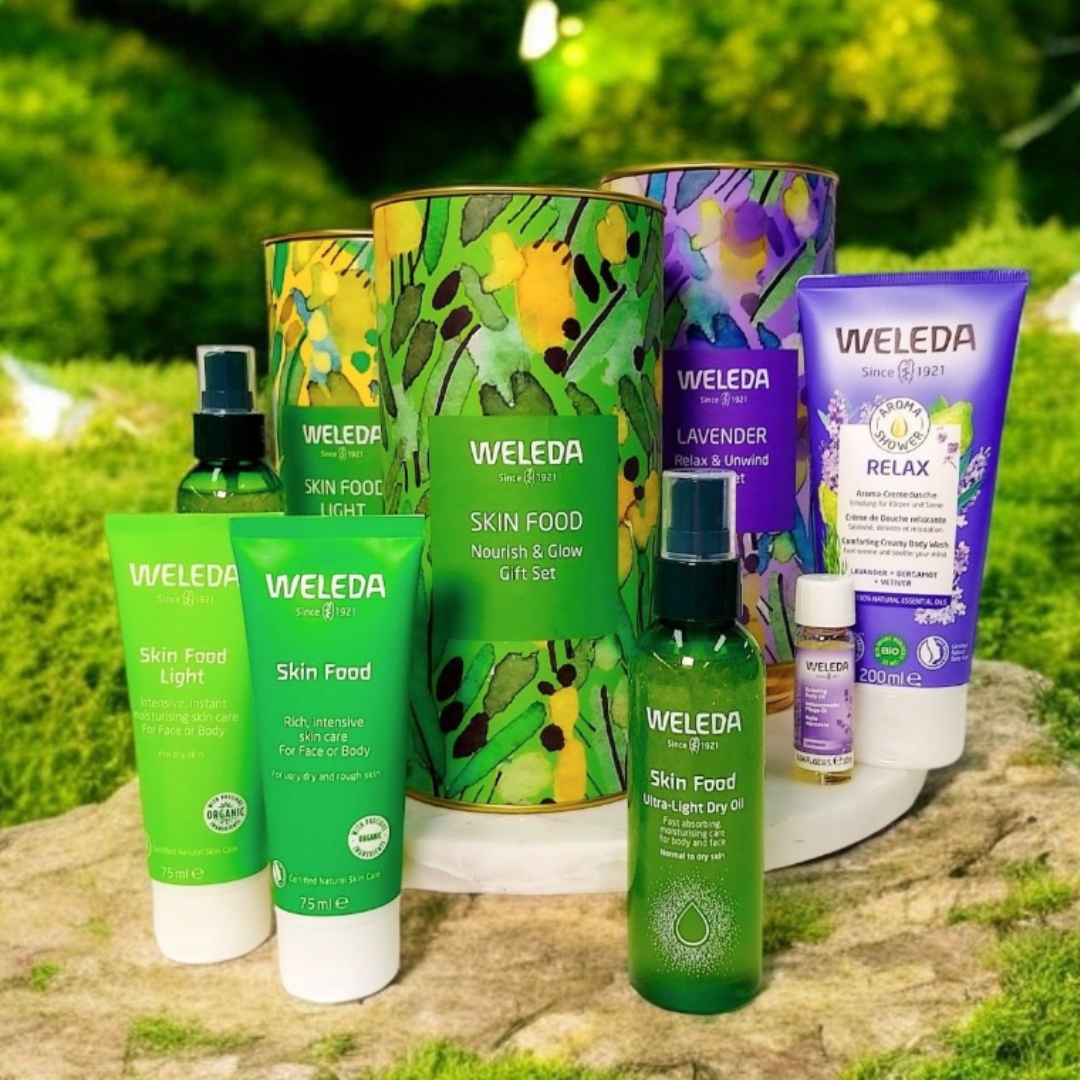
Is a personal care upgrade or re-stock of your faves in your low tox priorities right now? You’re in luck if you’re in Australia, as you have 20% Weleda site-wide, from March 31st to May 3rd. Head here and use code LOWTOXLIFE at check out.
Today, Weleda is the world’s leading manufacturer of certified natural and organic skincare and medicines for anthroposophic therapy. As a pioneer of sustainability, Weleda has followed this trailblazing approach for 100 years. Weleda’s ethical business principles have been recognised with numerous prestigious awards, such as the German Sustainability Award, the Swiss Ethics Award, and the Green Brand Award 2020. Weleda processes several hundred raw plant materials, which are cultivated in the company’s eight biodynamic medicinal plant gardens or sourced from more than 50 long-term raw materials partnerships around the world. Weleda places great importance on ensuring that its supply chains are both environmentally and socially sustainable.
Weleda is a certified B Corporation, joining other companies that want to do business in a meaningful way. Weleda’s B Corp impact score is 106.8 (the median score is 50.8).
Enjoy the 20% off site-wide with your code LOWTOXLIFE and if you have any questions, feel free to ask in the comments.
Alexx x
Website: www.weleda.com.au/
Instagram: www.instagram.com/weledaaustralia/
***
Title show track, by LIOR.
Love the podcast music? You will hear excerpts from Lior’s track “Caught Up” – go check it out on iTunes or Spotify if you want to hear the whole song or album, Scattered Reflections. Co-written with Cameron Deyell, it’s a great song and I love the reflective energy of it – perfect for the show, right? Enjoy. Lior is always touring, so do check out his website. It is wonderful to hear him sing live, trust me.
Low Tox Club – The place to bring your low tox life to life.
Want to join a community of like minds and enjoy all the perks of being in the Low Tox Life inner circle such as an online membership platform, 50% off all our Low Tox courses, an awesome chat group, my monthly Q&A, and special guest star interviews for just $49AUD ($29USD/28EUR/23pounds) per YEAR? We have created a special place and set of resources to help you achieve your goals and it’s a wonderful place to be – MORE DETAILS AND REGISTRATION HERE.
***
If you would love reading like me or you just simply want to go through the full transcript, you can check below.
[Alexx Stuart] (0:00 – 6:21)Could there be such a thing as a recipe for health that we can all get on board with? Today, Dr. Chatterjee takes us through some of the key things that we could put in that recipe. That’s today’s show.
Hello and welcome to the Lotox Life podcast. I’m Alexx Stuart, your host, founder of the Lotox Movement, and thrilled to have you join me for a bonus podcast this week. I could not pass up the chance with the stars aligning in the busiest UK medical doctor schedule that exists, Dr. Rangan Chatterjee and his upcoming tour to Australia had me wanting to have him on the show and really dive into him being asked the questions for a change and discussing some of the things that a lot of us grapple with. This, oh my gosh, there’s so much information, I’m overwhelmed and confused. This, oh my gosh, I feel really frustrated by the medical system and is it ever going to change? This, oh my gosh, the environmental toxin piece added on top of diet and lifestyle, that just kind of freaks me out.
In today’s show, we actually tease out some of the key, ditch the overwhelm things that you could be focused on to build a healthy recipe for yourself using your intuition, using data, and seeing red flags before they become big problems. We can genuinely take back our agency over our own health picture. It was just such a fantastic conversation.
If you don’t know Rangan’s work, I mean, the podcast that he hosts, Dr. Chatterjee, he’s done TV shows, he’s written, I think, six books now, been on the UK Times bestselling list a bazillion times over, and is, of course, a professor at the university level, educating and mentoring young doctors coming up in public health and policy and preventative health, as well as being a doctor himself actively.
So all of these moving parts lead me to ask the first question, which is, how’s the guy doing behind all of that? That looks like a lot. And we go from there.
So I’m going to jump into that in a little second. Of course, we could not do the show without our podcast partners. Weleda, one of my favourite pioneering brands of all time, over a century old now as a brand, and still pioneering in the performance of plants and the passion for regenerative, sustainable land practices and community building practices in sourcing raw materials from around the world, as well as growing them, to maximise the performance of those plants once they make it into the formulations and onto your face and body, and into your body as well, if we’re talking about the homeopathics. And so it’s just such a beautiful brand.
Aussies have 20% off site-wide, obviously, excluding gift packs and things that might already be discounted. But you have that for the whole month of April. And they’ve just brought out a relaunch of their beautiful smoothing range.
So this is, you would think, more the kind of 25 to 45 age bracket. But I’ve got to say, I’ve used the smoothing day cream back when it was in a tube for, I reckon, about 12, maybe even 15 years. And I keep coming back to it, especially in a more humid climate when I’m travelling for summer, or if I just feel like the principal need of my skin at that moment is hydration, and really plumping out those finer, more feathered lines that usually are caused by a water-based antioxidant-lacking issue, rather than needing more oil or collagen.
Then the smoothing day, night, and eye products are brilliant, and they’re available now across Australia. So definitely hook into that, as well as any of your Weleda favourites that you might want to stock up on. Cult products like the Rosemary Hair Tonic has finally seen its day in the sun.
I think they’re selling something crazy like one every 11 seconds worldwide. Skinfood, they sell one of those every four seconds worldwide. I mean, it’s been so beautiful to see the journey of this niche Lotox brand from 15 years ago, when I started Lotox Life, to now being a global leader in natural, high-performance skincare and beauty.
I just love this for them. So enjoy that offer. Your code is Lotox Life.
And of course, AusClimate. You’ve been seeing the reels, hopefully, that I’ve been doing on Insta, at Lotox Life. Join me there.
I’m doing an educational series on dehumidifying to prevent mould and moisture, and control your humidity indoors, depending on different floor plans. Lots of tips and tricks, lots of things that you can do to make sure you don’t end up with a mould problem inside. Obviously, aside from systemic leaks, rising damp, or floods, there’s a lot we can do, even when the poop hits the fan, with accidents and systemic issues like that, to at least control things as best we can until a bigger picture gets looked after.
So enjoy that. You have 10% off with Lotox Life for the Aussies again. And now let’s build an anti-overwhelm health picture.
Enjoy the show. Hello, Rangu. How are you?
[Dr Rangan Chatterjee] (6:21 – 6:24)I’m super good, Alice. Thank you for having me on your show. [Alexx Stuart] (6:24 – 6:55)
I love that we were able to make it work across the world. And I’m going to jump right in and say, wow, body of work, incredible. It sounds like if you read your CV and all the accomplishments and books and the fact that you fit in being a professor and seeing patients, it sounds like you are just a superhuman.
How do you feel as the human behind it all in the work you know you’re put on earth to do? How’s it going for you?
[Dr Rangan Chatterjee] (6:59 – 9:45)Honestly, really, really good. Genuinely. I know it may seem on the outside, if you read all the things that I do, that actually, oh, how does he manage to do all of that?
But actually, it’s not as much as you think in the sense that I have built systems around me to make sure that I’m not overworking, that I’m not getting stressed out. And underlying it all is I literally love what I do. Like everything I do in the public health space, whether it’s my podcast, my books, my speaking tools, whatever it might be, I love it.
It doesn’t feel like there’s a separation between me and what I stand for and what I stand for when I’m on the microphone, let’s say, it’s the same thing. And, you know, I don’t know this is related to your question or not, but I’ve just finished my very first UK theatre tour. So I created this two and a half hour show.
It’s called the Thrive Tour. I’ve, you know, nearly 20,000 people saw over March around the UK. But it was, you know, really tiring, you know, because, you know, I normally, I go to bed at nine.
And I wake up at five normally, but on tour, I was still on stage at 1030. And I couldn’t fall the seats or 2am. So I was getting progressively more and more tired.
But what I’ve realised is that it’s not as draining as you might think, because some one of my friends at one of the events asked me said, Rangan, listen, you seem to be energised when you’re on stage, and you’re getting more and more energy throughout the evening. And I said, Yeah, that’s because I no longer perform. And what I mean by that is much of my life, I’ve tried to change who I am to be accepted by other people, right?
So you’re putting on this act, you’re looking for external validation. And that’s the biggest thing that’s changed for me over the years. I’m not anymore.
I’m worried about not worried. I just try to validate myself. Am I being authentic?
Am I living in alignment with my values? And when I go on stage on this tour, for example, I’m just being myself, I’m not trying to be someone else. Therefore, it’s not as draining.
So when we try and put on these masks, and perform even just a little bit, it is it is it is very draining. So going back to your original question, I think one of the reasons why despite doing so many things, I feel really, really good is because I feel more today than ever before. I’m living in alignment, who I am on the inside and who I’m on the outside.
I’d like to think are one in the same or certainly they’re about as close as they’ve ever been to each other.
[Alexx Stuart] (9:46 – 10:42)Beautiful. And it kind of leads me to also want to ask then, one of the issues with this mass information environment on social media where I’ve got to try that protocol. Oh, I’ve got to do this exercise program.
Oh, she looks like she’s really got it together. I think I might, follow her and start doing what she’s saying. And doctors even having conflicting hot takes on different ways of being.
I feel like ordinary people are hyper externalizing. So literally doing the opposite of what you’re talking about. We’re ignoring ourselves at the expense of the flood of information in this sort of indecision or swapping and changing what we’re doing every week.
What would you say is a path for people to start a better conversation with their intuition about what truly works for them?
[Dr Rangan Chatterjee] (10:43 – 13:21)Yeah, I love that question. Chats one of my latest book, make change at last is called trust yourself. And it is literally all about this topic.
Because, you know, what have people said for years? Oh, people need knowledge. Knowledge is power.
Right? Well, yeah, I disagree. I completely disagree as well.
Because we have if you look at this rationally, you would have to acknowledge that we’ve got more health information out there than ever before. Right? More health podcasts, books, blogs, TV shows with health segments, right?
There’s more information than ever before. But if you look at the data of physical health is getting worse, our mental health is getting worse. So the increase in information is not leading to better health outcomes.
Now, there are many reasons for that. Right? But if it was just that we need more information, well, it that the worsening health outcomes don’t make sense.
This confusion people are getting right. Because again, what’s the common narrative, the common narrative is you should only listen to health advice from well credentialed experts, right? I don’t agree with like genuinely, and I’m a well credentialed expert myself.
And I don’t I’ve always on an individual level, I’ve wanted to learn from all different modalities and different professions. Even when I was a junior doctor, there was a personal trainer I follow online, I thought God, that sounds really interesting about muscle mass and type two diabetes. I wasn’t learning that at medical school.
I’m going to bring that in to help my patients, right? So I’ve always been very open minded and willing to learn from anyone, because I believe you can, right? But going back to this narrative that you need to only listen to well credentialed experts.
Well, here’s the problem with that. As you hinted at in your question, in 2025, you could get a well credentialed medical doctor from Harvard University, suggesting to you that you should be going on a low carb diet for your mental well being. And they will provide case studies and publish data to support what they’re saying.
At the same time, you could get a professor from Oxford University telling you to follow a whole food plant based diets for your mental well being and could also present to you case studies and publish data. So people will often say to me, Dr. Chastity, I don’t know which expert I should trust anymore. But I don’t think Alex in 2025.
That’s the most helpful question instead of asking, which expert should I trust? I think the question should be, why do I no longer trust myself?
[Alexx Stuart] (13:23 – 13:32)Hold on, we’ve got to give that space. Why do I no longer trust myself? That is the work ahead. [Dr Rangan Chatterjee] (13:33 – 16:50)
That’s the way that and this is this is what your question is all about for me, right? That because underlying that belief that which expert should I trust? There’s this there’s this assumption that there’s one approach, that why can’t someone tell me the one approach that’s going to work for me, Alice, I’ve been a doctor for 23 years.
One of the key things I’ve learned is that there is no one approach that works for everyone. Right? That’s just not been my experience of treating 10s of 1000s of patients.
I have seen some patients depending on the state of their health, thrive on a low carb diet, I have seen some patients thrive on a whole food plant based diets, right? Different things work for different people. And I think when I see all these fights online about which diet to follow, I’m like, guys, could it be that you’re all right?
Like you’re all right, for different people. Both of those experts are correct for different people. The question is, which one of those people are you so I would say to people, well, I tell you if you’re confused, why don’t you follow one of these experts diets advice for four weeks.
And during those four weeks, pay attention to your energy, your focus, your sleep, your digestion, your bloating, right? Pay attention, maybe do blood tests as well. Then for another four weeks, do the other diet and pay attention to those same things.
You will find once you start tuning in, that you will very quickly know at this stage in my life, actually, I think that’s the right diet for me. Right? That’s the one that suits me.
And I will confidently say that after 23 years of seeing patients, Alex, the patients who truly transform their lives for good, not just for a few weeks or a few months for goods. They were the patients who learned to trust themselves. They were the patients who were able to say to me, Dr. Chastity, you mentioned these six things that you want me to do. But actually, these five were really well for me. But that one, that’s not the right one for me. I love that.
I’m like, great. You’re now becoming empowered. You’re telling me what’s working for you, what’s not going to work for you.
And I kind of feel that I don’t know if this is a West v Eastern thing or not. I’m not convinced it is. But I kind of feel that where do we when when do we stop learning to trust ourselves?
I think it starts at school where we kind of start listening to teachers and we start to go well, I don’t know like that person is going to tell me what’s best for me. I’m a very experienced medical doctor. At the same time, I can say I cannot possibly know exactly what is the right approach for each and every single person.
I can’t, I can offer you guidelines, principles, case studies, but ultimately, you have to try it out and see what works best for you. So going back to the original question, how can we learn to do this? I think the very best way is with a daily practice of solitude.
And when I say solitude, I mean, some form of practice, where we stop consuming from the outside, right? So what do we do these days, so many of us who wake up, we’re consuming email, news, social media.
[Alexx Stuart] (16:50 – 16:52)Yeah, it’s very reactive, isn’t it? [Dr Rangan Chatterjee] (16:52 – 18:08)
Yeah, yeah. And I say, look, if you’re constantly consuming from the outside, even good quality content, right, you’re not allowing yourself to listen to what’s going on on the inside, your body is always trying to send you messages and signals. And we stop paying attention.
We live in our heads. We’re just constantly thinking about stuff and consuming stuff. That’s why we’re so confused.
That’s why these experts are confusing us. If we were more tuned into ourselves, if we spent 10 minutes a day in solitude, whether that be journaling, meditation, breath work, yoga, even a walk, you know, you don’t have to be still for solitude, you can move your body and get that internal stillness. That’s how you’re going to learn the skill again, or I should say, relearn the skill of listening to yourself because you had it when you were a kid.
You had it, but it’s been untrained. I think this is the biggest thing in health, frankly. I think in a world where there’s more and more information coming out by the day, the only way we’re going to navigate this new world is by learning to trust ourselves again.
And I personally believe that it’s solitude that’s going to help do that for us.
[Alexx Stuart] (18:09 – 19:05)Love that. And do you think part of the problem is the culture piece? What we’re surrounded by and how we’ve built societies and the things that lie in our supermarket shelves?
Because I often think you’d get to your, I remember getting to my late twenties and I’d have one of those popper drinks for breakfast that kind of had everything you needed in it that was trash, right? And I was sick all the time. And I remember realizing at one point, once I did clean up everything, and once I did learn how to cook in my, by my early thirties and I felt great, I was like, I actually never was taught that you are designed to feel fantastic.
Like that was, so it was just so normal to be average and often sick that it was like, I think that’s part of the lost or the lacking intuition piece, right?
[Dr Rangan Chatterjee] (19:06 – 20:08)Yeah, completely. Because when your, your normal is suboptimal as it is for so many people, you do lose touch with your intuition, right? So it changes who we are.
It changes our biology. It changes how we experience the world. And I think something that a lot of people forget is that, you know, we are living generally in these toxic environments these days, right?
If your hunter gatherer ancestors, or even now people in, let’s say the Hadza tribe in Tanzania, who are well and healthy and are living in alignment with their evolution, bring them to Sydney, bring them to London, bring them to New York, bring them to LA, they’ll also get fat and sick, right? Because the easy option in the modern Western world, and frankly, the modern world, I should say, is the unhealthy option, right? So and that’s one of the hard things for us these days, in order to be well, you have to actively go against the prevailing tide of society.
[Alexx Stuart] (20:09 – 20:14)Which Brene Brown has taught us is the single hardest thing to do as a human. [Dr Rangan Chatterjee] (20:14 – 21:51)
Well, we’re social animals, we want to fit in, right? And I really feel this with my children, right? My kids are 14 and 12.
I kind of feel that until the last two years, I would say, I thought I’d, you know, I still do, you know, my kids are great, to be clear, but like, I’m now really seeing particularly my eldest, peer influence, right? That is strong, you know, I’ve managed to control the home environment, the foods, like how they live, but man, things are starting to change, because, and I’m having to ask myself questions ago. Okay, you want your kids to have the best, you want the best food in the bodies, you want this and bodies.
At the same time, you have to acknowledge that they want to fit in with their friends. So I’ve had to loosen up a little bit relative to what I would ideally like. And that’s something if I’ve struggled, I’ve had to challenge myself and go, okay, but you know, I, you know, I draw a hard line on certain things, for example, okay.
So, you know, I know, social media and smartphones is a hot topic everywhere. I think this stuff is toxic, my children are not on social media, they don’t even they don’t say they want to anymore. They never did, to be fair, right.
But me and my wife always had open conversations with them about why we didn’t want them on social media. And I do believe they might be two of the only kids in their school who are not on social media. But unless they’re not telling me something, unless you know, this is going to bite me in the ass in a few years time, right?
[Alexx Stuart] (21:51 – 21:54)Well, one of them is a teenager. So we never know. [Dr Rangan Chatterjee] (21:55 – 22:56)
I think we, we have open dialogue with them about this stuff. And I say, this is the reason why not have I softened up on some things about diet when they’re out with their friends? Yes, I have.
I mean, that’s another rabbit hole to go down. But going back to your question. Yes, our environment and our culture and our society influences, influences us more than we think.
And I think you’ve got, I think you’ve also now got probably two different sets of people who are living in society. I never thought about it like this before, right. But I think you’ve got one set who just don’t know how good it’s possible to feel.
They just don’t know. Because they’re doing what they’ve been told to do. You know, you have a bowl of cereal in the morning, you know, you have a snack at lunchtime, you have a big carb-rich lunch, and then you feel knackered at 2.30 or 3pm, you need a coffee to power through. Like, I used to think that was normal.
[Alexx Stuart] (22:56 – 22:57)Me too. Yeah. [Dr Rangan Chatterjee] (22:57 – 23:53)
Right. So I ain’t judging. But the problem is once you know, once you’ve experienced what it’s like, when you largely and mostly put whole foods into your body, and don’t drink soft drinks, and don’t drink that, you know, all that sweet stuff.
You can’t unknow it. You’re like, Well, oh, this feels amazing. And the longer you do it for the more you don’t want to go back, right.
So but I think there is a whole population out there who simply do not know what it feels like to be great. I really and that’s sad. And something I would my work and I’m sure you the same thing.
We’re trying to empower people to go just give it a go. I still believe right after 23 years of medicine, one of the most powerful things I can recommend to a patient is to encourage them to try for two weeks when they’re ready when they’ve got everything ready. And you know, maybe they’re not traveling.
Are we ever ready?
[Alexx Stuart] (23:54 – 23:55)Are we ever ready? [Dr Rangan Chatterjee] (23:55 – 24:28)
Yeah, good point. Yeah, two weeks of exclusively whole foods. Right?
Good challenge. You have never done that before. It is life changing.
People get Oh, I’ve got more energy. My skin’s better. I’m sleeping better.
Like it is really that profound for so many people. And once you know, yeah, you might then go I can’t do this long term. But at least you know, and then it will be niggling away at the back of your mind.
How can I get back to that? How can I get back to that? Yeah, yeah, nice one.
[Alexx Stuart] (24:28 – 25:23)Something I want to ask, given we’re talking about the patient doctor experience at this moment is a lot of people find external health modalities, therapies, go looking for other answers, because in a conventional setting, it seems still for most general practice, you have to wait until the blood values are sort of in line with the symptoms that have been complained about to finally do something. And doing something often involves a medication.
Now I know you’ve championed type two diabetes reversal in clinic and had some incredible results. How close are we to a greater awareness of prevention at the tiny red flag stage, rather than waiting for the poop to hit the fan in general practice? Do you think?
[Dr Rangan Chatterjee] (25:24 – 25:27)We’re closer than we were. Great. [Alexx Stuart] (25:27 – 25:29)
So at least we’re traveling. [Dr Rangan Chatterjee] (25:30 – 26:17)
We’re making progress, but we’re not we’re nowhere near where we should be right with the knowledge that we have that medicine is a big beast of an institution. It takes a long time to start making these shifts and how we practice. So I’ll give an example.
Okay. So in 2014, I was filming for my own BBC one primetime documentary series called doctor in the house. I lived alongside families who were sick for four to six weeks to see what happens if a doctor lives with you for four to six weeks, can you get better health outcomes, right?
It was a phenomenal experience. And one of the things I was able to do, I was able to help people reverse multiple illnesses on primetime television, which was phenomenal.
[Alexx Stuart] (26:18 – 26:18)Amazing. [Dr Rangan Chatterjee] (26:19 – 30:58)
Oh, it really did. Right. And one of the things I did was I helped a lady called Dottie reverse her type two diabetes in 30 days.
It was all filmed. There’s no magic there. It was a documentary.
The BBC filmed everything. We got all blood tests to prove it. And what was really interesting is back and when this program aired in 2015, right?
So it’s a 5 million people in the UK, it’s gone to 70 countries around the world now. Right. It was deemed controversial.
I, you know, for all the positive feedback I got, I also got some vitriolic hate online people saying this is a load of nonsense type two diabetes is a chronic irreversible disease. This is nonsense. Now I knew it wasn’t nonsense.
I knew that type two diabetes could be reversed. But back then it wasn’t widely acknowledged. Now, in any general practice in Australia or the UK or America, there will be a code for type two diabetes in remission.
Okay, it is well accepted and acknowledged. Right. In just 10 years from from me facing a load of vitriol for doing this on primetime television.
It’s now well recognized and is conventional wisdom. Okay. That is one way that we’re showing that okay, we are updating that when I say we the medical profession is updating how it views these things.
But let me give you another example relating to blood sugar, right? So our blood sugar should be in a tightly controlled range, right? Your body will do whatever it can to keep it in this tightly controlled range.
If we have been abusing our body for a number of years in a variety of different ways, let’s say with poor food choices, not not not not moving our bodies enough being chronically stressed, being sleep deprived, basically the modern world, we can end up getting to a point where we can no longer keep our sugar in the optimal range, our blood sugar, and it creeps up until ultimately becomes type two diabetes, right type two diabetes is when we have chronically elevated blood sugar levels.
Now, here’s the thing. If you get your blood taken, one of the markers you can do is your HbA1c, which is your two to three month average blood sugar level, very common, very cheap test, you can get it in most countries around the world. Okay.
Now, when it hits 6.5, it is deemed to be type two diabetes. In the UK, when it hits 6.0, I don’t know what it is in Australia. I think it’s the same actually.
When it hits 6.0, we call it pre diabetes. Right now, here’s the thing, you can have an HbA1c at 4.5, 5, 5.5. All of those are considered normal. Now, here’s the point I’m trying to make.
Health is on a continuum. Right 6.0 is when you hit pre diabetes. 6.5 is when you hit type two diabetes. But there is a lot of research showing that even when you go above 5.2 or 5.3, your all cause mortality risk starts to go up. Right? What does that mean?
Basically, what I’m saying is that in the UK and in Australia today, you could have an A1c result back at 5.9. And it will be reported as normal. Right? So it’s complete madness, if you ask me, right?
You’re just almost at pre diabetes, but you’re not there yet. So we call it normal. Let alone the fact that I’ve just said that above 5.2, 5.3, there’s pretty good data suggesting that once you get above that, your risk of all cause mortality starts to go up, your risk of death from any cause. So there’s a huge window there where we’re not catching people, where we get are you normal, you’re normal, you’re normal until then one day in five years, oh, you’ve got diabetes. And the patient thinks, oh, I’ve just come to that came out of the blue. Yeah, yeah.
But type two diabetes probably takes about 10 years or so to build up in your body. It doesn’t happen overnight. So where I think medicine still is the practice of modern medicine, I still think is behind the research.
But there’s many areas, actually. But one area is here, we should be catching people at 5.6. We should be saying, hey, listen, you know, when they’re pre diabetes or diabetes, but you’re not optimal.
[Alexx Stuart] (30:58 – 31:05)Right? Or you’re a couple of points higher than you were last year. And that’s exactly we want to now work on proactively. [Dr Rangan Chatterjee] (31:06 – 31:34)
Would you would you be interested in me helping you understand what is going on in your lifestyle that may be contributing to this? We don’t do that. But if we did this, sure, not everyone will say yes.
But some people will go. Yeah, go on, Doc. Actually, I’d love to know, is there something I could do about this?
By not intervening, then we are doing our patients a real disservice. So are we getting better? Yes.
Are we where we should be? No.
[Alexx Stuart] (31:36 – 31:50)And how hard as at the professor level, I’m sure you have insights into the steps that are required to get us there. What are the conversations behind the scenes in the medical community that drive that change? [Dr Rangan Chatterjee] (31:51 – 32:13)
You know, it’s, it’s really hard, right? Things are so fixed in place. Things are done a certain way.
And I, you know, I think 23 years into my career, I can say this. I think modern medicine is really good at some things. But it’s not good at everything.
It’s very good at acute problems.
[Alexx Stuart] (32:14 – 32:20)Yeah, I’m not going to go say my acupuncturist if someone’s, you know, torn my arm. [Dr Rangan Chatterjee] (32:20 – 32:21)
Exactly. [Alexx Stuart] (32:21 – 32:21)
Yeah. Right. [Dr Rangan Chatterjee] (32:21 – 35:05)
So we’re really good. You’re having a heart attack. Yeah.
Yeah. Go to your ER. Go to your A&E.
Get sourced. You had a car crash. Great.
You’ve got a pneumonia, right? Which you’re really sick. Yeah.
Go and get a treatment like an antibiotic. I get it. We’re very good at that acute stuff.
Where we’re not very good in my view is that the chronic stuff, the stuff that is 80 to 90% of what we now see. I mean, the truth is 80 to 90% of what doctors now see is in some way related to our collective modern lifestyles. I’m not putting blame on people.
I do understand that modern life is tough. But we have to acknowledge and understand that the way we are living modernity is causing havoc on our bodies, right? And what we get taught in medical school is how to diagnose disease.
We do not get taught how to create health, right? People, the general public do not understand that. And I think a lot of doctors, if I’m honest, don’t understand that.
You know, a lot of doctors don’t actually know about the creation of health. We get very much taught to what are the symptoms? What category can we put those symptoms in so we can make a diagnosis?
Once we’ve got the diagnosis, we can give treatment, usually pharmaceutical drugs. That approach can work for some people some of the time, but it doesn’t work for most people most of the time. So if you’ve got gut problems, depression, anxiety, sleep issues, chronic stress, whatever it might be, I just don’t think our pharmaceutical tools are the way to manage that stuff.
You need a much more holistic approach, but fundamentally, we’re not taught that. So I’ve got this, I created a course with a colleague called prescribing lifestyle medicine in 2018. It was the first lifestyle medicine course accredited by the Royal College of GPs in the UK.
And we have trained, now we moved the course online during COVID, we moved it online. And we’ve trained several thousand doctors all over the world now in these principles. And 95% of healthcare professionals who’ve done my course say that it has significantly changed the way that they practice.
And we’ve had, yeah, GPs, we’ve had consulted cardiologists, psychiatrists, endocrinologists, all come and do this training. But the problem is, and this relates to your question, Alex, the problem is that that course is still reliant on doctors who are interested signing up.
[Alexx Stuart] (35:05 – 35:10)Yeah, I was gonna say, it’s not exactly mandatory and part of the medical degree. [Dr Rangan Chatterjee] (35:10 – 35:11)
Is this an improvement? [Alexx Stuart] (35:12 – 35:12)
Yes. [Dr Rangan Chatterjee] (35:13 – 35:58)
Is it ideal? No, because ideally, you’d want every doctor to go through some form of training like this, so they have this knowledge. But I am an optimist Alex, I look at the world through rose tinted glasses, I do believe that we will sort this out.
And the fact that, you know, several 1000 doctors now have done that course, that gives me hope because all those doctors are now going to their practices wherever they are around the world and spreading the word. And, you know, you know, I think things are changing. And I do think it will very quickly come to this kind of threshold point, this tipping point, where if you’re a doctor, you don’t know this stuff, you’re gonna just be left behind, basically.
And I don’t think that it’s too far to go until we get there.
[Alexx Stuart] (35:59 – 36:48)Yeah, 100%. It’s a huge passion of mine, because my experience in the last decade has been around mold toxicity. And that was a subject I never wanted to know anything about, and have now become an accidental global expert through, I think I spent the year before I figured it out, I spent about $25,000 of our life savings on trying to figure it out.
And, and I think, you know, that’s that last piece, isn’t it the environmental piece, the fragrances in the home and the mold and the issues with leaks not being fixed. And I think with what you’re talking about with that lifestyle piece, and then what I think will be the final penny drop, which will be the environmental toxin piece.
[Dr Rangan Chatterjee] (36:48 – 36:49)The environmental toxin piece is huge. [Alexx Stuart] (36:49 – 36:51)
It’s huge, yeah. [Dr Rangan Chatterjee] (36:51 – 37:12)
And the problem is, is that, you know, like you, you know, we, I also communicate with a lot of people each week. And, you know, what I was thinking about, you want to be honest with people and transparent with people at the same time. If you really understand how toxic the world in which we live is, it’s pretty stressful for a lot of people.
It can be.
[Alexx Stuart] (37:12 – 37:19)And then it’s ushering the mental health piece, uh, of, of that person’s journey. Yeah. [Dr Rangan Chatterjee] (37:19 – 37:34)
I mean, just on a, on a, on a personal level, like my, so I’m, I, I think I, well, not, I think I know I’m an excellent health, right? I am. I’m yeah.
Yes. You know, without getting into all the details, I, I look after myself. I’m able to look after myself.
[Alexx Stuart] (37:34 – 37:38)Yeah. I love that you added in able, because that’s a modern struggle as well. [Dr Rangan Chatterjee] (37:38 – 37:58)
Exactly. I accept that. I accept that, you know, because of my lifestyle and my job and therefore the income that I get, I have a certain capability to make certain choices that not everyone can.
And I do recognize that. What’s really interesting to me, let’s say you talked about the, the, the toxic environment. Let’s just talk about microplastics for just a moment.
[Alexx Stuart] (37:59 – 38:00)Oh my goodness. [Dr Rangan Chatterjee] (38:00 – 38:41)
So I know about microplastics. Okay. Um, and I’ve seen a lot of the science on it and I’m up to date with it.
And I, you know, do my bit and try, but until I went to LA in November, so my six book, Make Change Last, came out in January. So in November, I went to LA to go on some of the big sort of global podcasts to talk about my new book, right? So we pre-record the episodes and they would come out in January when my book’s out, right?
There’s this really phenomenal clinic in LA run by my friend, Darshan Shah called Next Health. It’s really sort of cutting edge, very, very LA basically. Okay.
[Alexx Stuart] (38:41 – 38:46)Yeah. Like tons of biohacking and You can literally get anything Banty, a stem cell injection today. [Dr Rangan Chatterjee] (38:47 – 40:38)
So it was very LA, right. But it, but it’s excellent. And so I went in and, and ran a full set of bloods, right.
So stuff that I can’t get in the UK, which is not easy to get. I was there and he’s like, Oh, we can run. I was like, yeah, let’s do them.
One of the things we ran was my BPA levels. Right. Yes.
I got them back to, I come back to the UK and he sent me, it’s like, your results are back. I had to look, I was like, Oh my God. Right.
So there’s a range. My BPA levels were right at the top of the red range, i.e. mega, mega high. Now I don’t have any direct symptoms that I know of, but I know the long, the potential long-term implications of this.
Now, this is what it was really interesting. I’m an expert. I’m knowledgeable about the stuff.
I look after myself as much as I can. That BPA test has literally changed how I live since that test. Since I got that results, I have not bought a single takeaway coffee.
I have not drunk. I think once on a flight, I had a little bottle of water. Apart from that, I haven’t.
So this is where testing can be really useful. Right. It’s not stressed me out.
I just thought, Oh, this is interesting. You have really high levels of BPA in your blood. I don’t want to have high levels of BPA in my blood.
Right. No, thank you. Yeah.
And so I don’t know if everyone in the street would also be in the red. Maybe they would be, maybe that’s how prevalent microplastics are now, but for me personally, seeing that immediately, a switch flipped in my brain. I’m like, that’s it.
I’m done. That’s it. Those behaviors aren’t now optional.
They’re like, no. And I may be going back in June to record some more podcasts. And if I do, I’ll rerun the test.
[Alexx Stuart] (40:39 – 40:40)You have to let us know. [Dr Rangan Chatterjee] (40:40 – 41:03)
Yeah. Because if it’s come down, then suddenly I’m like, Oh, had an issue. I changed my habits and my behaviors.
It’s come down. Right. That then reinforces that those behavior changes are making a difference.
It’s this very powerful loop. So we’ll see. Let’s see if it comes out.
I flip it. I hope it’s come down.
[Alexx Stuart] (41:03 – 42:07)Yeah. And a lot of men don’t test their estrogen levels to kind of marry up the, the something like that. And then we always test testosterone for blokes.
So that just seems like the normal thing to do, but estrogen can be a really special marker for the environmental toxin piece with the endocrine disruptors because it’s so prevalent. But I remember when I cleaned everything up and started low tox life, and I was really passionate about those, those little simple changes that you said is it wasn’t rocket science. It was just saying no to the coffee, saying no to the bottle of water, bringing my own reusable everywhere.
And it was stainless steel. And I remember doing my first tox screen and the naturopath saying, how on earth are your levels for phthalates and BPA so low you live in Sydney, you live in a city and it’s just proof that our direct environment and our daily choices really can make an impact even in a city environment. And I am smack bang in a Sydney.
[Dr Rangan Chatterjee] (42:08 – 42:20)So there’s a really interesting point there for me, Alex, which is, and look, do we all need to test? Look, I think we’ve all got different personalities. We all respond to different things at the same time. [Alexx Stuart] (42:20 – 42:26)
It can be agency and motivation for one person and stress and panic for the next. Exactly. Exactly. [Dr Rangan Chatterjee] (42:26 – 42:34)
You know, people ask me, are health wearables a good thing? I say, it depends. Right.
I actually respond very well. I don’t allow the data to stress me out.
[Alexx Stuart] (42:34 – 42:34)Yeah. [Dr Rangan Chatterjee] (42:35 – 44:03)
I can look at it rationally. I can use it as a way of helping me change my behavior. My wife, on the other hand, can’t stand them.
She doesn’t want anything on them. She would find it, you know, it would probably induce anxiety. Right.
So, again, we want these blanket statements. Is it good or bad? It’s like, well, it kind of depends for some people.
They’re great for other people. They’re probably not the right approach. But, you know, where testing can be really useful is.
If you test, you get a result, you make a change and then that result changes, that’s a very, very powerful loop. Let’s, you know, let’s say these HBA1Cs that we were talking about before, these blood sugar markers, right. Let’s say someone has 5.7 or 5.8 and the doctor, instead of saying it was normal, says, hey, listen, you’ve gone up from where you were just a year ago. If it goes up more, you’re actually pre-diabetic. Right. Let’s look at your lifestyle.
Let’s say that the patient’s engaged and goes, yeah, OK, right. You know, I don’t want it to go to pre-diabetes. I want it where it was two years ago.
And I don’t know. Let’s say they start going for a walk every lunchtime and they lift weights twice a week and they cut out that ice cream habit, whatever it might be. And six months later, they check and it’s gone down to 5.4. That is so powerful because when it’s invisible, you don’t really know what’s working.
[Alexx Stuart] (44:04 – 44:05)Yeah, it’s just chat, really. [Dr Rangan Chatterjee] (44:06 – 45:15)
It’s just like, yeah, well, I think I feel better. But when you go, oh, wow, I do this and then it comes down, that’s very powerful. So for me, right, let’s say I go and this won’t happen with me because just the way I’m wired, but someone might go and redo their BPA test, let’s say in June.
And if it hasn’t changed at all, they might go, oh, screw it. None of this makes a difference. I’m just going to go back to my takeaway coffees.
Right. And it doesn’t make a difference. If that is the case with me, which I hope it isn’t, I’d like to think I will see a big difference.
But if I didn’t, I would go get even more inquisitive. OK, what is leaking in? What why what is going on where I’m not able to clear this or that’s a you know, I would use that as a way of going deeper into my life to try and figure out why have I got it?
So, yeah, just a few thoughts that if you have to think about, you know, how do they respond to testing? You know, what do they think of when they get those tests? Because I think it’s always worth asking ourselves these kinds of questions and actually challenging ourselves to see if we can change it 100 percent.
[Alexx Stuart] (45:16 – 45:25)And active wear is a huge one that a lot of people don’t realize. Oh, it’s the shorts I wear when I’m bike riding or, you know, that kind of stuff. That’s a hard one as well. [Dr Rangan Chatterjee] (45:25 – 45:30)
And we’re used to not having the sweat and everything. [Alexx Stuart] (45:30 – 46:04)
Yeah. I switched to cotton recently and I’m yeah, I just feel a bit daggy like I’m actually dealing with it. But I’m just I’m I’m staying the course because it’s true.
I do a lot of exercise. I walk the dog every single day, a couple of days at the gym. And I just don’t I recognize that’s a lot of hours to be wearing synthetic clothing.
So, yeah. Now you are coming to Sydney. Last question.
What can we expect? It’s very exciting that you will be on our shores and I’m sure a lot of Lotoxes will be there.
[Dr Rangan Chatterjee] (46:05 – 46:17)I’m I can’t wait. Listen, I’ve been to Australia once before when I was 18. I think that was in 95 on a family holiday.
So I haven’t been in. In fact, we’ll be 30 years basically, won’t it?
[Alexx Stuart] (46:18 – 46:19)30 years. Oh my gosh. [Dr Rangan Chatterjee] (46:19 – 47:18)
Right. So my wife’s never been. My kids have never been.
So we’re all coming for a family holiday at this summer. And as part of this family holiday, I am doing three dates. I’m doing Sydney, Brisbane and Melbourne.
Beautiful theaters. And it’s all going to be about health and happiness. So they’re going to learn about, you know, how do you develop the skill of happiness?
Because happiness is a skill and that we can cultivate and get better at once. We know what to work on. We’re going to talk about health.
It’s going to be Q&A where people I think the second half is going to be direct questions with me. It’s going to be a really, really special evening in these beautiful theaters. And, you know, we only just recently announced and I think there’s already like 600 tickets sold at each event already just on announcement.
So I I’m pretty sure these things are going to sell out by the time I get there. But I’m I’m really, really excited. You know, I know a lot of people in Australia listen to my podcast.
I think I think it might be the third most popular country.
[Alexx Stuart] (47:19 – 47:22)We do love our health in this country. I’ve got to say. [Dr Rangan Chatterjee] (47:22 – 48:00)
I think it’s UK, America, then Australia. And it’s it’s I’m very lucky. It’s got a massive listenership.
So I kind of think a lot of my podcast listeners in Australia will be at these events. But yeah, it’s going to be fun, motivational, inspirational evening, full of practical guidance, hopefully full of practical insights and wisdom. And I just can’t wait.
So in July, which I believe is your winter, although the temperatures still look pretty good to me from where I’m coming from. Something this winter, the middle of July and having a night out and learning all about health and happiness. Come along.
I would love to see you there.
[Alexx Stuart] (48:00 – 48:19)And I think these now that the COVID times are done, I think you cannot put a price tag on getting together with like mind. Oh my God, and absorbing the energy of that space where we are all here because we know we deserve to feel great. I think that was really missing for a few years. [Dr Rangan Chatterjee] (48:20 – 49:05)
Two things I have to say. First of all, there’s so many things that you’ve said in this podcast that deeply resonate with me that yeah, I think we would just hit it off so much. I think we see the world in a very similar way.
I completely agree with you. Right? I think a collective inertia has set into society post COVID.
I think in COVID what happened? Let’s take a very simple example. I know patients who pre COVID would, let’s say they liked doing yoga.
They would go to a local yoga class once a week, right? In COVID because of the lockdowns and things, they started to do it online on Zoom. And for some people they’ve never got out of that habit.
Yeah.
[Alexx Stuart] (49:05 – 49:14)It’s like the muscle weakened, the societal connection muscle, the immersion muscle. And you’ve actually got to build it back up very consciously I’ve found. [Dr Rangan Chatterjee] (49:14 – 51:08)
I totally agree. Humans are wired for ease, right? We’ve always taken the easy option.
Suddenly people were like, oh, why do I have to go and drive and park? I could just put on my computer and do it. But that is coming at a cost.
I say to people, sure, do your 15 minutes a day on YouTube if you want to, but make sure you also go once a week to an in-person class where you meet other like-minded people. And I think that’s key. As I said before, I’ve just come off the back of this 16 day UK tour, which I’ve never done before, this big theatre tour.
It’s going to be slightly different in Australia. This was a theatre show called The Thrive Tour. And one of the things that people have said, because almost 20,000 people came out over the course of March.
You know what? It was so great to be in a room with a thousand other like-minded people who were all interested in the same things that I am. That collective energy is powerful.
It’s inspirational. It’s motivational. And this also links to something we said earlier on in the conversation where, you know, this idea that to be well in this modern world, you have to go against the prevailing tide.
What does that mean? It means some of us feel quite isolated, like maybe our friends don’t do what we do. So we’re trying to live our best life in conflict with the people around us.
If people come to my show or any other health show, you’re going to be surrounded by other people and you’re going to realise, oh, it’s not just me. There’s another thousand people in here or 1500 or 500 people in here who also see the world in the way that I do. And it feels good.
You feel part of this bigger community of other like-minded people. So I think these things go beyond just the information you’ll get from the person on stage. I think you also go for the experience, basically.
[Alexx Stuart] (51:09 – 51:17)A hundred percent. And as the creator, the teacher, it’s also important to like get that energy to realise why you do what you do. [Dr Rangan Chatterjee] (51:18 – 52:05)
A hundred percent. Because, you know, what you do, right? You’ve got a podcast.
I have a podcast, right? We love the impact our podcast has on people. But a lot of the time we can only get that feedback on a digital platform, right?
People are listening on their digital devices. They might tell us on Instagram or send us a message. And of course, it’s lovely to read these messages, but it ain’t the same as seeing the whites of people’s eyes or when they stop you in the street and they say, oh, that podcast really helped me think about my life differently or it’s really helped me with my mental well-being or whatever it might be.
It’s different. It’s who we are. It’s who we’ve always been.
And so I think that human connection piece is something we’ve really missed during COVID. And as you say, we need to actively think about bringing it back into our lives.
[Alexx Stuart] (52:06 – 52:21)Beautiful. Well, what a beautiful note to end on. I know it’s bedtime in the UK.
So thank you so much for joining me and our wonderful community to share some of the insights and your beautiful optimism that always shines through in all the work you do.
[Dr Rangan Chatterjee] (52:21 – 52:31)Oh, well, thanks for having me, Alex. And hopefully see you and some of your audience this summer or your winter, this July, I should say. It’s this July, I’m sure we’ll be there. [Alexx Stuart] (52:32 – 52:33)
Have a great night. [Dr Rangan Chatterjee] (52:34 – 52:34)
Take care. [Alexx Stuart] (52:35 – 55:30)
I hope you loved today’s show as much as I loved bringing it to you. I want to remind you that if you are someone who craves a low-tox community that is judgment-free, full of empowerment, has health professionals and building health professionals that can support you as well as me in their answering questions multiple times a week, I want to invite you to join the low-tox club for the price of less than a cup of coffee a month. You have an annual membership for $49 Australian.
So it’s about $30 US or Euro that allows you to have a member masterclass every single month with a health professional or global expert from the podcast where we have them to ourselves for an hour to ask questions and deep dive further. You have the beautiful supportive chat group. You have Q and A’s with me, me answering questions.
We read books and talk about them and a whole bunch more. You can head to lowtoxlife.com, hit the explore tab and join the club is the very first option on that list. Of course, we have over 10 evergreen courses that you can jump into anytime, whether it’s navigating everyday low-tox swaps with our Go Low Tox signature course, whether you have kids and you’re wanting to know how to best support them with our low-tox kids course, whether you’re planning a family and looking at a healthy low-tox preconception journey, reducing inflammation, especially the chronic kind without inflammation ninja course, many, many other courses. You can again head to lowtoxlife.com, hit the courses tab and you’ll see all of the options, which includes a business course, my low-tox method program. A lot of people don’t know, but I was doing a lot before starting low-tox life in 2009 and I was a business consultant across hospitality, health, retail, and cosmetics.
I have been in business consulting for a very long time. So I absolutely adore helping people move into the low-tox space or develop their low-tox businesses. So that’s a way I can support you.
And then of course, there’s our wonderful social media communities at lowtoxlife on Instagram. And of course the website with over 250 gluten-free recipes, blogs, downloadable PDFs to help you navigate wanting to get rid of synthetic fragrances in your school or office. I could go on.
So head to lowtoxlife.com, see what takes your interest or fancy. And thank you so much for being a part of our podcast community. I love, love, love reading your reviews.
I appreciate every follow and subscribe. And I want to just remind you to finish off that if there’s anything you heard that you found interesting from medical or scientific perspective, it is intended as education only. Please always chat to a health professional who knows you and your situation best.
I’ll see you next week. Bye.
