


Plastic is the ultimate sell of the convenience life style, isn’t it? Just cling it, pop it in the freezer bag, pop it in the bin bag, the zip lock, the tupperware. Just pick up the takeaway coffee… ARGH! It’s everywhere and this has been my biggest challenge on the road to conscious living. Do not ever feel, as with anything we’ve talked about food wise, that all the change has to be immediate. I wanted to share an extract of 30 of the 120 solutions I share in my GO LOW TOX e course with you, because I believe we can all start somewhere and these ideas really help you get going.
I’d say it was a 6 month journey to finally ditching single use plastic bags and bottles once I was clear on the goal a few years back. It still then took me that long to break the habit and involved in the end me doing things like carrying groceries home in a gym towel, an overflowing tiny handbag or a jumper, as well as getting super thirsty a couple of times to remember: Bring the darn bottle next time. Simple.
Why should we attempt to reduce our purchase of plastic items moving forward? This film will provide you with the passion to make the changes we need to make and I highly recommend you look up BAG IT: The Movie to watch as a family.
Plastic helps us stand by two pillars of the low tox life: Shape your health. Shape the world. Dr David Suzuki estimates that the average adult has 1 kilo of plastic swimming around their bodies. 1 KILO (Nearly 2 pounds!) Say, WHAT? True story. It’s time to do something and get good at using less of the stuff.
Plastic is very costly to recycle and damaging to the environment – especially wildlife and ocean life. The most important message on plastic is to reduce where possible and stay away from the BPA / BPS / PVC varieties. Life is at best 90/10 as a conscious living person, especially if you’re in the city or a town, because you simply cannot control everything and everyone else’s choices. So, while I say a definite yes on ditching single use drink bottles, shopping bags and smoothie cups (I take my jar to About Life if I’m craving a smoothie and they fill that), BPA, PVC… If you have to get a plastic lunch box here, or your favourite eco cleaning product or make up is in plastic, then relax. You might never eliminate plastic altogether, but every piece of plastic counts.
There is no 100% perfection and things just aren’t black and white nor should we insist they be. That is why when I first started my blog, thinking of what ‘identifying terms’ resonated with me, “LOW” tox was what I chose, when I realised that NO tox was both impossible as well as the fact that it would mean people might always have a sense that they weren’t doing enough. I know I’ve felt like that, and no one needs to feel like that when what we’re doing – even one little thing – is awesome. I’m not going to refuse an IV in a hospital, nor feel remotely guilty about needing it should the occasion arise, touch wood. It’s not about perfection and being 100% plastic free – it’s about the things that we can influence and choose daily.
You. Are. Doing. Enough.
There are enough people judging everyone out there in today’s world – let’s not bring that into a space that is so, so positive and impactful on so many levels.
So as we focus on ditching plastics from the kitchen to some degree, again the focus is to reduce over time and to start becoming conscious when choosing anything new. The one thing to try and reduce the MOST is single-use plastics, i.e., a packet snack or drink packaged in plastic or single-use bags. It’s crazy that something goes through so much production from its oil rig beginnings to make something that will be used once for 10 minutes and then is oftentimes not even possible to recycle.
I’ve done a few categories of plastic saving ideas. Enjoy, make a list of your top 3 goals for ditching plastics this month, and voila. Make another 3 next month.
A few things about plastic to help you get motivated to get ditching
- In 2002 alone, 5 trillion plastic bags were produced. They never fully degrade, they simply break down into micro plastics affecting wildlife and human life as we ingest without knowing.
- BPA free plastics may be as bad for you, or even worse for you, than those containing BPA. That’s because alternatives to BPA, like BPF might be even more harmful. There is more and more evidence coming to light on this every day.
- Some of the chemicals in plastic are obesogenic – Causing you to put on weight! So by ditching the weirdo packet of fakeness that is a processed chocolate bar, you’re ditching that AND the plastic it’s wrapped in – Double farewell for a better YOU and planet.
- Roughly 50% of the world’s plastic production is used ONCE and thrown away. And no, I don’t mean into recycling.
- The amount of plastic produced in the past 10 years is equal to the amount produced in the entire 20th Century since plastic came into production in the late 1940s.
- Throughout the world, around one million seabirds and 100,000 marine mammals are killed every year by plastics, either entangled and strangled or choked and starved. (source: marine conservation.org)
Now, before you freak out, let’s remember how big this community is and how much we can collectively do, right?
Do you want to know something cool? If everyone here was using even just 1 plastic bag of some kind a week and stopped, we would save over half a million plastic bags from being in circulation in just one year. Isn’t that awesome?
So here are a few more ideas for us to collectively make a difference.
At the shops
Stop using individual plastic bags for produce and plastic bags for carting your shopping. There is absolutely no need for 3 lemons to go into a single use plastic bag that then get packed into a single use plastic bag. None. My tip with reusable shopping bags? When you unpack the shopping, place them IMMEDIATELY BACK IN FRONT OF YOUR FRONT DOOR so that they go down to the car with you without forgetting them. This will help anyone who’s found it hard, to turn a corner, finally. Of all the low tox changes I made, I think this habit was the hardest – the remembering of the reusable bags so I never had to say yes to a plastic bag. The other corner I turned was suddenly forbidding myself from saying yes to a bag. At first, that meant wrapping shopping in my gym towel, or 6 avocados in my hand bag (I like avocados and I’m pretty sure people thought I was a shoplifter on the way home!) Whatever I wanted had to fit in my hands or hand bag, or I’d have to leave it, because I was not allowed a plastic bag full stop! I was remembering those reusable bags pretty easily after a week or two of that!
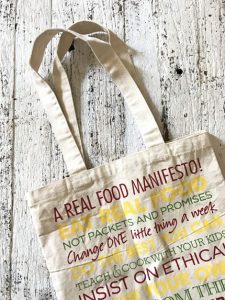
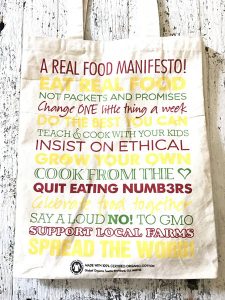
Want a GORGEOUS organic cotton shopping bag?
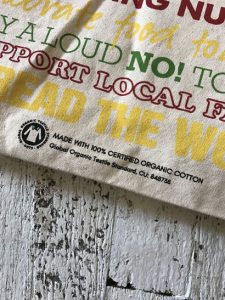
We have one! Double sided with the inspiring Real Food Manifesto so you can spread the word on real food awesomeness while you walk! With the highest certification from the textiles industry – GOTS certification – everyone is paid fairly, no harsh dyes, great working conditions, no pesticides on the farms or farmers… It’s shopping bag utopia! GRAB 1 or 10 HERE
Or if you order two or more of my books, you will receive one free along with your signed books. You can that here.
Stop buying nuts, seeds and other dried goods at the supermarket.
…or most health stores and buy instead from a bulk bin place or a co-op if you can join one in your area. Soft plastic pouches are notoriously hard to recycle and can often be high in phthalates – a hormone-disruptive plastic ingredient. Find a bulk foods store that sells pantry items from the bulk bins – this is a great way to also waste less, as you tend to buy less if you get to choose just what you need.
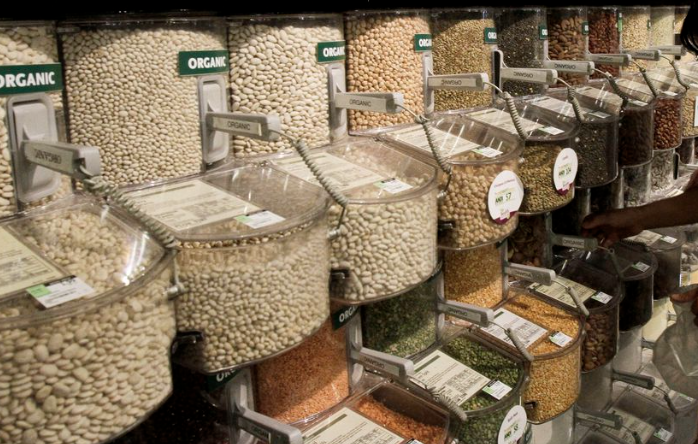
If you’re a supermarket shopper they’re even starting to put these in there in many countries… Bring your own brown paper bags, produce bags or go take some paper bags from the mushroom area in the produce section, to come back and use and avoid their plastic ones provided!
Stop buying ‘halves’ of fruit and veg.
Half a melon, pumpkin, cauliflower, cabbage or paw paw means plastic wrap. Buy whole and get a little recipe inspiration to use it all over the week. A whole cauliflower could be half roasted with turmeric and olive oil and then served with pomegranate and goat’s curd… the other half could be blitzed into a puree with coconut milk and sea salt or made into a soup. Different textures and flavours = not getting bored!
Get re-usable produce bags for delicates (or make!)
I find a lot of eco brands when they send you something, unfortunately also send a calico style drawstring bag for the ‘premium eco vibes’ which is a shame because how many does one need, right? BUT if you collect them, you can also use these as produce bags when out and about, or you could buy a set of produce bags if you don’t have any.
Ask for a box from the storeroom if you’ve forgotten your bag – even the sturdy eco ‘reusable’ options are made from plastic and you can quickly amass a collection you don’t need of those, which is no better really, than the single use plastic bags we’re trying to ditch.
Ditch the receipts. Receipts covered in thermal coatings (that plasticky feeling receipt) are covered in BPA in a much more concentrated dose that from food packaging – Say ‘no thanks’ unless you really need that receipt. If you need a receipt, many retailers now have the email-to-phone option available at your request.
Stop buying convenient ‘squeeze top’ products like tomato sauce, honey or mayo. Choose a glass jar. You CAN grab a teaspoon and grab what you need. You DON’T need a squeeze bottle. THEY told you you did. Mute the ads and save the planet. Ha! Now of course, when it comes to plastics there is always the consideration for people who genuinely need the convenience from perhaps a disability perspective. I’m not saying everyone has to do this ‘or else’. It’s more that if you can, then DO and if you can’t, then just do what you CAN. Makes sense, right?
At the cafe or while travelling
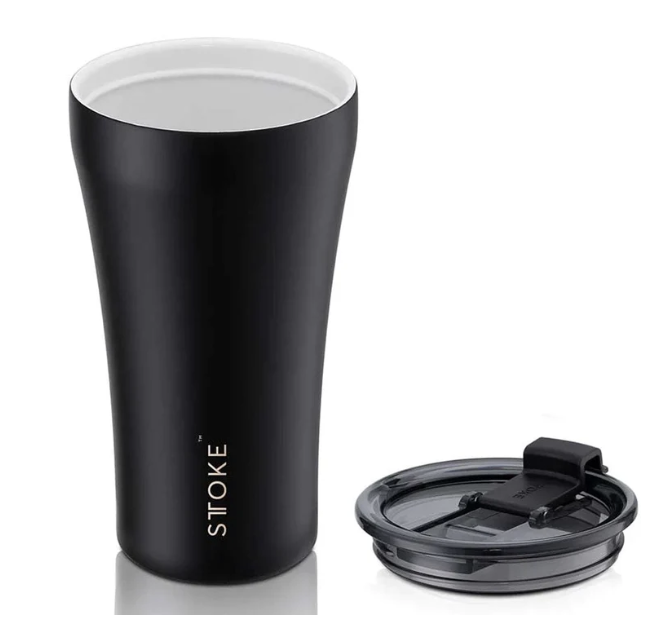
If you like taking your takeaway drink and going and sitting on the bench, or if it’s part of your commute, there are lovely ones now to have as your reusable. Set yourself a “No cup, no coffee” rule and you’ll quickly start to remember yours.
Get a cool JOCO take away glass takeaway coffee cup, or even bring your jars or mugs down for coffees, smoothies or juices to the cafe – They’re cool with it, I promise – No matter how ‘recyclable / degradable’ they tell you a coffee cup or smoothie cup is from a cafe, if it goes into a regular bin, it ends up immortalised in landfill. No good. When I went to New York and Europe in July, I saved 47 single use plastic cups by bringing my mug from home. Crazy, hey?
I love these Sttoke ones (that’s a ceramic interior and it’s insulated) they have in black/white- a narrow bottom = good for the long-drive or pram cupholder situation.
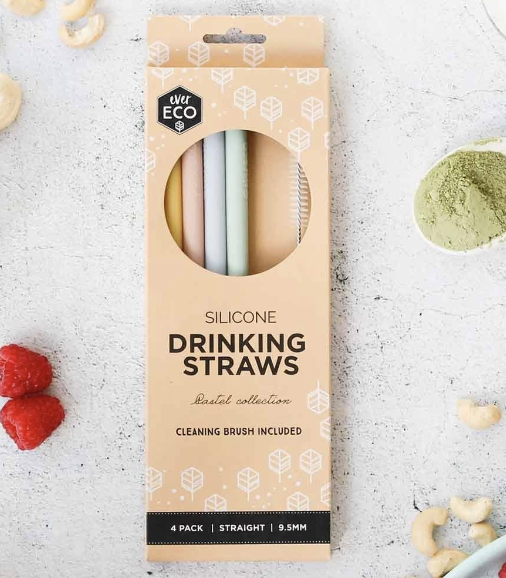
Say NO to straws! And given not everyone can, get soft silicone ones for people who need a softer texture – this pack comes with a brush or grab a stainless steel option.
In the kitchen
Stop using cheap ice cube trays that break and split every couple of years after all the bending you have to do to get the cubes out. Invest in a couple of stainless steel ones. You will not regret it, these things are indestructible and totally old school and I’ve had our 2 trays for over 10 years now. True story!
JARS. JARS. JARS. Who’s already a pro jar person? I am of the firm opinion that as long as you have a matching lid, your collection is allowed to be what it wants to be – as big as you like and we’ve laughed about this over the years on socials that’s for sure.
I have them everywhere and use for everything! If you’re freezing leftovers in jars to avoid plastic, be sure to leave a comfortable inch at the top so you don’t break the jar when the liquid expands while freezing.
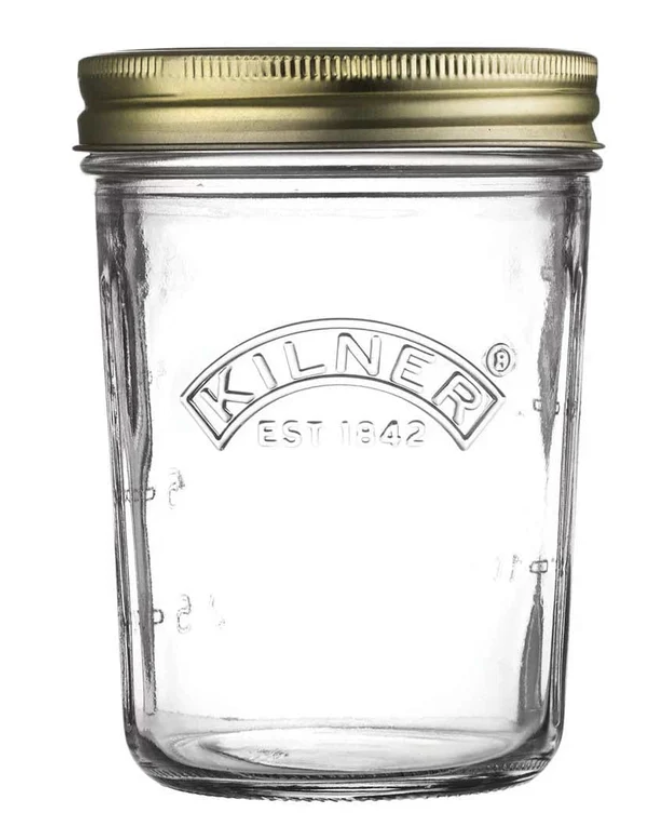
If you are of the special breed for whom collecting empty used jars isn’t enough and you want to buy a NEW jar? I won’t judge. How gorgeous is this KILNER one. Go on. You deserve it 😉
Ditch the plastic wrap. Reusable covers made from either beeswax, silicon or fabric give us plenty of choice these days for covering food! All different shapes and sizes you can use as needed and for whichever bowl size is appropriate.
You can get a groovy silicone one these days too – here is a six pack of different sizes

Wax and wax coated wraps and “I still want to microwave” challenges
I love my wax wraps to replace cling film, too. That one I linked is a meter long sheet so you can cut to size what you need – perfect!
And you can even get a “Refresher Stick” for your wax wraps to keep them, erm, waxy!
A lot of peeps now like the silicone pouches, too, for storing foods/sandwiches and the like.
And if you still use a microwave and aren’t ready to let go there, that’s fine – Just reheat things in bowls rather than on plates, so that you can pop a plate on top of the bowl to microwave, instead of glad wrap – I cringe at all the wilted hot glad wrap that touched my food as I grew up, nuking things in the microwave – but as I always say, it’s not what you DID that matters, it’s much better to get excited about what you’re going to DO from now on that’s positive.
Ditch the zip lock bags or at least start to challenge yourself to use them less and diversify as your first step. Start seeing how much you can put into jars, stainless containers, glass bottom containers or simply wrap in sandwich wrap bags/wax coated paper sheets. The simple act of NOT buying that next lot of them, will see your brain creating the new ways to store things. The TV told you that ziplock bags were convenient. Then your habit told you they were. The price of that convenience is massive for your health and the planet’s health and you CAN change this. Tough love is sometimes the answer so that our brains are forced to find a new way to do things. I know this is what’s worked for me.
Storing Meat and fish in the freezer
Meat is best ‘dealt with’ in some way to get it closer to being how you’re going to end up using it. Let me explain: It’s hard to freeze 2 kg of mince in the freezer as is if you’ve just received a delivery. Best is to prepare it into the ways you’re going to use it first and THEN freeze. So, if you’ve got meatballs, burger patties and bolognese on the cards, make your meatball mix (tried my sticky tamari meatballs?), your patty mix and then cook up a bolognese, and then store all of those things, ready to cook in your pyrexes, instead of in plastic bags from the butcher. You will thank me for this tip when you have abundant meals ready to go, instead of ‘mince to defrost’ and that mountainous feeling sometimes of “Oh but there’s so much to do to just getting dinner on the table”.
Next step, is to remember to bring big containers to the butcher and avoid the plastic bag the meat would go in all together!
For bigger cuts like roasts and shoulders, if you have to freeze them, you can remove from the plastic, wrap in parchment and then over the top of that in foil or just tie a couple of elastics or string around them. You can then wash the parchment and reuse the whole lot for another large piece again and again.
For fish, I use pyrex. Fishy smells can come out if you only wrap fish in parchment and foil, so if you’re worried, then I would use a closable pyrex style of container.
To avoid freezer burn, just press parchment down on the surface of what you’re freezing and then freeze. You can wash parchment and re-use! This If You Care parchment paper is the best low tox one.
Plastic free food prep and storage
Use those jars you have a humungous collection of, for:
- Chopped onion. Chop double or triple and jar the leftovers up to a week to use another day. Keep the lid on as onions soak up environmental bacteria.
- Stock – A lot of people are paranoid about freezing in jars. As long as you leave a good inch off the top to freeze them, when the liquid expands a little, you won’t get cracks or explosions. No one has on my watch so far when we corrected how full people were filling their jars to.
- Single serve portions of stews, sours and curries. Perfect for defrosting on one of those days when preparing lunch isn’t an option. defrost overnight in the fridge and pop on the stove in a saucepan to be ready in 5 minutes!
- Crudité sticks. Chop a couple of days at a time for snacks with dips and jar the ones for the next day.
- Leftover animal fats from cooking – Let’s say you’ve roasted a chicken, pork belly, side of beef or anything that has juice / fat run off. Do not wash this down the drain. HUGE saving to be made on stretching your organic / pasture raised meats further by using those fats and pan juices to form the base for the next day’s soup or stew or curry.
- Homemade dips, cultured veggies, pesto, home made ketchup or BBQ sauce… you name it, those jars are going to be your best ally. Show your partner this list and tell them to back off about the ‘too many jars’ comments (hmmm, is that just me?
- Fresh herbs don’t need plastic wrap or tupperware ‘high tech storage systems’ to stay crisp. Wrap them super tightly in a damp tea towel and refrigerate. Basil / coriander 5-6 days, mint and parsley 2 weeks +++. I promise you!
- Keep a damp tea towel at the bottom of your fruit and veg crisper drawer and clean it and replace it each week. This means you avoid wasting food and catching it for a ‘throw the ends in’ soup with stock, herbs and cream / coconut cream (STRETCH THAT BUDGET PEOPLE AND LOWER WASTE – WINNING ALL ROUND!)
- For leftovers, just put a simple plate on top of a bowl – remember that old trick?
- Bring parchment paper, a couple of big pyrex type tubs with lids, and take to places like the butcher, fish shop or deli, to have things wrapped or packed without new plastic being needed.
The important thing, no matter how slowly you do it, is to do it at all.
Your journey. Your way. What are you going to change today? I’d love to hear and I think you’re awesome for having a go at doing better than yesterday.


Comments 12
loving this article!
Author
Glad you love it Holly!
Pingback: Simple vegetarian stew | Low Tox Life
Pingback: How much plastic do you use? · Prescribing a Healthy Life
I noticed that you advised to use aluminum foil. Isn’t that just as bad for the environment
Author
Hey Zan – Oh my gosh I just today found a whole bunch of old comments I didn’t reply to – mortified! Yes aluminium can be bad for our health, especially ‘nude and cooked or as a personal care ingredient, but for the environment, it’s extremely well recycled and as long as one recycles it, it will go on to live many lives, so as my suggestion is for storing meat with the baking paper layer first then alu, it’s all good and remember to recycle if you did do this – although 6 years on I reckon you’re totally sorted by now. Ha!
Just what I needed to come across today, I was feeling very overwhelmed by doing it all, but I am feeling better now after reading this article. Knowing I am trying still counts, and if I keep trying and aim to change what I can when I can then for this season I am in I’m doing really well.
Author
Hey Kathleen – So, while I missed a whole bunch of comments obviously when I wrote this – sorry! I did want to say I’m so glad your overwhelm was decreased in the process – Overwhelm is so counter productive to positive changes cause we end up paralysed. Hope it’s all going well a few years onward! Alexx x
Hi Alex,
I love your message. Can you please advise some low tox options for glass storage jars for my pantry? I’ve seen some matching bamboo lids storage sets and love them. How do you know if they have used vanish on the bamboo lids?
Many thanks for your time
Megan
Author
Hey Megan, we cover off all of this and SO much more in my course, Go Low Tox kicking off shortly: https://www.lowtoxlife.com/go-low-tox/
One of favourite brands for storage is Biome:https://www.biome.com.au/273-bpa-free
Alexx x
Hi Alex,
I am thinking about getting some natural cotton pillow case covers, but noticed they are cotton with a polypropylene backing. Is this a safe option or should I be looking for something else?
Author
Hey Tamara – sorry I missed your comment a couple fo years later. If you need them to be waterproof for some reason then sometimes we have to draw the line, but polypropylene is plastic, so if you can avoid it go with 100% natural cotton, organic cotton, GOTS certified cotton or flax linen as the best options for pillow case materials and always wash before wear. Hope that helps!